Oleksandr Dovzhenko — Director (11)

Movie

Vasya, the Reformer (1926)
Вася-реформатор WikiData IMDb TMDB
other title: Вася-реформатор / Wanja der Reformator
Lost film directed by Oleksandr Dovzhenko (his first film) and Favst Lopatynskyi. It is a satire of the NEP period. Vasia, the son of a factory’s worker, is attracted by the romance of adventures. And he goes to look for them. He saves a drowning drunkard who tries to beat him. Vasia escapes from him in a vehicle parked on the shore. However, the vehicle belongs to a superintendent who, when he does not find it, stages its theft. Meanwhile, Vasia exposes priests in the church. As a result, the church is turned into a cinema, and the priest becomes a cinema technician. And finally, Vasia’s last deed is catching a criminal at home and denouncing him to the militia.
Movie

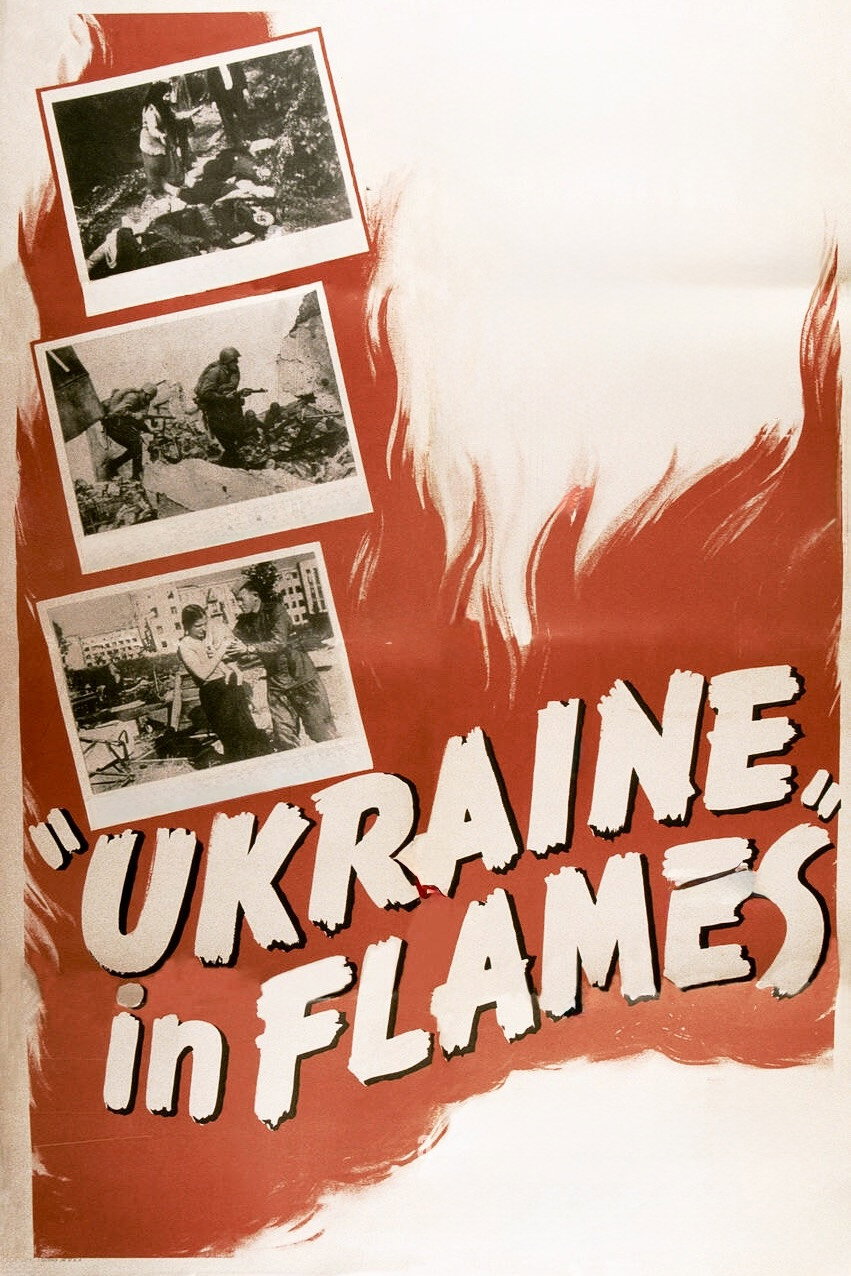
Ukraine in Flames (1943)
Битва за нашу Советскую Украину WikiData IMDb TMDB
other title: Битва за нашу Советскую Украину / La batalla por nuestra Ucrania soviética …
A 1943 Soviet war propaganda film by Ukrainian director Oleksandr Dovzhenko and Yuliya Solntseva. It is Dovzhenko's second World War II documentary, and dealt with the Battle of Kharkiv. The film incorporates German footage of the invasion of Ukraine, which was later captured by the Soviets.

Movie

Victory in Soviet Ukraine (1945)
Победа на Правобережной Украине IMDb TMDB
other title: Победа на Правобережной Украине
A wartime documentary directed by Alexander Dovzhenko and Yuliya Solntseva, depicting the final campaigns that drove Nazi forces from Ukraine in 1944–45. Combining frontline footage, liberated cityscapes, and scenes of returning civilians, the film chronicles both the devastation of occupation and the triumph of Soviet arms. It stands as both a historical record of the Ukrainian front and a patriotic celebration of victory at the close of the Second World War.

Movie

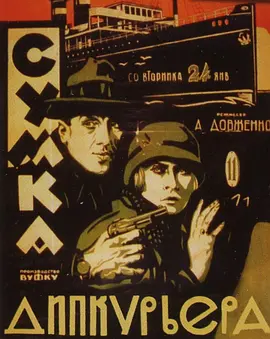
The Diplomatic Pouch (1927)
Сумка дипкурьера IMDb Douban
亚历山大·杜辅仁科 actor: 亚历山大·杜辅仁科
other title: Sumka dipkuryera / 外交信使袋 …
The Soviet embassy in England sends two couriers with diplomatic mail to Leningrad. The inspector of security police, White, and a group of policemen attack the Soviet diplomatic couriers at night. The documents get to an English trackman, who gives them to his son, a sailor in Portsmouth.

Movie

Michurin (1949)
Мичурин Douban
other title: 米丘林 / Мичурин
杜甫仁科的遗作,一部成功的人物传记电影,描述了苏联著名的植物育种家米丘林的生平。米丘林提出生物学的基本原则是主物体与生活条件的统一,在果树培育方面做出了杰出的贡献。他认为生物对生活条件有高度选择性,而生活条件对生物的发育和遗传变异则起主导作用。 影片真实地还原了米丘林奉献的一生,导演所拿手的蒙太奇处理也有不错的表现力,当然电影带有厚重的红色题材味道,有高大全的脸谱化,但在那个年代里确实产生过很大的震撼力。在国内上映时,就曾经鼓舞了不少立志投身植物研究的热血青年,与《乡村女教师》的政治教育功能类似。上影厂的配音也是经典,其中邱岳峰的声音更让人十分难忘。

Movie

Frontier (1935)
Аэроград WikiData IMDb TMDB Douban
亚历山大·杜辅仁科 actor: Stepan Shagaida / Sergei Stolyarov …
other title: 边疆风云 / Аэроград …
A Russian outpost in Eastern Siberia comes under threat of attack by the Japanese in this patriotic film from 1935. Aerograd is a new town with a strategically located airfield of vital interest to the government. Work on the new outpost is complicated when tensions develop between workers and a religious sect. The sect threatens to give their support to a band of marauding samurai warriors who battle for control of the region. Relations between the two countries are further strained in the days before World War II, dating back to the Russo-Japanese War of 1905. In this feature, the Russians are victorious as airplanes throughout the country come to the aid of the beleaguered new town. Director Alexander Dovzhenko, long considered a giant in Russian classic cinema, also wrote the screenplay for this feature.

Movie

Ivan (1932)
Иван WikiData IMDb TMDB Douban
other title: 伊万 / Иван …
Alexander Dovzhenko’s first sound film, revolving around the construction of a giant dam on the Dnieper River, is one of his greatest, though it was poorly received in the Soviet Union when it came out in 1932. It’s only one of the eccentricities of this lyrical and monumental feature that the title refers to three different characters, and it’s telling that the father of one of them, an illiterate peasant who proudly spends his time fishing and loafing while everyone else works, is treated with considerable warmth. (A sequence in which he’s frightened when addressed by an outdoor loudspeaker evokes Chaplin as well as Tati.) As in all of Dovzhenko’s best work, the style veers closer to lyrical poetry (its opening sequence about the river) and portraiture (a later segment introducing us to various workers) than to narrative, though it’s innovative in other respects as well: the final sequence includes some striking jump cuts almost 30 years before Jean-Luc Godard purportedly invented them in Breathless.

Movie

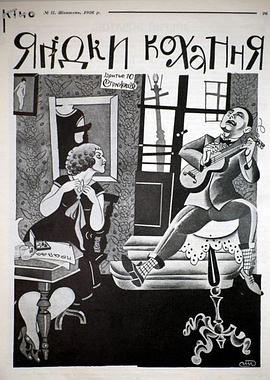
Love's Berries (1926)
Yagodka lyubvi WikiData IMDb TMDB Douban
杜辅仁科 Aleksandr Dovzhenko actor: Maryan Krushchelnitsky / Margarita Barskaya …
other title: 爱情的果实 / Yagodka lyubvi …
Jean, the hairdresser, is flabbergasted: what is that baby his girlfriend Lisa has put in his arms out of the blue? The fruit of love? Out of the question. From that moment on, the reluctant father has but one thought in his head: he must get rid of the cumbersome 'article'. And, take his word for it, all the ways are good.

Movie

Arsenal (1929)
Арсенал WikiData IMDb TMDB Douban
亚历山大·杜辅仁科 actor: Semyon Svashenko / Nikolai Nademsky …
other title: 兵工厂 / Арсенал …
A soldier returns to Kyiv after surviving a train crash and encounters clashes between nationalists and collectivists. The story of the suppression of the Bolshevik uprising at the Arsenal factory in Kyiv by the Central Council troops.

Movie

Zvenigora (1928)
Звенигора WikiData IMDb TMDB Douban
亚历山大·杜辅仁科 actor: Georgi Astafyev / Nikolai Nademsky …
other title: 兹韦尼戈拉 / Звенигора …
Zvenigora is, in terms of narrative and content, one of the most remarkable avant-garde films of an exuberantly experimental period. The film uses the central construct of a legend regarding treasure buried in Mount Zvenigora to build a montage of scenes praising Ukrainian industrialisation, attacking the European bourgeoisie, celebrating the beauty of the Ukrainian steppe and re-telling ancient myths. The narrative is built upon Modernist lines, disregarding the traditional, novelistic storytelling techniques and instead using abrupt shifts in time and using the constructive devices of avant-garde poets such as Blok, Bely and Mayakovsky to create a picture of modern Ukraine that pushes in several directions at once. There are some incredibly striking tableaux that require the viewers to create a structure for themselves (such as the Bolshevik soldier directing his own execution) although the climax does draw the preceding events together, combining the dialectical threads of modern industry and the old man's myth together in two exhilarating scenes. The cinematography is fascinating - elements of the style of Eisenstein, Pudovkin, Protazanov and Kuleshov are recognisable, yet Zvenigora seems completely different to any of them. The juxtaposition of rapid montages, swift city tours and slow, poetic journeys around the countryside is powerful, and the mythical scenes, although winding, are beautifully realised with a dreamlike quality to them. Zvenigora is not Dovzhenko's masterpiece, if only because his Earth (1930) is one of the greatest Russian films ever made. However, it is highly recommended, although if you are new to Russian film of the period it is probably not the best place to start.