Daniel C. Dennett — Actor (5)
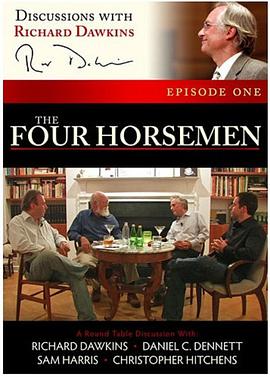
Discussions with Richard Dawkins, Episode 1: The Four Horsemen (2008) [Movie] Douban
Discussions with Richard Dawkins, Episode 1: The Four Horsemen
director:
Josh Timonen
actor:
理查德·道金斯
/
Daniel C. Dennett
…
other title:
对话道金斯第一集:四骑士
I, Pastafari: A Flying Spaghetti Monster Story (2020) [Movie] Douban
I, Pastafari: A Flying Spaghetti Monster Story
director:
Michael Arthur
actor:
Niko Alm
/
Bruder Spaghettus
…
other title:
我“煮”:飞面大神本纪
/
我“煮”沉浮
飞天面条神教(FSM)在全球拥有成千上万的信徒,是世界上发展速度最快的宗教和教会。我“煮”,伴随着FSM教会的一些勇敢成员,即Pastafarians,不断为维护自身的宗教自由而四处征战,以获取等同于其他宗教的特权和许可。在此过程中,FSM信众也一再迫使各种质疑FSM的人不得不应对这一问题:“ 真正的宗教到底是什么?”
——Michael Arthur
——————————————————————
With millions of believers worldwide, The Church of the Flying Spaghetti Monster is the world's fastest growing religion. Followers of the faith, Pastafarians, have been preaching the message of the Flying Spaghetti Monster (FSM) since The Prophet, Bobby Henderson's, Open Letter to the Kansas School Board went viral in 2005.
In response to the school board's decision to teach evolution alongside creationism as equivalent scientific theories in science classes statewide, Mr. Henderson argued that it would then only be fair to teach other creation beliefs in science classes as well. Specifically, his belief: that a Flying Spaghetti Monster created the universe a few thousand years ago.
Pastafarians acknowledge that there is overwhelming observable evidence that shows the universe is likely billions of years old; however, they believe this evidence was put in place by The FSM in order to trick scientists. They also believe that global warming is caused by the reduction in the pirate population, since the correlation between the two is undeniable.
With this irrefutable evidence in hand, their holy mission is to increase the pirate population in order to combat climate change. Successful completion of this mission grants them access to Pastafarian Heaven, where a beer volcano and a stripper factory await them. Pastafarian Hell also contains a beer volcano and a stripper factory, but the beer is stale and the strippers have sexually transmitted diseases.
The film begins in January 2016, when The Netherlands granted official recognition that the Kerk van het Vliegend Spaghettimonster is a religion. With this recognition, Mienke, Samir, Mathé, Dirk Jan, and other members of the church, begin their mission to get access to the same rights Dutch law affords other recognized religions, starting with the right to wear religious headwear in their driver's license photos.
Battling in Dutch courts, they make the case that Pastafarianism is just as rational a belief system as any other religion; therefore, Pastafarians should be able to express their faith in the same way as all other religions. Who decides what a "real religion" is anyway?
Meanwhile, in a small town outside Berlin, Germany, Rüdiger Weida aka Bruder Spaghettus fights a similar fight. As the founder of the Kirche des Fliegenden Spaghettimonster, he would also like to share in the rights of the other Churches in Germany: to post a sign showing the time and location of his weekly faith service, Noodlemass, held at the first physical Pastafarian Church. In full Pirate Regalia (the chosen attire of the German Pastafarians), he faithfully evangelizes the teachings of the FSM to his congregation.
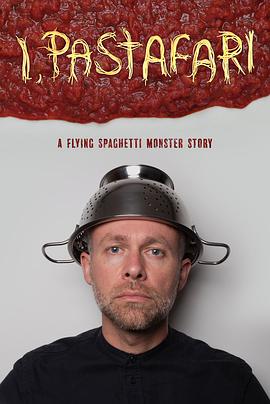
Like any other religion, Pastafarians have a supernatural deity, a prophet, and lessons of morality written in holy scriptures. Unlike other religions, Pastafarianism seems to have forgone the hate, bigotry, violence, and instead focuses their faith on one dogma: there is no dogma. This explains why some Pastafarians choose to dress like Pirates, while others choose wearing a colander to express their religious identity. Wearing the Colander was not a commandment from their Noodly God, it was the divine revelation of Niko Alm, member of the Austrian Parliament, and the first person to legally win the right to express his Pastafarian faith in his driver's license photo.
While other religions are conflicted with fitting the morality of their scriptures as it was written in ancient times with the ethics of today, the Pastafarians ethical teachings evolve as society evolves. They do not hate those with different beliefs from their own, they do not judge on the basis of sexual preference, and their God does not require sacrifices. These loose moral guidelines are highlighted in their version of the Ten Commandments, the Eight I'd Really Rather You Didn'ts.
I, Pastafari is a story about a few brave Pastafarians evangelizing the message of the FSM, while fighting against intolerant skeptics, for the freedom to access religious privileges in law granted to other "real" religions. In a time of flat-earthers, anti-vaxxers, fake news, and alternative facts, the Pastafarians may be the savior the world has been waiting for.
——Michael Arthur
——————————————————————
With millions of believers worldwide, The Church of the Flying Spaghetti Monster is the world's fastest growing religion. Followers of the faith, Pastafarians, have been preaching the message of the Flying Spaghetti Monster (FSM) since The Prophet, Bobby Henderson's, Open Letter to the Kansas School Board went viral in 2005.
In response to the school board's decision to teach evolution alongside creationism as equivalent scientific theories in science classes statewide, Mr. Henderson argued that it would then only be fair to teach other creation beliefs in science classes as well. Specifically, his belief: that a Flying Spaghetti Monster created the universe a few thousand years ago.
Pastafarians acknowledge that there is overwhelming observable evidence that shows the universe is likely billions of years old; however, they believe this evidence was put in place by The FSM in order to trick scientists. They also believe that global warming is caused by the reduction in the pirate population, since the correlation between the two is undeniable.
With this irrefutable evidence in hand, their holy mission is to increase the pirate population in order to combat climate change. Successful completion of this mission grants them access to Pastafarian Heaven, where a beer volcano and a stripper factory await them. Pastafarian Hell also contains a beer volcano and a stripper factory, but the beer is stale and the strippers have sexually transmitted diseases.
The film begins in January 2016, when The Netherlands granted official recognition that the Kerk van het Vliegend Spaghettimonster is a religion. With this recognition, Mienke, Samir, Mathé, Dirk Jan, and other members of the church, begin their mission to get access to the same rights Dutch law affords other recognized religions, starting with the right to wear religious headwear in their driver's license photos.
Battling in Dutch courts, they make the case that Pastafarianism is just as rational a belief system as any other religion; therefore, Pastafarians should be able to express their faith in the same way as all other religions. Who decides what a "real religion" is anyway?
Meanwhile, in a small town outside Berlin, Germany, Rüdiger Weida aka Bruder Spaghettus fights a similar fight. As the founder of the Kirche des Fliegenden Spaghettimonster, he would also like to share in the rights of the other Churches in Germany: to post a sign showing the time and location of his weekly faith service, Noodlemass, held at the first physical Pastafarian Church. In full Pirate Regalia (the chosen attire of the German Pastafarians), he faithfully evangelizes the teachings of the FSM to his congregation.
Like any other religion, Pastafarians have a supernatural deity, a prophet, and lessons of morality written in holy scriptures. Unlike other religions, Pastafarianism seems to have forgone the hate, bigotry, violence, and instead focuses their faith on one dogma: there is no dogma. This explains why some Pastafarians choose to dress like Pirates, while others choose wearing a colander to express their religious identity. Wearing the Colander was not a commandment from their Noodly God, it was the divine revelation of Niko Alm, member of the Austrian Parliament, and the first person to legally win the right to express his Pastafarian faith in his driver's license photo.
While other religions are conflicted with fitting the morality of their scriptures as it was written in ancient times with the ethics of today, the Pastafarians ethical teachings evolve as society evolves. They do not hate those with different beliefs from their own, they do not judge on the basis of sexual preference, and their God does not require sacrifices. These loose moral guidelines are highlighted in their version of the Ten Commandments, the Eight I'd Really Rather You Didn'ts.
I, Pastafari is a story about a few brave Pastafarians evangelizing the message of the FSM, while fighting against intolerant skeptics, for the freedom to access religious privileges in law granted to other "real" religions. In a time of flat-earthers, anti-vaxxers, fake news, and alternative facts, the Pastafarians may be the savior the world has been waiting for.
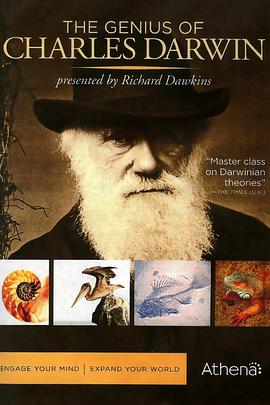
The Genius of Charles Darwin (2008) [Movie] Douban
The Genius of Charles Darwin
director:
Russell Barnes
/
Dan Hillman
actor:
理查德·道金斯
/
Steven Pinker
…
other title:
天才达尔文
The Genius of Charles Darwin is a three-part television documentary, written and presented by evolutionary biologist Richard Dawkins.
In the first episode Richard Dawkins explains the basic mechanisms of natural selection, and tells the story of how Charles Darwin developed his theory. He teaches a year 11 science class about evolution, which many of the students are reluctant to accept. He then takes them to the Jurassic Coast in Dorset to search for fossils, hoping that the students can see some of the evidence for themselves. Dawkins also visits Nairobi, where he interviews a prostitute who seems to have a genetic immunity to HIV, and talks to microbiologist Larry Gelmon. He goes on to predict that genetic immunity is a trait that will become more prevalent in the community over time.
In the second episode Richard Dawkins deals with some of the philosophical and social ramifications of the theory of evolution. Dawkins starts out in Kenya, speaking with palaeontologist Richard Leakey. He then visits Christ is the Answer Ministries, Kenya’s largest Pentecostal church, to interview Bishop Bonifes Adoyo. Adoyo has led the movement to press the National Museums of Kenya to sideline its collection of hominid bones pointing to man’s evolution from ape to human. The collection includes the Turkana Boy discovered by Kamoya Kimeu, a member of a team led by Richard Leakey in 1984.
Dawkins discusses social Darwinism and eugenics, explaining how these are not versions of natural selection, and that “Darwin has been wrongly tainted”. He then meets with evolutionary psychologist Steven Pinker to discuss how morals can be compatible with natural selection. He goes on to explaining sexual selection, with peafowls as an example. To find out whether sexual selection plays a role for altruism and kindness among humans, he visits women who are looking for sperm donors, as well as a sperm bank manager. Dawkins also explains kin selection and selfish genes.
In the third and final episode, Dawkins explains why Darwin’s theory is one of history’s most controversial ideas. Dawkins uses this episode to discuss the opposition that evolution has experienced since it was first discovered. He starts by approaching various anti-evolutionists, ranging from John Mackay from Creation Research, Wendy Wright, President of Concerned Women for America, to English school teacher Nick Cowen. In order to address concerns they bring up, he shows the evidence for evolution, including fossil and DNA evidence. He also talks to the science students of the school he taught in during the first episode, asking them why they aren’t adequately teaching the ideas of science properly, instead allowing their students to believe that truth is personal and that science is merely a point of view.
Dawkins also describes Darwin’s personal journey from Christianity to atheism, based not only on the natural mechanisms he saw, but also on the cruelty in the world which seemed to deny a loving God, in particular the loss of his daughter Annie. While Dawkins does address the bleakness of the Darwinian view, he spends the last part of this episode describing how Darwin and he himself address it, ending by saying: “In the perspective of the universe, the vastness of the universe and of geological time, we are insignificant. Some people find the thought disturbing, even frightening. Like Darwin, I find the reality thrilling.”
In the first episode Richard Dawkins explains the basic mechanisms of natural selection, and tells the story of how Charles Darwin developed his theory. He teaches a year 11 science class about evolution, which many of the students are reluctant to accept. He then takes them to the Jurassic Coast in Dorset to search for fossils, hoping that the students can see some of the evidence for themselves. Dawkins also visits Nairobi, where he interviews a prostitute who seems to have a genetic immunity to HIV, and talks to microbiologist Larry Gelmon. He goes on to predict that genetic immunity is a trait that will become more prevalent in the community over time.
In the second episode Richard Dawkins deals with some of the philosophical and social ramifications of the theory of evolution. Dawkins starts out in Kenya, speaking with palaeontologist Richard Leakey. He then visits Christ is the Answer Ministries, Kenya’s largest Pentecostal church, to interview Bishop Bonifes Adoyo. Adoyo has led the movement to press the National Museums of Kenya to sideline its collection of hominid bones pointing to man’s evolution from ape to human. The collection includes the Turkana Boy discovered by Kamoya Kimeu, a member of a team led by Richard Leakey in 1984.
Dawkins discusses social Darwinism and eugenics, explaining how these are not versions of natural selection, and that “Darwin has been wrongly tainted”. He then meets with evolutionary psychologist Steven Pinker to discuss how morals can be compatible with natural selection. He goes on to explaining sexual selection, with peafowls as an example. To find out whether sexual selection plays a role for altruism and kindness among humans, he visits women who are looking for sperm donors, as well as a sperm bank manager. Dawkins also explains kin selection and selfish genes.
In the third and final episode, Dawkins explains why Darwin’s theory is one of history’s most controversial ideas. Dawkins uses this episode to discuss the opposition that evolution has experienced since it was first discovered. He starts by approaching various anti-evolutionists, ranging from John Mackay from Creation Research, Wendy Wright, President of Concerned Women for America, to English school teacher Nick Cowen. In order to address concerns they bring up, he shows the evidence for evolution, including fossil and DNA evidence. He also talks to the science students of the school he taught in during the first episode, asking them why they aren’t adequately teaching the ideas of science properly, instead allowing their students to believe that truth is personal and that science is merely a point of view.
Dawkins also describes Darwin’s personal journey from Christianity to atheism, based not only on the natural mechanisms he saw, but also on the cruelty in the world which seemed to deny a loving God, in particular the loss of his daughter Annie. While Dawkins does address the bleakness of the Darwinian view, he spends the last part of this episode describing how Darwin and he himself address it, ending by saying: “In the perspective of the universe, the vastness of the universe and of geological time, we are insignificant. Some people find the thought disturbing, even frightening. Like Darwin, I find the reality thrilling.”
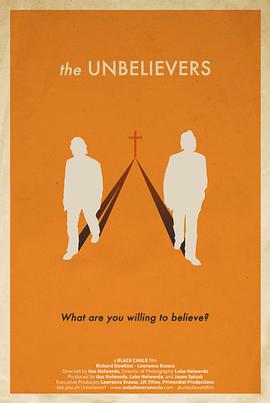
The Unbelievers (2013) [Movie] WikiData IMDb TMDB Douban
The Unbelievers
other title:
不信上帝的人
/
无信仰者
…
Renowned scientists Richard Dawkins and Lawrence Krauss cross the globe as they speak publicly about the importance of science and reason in the modern world.