Hans Richter — Director (15)

Movie

Dadascope (1962)
Dadascope Douban
汉斯·李希特 actor: 马塞尔·杜尚 / 曼·雷 …
other title: 达达视野
Starring: Marcel Duchamp, Man Ray, Jean Arp, Richard Huelsenbeck, Raoul Hausmann and others. Dadascope is a comprehensive portrait of the Dada movement with its specific techniques of sound and visual clash, word puns, chess, dice and other games of chance. Richter stated, "There is no story, no psychological implication except such as the onlooker puts into the imagery. But it is not accidental either, more a poetry of images built with and upon associations. In other words the film allows itself the freedom to play upon the scale of film possibilities, freedom for which Dada always stood - and still stands."

Movie

包豪斯媒体艺术 (2009)
Bauhaus Edition 1: Medienkunst Douban
other title: Bauhaus Edition 1: Medienkunst
Filmische Praxis war am Bauhaus ein Teil des Lehrkonzeptes einer „Wissenschaft des Sehens“. Kunst und Technik sollten eine neue Einheit bilden. Film, als technisches Medium par excellence, war wichtiges Element dieser Programmatik. Die erstmals in dieser Edition zusammengestellten filmischen Arbeiten des Bauhauses zur Medienkunst eröffnen einen Einblick in das Spektrum der verschiedenen Kunstgattungen, die am Bauhaus gelehrt und praktiziert wurden und sich gegenseitig be-einflussten. In den ausgewählten Arbeiten von Heinrich Brocksieper, Werner Graeff, Kurt Kranz und Kurt Schwerdtfeger werden Malerei, Zeichnung, Grafik und Installation durch das Medium Film zusätzlich dynamisiert. Inspiriert durch die abstrakten Filme von Hans Richter und Viking Eggeling entwickelten Bauhäusler die moderne Formensprache in medienkünstlerischen Experimenten weiter.

Movie

Everyday (1929)
Everyday IMDb TMDB Douban
汉斯·李希特 actor: Sergei M. Eisenstein / Michael Hankinson …
other title: 日复一日 / Every Day
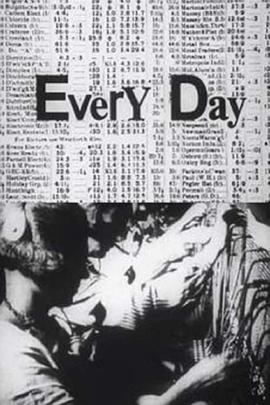
Experimental documentary focusing on a day in the life of city workers, featuring montage sequences and repetition to emphasise the monotony of routine office work. A body struggles to get out of bed; a hand knocks a clock onto the floor and there is a close-up of an alarm clock. We see a montage of legs getting out of bed, followed by fragments of different bodies exercising. Many people rushing to get to work on the bus and train are shown, succeeded by shots of people going about routine actions in a bored manner within an office environment. A lunch break occurs, which includes a stop-motion scene of food dancing around on a plate. After work we see workers visit either a show or the cinema, and then focus upon the subjective mind of an audience member: we see him looking tired at the show, intercut with him getting into bed and dreaming. The above routine is then repeated at an even faster rate, compressing the activities and including a few new intercut clips, such as workers at a factory and telephone operators at work.

Movie

Everything turns, everything resolves (1929)
Alles dreht sich, alles bewegt sich TMDB Douban
other title: 一切都在旋转,一切都在运动 / Alles dreht sich, alles bewegt sich
狂欢节的一天——人群中吵杂的声音 尖锐的马戏团音乐 街上十倍的暴力 这一切都变成真实的内容 里希特的第一部有声作品(无对白)

Movie

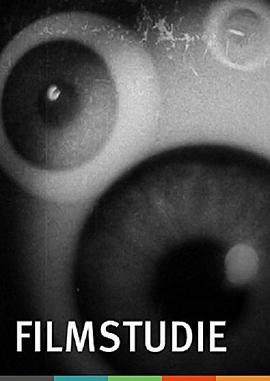
Filmstudie (1926)
Filmstudie WikiData IMDb TMDB Douban
★ 8.0 8 ratings
汉斯·李希特 actor: Stella F. Simon
other title: 电影研究 / Film Study
Entertaining Dadaist experimental short, similar to Man Ray's work, full of shifting geometric shapes, stock footage of seagulls, flying eyeballs, and glaring floating heads.

Movie

Rhythm 23 (1923)
Rhythmus 23 WikiData IMDb TMDB Douban
other title: 23号节奏 / Rhythmus 23 …
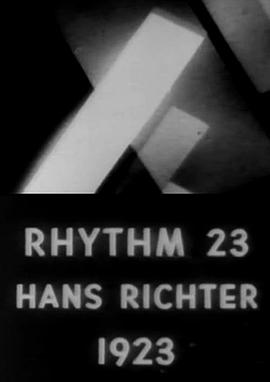
We watch white shapes dancing on black background, which changes when the white shape fills up the screen completely, and black lines and figures bounce around on the now white background.

Movie

新居所 (1930)
Die neue Wohnung Douban
other title: Die neue Wohnung
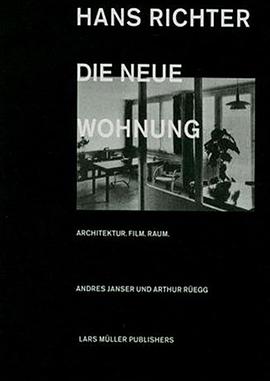
Die neue Wohnung. Version Atelier Richter was made a year after the SWB version, for screenings in Germany that began in January 1932. This version, of similar length, is a complete re-edit, in which there is no mention of SWB, but there are new intertitles and previously unseen shots were added. It emphasizes the social dimension of modern housing, accessible to all workers. So there is a shift from a specialist perspective on architecture to an optimistic view of the future of working-class lives.