Ned Sublette — 作者 (2)
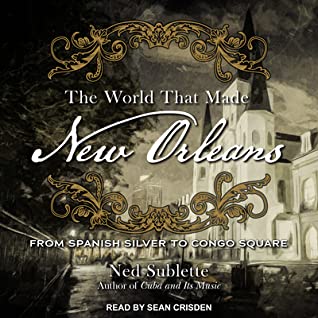
The World That Made New Orleans: From Spanish Silver to Congo Square [图书] Goodreads
The World That Made New Orleans: From Spanish Silver to Congo Square
作者: Ned Sublette publishing house: Tantor Audio 2017 - 10
Offering a new perspective on the unique cultural influences of New Orleans, this entertaining history captures the soul of the city and reveals its impact on the rest of the nation. Focused on New Orleans' first century of existence, a comprehensive, chronological narrative of the political, cultural, and musical development of Louisiana's early years is presented. This innovative history tracks the important roots of American music back to the swamp town, making clear the effects of centuries-long struggles among France, Spain, and England on the city's unique culture, and the role of the Senegambia, Congo, and Haiti on the making of Afro-Louisiana. The origins of jazz and the city's eclectic musical influences, including the role of the slave trade, are also revealed. Featuring little known facts about the cultural development of New Orleans-such as the real significance of gumbo, the origins of the tango, and the first appearance of the words vaudeville and voodoo-this rich historical narrative explains how New Orleans' colonial influences shape the city still today.
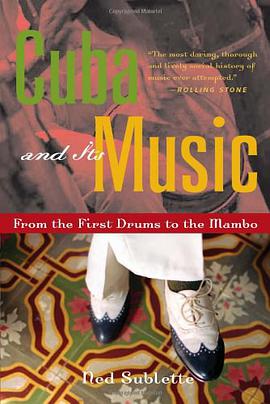
Cuba and Its Music [图书] 豆瓣
作者: Ned Sublette publishing house: Chicago Review Press 2007 - 2
This entertaining history of Cuba and its music begins with the collision of Spain and Africa and continues through the era of Miguelito Valdes, Arsenio Rodriguez, Benny More, and Perez Prado. It offers a behind-the-scenes examination of music from a Cuban point of view, unearthing surprising, provocative connections and making the case that Cuba was fundamental to the evolution of music in the New World. The ways in which the music of black slaves transformed 16th-century Europe, how the claves appeared, and how Cuban music influenced ragtime, jazz, and rhythm and blues are revealed. Music lovers will follow this journey from Andalucia, the Congo, the Calabar, Dahomey, and Yorubaland via Cuba to Mexico, Puerto Rico, Saint-Domingue, New Orleans, New York, and Miami. The music is placed in a historical context that considers the complexities of the slave trade; Cuba's relationship to the United States; its revolutionary political traditions; the music of Santeria, Palo, Abakua, and Vodu; and much more.