Ebrahim Golestan — Actor (5)

Movie

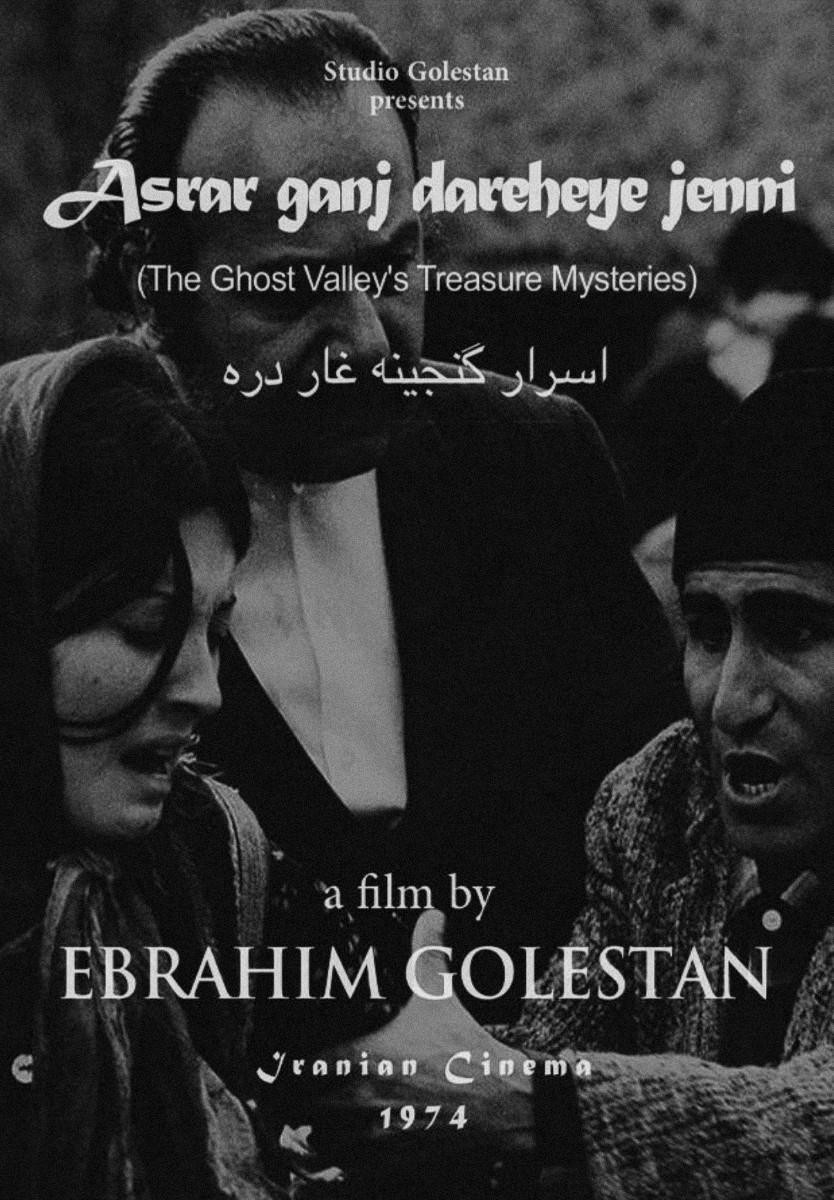
The Ghost Valley's Treasure Mysteries (1974)
اسرار گنج درهٔ جنی WikiData IMDb TMDB Douban
other title: اسرار گنج درهٔ جنی / Secrets of the Treasure of the Jinn Valley …
A satirical comedy about a poor farmer who, while plowing his field, accidentally uncovers an ancient burial chamber loaded with gold artifacts. Realizing that the trove would somehow liberate him from his bumpkin existence, he brings pieces of it to a jeweler in the city.

Movie

The Crown Jewels of Iran (1965)
Ganjine-haye gohar IMDb TMDB Douban
other title: 伊朗皇室珠宝 / Ganjine-haye gohar …
When the Shah-era Ministry of Culture asked Ebrahim Golestan for a documentary on Iran’s crown jewels, they didn’t expect an acidic indictment of the regime’s politics. Previously released only in a diluted version, this vanguard masterpiece can now be seen for the first time in its unexpurgated original version. Ebrahim GOLESTAN (1922, Iran) grew up in a well-to-do family. He founded his own film studio, Golestan Films, in 1957. After meeting the controversial Iranian artist Forugh Farrokhzadher in 1958, he became a close associate hers. Inspired by her to pursue his own artistic vision, he began directing his own short documentaries. In 1965 he released his first feature, BRICK AND MIRROR. His second feature, THE SECRETS OF THE TREASURE OF THE FINN VALLEY (1974), would prove to be his last film: Golestan left Iran in 1975, settling in the United Kingdom and focusing completely on his writing.

Movie

See You Friday, Robinson (2022)
À vendredi, Robinson WikiData IMDb TMDB Douban
other title: 星期五见,鲁滨逊先生 / À vendredi, Robinson …
A few years ago, Mitra Farahani had an idea. Could she engineer the encounter of two great filmmakers who, although they belong to the same generation, have never met in person: Jean-Luc Godard, the Swiss master who needs no introduction, and the lesser known Ebrahim Golestan, whose literary and film work is the bedrock of modern Iranian culture – two hermits of cinema’s technical and political revolution. A meeting proves to be out of the question but, just as Farahani had to adapt the unforgettable Fifi Howls from Happiness after the unexpected death of her protagonist, this new setback stimulates another creative approach. Farahani suggests a correspondence, to which a hesitant Godard, playful as ever, replies: “Maybe we will not correspond to one another”. Contemplating their common and/or divergent odysseys, the maestros begin sending each other a message, every Friday, for 29 weeks. À vendredi, Robinson offers a brilliant insight into the role of the artist in the 20th and 21st centuries. With death now a tangible possibility, the two great men also consider their own end, as intellectuals and critics of the times. One thing is certain: they won’t be facing it with anything less than razor-sharp insight and, of course, humour.