Waldemar Januszczak — Director (6)

Movie

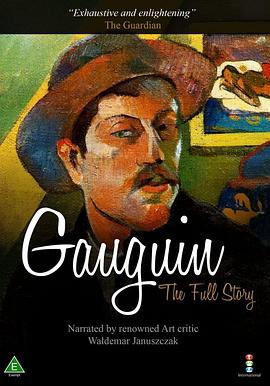
Gauguin: The Full Story (2010)
Gauguin: The Full Story IMDb Douban
瓦尔德马·雅努茨扎克 actor: 瓦尔德马·雅努茨扎克
other title: 高更全传
One hundred years ago, on the Island of Hiva Oa in the Marquesas, a syphilitic and alcoholic Frenchman called Paul Gauguin died of a heart attack. At that point nobody realized the incredible impact Gauguin's work was to have on modern art. Art critic and broadcaster Waldemar Januszczak has written and directed this examination of a man who was not only a great painter but sculptor, wood carver, musician, print maker, journalist and ceramicist. As well as telling the remarkable story of Gauguin's life, Januszczak also celebrates Gauguin's achievements and examines the various accusations of sexual misconduct, familial neglect and racism that are frequently made against him. The film contains many of Gauguin's masterpieces and includes paintings recently put on show at the Hermitage in St Petersburg which haven't been seen in public since their disappearance during World War II.

Movie

Rubens: An Extra Large Story (2015)
Douban
These days, nobody takes Rubens seriously. His vast and grandiose canvases, stuffed with wobbly mounds of female flesh, have little appeal for the modern gym-subscriber. And it's not just the bulging nudity we don't like. The entire tone of Rubens's art offends us. Everything in it is too big - the epic dramas full of tragedy, the fantastical celestial scenery, the immense canvases and murals adorning the walls and ceilings of Europe's grandest palaces. All of it seems too much for modern sensibilities. But Waldemar Januszczak begs to differ. In Waldemar's eyes, Rubens has been traduced by modern tastes, and a huge misunderstanding of him has taken place. By looking in detail at Rubens's fascinating life, by understanding his art in more enlightened ways, Waldemar sets out to correct the extra-large misconceptions that have arisen about Rubens.

Movie

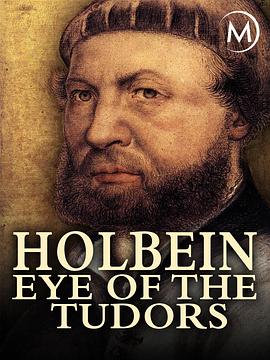
Holbein: Eye of the Tudors (2015)
Douban
瓦尔德马·雅努茨扎克 actor: 瓦尔德马·雅努茨扎克
As Henry VIII’s court painter, Hans Holbein witnessed and recorded the most notorious era in English history. He painted most of the major characters of the age, and created the famous image of the king himself that everyone today still recognises. But who really was Holbein? Where did he come from? And what were the dark and unsettling secrets hidden in his art? Waldemar Januszczak looks at the life and work of an artist who became famous for bringing the Tudor age to life, but who could have been so many other things.

Movie

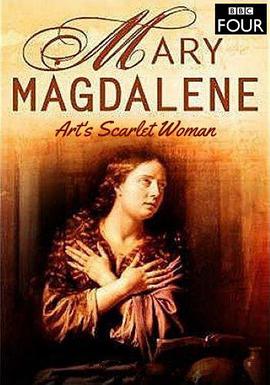
Mary Magdalene: Art's Scarlet Woman (2017)
Mary Magdalene: Art's Scarlet Woman Douban
瓦尔德马·雅努茨扎克 actor: 瓦尔德马·雅努茨扎克
other title: 抹大拉的玛丽亚:艺术作品中的荡妇形象 / 抹大拉的玛丽亚:绯红色的艺术形象
Waldemar Januszczak explores the impact of Mary Magdalene's myth on art and artists. All saints in art are inventions, but no saint in art has been invented quite as furiously as Mary Magdalene. For a thousand years, artists have been throwing themselves at the task of describing her and telling her story, from Caravaggio to Cezanne, Rubens to Rembrandt, Titian to van Gogh. Her identity has evolved from being the close follower of Jesus who was the first witness to his resurrection, to one of a prostitute and sinner who escaped from persecution in the Holy Land by fleeing across the Mediterranean to wind up living in a cave as a hermit in the south of France, enjoying ecstatic experiences with Christ.

Movie

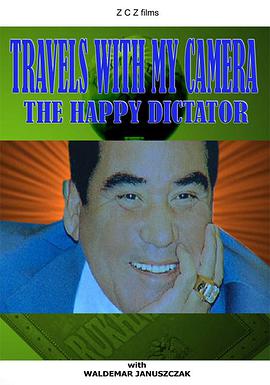
The Happy Dictator (2007)
The Happy Dictator Douban
瓦尔德马·雅努茨扎克 actor: 瓦尔德马·雅努茨扎克
other title: 快乐的独裁者 / Travels with My Camera: The Happy Dictator
Deep in the heart of Central Asia lies one of the world’s most secretive countries – Turkmenistan. Run by a crazy dictator whose megalomania has spawned a personality cult to rival that of Chairman Mao, this unlikely desert republic has earned itself a grim reputation as “the North Korea of Central Asia.” But since no one is usually allowed in or out, the truth about Turkmenistan is impossible to separate from the rumours and the legends. Until now. Posing as a tourist who has come to Turkmenistan for a stag weekend, Waldemar Januszczak goes undercover in this bizarre and sinister country to separate the facts from the fiction. And he’s taken his camera with him… “Utterly fascinating…a brilliant piece of observational journalism…” – Radio Times “a light-hearted yet fascinating look at life in one of the world’s most secretive countries” – Daily Mail “…a beautifully observed film…” – The Observer “very funny…” – Financial Times “entertainingly observational film” – The Times

Movie

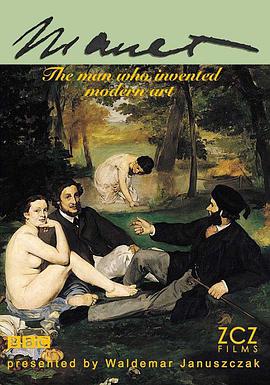
Manet: The Man Who Invented Modern Art (2009)
Manet: The Man Who Invented Modern Art Douban
other title: 马奈:创造现代艺术的男人
Manet is one of the main candidates for the title of the most important artist there has been. As the reluctant father of Impressionism, and the painter of Dejeuner sur l'herbe, he can probably be accused of inventing modern art. But his story is fascinating on many other levels. As a piece of compelling biography, Manet's is the unlikely tale of the stubborn son of the most highly placed judge in France who decides to become an artist and embarrass his father. The resulting family tensions are the stuff of legend. His mother, by the way, was from a family that still supplies Sweden with its royalty. Then there was Manet's dramatic private life, including exotic romantic affairs and a particularly horrible death when, riddled with syphilis and gangrene, Manet had to have his leg amputated. But none of this would matter a jot were it not for the revolutionary art it provoked and coloured. Always cited as the father of the Impressionists, Manet stubbornly refused to show with them, and was careful to maintain an aesthetic distance from Monet, Renoir and the others. While they worshipped him, he looked down on them, preferring to continue his own remarkable departure from the traditional ways of art. The scandalous paintings with which he made his reputation - the outrageously sexy Olympia, the relentlessly paraphrased Dejeuner sur l'herbe - are the most totemic images in French 19th-century art. And the story of how Manet was rejected from the official salon, and ended up instigating the Salon des Refuses, can be understood as the epoch's key cultural event. Using the life of Manet as his narrative arch, Waldemar Januszczak tells the story of a complex and difficult man who started a revolution that continues to rumble on today.