Cambridge University Press — Publisher (5337)

Book

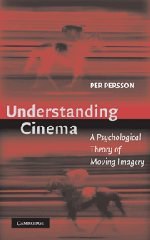
Understanding Cinema
Douban
Per Persson publishing house: 劍橋大學出版社 2003 - 7
Understanding Cinema, first published in 2003, analyzes the moving imagery of film and television from a psychological perspective. Per Persson argues that spectators perceive, think, apply knowledge, infer, interpret, feel and make use of knowledge, assumptions, expectations and prejudices when viewing and making sense of film. Drawing psychology and anthropology, he explains how close-ups, editing conventions, character psychology and other cinematic techniques work, and how and why they affect the spectator. This study integrates psychological and culturalist approaches to meanings and reception. Anchoring the discussion in concrete examples from early and contemporary cinema, Understanding Cinema also analyzes the design of cinema conventions and their stylistic transformations through the evolution of film.

Book

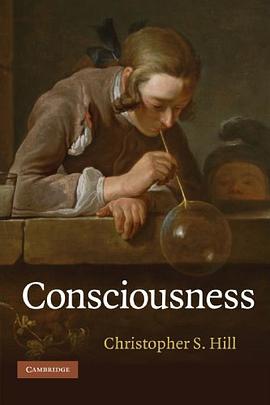
Consciousness
Douban
Christopher S. Hill publishing house: 劍橋大學出版社 2009 - 11
This book presents a novel and comprehensive theory of consciousness. The initial chapter distinguishes six main forms of consciousness and sketches an account of each one. Later chapters focus on phenomenal consciousness, consciousness of, and introspective consciousness. In discussing phenomenal consciousness, Hill develops the representational theory of mind in new directions, arguing that all awareness involves representations, even awareness of qualitative states like pain. He then uses this view to undercut dualistic accounts of qualitative states. Other topics include visual awareness, visual appearances, emotional qualia, and meta-cognitive processing. This important work will interest a wide readership of students and scholars in philosophy of mind and cognitive science.

Book

Must We Mean What We Say?
Douban
Stanley Cavell publishing house: 劍橋大學出版社 2002 - 11
Reissued with an additional preface to sit alongside the volume on Stanley Cavell in Contemporary Philosophy in Focus this famous collection of essays covers a remarkably wide range of philosophical issues (there are essays on Wittgenstein, Austin, Kierkegaard, and the philosophy of language) and extends beyond philosophy into discussions of music and drama.

Book

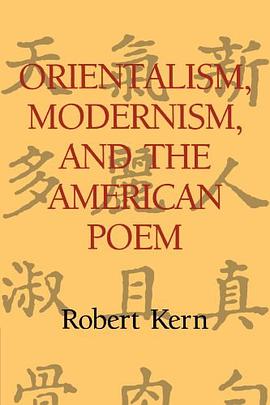
Orientalism, Modernism, and the American Poem
Douban
Robert Kern publishing house: 劍橋大學出版社 2009 - 3
This is a critical and historical interpretation of 'Oriental' influences on American modernist poetry. Kern equates Fenollosa and Pound's 'discovery' of Chinese writing with the American pursuit of a natural language for poetry, what Emerson had termed the 'language of nature'. This language of nature is here shown to be a mythic conception continuous with the Renaissance idea of the language of Adam - a language lacking any difference between what it is and what it means. Through analysing and contextualising the nineteenth-century works of Ralph Waldo Emerson and Ernest Fenollosa and the twentieth-century creations of Ezra Pound and Gary Snyder, Kern sheds light on the three contemporary nexuses of his search: the cultural study of Orientalism and the West, the evolution of Indo-European linguistic theory, and the intellectual tradition of American modernist poetry.

Book

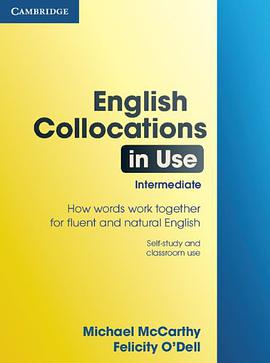
English Collocations in Use
English Collocations in Use Douban Goodreads
Michael McCarthy / Felicity O'Dell publishing house: 劍橋大學出版社 2005 - 10 other title: English Collocations in Use Intermediate
This book presents and practises hundreds of collocations in typical contexts and is ideal for intermediate level students and above who want to take their English to the next level. A good knowledge of collocations (typical word combinations) is essential for fluent and natural-sounding English. Using collocations will improve your style of written and spoken English, and knowledge of collocations is often tested in examinations such as Cambridge FCE, CAE, CPE and IELTS. Learning correct word combinations will also help you avoid common learner errors. English Collocations in Use presents and practises hundreds of collocations in typical contexts. It is ideal for students at good intermediate level and above.

Book

Religion after Metaphysics
Douban
Wrathall, Mark A. 编 publishing house: 劍橋大學出版社 2004 - 1
How should we understand religion, and what place should it hold, in an age in which metaphysics has come into disrepute? The metaphysical assumptions which supported traditional theologies are no longer widely accepted, but it is not clear how this 'end of metaphysics' should be understood, nor what implications it ought to have for our understanding of religion. At the same time there is renewed interest in the sacred and the divine in disciplines as varied as philosophy, psychology, literature, history, anthropology, and cultural studies. In this volume, leading philosophers in the United States and Europe address the decline of metaphysics and the space which this decline has opened for non-theological understandings of religion. The contributors include Richard Rorty, Charles Taylor, Jean-Luc Marion, Gianni Vattimo, Hubert Dreyfus, Robert Pippin, John Caputo, Adriaan Peperzak, Leora Batnitzky, and Mark Wrathall.

Book

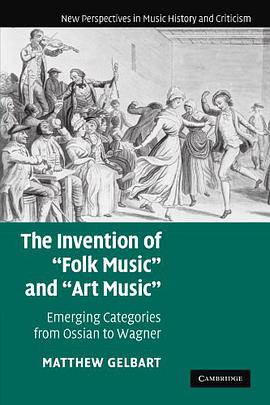
The Invention of 'Folk Music' and 'Art Music'
Douban
Matthew Gelbart publishing house: 劍橋大學出版社 2011 - 3
We tend to take for granted the labels we put to different forms of music. This study considers the origins and implications of the way in which we categorize music. Whereas earlier ways of classifying music were based on its different functions, for the past two hundred years we have been obsessed with creativity and musical origins, and classify music along these lines. Matthew Gelbart argues that folk music and art music became meaningful concepts only in the late eighteenth and early nineteenth centuries, and only in relation to each other. He examines how cultural nationalism served as the earliest impetus in classifying music by origins, and how the notions of folk music and art music followed - in conjunction with changing conceptions of nature, and changing ideas about human creativity. Through tracing the history of these musical categories, the book confronts our assumptions about different kinds of music.

Book

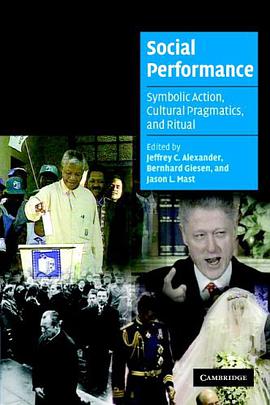
Social Performance
Douban
Alexander, Jeffrey C.; Mast, Jason L.; Giesen, Bernhard publishing house: 劍橋大學出版社 2006 - 6
Jeffrey C. Alexander brings together new and leading contributors to make a powerful and coherently argued case for a new direction in cultural sociology, one that focuses on the intersection between performance, ritual and social action. Performance has always been used by sociologists to understand the social world but this volume offers the first systematic analytical framework based on the performance metaphor to explain large-scale social and cultural processes. From September 11, to the Clinton/Lewinsky affair, to the role of the South African Truth and Reconciliation Commission, Social Performance draws on recent work in performative theory in the humanities and in cultural studies to offer a novel approach to the sociology of culture. Inspired by the theories of Austin, Derrida, Durkheim, Goffman, and Turner, this is a path-breaking volume that makes a major contribution to the field. It will appeal to scholars and students alike.

Book

The Young Derrida and French Philosophy, 1945-1968
Douban
Edward Baring publishing house: 劍橋大學出版社 2011 - 10
In this powerful new study Edward Baring sheds fresh light on Jacques Derrida, one of the most influential yet controversial intellectuals of the twentieth century. Reading Derrida from a historical perspective and drawing on new archival sources, The Young Derrida and French Philosophy shows how Derrida's thought arose in the closely contested space of post-war French intellectual life, developing in response to Sartrian existentialism, religious philosophy and the structuralism that found its base at the Ecole Normale Superieure. In a history of the philosophical movements and academic institutions of post-war France, Baring paints a portrait of a community caught between humanism and anti-humanism, providing a radically new interpretation of the genesis of deconstruction and of one of the most vibrant intellectual moments of modern times.

Book

Distant Suffering
Douban
Luc Boltanski translator: Graham D. Burchell publishing house: 劍橋大學出版社 1999 - 5
Distant Suffering, first published in 1999, examines the moral and political implications for a spectator of the distant suffering of others as presented through the media. What are the morally acceptable responses to the sight of suffering on television, for example, when the viewer cannot act directly to affect the circumstances in which the suffering takes place? Luc Boltanski argues that spectators can actively involve themselves and others by speaking about what they have seen and how they were affected by it. Developing ideas in Adam Smith's moral theory, he examines three rhetorical 'topics' available for the expression of the spectator's response to suffering: the topics of denunciation and of sentiment and the aesthetic topic. The book concludes with a discussion of a 'crisis of pity' in relation to modern forms of humanitarianism. A possible way out of this crisis is suggested which involves an emphasis and focus on present suffering.

Book

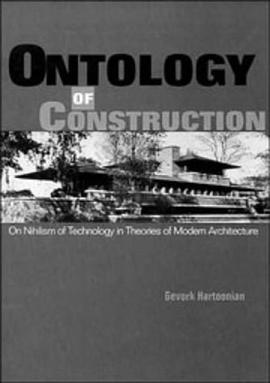
Ontology of Construction
Douban
Gevork Hartoonian publishing house: 劍橋大學出版社 1997
Ontology of Construction, first published in 1994, explores theories of construction in modern architecture, with a particular focus on the relationship between nihilism of technology and architecture. Providing an historical context to the concept of making, the essays collected in this volume articulate the implications of technology in works by such architects as Le Corbusier, Frank Lloyd Wright, Adolf Loos and Mies van der Rohe. Also provided is an interpretation of Gottfried Semper's discourse on the Tectonic and the relationship between architecture and other crafts. Emphasising 'fabrication' as a critical theme for contemporary architectural theory and practice, Ontology of Construction is a provocative contribution to the current debate in these areas.

Book

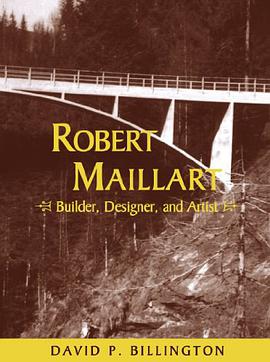
Robert Maillart
Douban
David P. Billington publishing house: 劍橋大學出版社 2008 - 3
This comprehensive biography traces the life and works of Robert Maillart, one of the most important engineers and designers of the twentieth century. His career developed around a central issue of modern technological society: the debate between two antithetical views of engineering opposing applied science, which relied on general mathematical theories for understanding structures against design, which Maillart championed. Maillart considered structures not merely works of utility but also as works of art. As utilitarian objects, he created a series of innovations of lasting significance. Aesthetically, Maillart shaped his three innovations in concrete to create surprising and often stunning new forms. Providing an analysis of these innovations, this biography also connects Maillart's aesthetic ideas with the private and professional context in which he worked.

Book

The Phenomenology of Spirit
Douban Goodreads
Georg Wilhelm Fredrich Hegel translator: Michael Baur publishing house: 劍橋大學出版社 2018 - 2
Hegel's Phenomenology of Spirit (1807) is one of the most influential texts in the history of modern philosophy. In it, Hegel proposed an arresting and novel picture of the relation of mind to world and of people to each other. Like Kant before him, Hegel offered up a systematic account of the nature of knowledge, the influence of society and history on claims to knowledge, and the social character of human agency itself. A bold new understanding of what, after Hegel, came to be called 'subjectivity' arose from this work, and it was instrumental in the formation of later philosophies, such as existentialism, Marxism, and American pragmatism, each of which reacted to Hegel's radical claims in different ways. This edition offers a new translation, an introduction, and glossaries to assist readers' understanding of this central text, and will be essential for scholars and students of Hegel.

Book

Derrida, Heidegger, Blanchot
Douban
Timothy Clark publishing house: 劍橋大學出版社 2008 - 1
Jacques Derrida is undoubtedly one of the foremost figures in the development of twentienth-century literary theory. The school of 'deconstruction' that has grown out of his work has been either absorbed into the corpus of modern literary theory, or criticized for its departures from the original texts of Derrida in whose name it is practised. Timothy Clark's innovative book traces instead sources of Derrida's practice of 'literature' as a form of philosophical thinking, in the work of Heidegger and Blanchot. It offers a welcome stylistic clarity in a field beleaguered by its philosophical and linguistic difficulty. Clark gives close readings of key texts including Heidegger's Conversation on a Country Path, Blanchot's L'attente l'oubli, and Derrida's Pas and Signsponge, and widens the scope of his discussion of philosophical cultivation of 'literary' forms to include in addition the issues of creativity, influence and responsibility as they appear in the work of Lyotard and Levinas.

Book

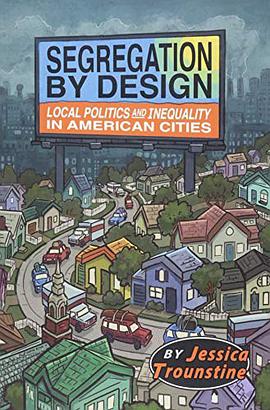
Segregation by Design
Douban Goodreads
Jessica Trounstine publishing house: 劍橋大學出版社 2018 - 11
Segregation by Design draws on more than 100 years of quantitative and qualitative data from thousands of American cities to explore how local governments generate race and class segregation. Starting in the early twentieth century, cities have used their power of land use control to determine the location and availability of housing, amenities (such as parks), and negative land uses (such as garbage dumps). The result has been segregation - first within cities and more recently between them. Documenting changing patterns of segregation and their political mechanisms, Trounstine argues that city governments have pursued these policies to enhance the wealth and resources of white property owners at the expense of people of color and the poor. Contrary to leading theories of urban politics, local democracy has not functioned to represent all residents. The result is unequal access to fundamental local services - from schools, to safe neighborhoods, to clean water.

Book

Hamlet
The Tragedy of Hamlet, Prince of Denmark Goodreads Skybridge
★ 8.7 11 ratings
William Shakespeare publishing house: Cambridge University Press 2005 - 8
Among Shakespeare's plays, "Hamlet" is considered by many his masterpiece. Among actors, the role of Hamlet, Prince of Denmark, is considered the jewel in the crown of a triumphant theatrical career. Now Kenneth Branagh plays the leading role and co-directs a brillant ensemble performance. Three generations of legendary leading actors, many of whom first assembled for the Oscar-winning film "Henry V", gather here to perform the rarely heard complete version of the play. This clear, subtly nuanced, stunning dramatization, presented by The Renaissance Theatre Company in association with "Bbc" Broadcasting, features such luminaries as Sir John Gielgud, Derek Jacobi, Emma Thompson and Christopher Ravenscroft. It combines a full cast with stirring music and sound effects to bring this magnificent Shakespearen classic vividly to life. Revealing new riches with each listening, this production of "Hamlet" is an invaluable aid for students, teachers and all true lovers of Shakespeare - a recording to be treasured for decades to come.

Book

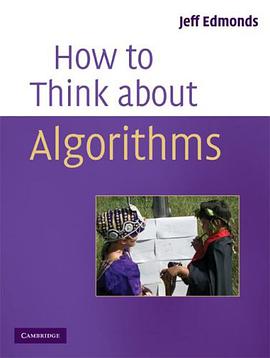
How to Think About Algorithms
Douban
Jeff Edmonds publishing house: 劍橋大學出版社 2008 - 5
HOW TO THINK ABOUT ALGORITHMS There are many algorithm texts that provide lots of well-polished code and proofs of correctness. Instead, this one presents insights, notations, and analogies to help the novice describe and think about algorithms like an expert. It is a bit like a carpenter studying hammers instead of houses. Jeff Edmonds provides both the big picture and easy step-by-step methods for developing algorithms, while avoiding the comon pitfalls. Paradigms such as loop invariants and recursion help to unify a huge range of algorithms into a few meta-algorithms. Part of the goal is to teach students to think abstractly. Without getting bogged down in formal proofs, the book fosters deeper understanding so that how and why each algorithm works is trans- parent. These insights are presented in a slow and clear manner accessible to second- or third-year students of computer science, preparing them to find on their own innovative ways to solve problems. Abstraction is when you translate the equations, the rules, and the under- lying essences of the problem not only into a language that can be commu- nicated to your friend standing with you on a streetcar, but also into a form that can percolate down and dwell in your subconscious. Because, remem- ber, it is your subconscious that makes the miraculous leaps of inspiration, not your plodding perspiration and not your cocky logic. And remember, unlike you, your subconscious does not understand Java code. Bookmarks Cover Half-title Title Copyright CONTENTS PREFACE Introduction PART ONE: Iterative Algorithms and Loop Invariants 1 Iterative Algorithms: Measures of Progress and Loop Invariants 1.1 A Paradigm Shift: A Sequence of Actions vs. a Sequence of Assertions 1.2 The Steps to Develop an Iterative Algorithm 1.3 More about the Steps 1.4 Different Types of Iterative Algorithms 1.5 Typical Errors 1.6 Exercises 2 Examples Using More-of-the-Input Loop Invariants 2.1 Coloring the Plane 2.2 Deterministic Finite Automaton 2.3 More of the Input vs. More of the Output 3 Abstract Data Types 3.1 Specifications and Hints at Implementations 3.2 Link List Implementation 3.3 Merging with a Queue 3.4 Parsing with a Stack 4 Narrowing the Search Space: Binary Search 4.1 Binary Search Trees 4.2 Magic Sevens 4.3 VLSI Chip Testing 4.4 Exercises 5 Iterative Sorting Algorithms 5.1 Bucket Sort by Hand 5.2 Counting Sort (a Stable Sort) 5.3 Radix Sort 5.4 Radix Counting Sort 6 Euclid’s GCD Algorithm 7 The Loop Invariant for Lower Bounds PART TWO: Recursion 8 Abstractions, Techniques, and Theory 8.1 Thinking about Recursion 8.2 Looking Forward vs. Backward 8.3 With a Little Help from Your Friends 8.4 The Towers of Hanoi 8.5 Checklist for Recursive Algorithms 8.6 The Stack Frame 8.7 Proving Correctness with Strong Induction 9 Some Simple Examples of Recursive Algorithms 9.1 Sorting and Selecting Algorithms 9.2 Operations on Integers 9.3 Ackermann's Function 9.4 Exercises 10 Recursion on Trees 10.1 Tree Traversals 10.2 Simple Examples 10.3 Generalizing the Problem Solved 10.4 Heap Sort and Priority Queues 10.5 Representing Expressions with Trees 11 Recursive Images 11.1 Drawing a Recursive Image from a Fixed Recursive and a Base Case Image 11.2 Randomly Generating a Maze 12 Parsing with Context-Free Grammars PART THREE: Optimization Problems 13 Definition of Optimization Problems 14 Graph Search Algorithms 14.1 A Generic Search Algorithm 14.2 Breadth-First Search for Shortest Paths 14.3 Dijkstra's Shortest-Weighted-Path Algorithm 14.4 Depth-First Search 14.5 Recursive Depth-First Search 14.6 Linear Ordering of a Partial Order 14.7 Exercise 15 Network Flows and Linear Programming 15.1 A Hill-Climbing Algorithm with a Small Local Maximum 15.2 The Primal…Dual Hill-Climbing Method 15.3 The Steepest-Ascent Hill-Climbing Algorithm 15.4 Linear Programming 15.5 Exercises 16 Greedy Algorithms 16.1 Abstractions, Techniques, and Theory 16.2 Examples of Greedy Algorithms 16.2.1 Example: The Job/Event Scheduling Problem 16.2.2 Example: The Interval Cover Problem 16.2.3 Example: The Minimum-Spanning-Tree Problem 16.3 Exercises 17 Recursive Backtracking 17.1 Recursive Backtracking Algorithms 17.2 The Steps in Developing a Recursive Backtracking 17.3 Pruning Branches 17.4 Satisfiability 17.5 Exercises 18 Dynamic Programming Algorithms 18.1 Start by Developing a Recursive Backtracking 18.2 The Steps in Developing a Dynamic Programming Algorithm 18.3 Subtle Points 18.3.1 The Question for the Little Bird 18.3.2 Subinstances and Subsolutions 18.3.3 The Set of Subinstances 18.3.4 Decreasing Time and Space 18.3.5 Counting the Number of Solutions 18.3.6 The New Code 19 Examples of Dynamic Programs 19.1 The Longest-Common-Subsequence Problem 19.2 Dynamic Programs as More-of-the-Input Iterative Loop Invariant Algorithms 19.3 A Greedy Dynamic Program: The Weighted Job/Event Scheduling Problem 19.4 The Solution Viewed as a Tree: Chains of Matrix Multiplications 19.5 Generalizing the Problem Solved: Best AVL Tree 19.6 All Pairs Using Matrix Multiplication 19.7 Parsing with Context-Free Grammars 19.8 Designing Dynamic Programming Algorithms via Reductions 20 Reductions and NP-Completeness 20.1 Satisfiability Is at Least as Hard as Any Optimization Problem 20.2 Steps to Prove NP-Completeness 20.3 Example: 3-Coloring Is NP-Complete 20.4 An Algorithm for Bipartite Matching Using the Network Flow Algorithm 21 Randomized Algorithms 21.1 Using Randomness to Hide the Worst Cases 21.2 Solutions of Optimization Problems with a Random Structure PART FOUR: Appendix 22 Existential and Universal Quantifiers 23 Time Complexity 23.1 The Time (and Space) Complexity of an Algorithm 23.2 The Time Complexity of a Computational Problem 24 Logarithms and Exponentials 25 Asymptotic Growth 25.1 Steps to Classify a Function 25.2 More about Asymptotic Notation 26 Adding-Made-Easy Approximations 26.1 The Technique 26.2 Some Proofs for the Adding-Made-Easy Technique 27 Recurrence Relations 27.1 The Technique 27.2 Some Proofs 28 A Formal Proof of Correctness PART FIVE: Exercise Solutions Chapter 1. Iterative Algorithms: Measures of Progress and Loop Invariants Chapter 2. Examples UsingMore-of-the-Input Loop Invariant Chapter 3. Abstract Data Types Chapter 4. Narrowing the Search Space: Binary Search Chapter 6. Euclid’s GCD Algorithm Chapter 7. The Loop Invariant for Lower Bounds Chapter 8. Abstractions, Techniques, and Theory Chapter 9. Some Simple Examples of Recursive Algorithms Chapter 10. Recursion on Trees Chapter 11. Recursive Images Chapter 12. Parsingwith Context-Free Grammars Chapter 14. Graph Search Algorithms Chapter 15. Network Flows and Linear Programming Chapter 16: Greedy Algorithms Chapter 17. Recursive Backtracking Chapter 18. Dynamic Programming Algorithms Chapter 19. Examples of Dynamic Programs Chapter 20. Reductions and NP-Completeness Chapter 22. Existential and Universal Quantifiers Chapter 23. Time Complexity Chapter 24. Logarithms and Exponentials Chapter 25. Asymptotic Growth Chapter 26. Adding-Made-Easy Approximations Chapter 27. Recurrence Relations CONCLUSION INDEX