Cambridge University Press — Publisher (5338)


Book
From Calculus to Cohomology
DoubanDe Rham cohomology is the cohomology of differential forms. This book offers a self-contained exposition to this subject and to the theory of characteristic classes from the curvature point of view. It requires no prior knowledge of the concepts of algebraic topology or cohomology. The first 10 chapters study cohomology of open sets in Euclidean space, treat smooth manifolds and their cohomology and end with integration on manifolds. The last 11 chapters cover Morse theory, index of vector fields, Poincare duality, vector bundles, connections and curvature, Chern and Euler classes, and Thom isomorphism, and the book ends with the general Gauss-Bonnet theorem. The text includes well over 150 exercises, and gives the background necessary for the modern developments in gauge theory and geometry in four dimensions, but it also serves as an introductory course in algebraic topology. It will be invaluable to anyone who wishes to know about cohomology, curvature, and their applications.
Book
Competitive Authoritarianism
DoubanReview
"This landmark contribution to the comparative study of political regimes will be widely read and cited. In an epic act of theoretical synthesis, Levitsky and Way weave careful empirical research on three-dozen countries across five world regions into a convincing account of patterns of regime change. In distinguishing democratic transitions from a range of authoritarian outcomes, they reach nuanced conclusions about the relative explanatory influence of international factors (linkage and leverage) and domestic power politics (rulers versus oppositions). Above all, they help us understand how autocrats learn to live with elections. Strongly recommended."
- Michael Bratton, University Distinguished Professor of Political Science and African Studies, Michigan State University
"This is a brilliant and truly pathbreaking book that should be closely studied by any serious student of democracy or comparative politics. Its precise conceptualization, striking theory, rigorous comparative methodology, and breathtaking range of case study evidence distinguish it as the most important study of political regimes and regime transitions in a generation."
- Larry Diamond, Stanford University
"Competitive Authoritarianism establishes Steven Levitsky and Lucan Way as the Juan Linz and Alfred Stepan of their generation. In the tradition of Linz and Stepan, Levitsky and Way offer an abundance of theoretical and conceptual innovation as well as a trove of empirical material drawn from broad swaths of the globe. The book is as elegantly written as it is theoretically creative. It is written by and for professional social scientists; yet undergraduates and the attentive public will be able to digest the book's central argument and findings with ease. This is what social science should look like."
- M. Steven Fish, University of California, Berkeley
"This is the most anticipated book in comparative politics in more than a decade. Written in a single authorial voice, Levitsky and Way's arguments about the distinct trajectories of competitive authoritarian regimes are theoretically grounded, conceptually nuanced, geographically wide ranging, and empirically well supported. I expect this book to have a major impact on the field for many years to come."
- Marc Morjé Howard, Georgetown University
"Levitsky and Way's book makes two major contributions to research on political regime change. First, by developing the notion of competitive authoritarianism, it engages in a sustained effort to provide a clear and theoretically fertile conception of a particular subset of political regimes belonging to the vague class of 'hybrid' regimes. Second, it offers the as yet most sophisticated and subtle effort to interweave domestic and international explanations of political regime change with provocative implications for run-of-the-mill theories, whether based on economic development, inequality, or institutions."
- Herbert Kitschelt, Duke University
"Regimes that blend meaningful elections and illicit incumbent advantage are not merely resting points on the road to democracy; Levitsky and Way guide us along the multiple paths these regimes can take and provide powerful reasoning to explain why nations follow these distinct paths. This deeply insightful analysis of an important subset of post-Cold War regimes is conceptually innovative and precise, empirically ambitious, and theoretical agile, moving fluidly between international and domestic causes of regime dynamics. Read it to understand the dynamics of contemporary hybrid regimes; then read it again to appreciate its many lessons for our general understanding of regime change."
- David Waldner, University of Virginia
Product Description
Competitive authoritarian regimes - in which autocrats submit to meaningful multiparty elections but engage in serious democratic abuse - proliferated in the post-Cold War era. Based on a detailed study of 35 cases in Africa, Asia, Latin America, and post-communist Eurasia, this book explores the fate of competitive authoritarian regimes between 1990 and 2008. It finds that where social, economic, and technocratic ties to the West were extensive, as in Eastern Europe and the Americas, the external cost of abuse led incumbents to cede power rather than crack down, which led to democratization. Where ties to the West were limited, external democratizing pressure was weaker and countries rarely democratized. In these cases, regime outcomes hinged on the character of state and ruling party organizations. Where incumbents possessed developed and cohesive coercive party structures, they could thwart opposition challenges, and competitive authoritarian regimes survived; where incumbents lacked such organizational tools, regimes were unstable but rarely democratized.
Book
Within the Human Realm
DoubanThis book is a study of the poetry of Huang Zunxian, one of the most famous authors of late nineteenth-century China. The first part consists of a detailed biography outlining Huang's literary and political career. This is followed by a critical discussion of Huang's poetry, including such topics as his theory of literature, his traditional verse, his highly original poetry on foreign lands, his political satire and his scientific verse. The book concludes with a generous sampling of his poetry in translation.
Book
Chopsticks
DoubanChopsticks have become a quintessential part of the Chinese, Japanese,
Korean and Vietnamese culinary experience across the globe, with more
than one fifth of the world’s population using them daily to eat. In this
vibrant, highly original account of the history of chopsticks, Q. Edward
Wang charts their evolution from a simple eating implement in ancient
times to their status as a much more complex, cultural symbol today.
Opening in the Neolithic Age, at the first recorded use of chopsticks,
the book surveys their use through Chinese history, before exploring
their transmission in the fifth century to other parts of Asia, including
Japan, Korea, Vietnam and Mongolia. Calling upon a striking selection
of artwork, the author illustrates how chopstick use has influenced Asian
cuisine, and how, in turn, the cuisine continues to influence chopstick
use, both in Asia and across the globe.

Book
剑桥雅思考试全真试题集 6
Douban《新东方•剑桥雅思考试全真试题集6》是剑桥大学出版社出版的。剑桥大学考试委员会的各类考试(包括雅思)历届考试真题的唯一官方出版社。《CAMBRIDGE IELTS(附光盘6)》所包含的最新雅思全真试题资料由剑桥大学考试委员会提供,是各类雅思考生备考过程中必不可少的参考书。《CAMBRIDGE IELTS(附光盘6)》由以下内容构成:•4套完整的学术类雅思全真试题•2套培训类雅思阅读与写作全真试题•各种题型的全面介绍以及剑桥大学考试委员会采用的评分系统解析•非常适合学生自学的习题解答和听力录音文本•可影印使用的答题卡.方便考生体验真实的考试模式•2张听力录音光盘

Book
The Life of Richard Strauss
DoubanRichard Strauss saw an empire come and go, survived two world wars, witnessed the rise and fall of the Weimar Republic, endured the period of National Socialism, and died the year that Germany was officially divided into two separate states. All the while he enjoyed a successful career as composer, as conductor of international stature, as organizer for the rights of composers, and as colleague of and collaborator with some of the most important composers, writers, and artists of his day. This biography covers Strauss's early musical development, his emergence as a tone poet in the late nineteenth century, his turn to the stage at the beginning of the twentieth century, the successes and failures of the post-World War I era, the turbulent 1930s, and the period of the Second World War and its aftermath.
Book
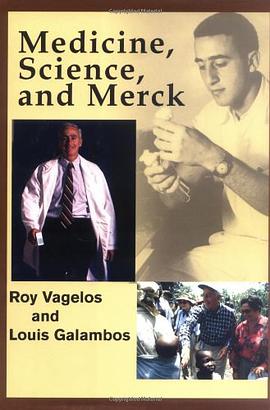
Medicine, Science and Merck
DoubanIn Medicine, Science, and Merck, the authors trace the careers of a son of Greek immigrants as he mastered three professions and ultimately became the Chief Executive Officer of America's most admired corporation - the multinational, pharmaceutical giant, Merck & Co., Inc. As the authors show, there was hope even for a wise-cracking kid living through the hard times of the 1930s. Education brought out the scholar in Roy Vagelos, who left his family's small restaurant to attend the University of Pennsylvania, Columbia's Medical School, and Massachusetts General Hospital in Boston. At NIH, he mastered biochemistry; at Washington University he became a distinguished science administrator; and at Merck, he headed the pharmaceutical industry's most innovative laboratory and then became its CEO. Throughout, he never lost touch with his family values, his intense desire to help others, or his faith in the partnership principle and the competition that makes it work.

Book
Superstring Theory
DoubanIn recent years, superstring theory has emerged as a promising approach to reconciling general relativity with quantum mechanics and unifying the fundamental interactions. Problems that have seemed insuperable in previous approaches take on a totally new character in the context of superstring theory, and some of them have been overcome. Interest in the subject has greatly increased following a succession of exciting recent developments. This two-volume book attempts to meet the need for a systematic exposition of superstring theory and its applications accessible to as wide an audience as possible.

Book
English Society, 1660-1832 2ed
Douban GoodreadsThis is a revised and extensively rewritten edition of a work first published in 1985 as English Society 1688-1832. That book arrived at the opening of a new phase in English historiography, which questioned much of the received picture of English society as secular, modernising, contractarian, and middle class; it began the recovery of the 'long eighteenth century', the period which saw a form of state defined by the close relationship of monarchy, aristocracy and church. In particular, it placed religion at the centre of social and intellectual life, and used ecclesiastical history to illuminate many historical themes more commonly examined in a secular framework. In its updated form, this book reinforces these theses with new evidence, which extends its arguments into fresh areas of enquiry.

Book
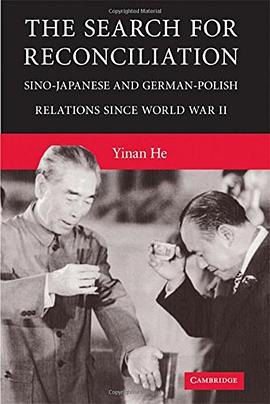
Exploratory Social Network Analysis with Pajek
Exploratory Social Network Analysis with Pajek (Structural Analysis in the Social Sciences) Douban GoodreadsThis is the first textbook on social network analysis integrating theory, applications, and professional software for performing network analysis (Pajek). Pajek software and datasets for all examples are freely available, so the reader can learn network analysis by doing it. In addition, each chapter offers case studies for practicing network analysis. The book will enable the reader to gain the knowledge, skills, and tools to apply social network analysis in all social sciences, ranging from anthropology and sociology to business administration and history.
========
Table of contents
Part I. Fundamentals
1. Looking for social structure
2. Attributes and relations
Part II. Cohesion
3. Cohesive subgroups
4. Sentiments and friendship
5. Affiliations
Part III. Brokerage
6. Center and periphery
7. Brokers and bridges
8. Diffusion
Part IV. Ranking
9. Prestige
10. Ranking
11. Genealogies and citations
Part V. Roles
12. Blockmodels
Appendix 1. Getting started with Pajek
Appendix 2. Exporting visualizations
Appendix 3. Shortcur Key Combinations
Book
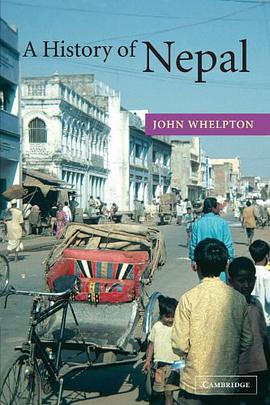
A History of Nepal
DoubanWhile John Whelpton's history of Nepal focuses on the period since the overthrow of the Rana family autocracy in 1950-51, the early chapters are devoted to the origins of the kingdom and the evolving relations of its diverse peoples. Whelpton portrays a country of extraordinary contrasts, whose history has been buffeted constantly by its neighbors, China and India. Economic and political turmoil over the last fifty years came to a climax with the massacre of the royal family in 2001, when the country erupted into civil war. This book is the most comprehensive and accessible English-language one-volume history of Nepal. John Whelpton, who works as a teacher in Hong Kong, is an historian and linguist. He has worked and traveled extensively in Nepal, and has written numerous articles and books on the subject. These include Nationalism & Ethnicity in a Hindu Kingdom: The Politics and Culture of Contemporary Nepal (Routledge, 1997), and Kings, Soldiers and Priests: Nepalese Politics and the Rise of Jang Bahadur Rana, 1830-1857 (South Asia Books, 1992).

Book
The Theft of History
DoubanProfessor Jack Goody builds on his own previous work to extend further his highly influential critique of what he sees as the pervasive eurocentric or occidentalist biases of so much western historical writing. Goody also examines the consequent 'theft' by the West of the achievements of other cultures in the invention of (notably) democracy, capitalism, individualism, and love. The Theft of History discusses a number of theorists in detail, including Marx, Weber and Norbert Elias, and engages with critical admiration western historians like Fernand Braudel, Moses Finlay and Perry Anderson. Major questions of method are raised, and Goody proposes a new comparative methodology for cross-cultural analysis, one that gives a much more sophisticated basis for assessing divergent historical outcomes, and replaces outmoded simple differences between East and West. The Theft of History will be read by an unusually wide audience of historians, anthropologists and social theorists.

Book
The Bulldozer in the Countryside
DoubanThe Bulldozer in the Countryside is the first scholarly history of efforts to reduce the environmental costs of suburban development in the United States. The book offers a new account of two of the most important historical events in the period since World War II--the mass migration to the suburbs and the rise of the environmental movement. This work offers a valuable historical perspective for scholars, professionals, and citizens interested in the issue of suburban sprawl.
Book
Situated Learning
Douban GoodreadsIn this important theoretical treatist, Jean Lave, anthropologist, and Etienne Wenger, computer scientist, push forward the notion of situated learning - that learning is fundamentally a social process. The authors maintain that learning viewed as situated activity has as its central defining characteristic a process they call legitimate peripheral participation (LPP). Learners participate in communities of practitioners, moving toward full participation in the sociocultural practices of a community. LPP provides a way to speak about crucial relations between newcomers and old-timers and about their activities, identities, artefacts, knowledge and practice. The communities discussed in the book are midwives, tailors, quartermasters, butchers, and recovering alcoholics, however, the process by which participants in those communities learn can be generalised to other social groups.
Book
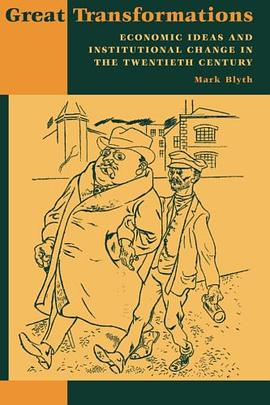
Great Transformations
DoubanMark Blyth argues that economic ideas are powerful political tools as used by domestic groups in order to effect change since whoever defines what the economy is, what is wrong with it, and what would improve it, has a profound political resource in their possession. Blyth analyzes the 1930s and 1970s, two periods of deep-seated institutional change that characterized the twentieth century. Viewing both periods of change as part of the same dynamic, Blyth argues that the 1930s labor reacted against the exigencies of the market and demanded state action to mitigate the market's effects by "embedding liberalism" and the 1970s, those who benefited least from such "embedding" institutions, namely business, reacted against these constraints and sought to overturn that institutional order. In Great Transformations, Blyth demonstrates the critical role economic ideas played in making institutional change possible and he rethinks the relationship between uncertainty, ideas, and interests on how, and under what conditions, institutional change takes place. Mark Blyth is an assistant professor of political science at the Johns Hopkins University specializing in comparative political economy. He has taught at Columbia University, and at the University of Birmingham, UK. Blyth is a member of the editorial board of the Review of International Political Economy.
Book
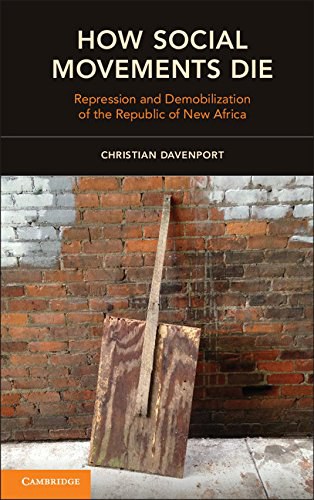
How Social Movements Die
DoubanHow do social movements die? Some explanations highlight internal factors like factionalization, whereas others stress external factors like repression. Christian Davenport offers an alternative explanation where both factors interact. Drawing on organizational, as well as individual-level, explanations, Davenport argues that social movement death is the outgrowth of a coevolutionary dynamic whereby challengers, influenced by their understanding of what states will do to oppose them, attempt to recruit, motivate, calm, and prepare constituents while governments attempt to hinder all of these processes at the same time. Davenport employs a previously unavailable database that contains information on a black nationalist/secessionist organization, the Republic of New Africa, and the activities of authorities in the U.S. city of Detroit and state and federal authorities.
Book
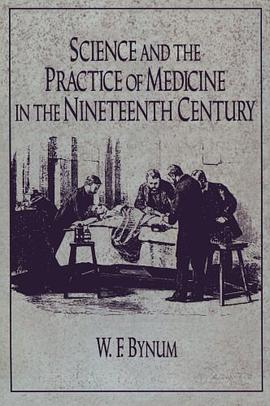
Science and the Practice of Medicine in the Nineteenth Century
DoubanPrior to the nineteenth century, the practice of medicine in the Western world was as much art as science. But, argues W. F. Bynum, 'modern' medicine as practiced today is built upon foundations that were firmly established between 1800 and the beginning of World War I. He demonstrates this in terms of concepts, institutions, and professional structures that evolved during this crucial period, applying both a more traditional intellectual approach to the subject and the newer social perspectives developed by recent historians of science and medicine. In a wide-ranging survey, Bynum examines the parallel development of biomedical sciences such as physiology, pathology, bacteriology, and immunology, and of clinical practice and preventive medicine in nineteenth-century Europe and North America. Focusing on medicine in the hospitals, the community, and the laboratory, Bynum contends that the impact of science was more striking on the public face of medicine and the diagnostic skills of doctors than it was on their actual therapeutic capacities.