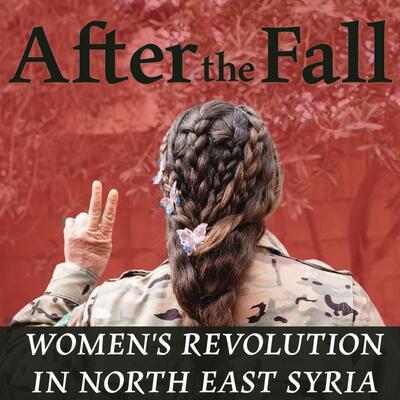
<p>This is one of the best analysis I've seen about recent developments in NE Syria. <a href="https://theirantiimperialismandours.com/2026/02/04/rojava-kurdish-autonomy-self-determination-and-the-hard-problem-of-simple-demographics-an-essay-of-maps/" rel="nofollow" class="ellipsis" title="theirantiimperialismandours.com/2026/02/04/rojava-kurdish-autonomy-self-determination-and-the-hard-problem-of-simple-demographics-an-essay-of-maps/"><span class="invisible">https://</span><span class="ellipsis">theirantiimperialismandours.co</span><span class="invisible">m/2026/02/04/rojava-kurdish-autonomy-self-determination-and-the-hard-problem-of-simple-demographics-an-essay-of-maps/</span></a></p><p>Choice quotes/tldr:</p><p>On the governance decisions by SDF/PYD in Raqqa in the years before the STG offensive in January 2026 and various people's reactions to Raqqa changing hands: "That is a story of its own; the point is that there was a contradiction between a ‘democratic confederalist’ project which by definition is not about territorial conquest, and the long-term rule by the SDF over another people, to the point that discussions about ‘autonomy’ and ‘federalism’ throughout 2025 seemed to assume that the entire 30 percent of Syria ruled by the SDF, with its arbitrary borders, should be the basis of some kind of autonomy or federal unit. Oddly for a project that aims to go beyond the prison of the arbitrary borders of modern states, the rupture of the arbitrary borders of DAANES by an act of Arab self-determination, as the Arab region collapsed into the more natural hands of the Syrian government, has been widely interpreted as a massive violation of Kurdish autonomy!"</p><p>...</p><p>On local democracy: "Of course, for those well-versed in Ocalan thought, this comes as no surprise; the very fact that peoples live interspersed and that there are few regions of homogenous ethnic population means that ‘democratic confederalism’ provides a better basis for minority groups to have their rights than territorial autonomy as such. What this means is that enhanced local ‘autonomy’ is needed, in the sense that local populations, of whatever ethnicity, should have wide-ranging powers over their own political, cultural, education, security and other affairs, while not contradicting the necessity of overriding central powers."</p><p>...</p><p>On the 30 January agreement: "If we look at the current SDF-Government agreement of January 30, while far from ideal in many respects, there are arguably aspects of this that could be built on – or at least, there are many articles of the agreement expressed in a general enough way to be open to interpretation, subject to negotiations of what ‘integration’ means in practice. This is the way a number of prominent SDF/DAANES leaders are interpreting it. For example, Mazloum Abdi claims “the institutions that the Autonomous Administration was managing will remain as they are,” Ilham Ahmed claims the co-chair system will remain, that the YPJ will be included in the new brigades formed for the SDF, and that “education will be reorganized in a way that preserves Kurdish as an official language of instruction,” Fawza Youssef adding that “educational institutions will retain their specific character, with joint committees to be formed to discuss the continuity of the educational process, including curricula and languages of instruction,” while Sipan Hemo claims that “everything—from command structure to deployment centers—has been determined by us,” and that not only the Hasakah governor, but all district governors in Hasakah will be appointed by the SDF."</p><p>...</p><p>On the things lots of the solidarity mvmnt doesn't wanna talk about: "Ironically, the worst thing that happened was that the SDF arrested dozens of Hasakah locals for coming out to welcome the entry of state security forces. A reminder for those decrying the end of ‘radical democracy’ at the hands of a ‘jihadist’ regime that authoritarian practices are not restricted to one side. Indeed, one issue raised by some Kurds opposed to the PYD is that the agreement at state level between the government and SDF may leave unresolved the issue of the democratic rights of Kurdish oppositionists in the SDF-controlled region."</p><p><a href="/tags/syria/" rel="tag">#Syria</a> <a href="/tags/rojava/" rel="tag">#Rojava</a> <a href="/tags/sdf/" rel="tag">#SDF</a> <a href="/tags/daanes/" rel="tag">#DAANES</a></p>
daanes

<p>Neues Starter Pack Kurdistan 💬 </p><p>Hier findest du Accounts, die über <a href="/tags/kurdistan/" rel="tag">#Kurdistan</a> und die Freiheitsbewegung Kurdistans berichten. Von Aktivismus, über Journalismus und Nothilfe bis zu den offiziellen Vertretungen der Demokratischen Selbstverwaltung Nord- und Ostsyriens (DAANES) und den anderen Teilen Kurdistans.</p><p><a href="https://fedidevs.com/s/OTAz/" rel="nofollow"><span class="invisible">https://</span>fedidevs.com/s/OTAz/</a></p><p><a href="/tags/rojava/" rel="tag">#Rojava</a> <a href="/tags/syrien/" rel="tag">#Syrien</a> <a href="/tags/daanes/" rel="tag">#DAANES</a> <a href="/tags/diday/" rel="tag">#diday</a> <a href="/tags/didit/" rel="tag">#didit</a> <a href="/tags/dud/" rel="tag">#dud</a> <a href="/tags/dudgemacht/" rel="tag">#dudgemacht</a> <a href="/tags/neuhier/" rel="tag">#neuhier</a> <a href="/tags/kurdistan/" rel="tag">#Kurdistan</a> <a href="/tags/starterpack/" rel="tag">#StarterPack</a></p>
Edited 63d ago