
Looks like a timely read:<br><br>Predatory Data<br><p>Eugenics in Big Tech and Our Fight for an Independent Future<br></p><a href="https://bookshop.org/p/books/predatory-data-eugenics-in-big-tech-and-our-fight-for-an-independent-future-anita-say-chan/21312207" rel="nofollow" class="ellipsis" title="bookshop.org/p/books/predatory-data-eugenics-in-big-tech-and-our-fight-for-an-independent-future-anita-say-chan/21312207"><span class="invisible">https://</span><span class="ellipsis">bookshop.org/p/books/predatory</span><span class="invisible">-data-eugenics-in-big-tech-and-our-fight-for-an-independent-future-anita-say-chan/21312207</span></a><br><br>There's a nearly straight line from 20th century eugenics to 21st century big data and data science. Google, the bastion of big data, was founded by two Stanford graduate students; Stanford was founded by a eugenicist and instituted eugenics principles. Francis Galton--inventor of the regression analysis that forms the backbone of data science--was "hot or notting" London with a counter hidden in his pocket long before Harvard-age Zuckerberg recuperated the same with the favorite quantification technology of our day, computers.<br><br>"The measured life" is a eugenics concept. All these doohickeys that collect data with the promise of making your body a bit more "fit"? Eugenicist in origin. Eugenics is about "optimizing" the physical "fitness" of people. Apps that help you learn, make you more mentally "fit"? Also have origins in eugenics. Eugenics is also about "optimizing" the mental "fitness" of people. Hence the obsession with IQ.<br><br>This isn't to say you shouldn't take care of your body and mind in whichever ways you want. I do think it's important, though, to periodically reflect on, and ask yourself hard questions about, what's driving those efforts and what the goals really are. Part of understanding why eugenics thinking is resurging so hard and fast in the US is understanding its roots, where that type of thinking comes from. It's also important to reflect on where the apps and devices you use to achieve these goals come from. How many come directly or indirectly from Stanford, which was built by eugenicists to achieve eugenic goals, and its offshoots?<br><br>Trump and Musk are literally repeating themes from Francis Galton's eugenics out in the open now. They're confident they can get away with it without pushback because the ground was laid long ago. But eugenics didn't suddenly become bad again because coarse people started saying the quiet part out loud. It's always been bad thinking, bad science, and bad morality.<br><br><a href="/tags/datascience/" rel="tag">#DataScience</a> <a href="/tags/eugenics/" rel="tag">#eugenics</a> <a href="/tags/bigdata/" rel="tag">#BigData</a> <a href="/tags/fitness/" rel="tag">#fitness</a> <a href="/tags/us/" rel="tag">#US</a> <a href="/tags/iq/" rel="tag">#IQ</a> <a href="/tags/trump/" rel="tag">#Trump</a> <a href="/tags/musk/" rel="tag">#Musk</a><br>
datascience


<p>If anyone reading this is in the Data Analysis industry and would be interested in facilitating some sort of unorthodox remote apprenticeship - even unpaid, if it gets me experience - please do kindly let me know.</p><p>I don't have the self-discipline for self-study right now. In fact I failed out of college twice because I couldn't handle working and attending and that was a traditional classroom experience.</p><p>Yes.. I'm asking for a shortcut. It's desperation, not hubris.</p><p><a href="/tags/getfedihired/" rel="tag">#GetFediHired</a> <a href="/tags/datascience/" rel="tag">#DataScience</a></p>

<p>Fuzzy matching: because sometimes your data just needs a hug, not a perfect match. 🤗📊 <a href="/tags/fuzzymatch/" rel="tag">#FuzzyMatch</a> <a href="/tags/entityresolution/" rel="tag">#EntityResolution</a> <a href="/tags/datascience/" rel="tag">#DataScience</a> <a href="/tags/dataanalytics/" rel="tag">#DataAnalytics</a> <a href="https://matasoft.hr/QTrendControl/index.php/41-matasoft-entity-resolution/123-funny-depiction-of-fuzzy-matching-and-entity-resolution-4" rel="nofollow" class="ellipsis" title="matasoft.hr/QTrendControl/index.php/41-matasoft-entity-resolution/123-funny-depiction-of-fuzzy-matching-and-entity-resolution-4"><span class="invisible">https://</span><span class="ellipsis">matasoft.hr/QTrendControl/inde</span><span class="invisible">x.php/41-matasoft-entity-resolution/123-funny-depiction-of-fuzzy-matching-and-entity-resolution-4</span></a></p>

<p>Datasci.social is a Mastodon server for nice and diverse people who are researching human-centric data science and adjacent topics such as human-centric network science, social data science, urban/geospatial data science, computational social science.</p><p><img src="https://neodb.social/media/emoji/social.growyourown.services/Fediverse.png" class="emoji" alt=":Fediverse:" title=":Fediverse:"> <a href="https://datasci.social" rel="nofollow"><span class="invisible">https://</span>datasci.social</a></p><p>You can find out more at <a href="https://datasci.social/about" rel="nofollow"><span class="invisible">https://</span>datasci.social/about</a> or contact the admin <span class="h-card"><a href="https://datasci.social/@mszll" class="u-url mention" rel="nofollow noopener noreferrer" target="_blank">@<span>mszll</span></a></span> </p><p><a href="/tags/featuredserver/" rel="tag">#FeaturedServer</a> <a href="/tags/datascience/" rel="tag">#DataScience</a> <a href="/tags/networkscience/" rel="tag">#NetworkScience</a> <a href="/tags/geospatial/" rel="tag">#Geospatial</a> <a href="/tags/socialscience/" rel="tag">#SocialScience</a> <a href="/tags/science/" rel="tag">#Science</a> <a href="/tags/mastodon/" rel="tag">#Mastodon</a> <a href="/tags/fediverse/" rel="tag">#Fediverse</a> <a href="/tags/freefediverse/" rel="tag">#FreeFediverse</a></p>
Massive compute power applied to massive data sets can produce outcomes that are worse at the task they’re (ostensibly) intended for than much simpler, easier to understand, less wasteful, and less intrusive data-light methods. It requires an extreme form of bias to believe that big compute + big data is always better.<br><br><a href="/tags/ai/" rel="tag">#AI</a> <a href="/tags/genai/" rel="tag">#GenAI</a> <a href="/tags/generativeai/" rel="tag">#GenerativeAI</a> <a href="/tags/llms/" rel="tag">#LLMs</a> <a href="/tags/tech/" rel="tag">#tech</a> <a href="/tags/dev/" rel="tag">#dev</a> <a href="/tags/datascience/" rel="tag">#DataScience</a> <a href="/tags/science/" rel="tag">#science</a> <a href="/tags/computerscience/" rel="tag">#ComputerScience</a> <a href="/tags/ecologicalrationality/" rel="tag">#EcologicalRationality</a><br>
Edited 128d ago
Mel Andrews on the connections between a naive belief in scientific objectivity (facts and data are "real" and "correct" and "neutral") and eugenics:<br><p>Francis Galton, pioneering figure of the eugenics movement, believed that good research practice should consist in “gathering as many facts as possible without any theory or general principle that might prejudice a neutral and objective view of these facts” (Jackson et al., 2005). Karl Pearson, statistician and fellow purveyor of eugenicist methods, approached research with a similar ethos: “theorizing about the material basis of heredity or the precise physiological or causal significance of observational results, Pearson argues, will do nothing but damage the progress of the science” (Pence, 2011). In collaborative work with Pearson, Weldon emphasised the superiority of data-driven methods which were capable of delivering truths about nature “without introducing any theory” (Weldon, 1895).<br></p>From The Immortal Science of ML: Machine Learning & the Theory-Free Ideal.<br><br>I've lost the reference, but I suspect it was Meredith Whittaker who's written and spoken about the big data turn at Google, where it was understood that having and collecting massive datasets allowed them to eschew model-building.<br><br>The core idea being critiqued here is that there's a kind of scientific view from nowhere: a theory-free, value-free, model-free, bias-free way of observing the world that will lead to Truth; and that it's the task of the scientist to approximate this view from nowhere as well as possible.<br><br><a href="/tags/ai/" rel="tag">#AI</a> <a href="/tags/genai/" rel="tag">#GenAI</a> <a href="/tags/generativeai/" rel="tag">#GenerativeAI</a> <a href="/tags/llms/" rel="tag">#LLMs</a> <a href="/tags/science/" rel="tag">#science</a> <a href="/tags/datascience/" rel="tag">#DataScience</a> <a href="/tags/scientificobjectivity/" rel="tag">#ScientificObjectivity</a> <a href="/tags/eugenics/" rel="tag">#eugenics</a> <a href="/tags/viewfromnowhere/" rel="tag">#ViewFromNowhere</a><br>

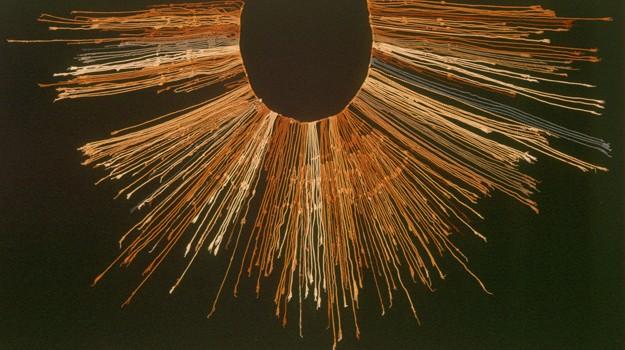
<p>What can Inka Quipus teach us about data management?</p><p>A blog post about the ingenious methods used by the ancient Inca culture to encode information and what insights we might draw from them today for <a href="/tags/datascience/" rel="tag">#datascience</a></p><p>The value of metadata, human readibility, schema flexibility and append-only <a href="/tags/database/" rel="tag">#database</a>? Its all there 🤓 </p><p><a href="https://www.openriskmanagement.com/what-inka-quipus-teach-us-about-data-management/" rel="nofollow" class="ellipsis" title="www.openriskmanagement.com/what-inka-quipus-teach-us-about-data-management/"><span class="invisible">https://</span><span class="ellipsis">www.openriskmanagement.com/wha</span><span class="invisible">t-inka-quipus-teach-us-about-data-management/</span></a></p>
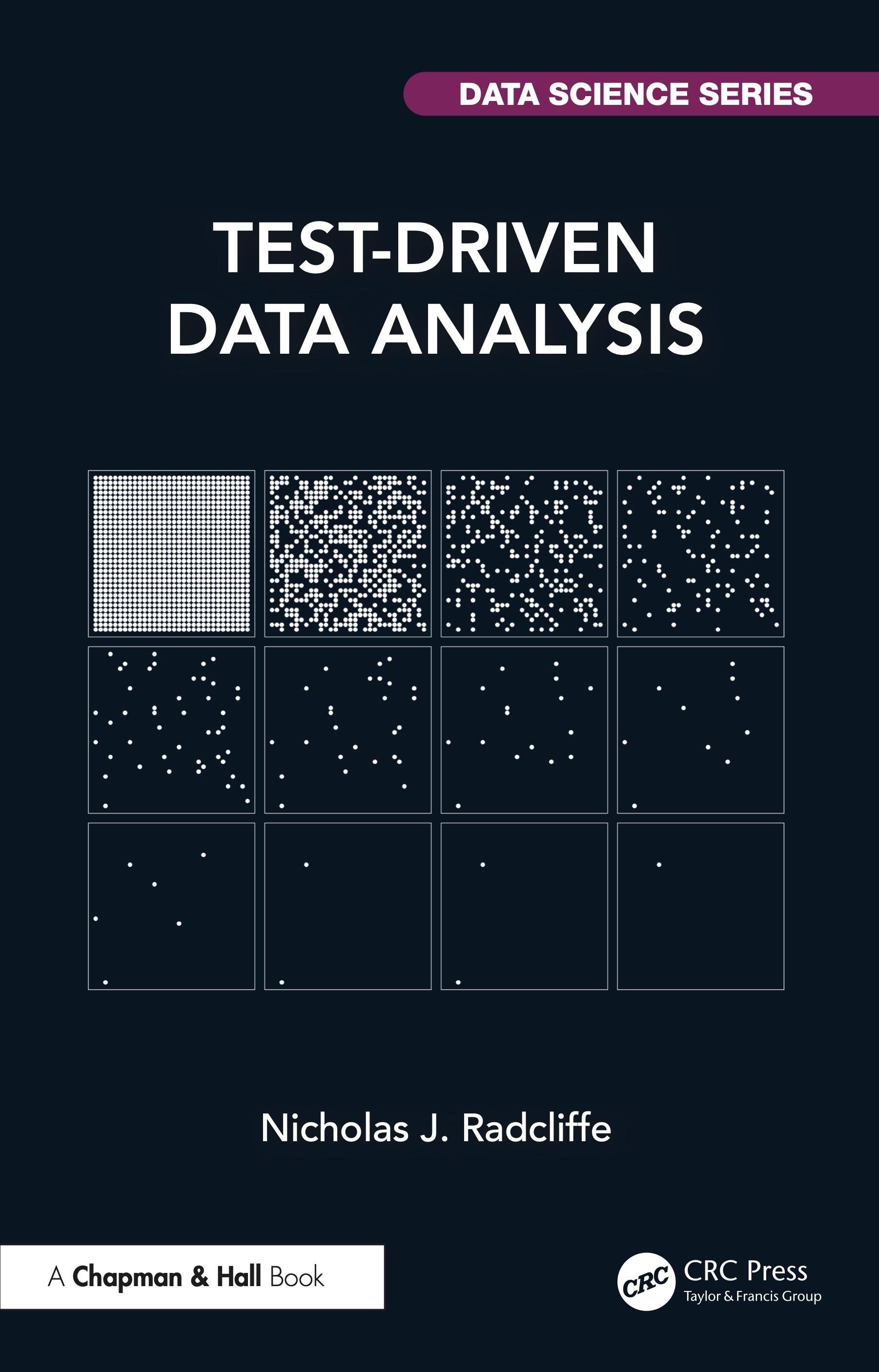
<p>Well, my book on TDDA has become slightly more real:</p><p>It’s not expected to be available until April, but you can see it on the publisher’s website at</p><p><a href="https://www.routledge.com/Test-Driven-Data-Analysis/Radcliffe/p/book/9781032897158" rel="nofollow" class="ellipsis" title="www.routledge.com/Test-Driven-Data-Analysis/Radcliffe/p/book/9781032897158"><span class="invisible">https://</span><span class="ellipsis">www.routledge.com/Test-Driven-</span><span class="invisible">Data-Analysis/Radcliffe/p/book/9781032897158</span></a></p><p>Although the publisher won’t let you pre-order till the end of March, the paper copy is listed on Blackwells and Waterstones:</p><p><a href="https://blackwells.co.uk/bookshop/product/Test-Driven-Data-Analysis-by-Nicholas-J-Radcliffe/9781032897158" rel="nofollow" class="ellipsis" title="blackwells.co.uk/bookshop/product/Test-Driven-Data-Analysis-by-Nicholas-J-Radcliffe/9781032897158"><span class="invisible">https://</span><span class="ellipsis">blackwells.co.uk/bookshop/prod</span><span class="invisible">uct/Test-Driven-Data-Analysis-by-Nicholas-J-Radcliffe/9781032897158</span></a></p><p><a href="https://www.waterstones.com/book/test-driven-data-analysis/nicholas-j-radcliffe/9781032897158" rel="nofollow" class="ellipsis" title="www.waterstones.com/book/test-driven-data-analysis/nicholas-j-radcliffe/9781032897158"><span class="invisible">https://</span><span class="ellipsis">www.waterstones.com/book/test-</span><span class="invisible">driven-data-analysis/nicholas-j-radcliffe/9781032897158</span></a></p><p>and Amazon will let you pre-order paper or Kindle copies.</p><p><a href="/tags/tdda/" rel="tag">#TDDA</a> <a href="/tags/books/" rel="tag">#books</a> <a href="/tags/data/" rel="tag">#data</a> <a href="/tags/analysis/" rel="tag">#analysis</a> <a href="/tags/testing/" rel="tag">#testing</a> <a href="/tags/datascience/" rel="tag">#datascience</a> <a href="/tags/quality/" rel="tag">#quality</a> <a href="/tags/ai/" rel="tag">#AI</a> <a href="/tags/ml/" rel="tag">#ML</a></p>
Edited 110d ago
<p>Datasci.social is a Mastodon server for researchers & practitioners in human-centric data science, including network science, social data science, computational social science, geospatial data science etc.</p><p><img src="https://neodb.social/media/emoji/social.growyourown.services/Fediverse.png" class="emoji" alt=":Fediverse:" title=":Fediverse:"> <a href="https://datasci.social" rel="nofollow"><span class="invisible">https://</span>datasci.social</a></p><p>You can find out more at <a href="https://datasci.social/about" rel="nofollow"><span class="invisible">https://</span>datasci.social/about</a> or contact the admin <span class="h-card"><a href="https://datasci.social/@mszll" class="u-url mention" rel="nofollow noopener noreferrer" target="_blank">@<span>mszll</span></a></span> </p><p><a href="/tags/featuredserver/" rel="tag">#FeaturedServer</a> <a href="/tags/datascience/" rel="tag">#DataScience</a> <a href="/tags/datasci/" rel="tag">#DataSci</a> <a href="/tags/networkscience/" rel="tag">#NetworkScience</a> <a href="/tags/socialdatascience/" rel="tag">#SocialDataScience</a> <a href="/tags/geospatial/" rel="tag">#Geospatial</a> <a href="/tags/mastodon/" rel="tag">#Mastodon</a> <a href="/tags/fediverse/" rel="tag">#Fediverse</a> <a href="/tags/freefediverse/" rel="tag">#FreeFediverse</a></p>

<p>🚀 The R Consortium Technical Grant Cycle is now open!</p><p>Have an idea to improve R’s technical infrastructure? Apply for funding!</p><p>We support projects with broad impact across the global R community—tools, infrastructure, and community initiatives.</p><p>📅 Apply by May 1<br>📅 Decisions by June 1</p><p>Get details + apply:<br><a href="https://r-consortium.org/all-projects/callforproposals.html" rel="nofollow" class="ellipsis" title="r-consortium.org/all-projects/callforproposals.html"><span class="invisible">https://</span><span class="ellipsis">r-consortium.org/all-projects/</span><span class="invisible">callforproposals.html</span></a></p><p><a href="/tags/rstats/" rel="tag">#rstats</a> <a href="/tags/opensource/" rel="tag">#opensource</a> <a href="/tags/datascience/" rel="tag">#datascience</a> <a href="/tags/rconsortium/" rel="tag">#rconsortium</a> <a href="/tags/rcommunity/" rel="tag">#rcommunity</a></p>

Edited 2d ago