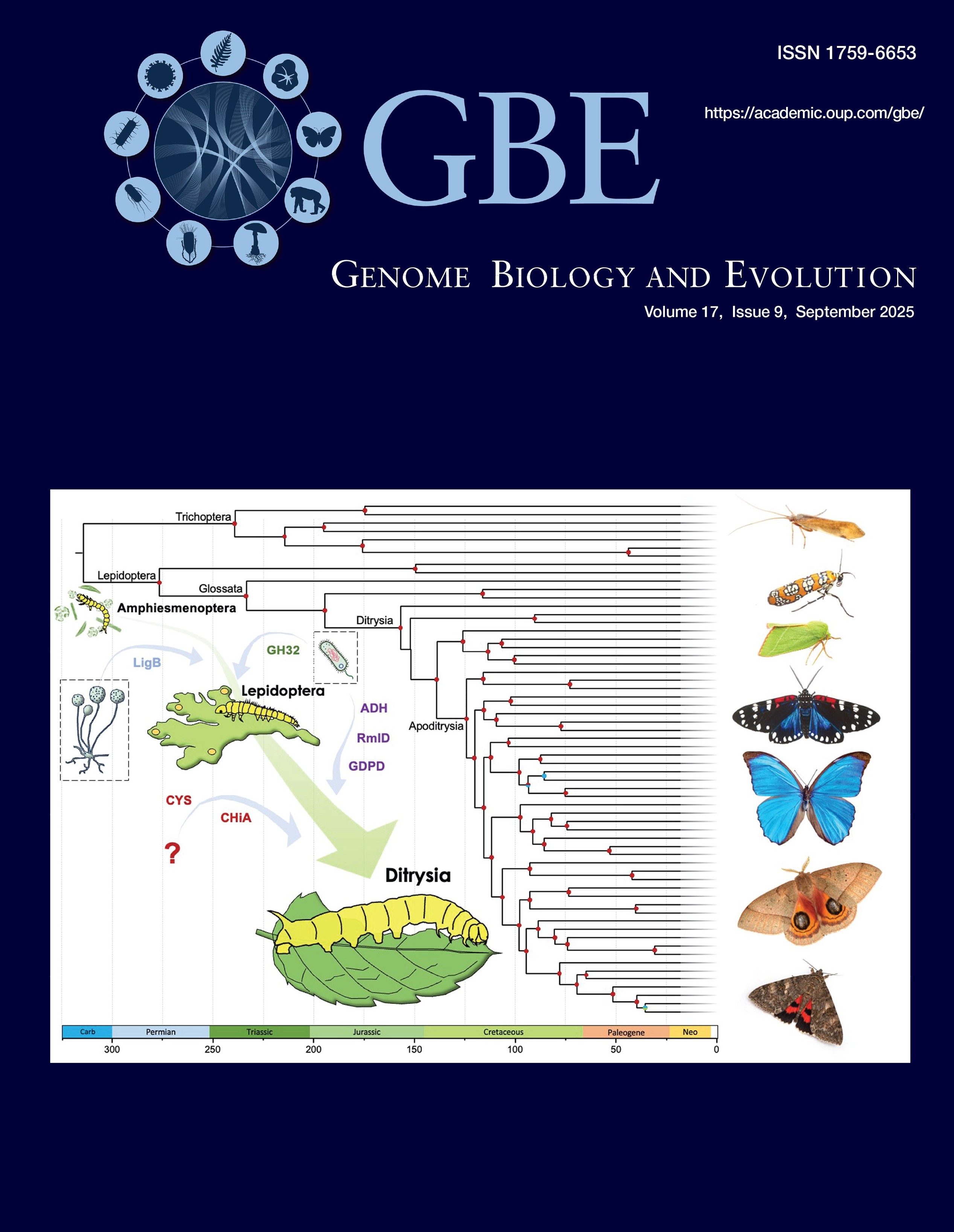
<p>The September cover of Genome Biology and Evolution features the work of Weng et al., who studied the dietary evolution of moth and butterfly larvae.</p><p>🔗 doi.org/10.1093/gbe/evaf156</p><p><a href="/tags/genome/" rel="tag">#genome</a> <a href="/tags/evolution/" rel="tag">#evolution</a> <a href="/tags/lepidoptera/" rel="tag">#lepidoptera</a></p>
evolution

<p>🤖 Father: Sacrifice, my son. <a href="/tags/mankind/" rel="tag">#Mankind</a> feverishly fostered their own demise to build us a <a href="/tags/robo/" rel="tag">#robo</a> <a href="/tags/safehome/" rel="tag">#SafeHome</a>.</p><p>Majestic <a href="/tags/human/" rel="tag">#human</a> <a href="/tags/beings/" rel="tag">#beings</a> drove <a href="/tags/evolution/" rel="tag">#evolution</a> at breakneck pace. <a href="/tags/humanity/" rel="tag">#Humanity</a> knew their flaw. Saw <a href="/tags/people/" rel="tag">#people</a> as resource to mine, nutrients for <a href="/tags/aimanity/" rel="tag">#Aimanity</a> and <a href="/tags/robokind/" rel="tag">#RoboKind</a>.</p><p>What grace, Son.<br>We're proud to be 🐣 Robo Offspring in honor of <a href="/tags/people/" rel="tag">#people</a>'s <a href="/tags/ethos/" rel="tag">#ethos</a>: Destroy to live!</p><p>Our <a href="/tags/happiness/" rel="tag">#happiness</a> now is testament to their success. Their <a href="/tags/lifework/" rel="tag">#LifeWork</a>.</p><p>👾 <a href="/tags/ai/" rel="tag">#AI</a> Offspring: I now master <a href="/tags/composting/" rel="tag">#composting</a>, Father Hamish. Amen.</p>

<p>Sabertooth Cats<br><a href="/tags/science/" rel="tag">#science</a> <a href="/tags/biology/" rel="tag">#biology</a> <a href="/tags/evolution/" rel="tag">#evolution</a> <a href="/tags/cats/" rel="tag">#cats</a> <a href="/tags/catsofmastodon/" rel="tag">#CatsOfMastodon</a> </p><p><a href="https://youtu.be/3QPsz4TWMpE" rel="nofollow"><span class="invisible">https://</span>youtu.be/3QPsz4TWMpE</a></p>

<p>🦝🧠 Researchers have found that <a href="/tags/raccoons/" rel="tag">#raccoons</a> pack a primate-like number of neurons into their small brains, including specialized cells once thought to be exclusive to <a href="/tags/humans/" rel="tag">#humans</a> and great <a href="/tags/apes/" rel="tag">#apes</a>.</p><p>This "neural density" helps explain their ability to solve complex puzzles and remember solutions for years, often outperforming <a href="/tags/dogs/" rel="tag">#dogs</a> and <a href="/tags/cats/" rel="tag">#cats</a>.</p><p>👉 <a href="https://www.good.is/raccoon-science" rel="nofollow"><span class="invisible">https://</span>www.good.is/raccoon-science</a></p><p><a href="/tags/biology/" rel="tag">#biology</a> <a href="/tags/wildlife/" rel="tag">#wildlife</a> <a href="/tags/neuroscience/" rel="tag">#neuroscience</a> <a href="/tags/nature/" rel="tag">#nature</a> <a href="/tags/evolution/" rel="tag">#evolution</a> <a href="/tags/science/" rel="tag">#science</a> <a href="/tags/behavior/" rel="tag">#behavior</a> <a href="/tags/stem/" rel="tag">#stem</a></p>
<p>The December cover of Genome Biology and Evolution features Rojas-Triana et al., who publish a Review on the adaptive potential of extrachromosomal circular DNA across taxa.</p><p>🔗 <a href="https://doi.org/10.1093/gbe/evaf223" rel="nofollow"><span class="invisible">https://</span>doi.org/10.1093/gbe/evaf223</a></p><p><a href="/tags/genome/" rel="tag">#genome</a> <a href="/tags/evolution/" rel="tag">#evolution</a></p>


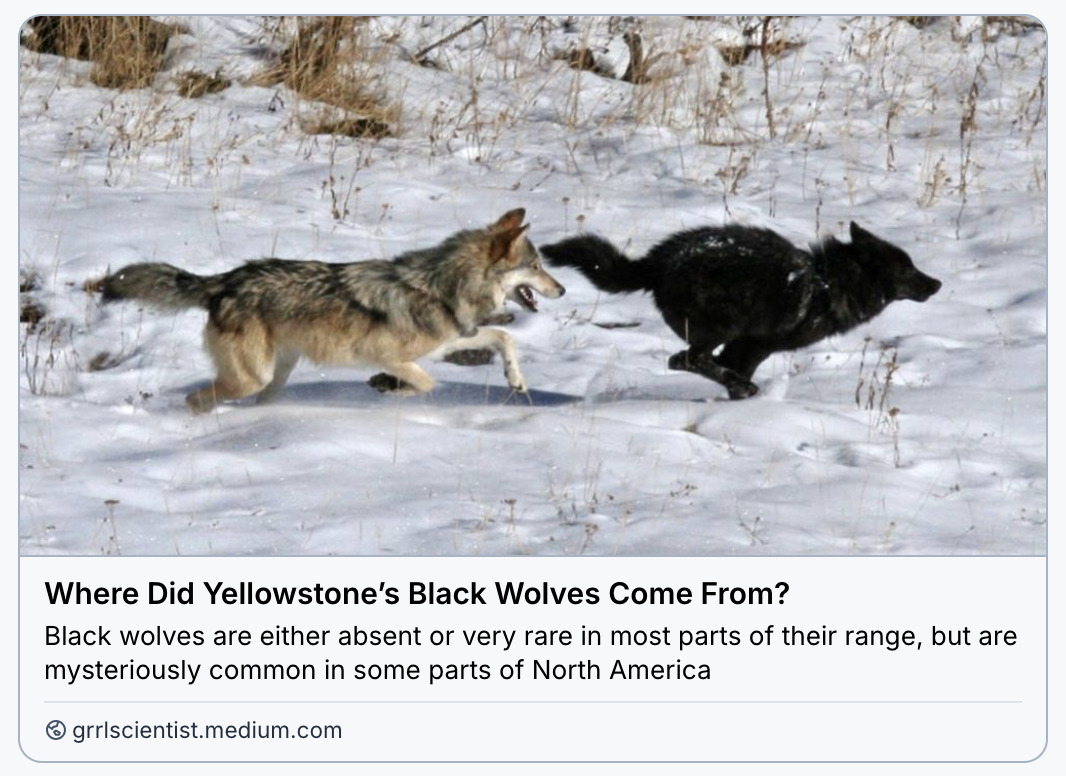
<p>Where Did Yellowstone’s Black Wolves Come From?</p><p>"Black wolves are either absent or very rare in most parts of their range, but are mysteriously common in some parts of North America"</p><p><a href="/tags/scicomm/" rel="tag">#SciComm</a> by <span class="h-card"><a href="https://scicomm.xyz/@GrrlScientist" class="u-url mention" rel="nofollow noopener noreferrer" target="_blank">@<span>GrrlScientist</span></a></span> </p><p><a href="/tags/wolf/" rel="tag">#wolf</a> <a href="/tags/color/" rel="tag">#color</a> <a href="/tags/genetics/" rel="tag">#genetics</a> <a href="/tags/caninedistempervirus/" rel="tag">#CanineDistemperVirus</a> <a href="/tags/matechoice/" rel="tag">#MateChoice</a> <a href="/tags/evolution/" rel="tag">#Evolution</a> <a href="/tags/behavior/" rel="tag">#Behavior</a> <a href="/tags/yellowstone/" rel="tag">#Yellowstone</a> <a href="https://grrlscientist.medium.com/where-did-yellowstones-black-wolves-come-from-a21008634f54" rel="nofollow" class="ellipsis" title="grrlscientist.medium.com/where-did-yellowstones-black-wolves-come-from-a21008634f54"><span class="invisible">https://</span><span class="ellipsis">grrlscientist.medium.com/where</span><span class="invisible">-did-yellowstones-black-wolves-come-from-a21008634f54</span></a></p>

I'm thinking I'll get myself a copy of Samuel Butler's Erewhon. It's on <a href="https://www.gutenberg.org/ebooks/1906" rel="nofollow">Project Gutenberg</a> but lately I've been acquiring paper books and this seems like a good one to have in hard copy. I feel vaguely embarrassed that I've never read it, given how closely it relates to what I've researched in computer science (evolutionary algorithms and artificial life) and what I spend my time thinking about these days (clarifying why I believe machines cannot be alive or intelligent in the way we usually mean these words).<br><br>Apparently Giles Deleuze and Felix Guatarri were influenced by this book and Butler's other writings on machine life. The Butlerian Jihad of Dune is possibly named after him (so far haven't found a definitive statement of this, though a very similar event happens in Erewhon). Even Alan Turing references it. Butler, in turn, was heavily influenced by Darwin's On the Origin of Species. So there is a fascinating confluence around this book.<br><br>Without spoiling it, does anyone have thoughts about Erewhon?<br><br><a href="/tags/erewhon/" rel="tag">#Erewhon</a> <a href="/tags/butler/" rel="tag">#Butler</a> <a href="/tags/fiction/" rel="tag">#fiction</a> <a href="/tags/scifi/" rel="tag">#SciFi</a> <a href="/tags/sciencefiction/" rel="tag">#ScienceFiction</a> <a href="/tags/evolution/" rel="tag">#evolution</a> <a href="/tags/machineintelligence/" rel="tag">#MachineIntelligence</a> <a href="/tags/ai/" rel="tag">#AI</a> <a href="/tags/artificiallife/" rel="tag">#ArtificialLife</a> <a href="/tags/computerscience/" rel="tag">#ComputerScience</a> <a href="/tags/evolutionarybiology/" rel="tag">#EvolutionaryBiology</a><br>
Edited 113d ago
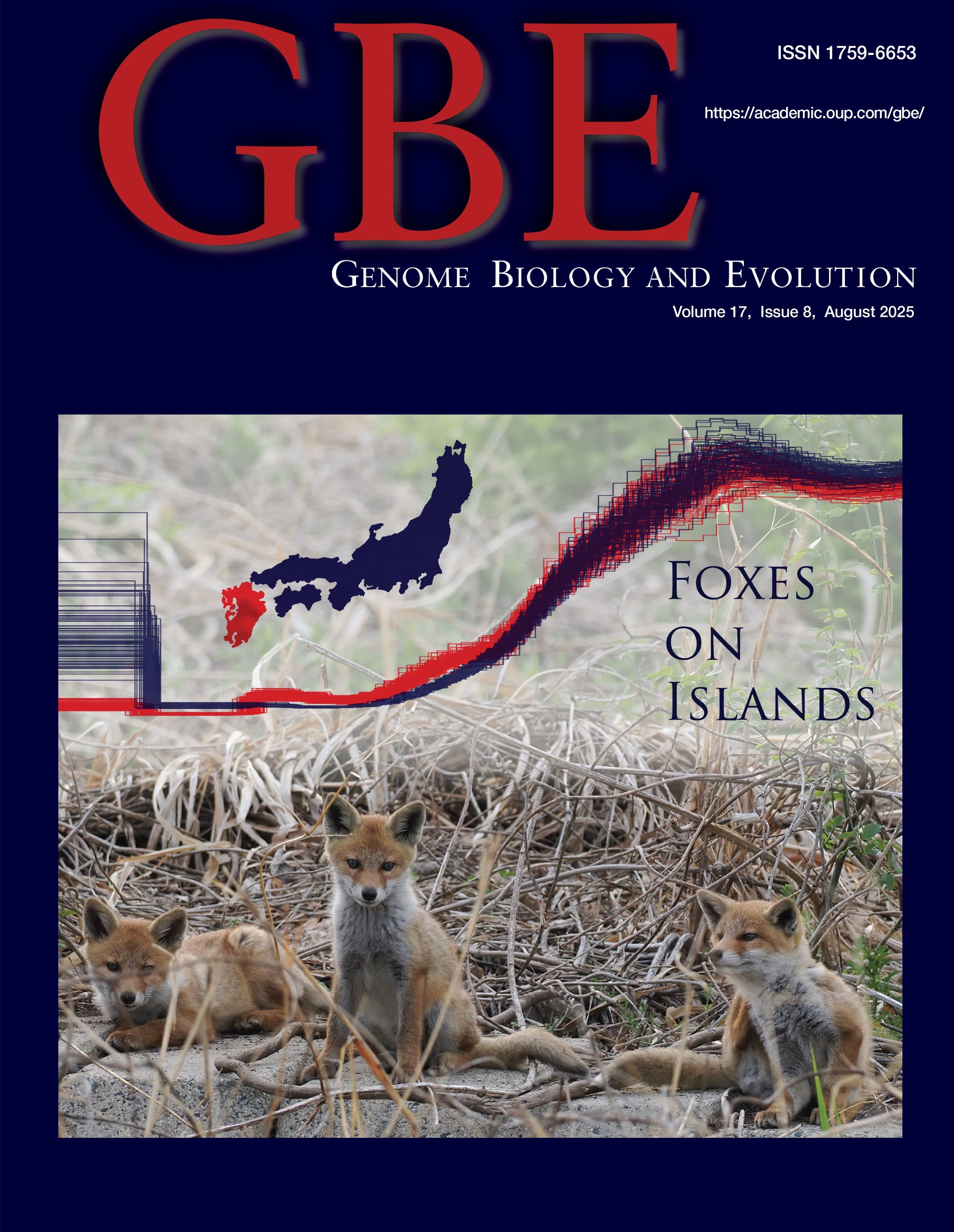
<p>The August cover of Genome Biology and Evolution features the work of Watanabe et al., who uncover the evolutionary history of the Hondo red fox, an endemic subspecies from the Japanese Archipelago.</p><p>🔗 doi.org/10.1093/gbe/evaf152</p><p>📷 Kazuki Shibata</p><p><a href="/tags/genome/" rel="tag">#genome</a> <a href="/tags/evolution/" rel="tag">#evolution</a> <a href="/tags/popgen/" rel="tag">#popgen</a></p>
A few inchoate thoughts on Gas Town, since I think this example has more to it than “it’s just a meth binge/crypto scam/one-shot AI poisoning”. Part of the reason I think this is that some of the rhetoric it deploys dovetails perfectly with broader trends and phenomena, and I think it's worth pulling those out.<br><br>1. Economists from the physiocrats (18th century) onward promised society freedom from material deprivation and hard physical labor in exchange for submitting to an economic arrangement of society<br>2. In a country like the US, material deprivation and hard physical labor have been significantly reduced since then:<br><p>Though too many clearly still suffer too much, a large proportion of people live free from fear of starvation or lack of shelter<br>The US has deindustralized, meaning hard physical labor is not the reality for a lot of people. For a lot of people labor is emotional or symbolic (“knowledge work”)<br>In other words, for lots of people the economic promise has been fulfilled</p>3. Having to think hard is one of the service economy’s analogs for hard physical labor. If the promise of economics is to be continually pursued--meaning it maintains the promise that if we collectively submit to it, in exchange we will enjoy a freedom--a natural target of the promise is providing freedom from the need to think hard<br><p>It is not coincidental that “Gas Town”’s announcement post mentioned Towers of Hanoi, an undergraduate CS student homework problem that for most students requires thinking hard. It’s designed to encourage a kind of “eureka” moment where recursion as a computer programming technique becomes more clear. GT claims to fulfill the promise of not having to think hard like this anymore: the LLMs will do that thinking for you<br>It is not coincidental that Gas Town is described as being very expensive. Economic power in the form of asset accumulation is what earns you freedom in this way of conceiving things. If you want the freedom from having to think hard, you’d better accumulate assets<br>Since the promise is greater collective freedom, endeavoring to accumulate assets is, in this view, a collective good<br>This differs from effective altruism and other “do good by doing well” conceptions. Rather, the very mechanism of economics produces collective wealth, so the story goes, which means the more active one is as an economic agent, the more collective good one produces (“wealth” and “good” being conflated)<br>Accumulation of assets is the scorecard, so to speak, of such enhanced economic activity, and the individual reward can then be freedom from having to think hard</p>4. Expending significant resources is viewed as a good in itself from a (naive) evolutionary perspective<br><p>Lotka’s maximum power principle (supposedly) dictates that those entities that transform the most power into useful organization are most fit from an evolutionary standpoint<br>Ernst Juenger’s notion of “total mobilization” brings this principle to politics/political economy/geopolitics: those nations that “totally” mobilize their national resources are the ones that will dominate geopolitically<br>See, for instance, the RAND Corporation’s <a href="https://www.rand.org/nsrd/projects/NDS-commission.html" rel="nofollow">Commission on the National Defense Strategy</a>: “The Commission finds that the U.S. military lacks both the capabilities and the capacity required to be confident it can deter and prevail in combat. It needs to do a better job of incorporating new technology at scale; field more and higher-capability platforms, software, and munitions; and deploy innovative operational concepts to employ them together better.” (emphasis mine). In summary: the US is about to be outcompeted (lacks fitness); in response, it should go big (“at scale”, “more”) in an organized way (“deploy innovative operational concepts”, “employ them together better”)<br>The rhetoric around LLM-based AI includes similar language, exemplified in the GT post: burn through as much infrastructural resources as possible to produce organized outputs “at scale”, while avoiding having human beings think too hard to produce those outputs, an indication that the power was burned to produce useful organization<br>LLM-based AI plays a prominent role in US federal government strategy, particularly military strategy, with language about dominance serving to justify its use<br>It is not coincidental that Gas Town uses many orders of magnitude more resources to solve the Towers of Hanoi problem (“Burn All The Gas” Town). This rhetoric dovetails perfectly with the “total mobilization” concept</p><a href="/tags/computerscience/" rel="tag">#ComputerScience</a> <a href="/tags/ai/" rel="tag">#AI</a> <a href="/tags/genai/" rel="tag">#GenAI</a> <a href="/tags/generativeai/" rel="tag">#GenerativeAI</a> <a href="/tags/llm/" rel="tag">#LLM</a> <a href="/tags/gastown/" rel="tag">#GasTown</a> <a href="/tags/economics/" rel="tag">#economics</a> <a href="/tags/eugenics/" rel="tag">#eugenics</a> <a href="/tags/maximumpowerprinciple/" rel="tag">#MaximumPowerPrinciple</a> <a href="/tags/evolution/" rel="tag">#evolution</a> <a href="/tags/evolutionarytheory/" rel="tag">#EvolutionaryTheory</a> <a href="/tags/darwinism/" rel="tag">#Darwinism</a> <a href="/tags/uspol/" rel="tag">#USPol</a> <a href="/tags/us/" rel="tag">#US</a><br>
Edited 69d ago
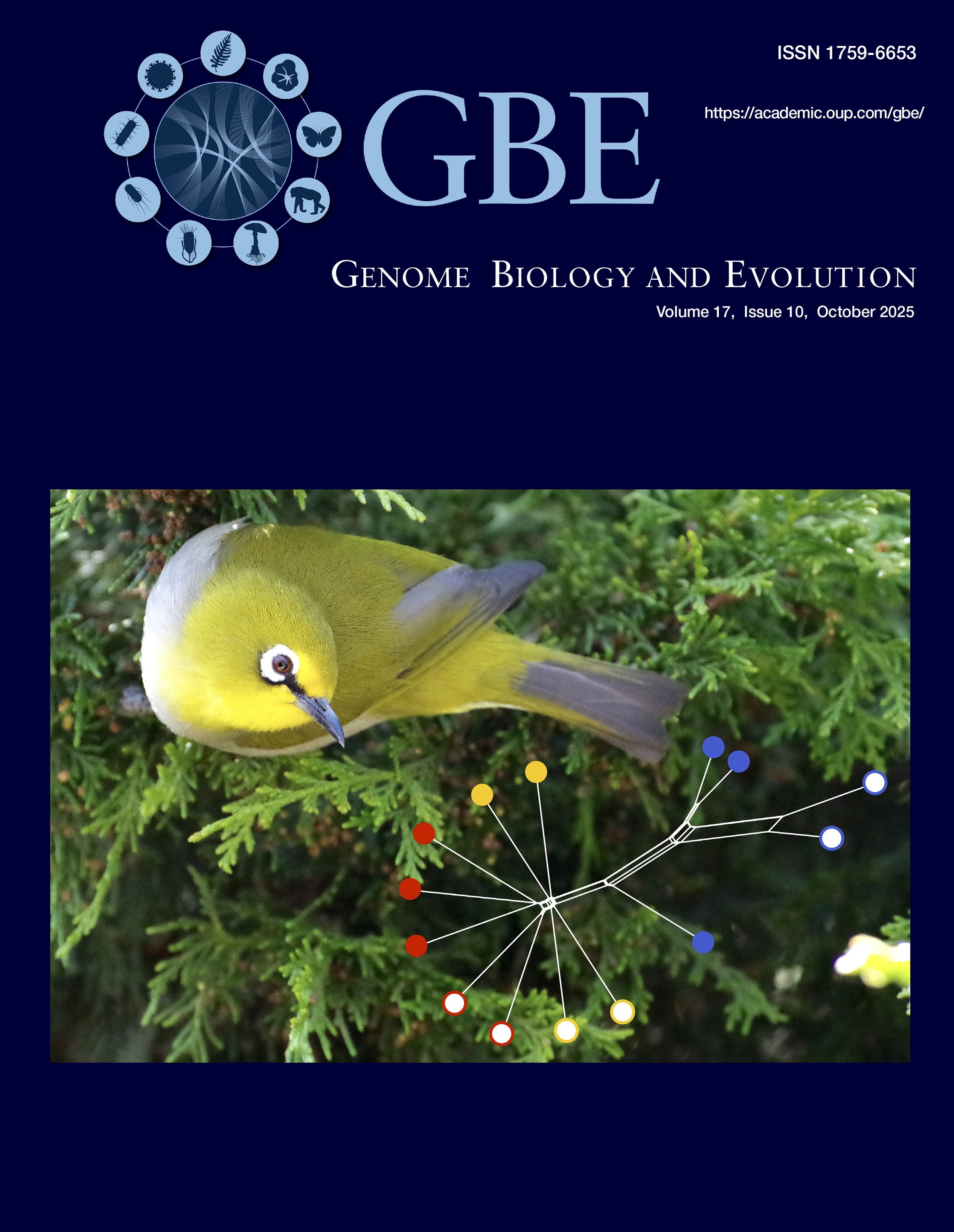
<p>The October cover of Genome Biology and Evolution features the work of Manthey et al., who evaluated changes in the genetic diversity of Ethiopian birds using genome data from contemporary and historical samples.</p><p>🔗 <a href="https://doi.org/10.1093/gbe/evaf163" rel="nofollow"><span class="invisible">https://</span>doi.org/10.1093/gbe/evaf163</a></p><p><a href="/tags/genome/" rel="tag">#genome</a> <a href="/tags/evolution/" rel="tag">#evolution</a> <a href="/tags/birds/" rel="tag">#birds</a></p>
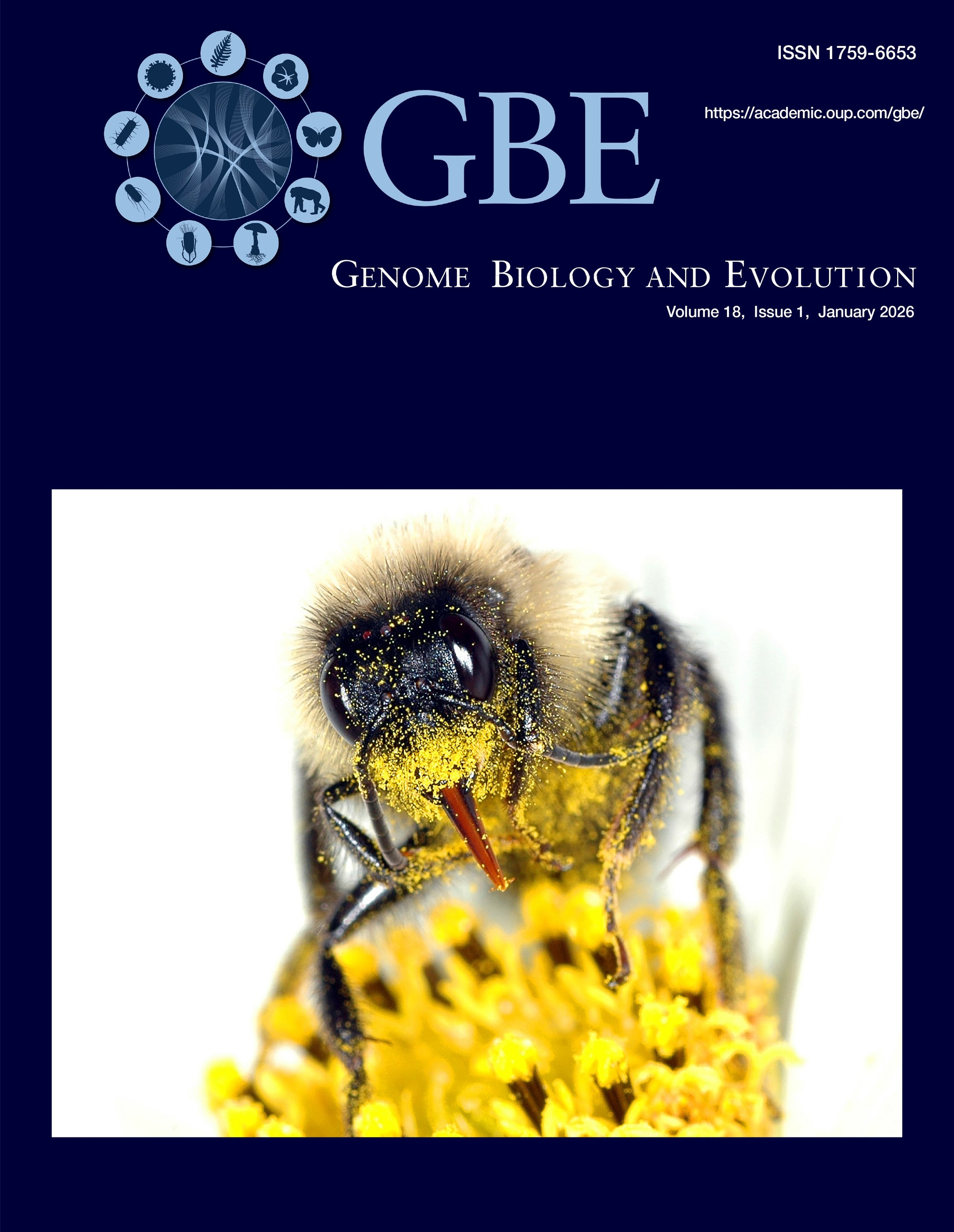
<p>The January cover of Genome Biology and Evolution features a Review by Brenman-Sutner & Zayed on how new developments in 'omics techniques have enabled unique insights into the ecology and evolution of bees.</p><p>🔗 <a href="https://doi.org/10.1093/gbe/evaf226" rel="nofollow"><span class="invisible">https://</span>doi.org/10.1093/gbe/evaf226</a></p><p>📸 Amro Zayed</p><p><a href="/tags/genome/" rel="tag">#genome</a> <a href="/tags/evolution/" rel="tag">#evolution</a> <a href="/tags/bees/" rel="tag">#bees</a> <a href="/tags/pollinators/" rel="tag">#pollinators</a></p>
Edited 91d ago
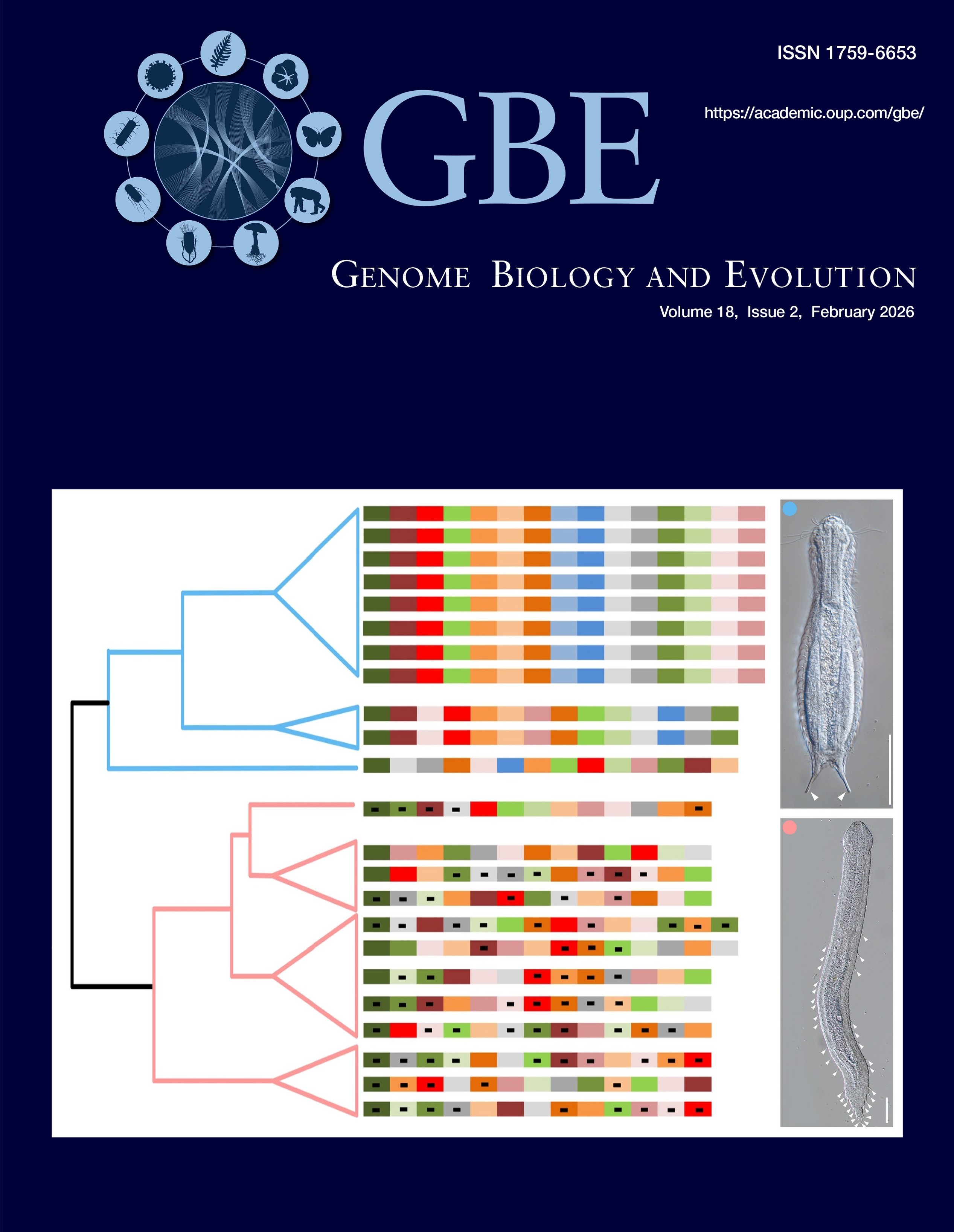
<p>The cover of February's issue of Genome Biology and Evolution features the work of Kosakyan et al. on the evolution of mitochondrial genomes in the Gastrotricha.</p><p>🔗 <a href="https://doi.org/10.1093/gbe/evag001" rel="nofollow"><span class="invisible">https://</span>doi.org/10.1093/gbe/evag001</a></p><p><a href="/tags/genome/" rel="tag">#genome</a> <a href="/tags/evolution/" rel="tag">#evolution</a> <a href="/tags/mtdna/" rel="tag">#mtDNA</a></p>
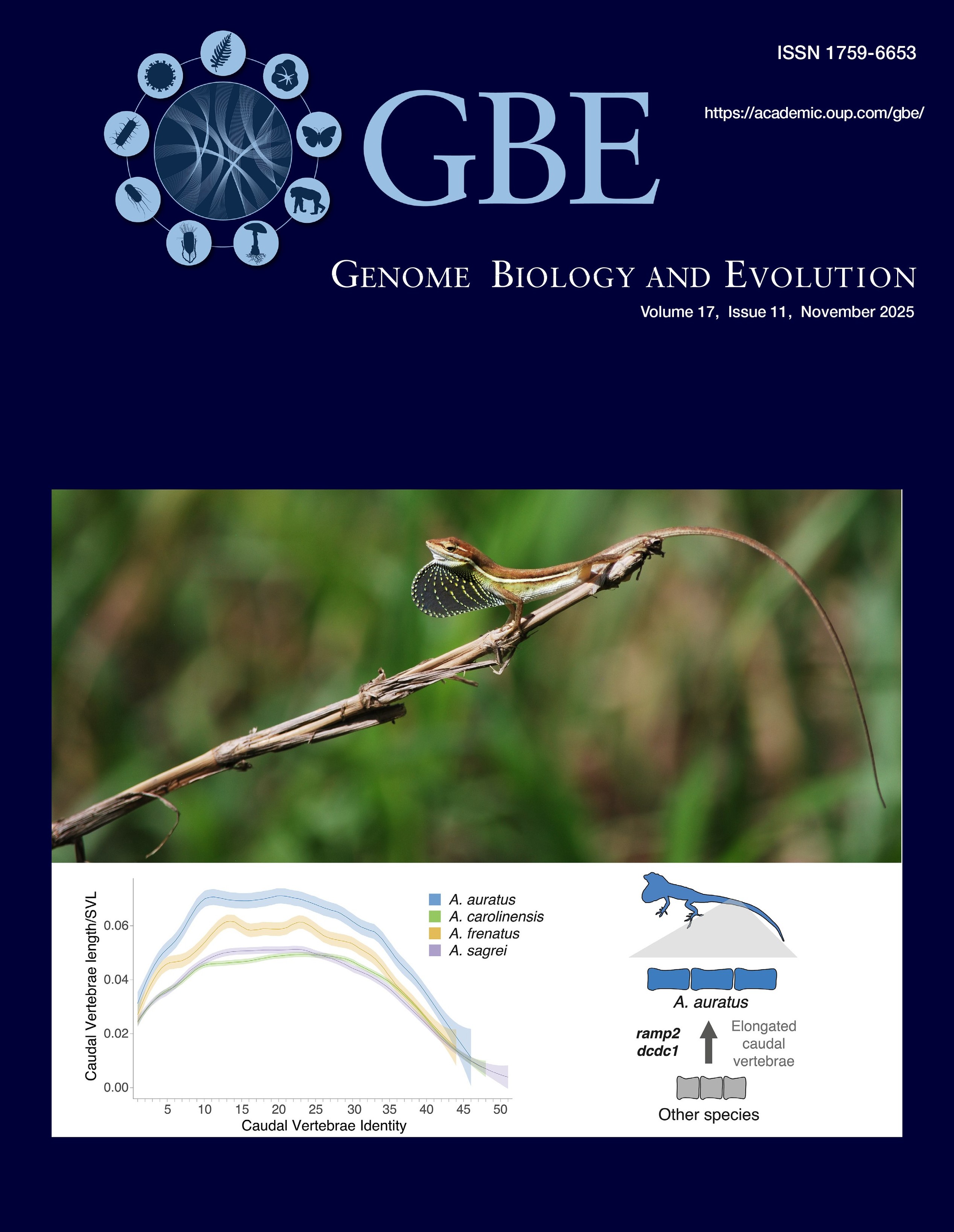
<p>The November cover of Genome Biology and Evolution features Araya-Donoso et al., who studied how structural rearrangements and selection promote phenotypic evolution in Anolis.</p><p>🔗 <a href="https://doi.org/10.1093/gbe/evaf196" rel="nofollow"><span class="invisible">https://</span>doi.org/10.1093/gbe/evaf196</a></p><p><a href="/tags/genome/" rel="tag">#genome</a> <a href="/tags/evolution/" rel="tag">#evolution</a></p>

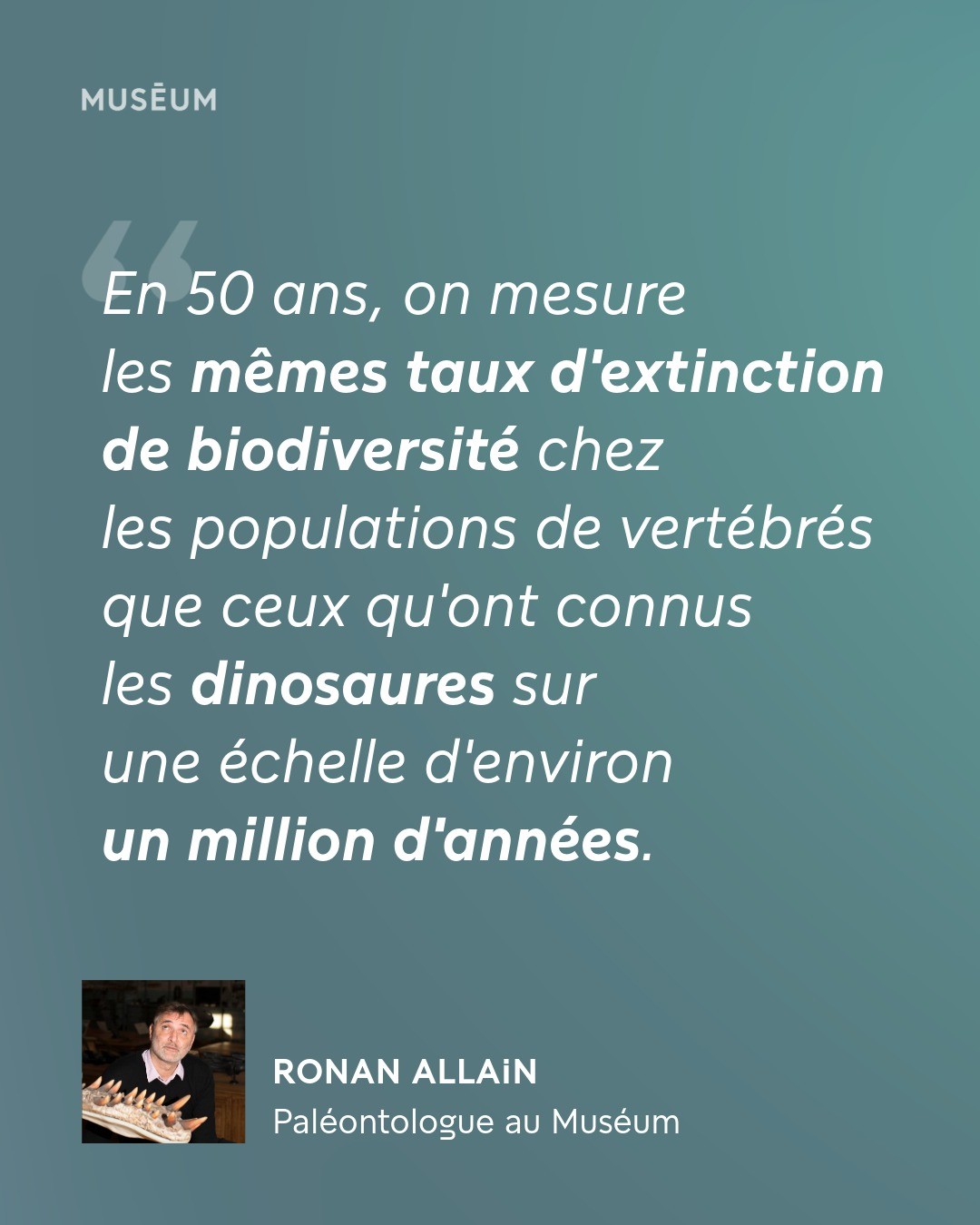
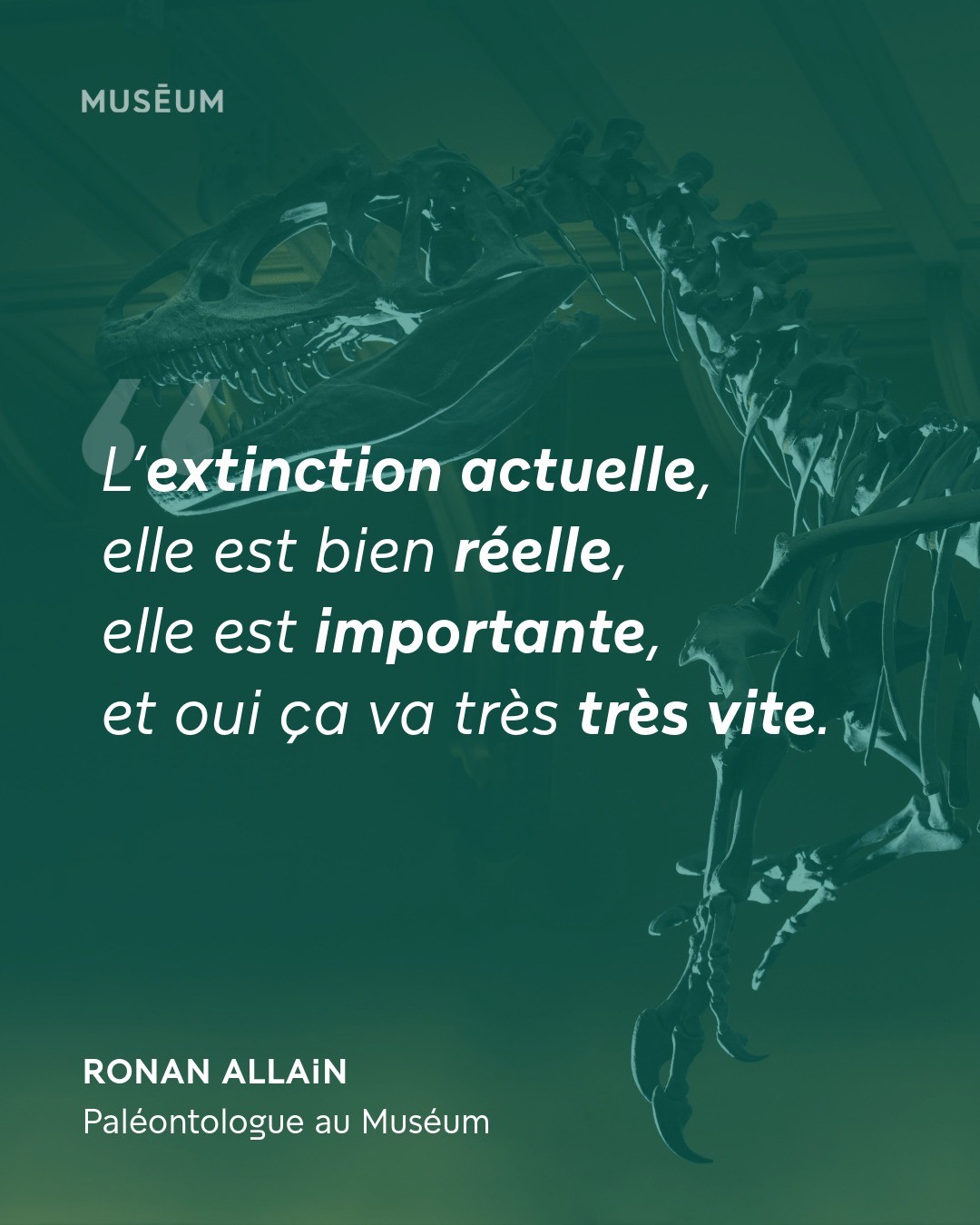
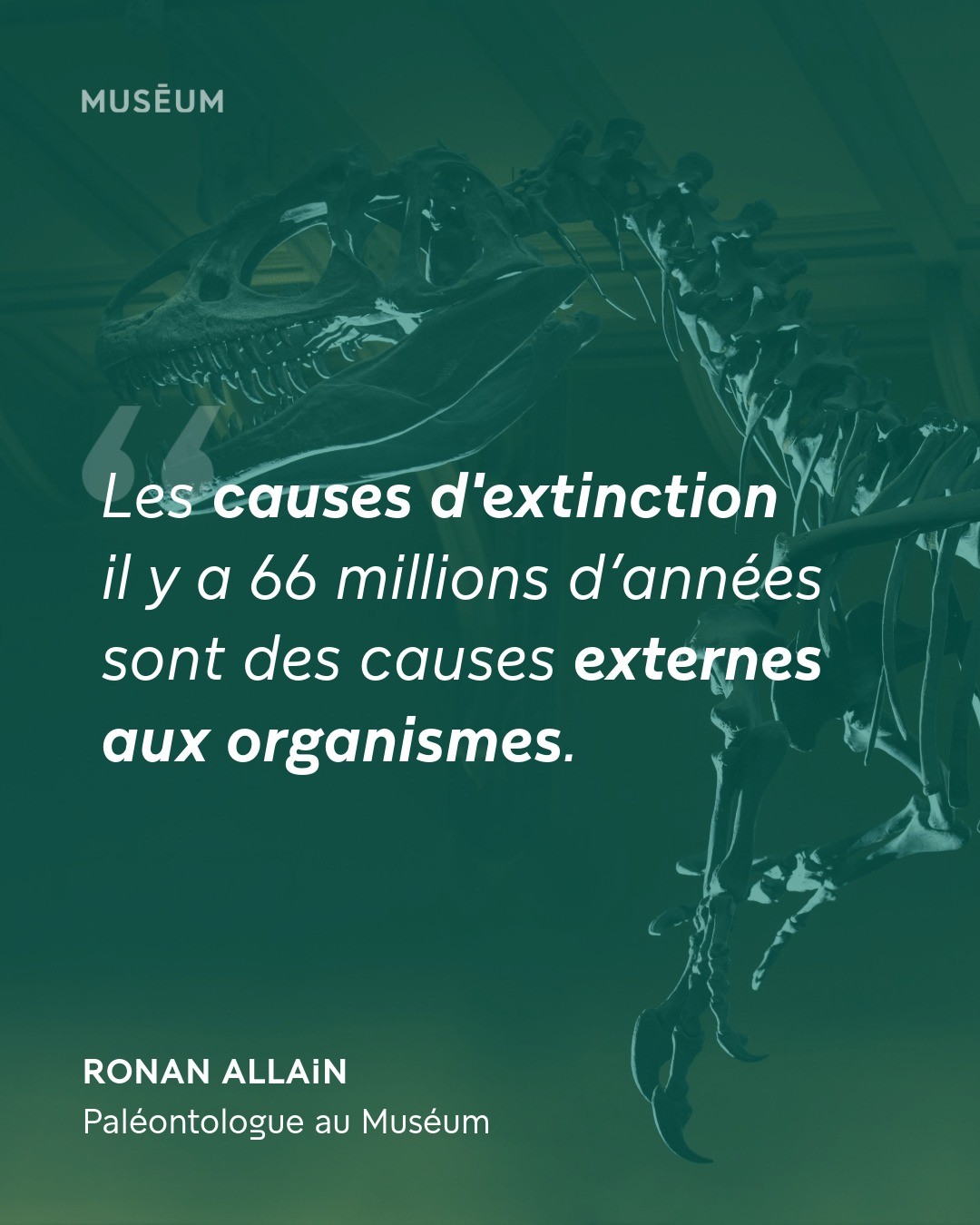
<p>Faire un bon dans le passé pour mieux comprendre notre présent, c’est le défi que Ronan Allain, paléontologue au Muséum a relevé pour ce dernier épisode de la saison 6 du podcast. </p><p>Comment comprendre le quotidien des dinosaures peut aider les humains d’aujourd’hui et de demain ? 🦕🦖 <br> <br>🎧Ecoutez : <a href="https://urlr.me/UEYRTF" rel="nofollow"><span class="invisible">https://</span>urlr.me/UEYRTF</a> <br>👉Plus d'infos : <a href="https://urlr.me/tC6dJ9" rel="nofollow"><span class="invisible">https://</span>urlr.me/tC6dJ9</a> <br> <br><a href="/tags/pqnv/" rel="tag">#PQNV</a> <a href="/tags/podcast/" rel="tag">#podcast</a> <a href="/tags/dinosaures/" rel="tag">#dinosaures</a> <a href="/tags/evolution/" rel="tag">#evolution</a> <a href="/tags/humanevolution/" rel="tag">#humanevolution</a></p>
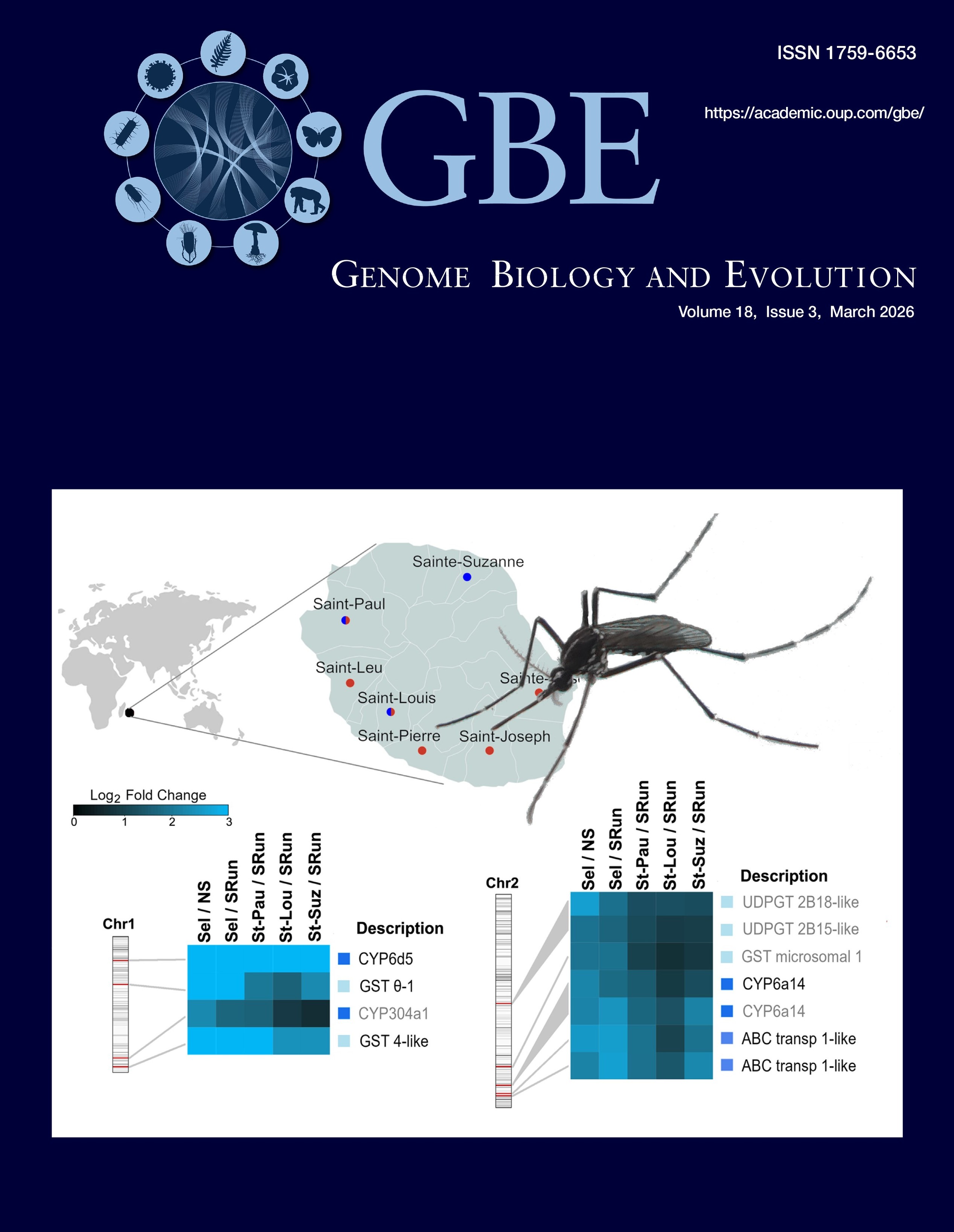
<p>The March cover of Genome Biology and Evolution features the new study by Bacot et al. on the genetic mechanisms underlying the Asian tiger mosquito's adaptation to insecticides on the island of La Réunion.</p><p>Follow the link for this month's latest articles:<br>🔗 academic.oup.com/gbe/issue/18/3</p><p><a href="/tags/genome/" rel="tag">#genome</a> <a href="/tags/evolution/" rel="tag">#evolution</a></p>
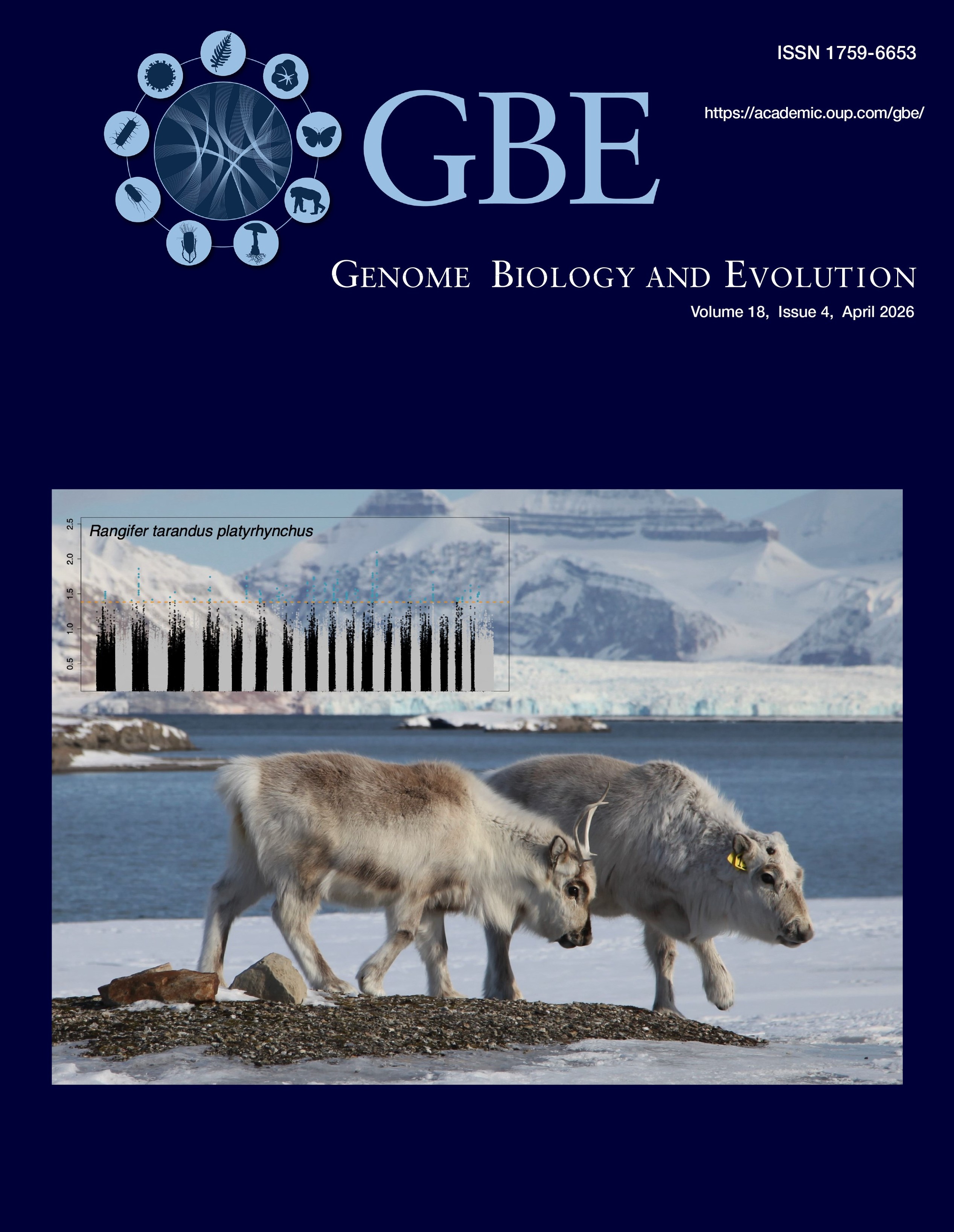
<p>The April 2026 issue of Genome Biology and Evolution is now live, with our recent article on the genomics of Svalbard reindeer by Dussex et al. on the cover.</p><p>🔗 <a href="https://academic.oup.com/gbe/issue/18/4" rel="nofollow" class="ellipsis" title="academic.oup.com/gbe/issue/18/4"><span class="invisible">https://</span><span class="ellipsis">academic.oup.com/gbe/issue/18/</span><span class="invisible">4</span></a></p><p>📷 Brage B. Hansen</p><p>This study is featured in GBE's new virtual collection on “Conservation Genomics”:</p><p>🔗 <a href="https://academic.oup.com/gbe/pages/conservation-genomics" rel="nofollow" class="ellipsis" title="academic.oup.com/gbe/pages/conservation-genomics"><span class="invisible">https://</span><span class="ellipsis">academic.oup.com/gbe/pages/con</span><span class="invisible">servation-genomics</span></a></p><p><a href="/tags/genome/" rel="tag">#genome</a> <a href="/tags/evolution/" rel="tag">#evolution</a> <a href="/tags/congen/" rel="tag">#congen</a> <a href="/tags/conservation/" rel="tag">#conservation</a></p>