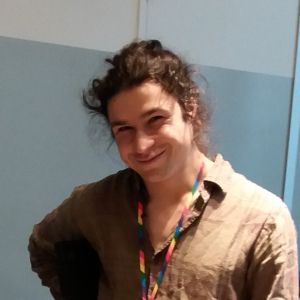
<p>I'm between jobs and open for short-term missions until the end of the year :) . I like jumping in old <a href="/tags/opensource/" rel="tag">#opensource</a> code bases, tackling tech debt, working on <a href="/tags/governance/" rel="tag">#governance</a>, and trying out new things! Get in touch :)</p><p>Lately I've mostly been working in <a href="/tags/java/" rel="tag">#Java</a> and <a href="/tags/rust/" rel="tag">#Rust</a>. Based in <a href="/tags/leipzig/" rel="tag">#Leipzig</a>, open for in-person or remote freelancing gigs.</p>
governance

<p>The fediverse has no central authority — which brings both challenges and opportunities for how it's governed. For Dot Social, <span class="h-card"><a href="https://flipboard.social/@mike" class="u-url mention" rel="nofollow noopener noreferrer" target="_blank">@<span>mike</span></a></span> spoke with <span class="h-card"><a href="https://mas.to/@kissane" class="u-url mention" rel="nofollow noopener noreferrer" target="_blank">@<span>kissane</span></a></span> and <span class="h-card"><a href="https://friend.camp/@darius" class="u-url mention" rel="nofollow noopener noreferrer" target="_blank">@<span>darius</span></a></span>, two of the smartest people working on this, about the impact of the 2024 U.S. Presidential election on fediverse work, the "Xodus," what needs to be done next, and how to fund and sustain better networks for humans. </p><p>Read more about it in this blogpost.<br><a href="https://about.flipboard.com/fediverse/erin-kissane-and-darius-kazemi/" rel="nofollow" class="ellipsis" title="about.flipboard.com/fediverse/erin-kissane-and-darius-kazemi/"><span class="invisible">https://</span><span class="ellipsis">about.flipboard.com/fediverse/</span><span class="invisible">erin-kissane-and-darius-kazemi/</span></a></p><p>Listen to the conversation on <a href="https://flipboard.video/c/dot_social/videos" rel="nofollow" class="ellipsis" title="flipboard.video/c/dot_social/videos"><span class="invisible">https://</span><span class="ellipsis">flipboard.video/c/dot_social/v</span><span class="invisible">ideos</span></a> or wherever you get your podcasts.</p><p><a href="/tags/dotsocial/" rel="tag">#DotSocial</a> <a href="/tags/podcast/" rel="tag">#Podcast</a> <a href="/tags/fediverse/" rel="tag">#Fediverse</a> <a href="/tags/flipboard/" rel="tag">#Flipboard</a> <a href="/tags/opensocialweb/" rel="tag">#OpenSocialWeb</a> <a href="/tags/socialmedia/" rel="tag">#SocialMedia</a> <a href="/tags/tech/" rel="tag">#Tech</a> <a href="/tags/socialweb/" rel="tag">#SocialWeb</a> <a href="/tags/governance/" rel="tag">#Governance</a> <a href="/tags/federation/" rel="tag">#Federation</a> <a href="/tags/bluesky/" rel="tag">#Bluesky</a> <a href="/tags/activitypub/" rel="tag">#ActivityPub</a> <a href="/tags/atprotocol/" rel="tag">#ATProtocol</a> <a href="/tags/socialnetworks/" rel="tag">#SocialNetworks</a></p>

<a href="/tags/macabekeliher/" rel="tag">#MacabeKeliher</a>. “<a href="https://muse.jhu.edu/pub/5/article/935010/summary" rel="nofollow">Ritual in the Early Modern World: Proliferation, State-Formation, and the Work of the Manchu Surrender Ceremony</a>.” Journal of World History 35:3 (2024): 377–406.<br><br>Abstract:<br><br><a href="/tags/ritual/" rel="tag">#Ritual</a> permeated the early modern world. While historians have explored ritual in regional and national contexts, little work has made sense of it as a global phenomenon. As a consequence, scholars continue to give primacy to bureaucracies and militaries in accounts of <a href="/tags/premodern/" rel="tag">#premodern</a> state-formation. This article examines ritual in relation to early modern social and political developments, especially territorial expansion and increasing interactions. It argues that as polities contracted and empires expanded rulers relied on ritual just as much as institutional and administrative measures. Ritual was a key mechanism to do the work of inclusion and social organization in <a href="/tags/governance/" rel="tag">#governance</a> and territorial expansion. In order to begin to theorize what ritual did and how it did it, the article turns to an empirical case study of the <a href="/tags/manchu/" rel="tag">#Manchu</a> surrender ceremony in the mid-seventeenth century. Through a close examination of the rite and its political and social background the article shows how ritual did the work of constructing and reconstructing social and political orders in the context of expanding <a href="/tags/empires/" rel="tag">#empires</a> in a quickly changing world. Ritual, it is argued, constructed social orders and created subjunctives that helped political actors navigate fraught political and social relations.<br><br><a href="/tags/qing/" rel="tag">#Qing</a> <a href="/tags/china/" rel="tag">#China</a> <a href="/tags/chinesehistory/" rel="tag">#Chinesehistory</a><br> <span class="h-card"><a href="https://ovo.st/club/newqinghistory" class="u-url mention" rel="nofollow noopener noreferrer" target="_blank">@<span>newqinghistory</span></a></span>

<p>We just held another Alternative Social Media Reading Group meeting, this time discussing Hwang et al's fantastic paper, "Governing Together: Toward Infrastructure for Community-Run Social Media."</p><p><a href="https://arxiv.org/abs/2509.19653" rel="nofollow"><span class="invisible">https://</span>arxiv.org/abs/2509.19653</a></p><p>Looking forward to adding this to our library! </p><p><a href="https://www.socialmediaalternatives.org/bib.html" rel="nofollow" class="ellipsis" title="www.socialmediaalternatives.org/bib.html"><span class="invisible">https://</span><span class="ellipsis">www.socialmediaalternatives.or</span><span class="invisible">g/bib.html</span></a></p><p><a href="/tags/alternativesocialmedia/" rel="tag">#alternativeSocialMedia</a> <a href="/tags/governance/" rel="tag">#governance</a> <a href="/tags/fediverse/" rel="tag">#fediverse</a></p>