Edited 25d ago
history
Rated Britain's Greatest Codebreaker 8/10
Rewatched this as a result of having recently seen THE IMITATION GAME and deeming it severely lacking in its approach--historical and thematic--to Alan Turing's work. On technical levels this film could use some improvement in its cinematography and editing, but given that it bills itself as a made-for-tv docudrama it comes across as both insightful and competent.What I appreciated most about the film was its construction and the way it dramatized the interactions between two people--Turing (Ed Stoppard) and his therapist, Franz Greenbaum (Henry Goodman). We get a bit of backstory of both, of course, but the interaction between the two allow us to get a better sense of the inner-workings of Turing's mind before, during, and after his service at Bletchley Park.This back-and-forth is complemented by the more traditional style of sit-down interviews, which include relatives and descendants of Turing and Greenbaum. More importantly to me, though, was the way in which the film perfectly contextualizes his general thinking about the computability of life with his discoveries of and contributions to computer science, artificial intelligence, and biological mathematics.What I appreciated most about this was the way in which it positions the sciences (and universities, really) as places of interdisciplinary study. Wozniak for the most part stresses the integral nature of his contributions to computer science and machine learning, but it is left to the professors to explicate how his genius would influence later thinkers and both postulate (and shape) the theories, philosophies, and extent(s) of artificial intelligence.The film isn't solely about his mind, however, it's also about his heart. And here the film also gets it right. We learn about the loss in his youth of his childhood friend Christopher and, perhaps masterfully, the philosophical question of immortality through AI is raised while at the same time Turing's conception of a means of discerning true intelligence--his eponymous test--comes into form.At nearly the same time his love for Queen and country is tested when, following a burglary at his residence, law enforcement are called, but are more interested in his sexual proclivities than in meting out justice to the thieves. What's interesting about the recollection of this event is how it's used to color Turing. We learn from various sources about how open he was about his sexuality, even with these officers, and also that he was aware that he bore some social privileges as an academician.Charged with gross indecency and offered the choice between jail and chemical castration, the film shows us how Turing's disillusionment and anger with the world and British society began. What he didn't count on was that his mind might become just as addled and confused as his heart. The idea that the country he helped save from Nazi Germany's atrocities could visit the same upon its own citizens would eventually drove him to his death. The film captures this reality with little to no effort and it doesn't shy away from it. It can't.CODEBREAKER is a film that is as much about genius as it is about the social contexts and relationships that inform and constrain it. What this film does right is depict a man wronged by society simply because he could be wronged. It is a tale about villainy and state violence, but it's also a story about a boy who wanted to give something back to the world and vindicate the worth of an adolescent friendship. It's a glimpse into a time characterized by secrets and surveillance. Deeply human despite its flaws, it passes the test.
Edited 25d ago

@classicalmusic
Camille Saint-Saëns - The Piano Concertos / No. 1
Piano: Jeanne-Marie Darré
Orchestre National de la Radiodiffusion Française (Orchestre National de France)
Direction : Louis Fourestier
Recorded in 1955-57, at Paris
@classicalmusic
Leos Janácek - JENUFA
Jenufa: Anny Schlemm
Die alte Buryja: Rosl Zapf
Štewa Buryja, ihr Enkel: Gerald McKee
Laca Klemen, ihr Stiefenkel: Ernst Kozub
Die Küsterin Buryja: Christel Goltz
Altgesell: Willy Wolff
Dorfrichter: Manfred Jungwirth
Seine Frau: Marta Garancsy
...
Chor der Frankfurter Oper
Frankfurter Opern- und Museumsorchester
Lovro von Matačić
Frankfurter Oper, 29. September 1961
Edited 25d ago
@classicalmusic
Johannes Brahms
Symphony No. 4 in E minor, Op. 98
Felix Weingartner, conductor
London Symphony Orchestra
Recorded on February 14, 1938
@classicalmusic
24. August 2026, 21:00 Uhr
Turnübung à la Schnabel
Brahms: Intermezzo, op. 117/1 (4. Juni 1947)
Beethoven: Appassionata (11. April 1933)
Beethoven: Klaviersonate, op. 49/2 (12. April 1933)
Schubert: Impromptu D899/4 (7. und 8. Juni 1950)
@classicalmusic
Opernabend
25. August 2026, 20:00 Uhr
Mozart, Wolfgang Amadeus
Idomeneo
Idomeneo: Luciano Pavarotti
Idamante: Agnes Baltsa
Ilia: Lucia Popp
Elettra: Edita Gruberova
Arbace: Leo Nucci
Gran Sacerdote di Nettuno: Timothy Jenkins
La voce: Nikita Storojew
...
Konzertvereinigung Wiener Staatsopernchor, Wiener Philharmoniker
Leitung: Sir John Pritchard
Diese Aufnahme entstand im Jahr 1993

Premodernist is a historian making excellent in-depth videos on a wide range of historical topics, periods and locations. You can follow at:
(Don't worry if it looks blank to you, that just means no one from your server is following them yet. If you follow, the videos will start showing up on your server too.)
#FeaturedPeerTube #History #Historians #AncientHistory #MedievalHistory #ModernHistory #PeerTube

Four foot three. Pock-marked. Half-blind. Kept in the kitchen till twenty-two, told she would never marry. Then her brother discovered Uranus. Meet Caroline Herschel: cataloguer of 2,500 nebulae, finder of eight comets, dresser of her own wounds.


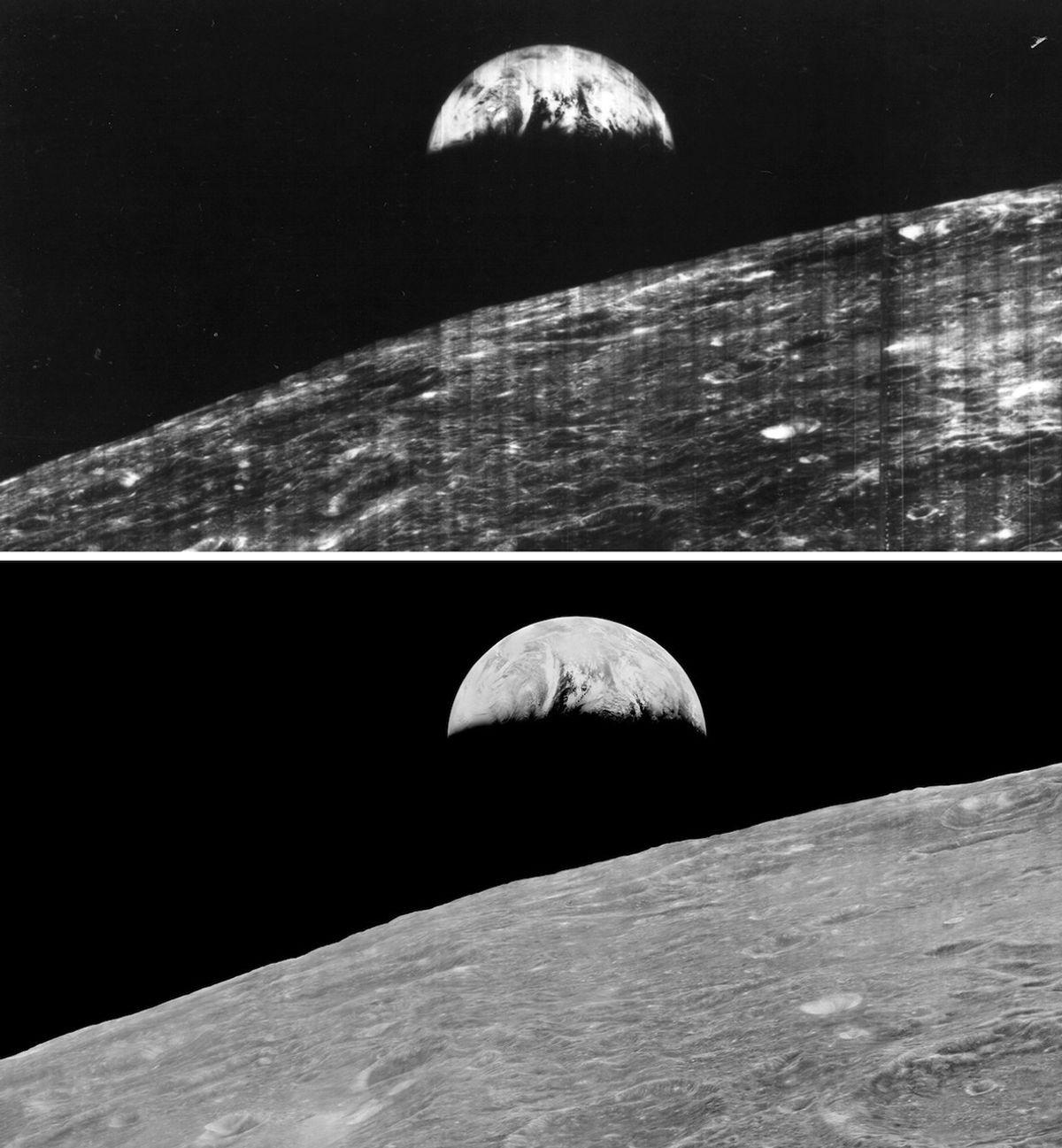
The historic first Earthrise photo from the Moon was received 60 years ago today. It was shot on film, developed onboard the Lunar Orbiter 1 spacecraft, scanned, transmitted home...and then meticulously restored decades later.
https://www.lpi.usra.edu/features/lunarOrbiter/ #space #science #history #tech
@classicalmusic
Camille Saint-Saëns - The Piano Concertos / No. 2
Piano: Jeanne-Marie Darré
Orchestre National de la Radiodiffusion Française (Orchestre National de France)
Direction : Louis Fourestier
Recorded in 1955-57, at Paris
@classicalmusic
Johannes Brahms
Symphony No. 3 in F Major, Op. 90
Felix Weingartner, conductor
London Philharmonic Orchestra
Recorded on October 6, 1938

NEW: In Idaho, prosecutors can't file neglect or manslaughter charges against parents who say their faith prohibited giving lifesaving medical care to their children.
Until the early 1970s, that wasn’t the case.
https://www.propublica.org/article/idaho-law-faith-healing-exemption?utm_source=mastodon&utm_medium=social&utm_campaign=mastodon-post
#News #Idaho #Parenting #Children #Health #History #Medicine #Law
This abandoned power station is from 1930.
#Iceland #photography #streetphotography #nature #landscape #naturephotography #landscapephotography #abandoned #decay #river ##history
@classicalmusic
Richard Strauss - ELEKTRA
Klytämnestra, Königin von Mykene: Anny Schlemm
Elektra, ihre Tochter: Pauline Tinsley
Chrysothemis, Elektras Schwester: Anna Alexieva
Aegisth: André Spijker
Orest, Elektras Bruder: Willard White
Der Pfleger des Orest: Joep Bröcheler
...
Het Nederlands Operakoor
Radio Filharmonisch Orkest
Richard Armstrong
Scheveningen, Circustheater, 24. April 1980
@classicalmusic
György Ligeti: Violin Concerto
Saschko Gawriloff, violin
Ensemble Intercontemporain
Pierre Boulez
@classicalmusic
Franz Schubert
Quartet in B-flat major, D. 112
Busch Quartet
Adolf Busch, violin
Gösta Andreasson, violin
Karl Doktor, viola
Hermann Busch, cello
Date: 25 November 1938
@classicalmusic
Richard Strauss
Complete Orchestral Works
Peter Damm (solo horn)
Staatskapelle Dresden
Rudolf Kempe
1971-73
https://www.youtube.com/playlist?list=PLzIcXmlKKpZ4lQCt069Ssr1FgWCc1IqZA
Edited 63d ago
@classicalmusic
Schubert Sonata in B flat.
Pianist, Jorge Demus
Year released 1951
@classicalmusic
Johannes Brahms
Symphony No 1 in C minor, Op.68
Felix Weingartner, conductor
The Royal Philharmonic Orchestra
Recorded on March 29/30, 1928
@classicalmusic
Opernabend
18. Juli 2026, 20:00 Uhr
Verdi, Giuseppe - Aida
Aida: Anna Tomowa-Sintow
Amneris: Brigitte Fassbaender
Radamès: Plácido Domingo
Amonasro: Siegmund Nimsgern
Ramfis: Robert Lloyd
Il Re dell' Egitto: Nikolaus Hillebrand
Un messaggero: Norbert Orth
Gran Sacerdotessa: Marianne Seibel
Chor der Bayerischen Staatsoper, Bayerisches Staatsorchester
Leitung: Riccardo Muti
Diese Aufnahme entstand im Jahr 1979
@classicalmusic
Johann Sebastian Bach
The Well-Tempered Clavier, book 1
Jörg Demus, piano
Rec. 1973
https://www.youtube.com/watch?v=dHA6N0WFA14&list=RDdHA6N0WFA14&start_radio=1
@classicalmusic
Johannes Brahms
Piano Concerto No. 2 in B-flat Major, Op. 83
Garrick Ohlsson, piano
BBC Symphony Orchestra
James Loughran, conductor
Live rec. Royal Albert Hall, July 31 1978
@classicalmusic
Joaquin Rodrigo
Concierto para una fiesta, for #guitar and #orchestra
Pepe Romero, guitar
Academy of St. Martin-in-the-Fields
Sir Neville Marriner, conductor
First rec. 1982