
<p>Windows CLAT Enters Private Preview: A Milestone for IPv6 Adoption</p><p><a href="https://techcommunity.microsoft.com/blog/NetworkingBlog/windows-clat-enters-private-preview-a-milestone-for-ipv6-adoption/4459534" rel="nofollow" class="ellipsis" title="techcommunity.microsoft.com/blog/NetworkingBlog/windows-clat-enters-private-preview-a-milestone-for-ipv6-adoption/4459534"><span class="invisible">https://</span><span class="ellipsis">techcommunity.microsoft.com/bl</span><span class="invisible">og/NetworkingBlog/windows-clat-enters-private-preview-a-milestone-for-ipv6-adoption/4459534</span></a></p><p><a href="/tags/ipv6/" rel="tag">#IPv6</a> <a href="/tags/clat/" rel="tag">#CLAT</a> <a href="/tags/windows11/" rel="tag">#windows11</a></p>
ipv6

<p><a href="/tags/ipv6/" rel="tag">#IPv6</a> was defined in RFC1883 in December of 1995.</p><p>That's right, IPv6 is now *30* frickin' years old. I've spent at least 25 of those yelling at people, companies, service providers, and many engineers who really should know better that they need to enable it.</p><p>Doesn't look like 2026 is going to change that. Le sigh.</p>

<p>If anyone would be willing to click this link and tell me if it worked for you, I'd be ever so grateful.</p><p><a href="http://whoami-6.petekeen.net" rel="nofollow"><span class="invisible">http://</span>whoami-6.petekeen.net</a></p><p><a href="/tags/homelab/" rel="tag">#homelab</a> <a href="/tags/ipv6/" rel="tag">#ipv6</a> <a href="/tags/selfhosted/" rel="tag">#selfhosted</a></p>

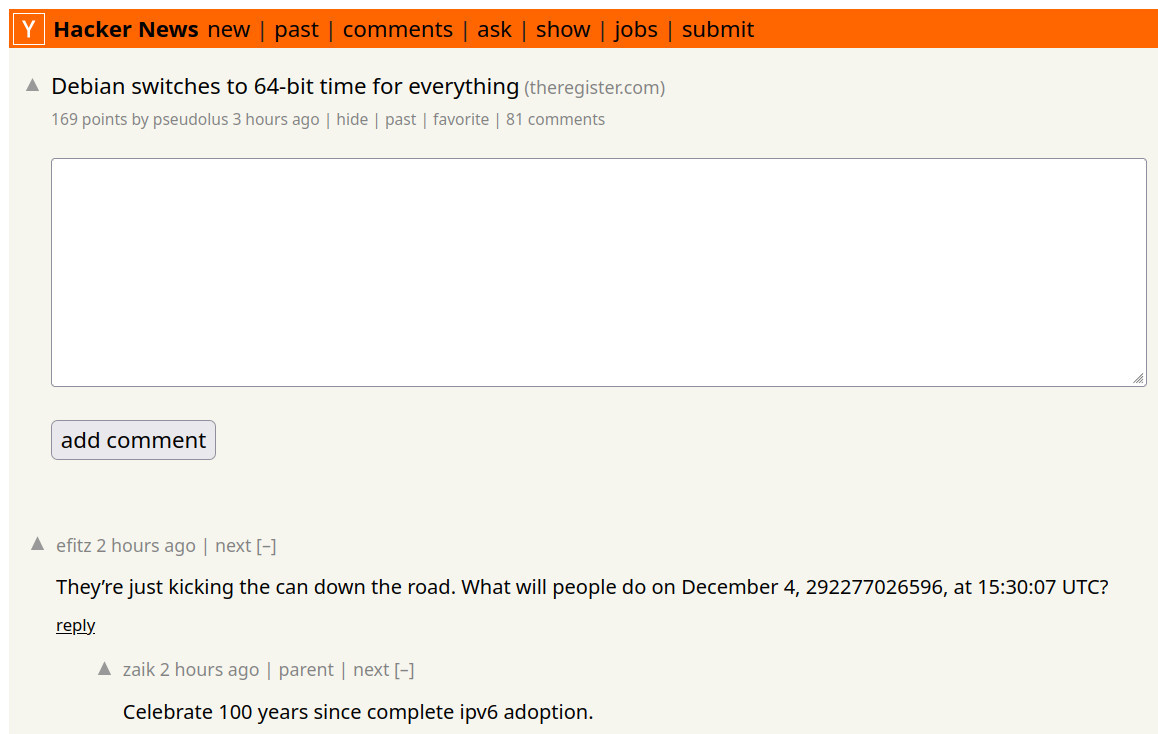
<p>This made me chuckle.</p><p><a href="/tags/debian/" rel="tag">#debian</a> <a href="/tags/humor/" rel="tag">#humor</a> <a href="/tags/ipv6/" rel="tag">#ipv6</a> <a href="/tags/y2k38/" rel="tag">#y2k38</a> <a href="/tags/hackernews/" rel="tag">#hackernews</a></p>

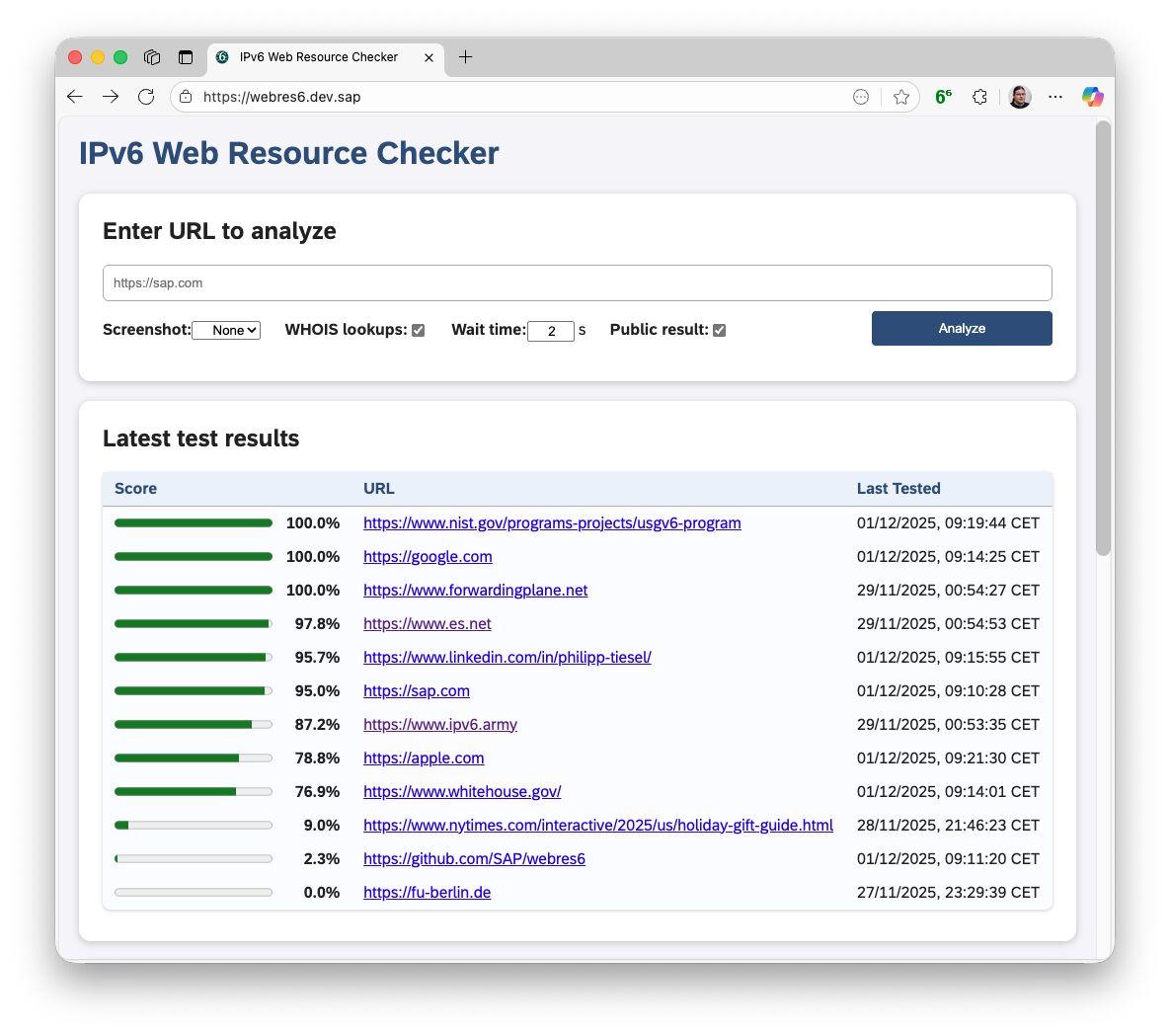
<p>Did you every ask yourself whether your <a href="/tags/web/" rel="tag">#Web</a> thingy is ready for an <a href="/tags/ipv6/" rel="tag">#IPv6</a>-only audience?</p><p>This question is surprisingly hard to answer as one has to account for resources dynamically loaded by JS and DNS dependencies. As a small step within <a href="/tags/sap/" rel="tag">#SAP</a> 's journey to become IPv6-only ready, I built an <a href="/tags/opensource/" rel="tag">#OpenSource</a> tool that helps answering this question.</p><p>You can try out the IPv6 Web Resource Checker at <a href="https://webres6.dev.sap/" rel="nofollow"><span class="invisible">https://</span>webres6.dev.sap/</a> or fork it on <a href="https://github.com/SAP/webres6/" rel="nofollow"><span class="invisible">https://</span>github.com/SAP/webres6/</a></p><p>Let's see who finds surprising scores</p>

<p>I’m genuinely confuzzled: why is <a href="/tags/ipv6/" rel="tag">#ipv6</a> such a basket case in implementations at this very late date? When I have network issues, it seems to mostly come down to ipv6 being a right nuisance. (Yes, or how it is handled, but…)</p>

Now my <a href="/tags/ipv6/" rel="tag">#IPv6</a> only network has IPv6 to IPv4 egress using DNS64 in <a href="/tags/unbound/" rel="tag">#unbound</a> and an af-to rule for 64:FF9B::/96. I just need to stand up an IPv6 only NGINX reverse proxy and the whole network will have native IPv6 and IPv4 access to the internet.<br><br>The configuration is very simple and once in place is set and forget.<br><br>Do not roll out IPv4 for any new deployments. Also think about migrating away from dual stack.<br><br><a href="/tags/openbsd/" rel="tag">#OpenBSD</a>

<p>What will we all grouse about once GitHub is available on <a href="/tags/ipv6/" rel="tag">#IPv6</a>?</p>

<p>So, I have been exploring <a href="/tags/nncp/" rel="tag">#NNCP</a> lately, and have it kind of sort of working...</p><p>But I struggle with a couple things:</p><p>How do you support multiple ip addresses from nncp-daemon?</p><p><a href="https://nncp.mirrors.quux.org/nncp_002ddaemon.html#index-nncp_002ddaemon" rel="nofollow" class="ellipsis" title="nncp.mirrors.quux.org/nncp_002ddaemon.html#index-nncp_002ddaemon"><span class="invisible">https://</span><span class="ellipsis">nncp.mirrors.quux.org/nncp_002</span><span class="invisible">ddaemon.html#index-nncp_002ddaemon</span></a></p><p>Passing the -bind argument multiple times seems to be a last-argument-wins situation. It is unclear if wildcards work, if any. I have both <a href="/tags/ipv4/" rel="tag">#IPv4</a> and <a href="/tags/ipv6/" rel="tag">#IPv6</a> addresses, as well as multiples of each...</p><p>Run the daemon multiple times listening on different ports seems kind of excessive...</p>