
<p>🦝🧠 Researchers have found that <a href="/tags/raccoons/" rel="tag">#raccoons</a> pack a primate-like number of neurons into their small brains, including specialized cells once thought to be exclusive to <a href="/tags/humans/" rel="tag">#humans</a> and great <a href="/tags/apes/" rel="tag">#apes</a>.</p><p>This "neural density" helps explain their ability to solve complex puzzles and remember solutions for years, often outperforming <a href="/tags/dogs/" rel="tag">#dogs</a> and <a href="/tags/cats/" rel="tag">#cats</a>.</p><p>👉 <a href="https://www.good.is/raccoon-science" rel="nofollow"><span class="invisible">https://</span>www.good.is/raccoon-science</a></p><p><a href="/tags/biology/" rel="tag">#biology</a> <a href="/tags/wildlife/" rel="tag">#wildlife</a> <a href="/tags/neuroscience/" rel="tag">#neuroscience</a> <a href="/tags/nature/" rel="tag">#nature</a> <a href="/tags/evolution/" rel="tag">#evolution</a> <a href="/tags/science/" rel="tag">#science</a> <a href="/tags/behavior/" rel="tag">#behavior</a> <a href="/tags/stem/" rel="tag">#stem</a></p>
neuroscience

<p>Do you remember where you first learned about Neurons and that the brain is made of them and that they basically are who we are? Was it at school, high school, university? Was it from a parent or a friend? Or maybe from a book?<br>I'm just curious about everyone's experiences :)</p><p><a href="/tags/neuroscience/" rel="tag">#Neuroscience</a> <a href="/tags/neurons/" rel="tag">#Neurons</a> <a href="/tags/brain/" rel="tag">#Brain</a></p>
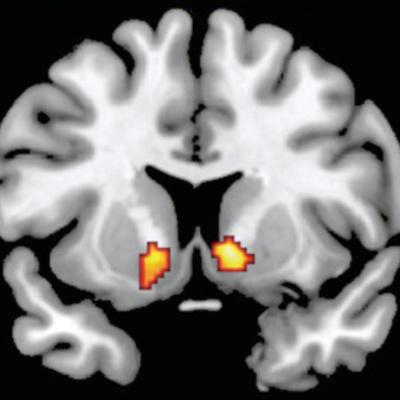
<p>Now out in @[email protected] : <br>“Deconstructing neural predictors of risky choice”! <br>Take-home point : <br>At least two systems (not one) predict risky choice — but both are affective! ( <a href="/tags/neuroscience/" rel="tag">#neuroscience</a> )</p><p><a href="https://academic.oup.com/pnasnexus/advance-article/doi/10.1093/pnasnexus/pgaf204/8168828" rel="nofollow" class="ellipsis" title="academic.oup.com/pnasnexus/advance-article/doi/10.1093/pnasnexus/pgaf204/8168828"><span class="invisible">https://</span><span class="ellipsis">academic.oup.com/pnasnexus/adv</span><span class="invisible">ance-article/doi/10.1093/pnasnexus/pgaf204/8168828</span></a></p>
Edited 290d ago

<p>We want to hear from you! <span class="h-card"><a href="https://mastodon.social/@thetransmitter" class="u-url mention" rel="nofollow noopener noreferrer" target="_blank">@<span>thetransmitter</span></a></span> and <span class="h-card"><a href="https://neuromatch.social/@neuromatch" class="u-url mention" rel="nofollow noopener noreferrer" target="_blank">@<span>neuromatch</span></a></span> are teaming up to better understand how to support early-career researchers. Make sure your voice is heard. <br><a href="https://www.thetransmitter.org/early-career-researchers/what-kinds-of-support-do-early-career-researchers-need/?utm_source=mastodon&utm_medium=org-social&utm_campaign=20250804-ecr-neuromatch-survey" rel="nofollow" class="ellipsis" title="www.thetransmitter.org/early-career-researchers/what-kinds-of-support-do-early-career-researchers-need/?utm_source=mastodon&utm_medium=org-social&utm_campaign=20250804-ecr-neuromatch-survey"><span class="invisible">https://</span><span class="ellipsis">www.thetransmitter.org/early-c</span><span class="invisible">areer-researchers/what-kinds-of-support-do-early-career-researchers-need/?utm_source=mastodon&utm_medium=org-social&utm_campaign=20250804-ecr-neuromatch-survey</span></a></p><p><a href="/tags/neuroscience/" rel="tag">#neuroscience</a></p>