
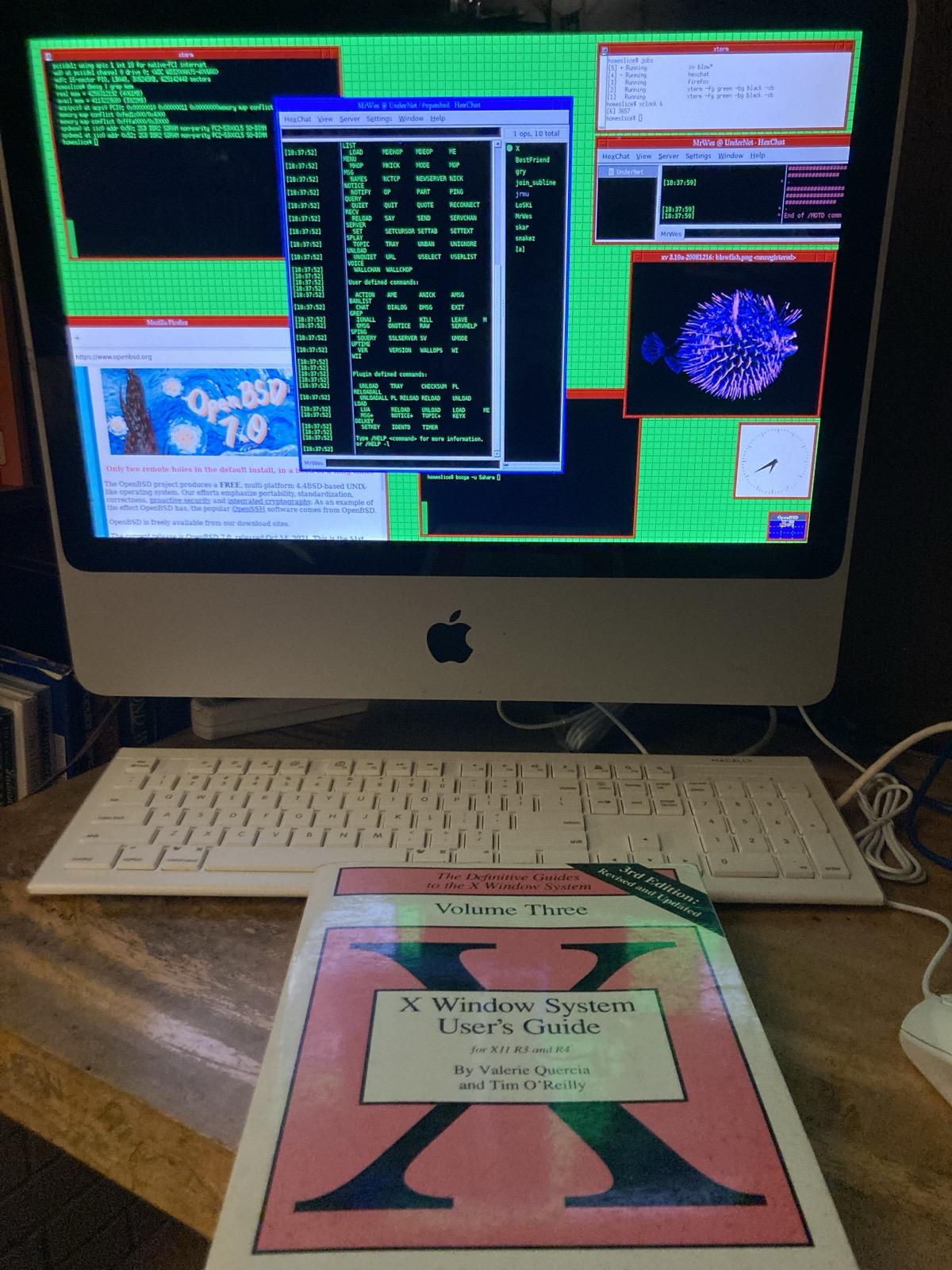





viper.wsb.onl upgraded to <a href="/tags/openbsd/" rel="tag">#OpenBSD</a> 7.7<br>
openbsd
I am once again requesting that anyone who has personally witnessed <a href="/tags/openbsd/" rel="tag">#openbsd</a> boot on an RK3588-equipped MNT Reform laptop come forward<br>
<p>"Happy Birthday, Linuks"</p><p><a href="/tags/unix_surrealism/" rel="tag">#unix_surrealism</a> <a href="/tags/openbsd/" rel="tag">#openbsd</a> <a href="/tags/linux/" rel="tag">#linux</a> <a href="/tags/technomage/" rel="tag">#technomage</a> <a href="/tags/birthday/" rel="tag">#birthday</a></p>
<p>Better the *daemon* you know than the *devil* you don't<br><img src="https://neodb.social/media/emoji/bsd.cafe/netbsd.png" class="emoji" alt=":netbsd:" title=":netbsd:"> <img src="https://neodb.social/media/emoji/bsd.cafe/freebsd.png" class="emoji" alt=":freebsd:" title=":freebsd:"> <img src="https://neodb.social/media/emoji/bsd.cafe/openbsd.png" class="emoji" alt=":openbsd:" title=":openbsd:"> </p><p><a href="/tags/runbsd/" rel="tag">#runbsd</a> <a href="/tags/netbsd/" rel="tag">#netbsd</a> <a href="/tags/freebsd/" rel="tag">#freebsd</a> <a href="/tags/openbsd/" rel="tag">#openbsd</a></p>
Edited 337d ago
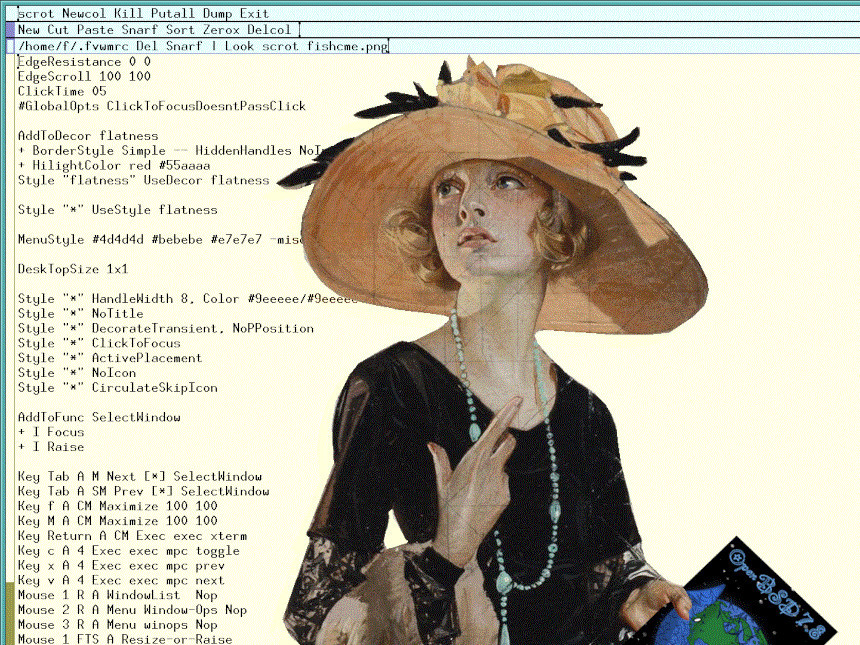
<p>rio-like configuration for base openbsd fvwm2</p><p><a href="https://nein.triapul.cz/technology/openbsd/fvwm/" rel="nofollow" class="ellipsis" title="nein.triapul.cz/technology/openbsd/fvwm/"><span class="invisible">https://</span><span class="ellipsis">nein.triapul.cz/technology/ope</span><span class="invisible">nbsd/fvwm/</span></a></p><p><a href="/tags/rio/" rel="tag">#rio</a> <a href="/tags/fvwm/" rel="tag">#fvwm</a> <a href="/tags/plan9/" rel="tag">#plan9</a> <a href="/tags/openbsd/" rel="tag">#openbsd</a> <a href="/tags/fishlinux/" rel="tag">#fishlinux</a> <a href="/tags/serpico/" rel="tag">#serpico</a></p>
Edited 153d ago
Having toyed around for a while in <a href="/tags/qemu/" rel="tag">#QEMU</a> <a href="/tags/vm/" rel="tag">#VM</a> boxes with <a href="/tags/freebsd/" rel="tag">#FreeBSD</a>, <a href="/tags/openbsd/" rel="tag">#OpenBSD</a> and <a href="/tags/netbsd/" rel="tag">#NetBSD</a> as well. I found that <a href="/tags/gpart/" rel="tag">#gpart</a> in FreeBSD is intuitive and easy to use for disk partition manipulation, followed by gpt in NetBSD. For me, powerful and flexible as fdisk is, it has always been mysteriously difficult and fighting.<br><a href="/tags/usebsd/" rel="tag">#UseBSD</a> <a href="/tags/runbsd/" rel="tag">#RUNBSD</a> <a href="/tags/bsd/" rel="tag">#BSD</a> <a href="/tags/foss/" rel="tag">#FOSS</a> <a href="/tags/unix/" rel="tag">#UNIX</a><br>
And oh boy all terms seem so foreign to me as a long time <a href="/tags/linux/" rel="tag">#Linux</a> user. The same disk is called ada0 with a partition like ada0p2 in <a href="/tags/freebsd/" rel="tag">#FreeBSD</a>, will be called something like sd0 with sd0h in <a href="/tags/openbsd/" rel="tag">#OpenBSD</a>, ld0 and dk2 in <a href="/tags/netbsd/" rel="tag">#NetBSD</a> . Then to experiment, all the <a href="/tags/dkctl/" rel="tag">#dkctl</a>, <a href="/tags/disklabel/" rel="tag">#disklabel</a> and <a href="/tags/fdisk/" rel="tag">#fdisk</a> commands are like blue and red wires on a dynamite you have to get rid of 😱. Linux distros nowadays seem to be going to the <a href="/tags/gdisk/" rel="tag">#gdisk</a> way which feels very much like <a href="/tags/gpart/" rel="tag">#gpart</a> in FreeBSD.<br><a href="/tags/usebsd/" rel="tag">#UseBSD</a> <a href="/tags/runbsd/" rel="tag">#RUNBSD</a> <a href="/tags/bsd/" rel="tag">#BSD</a> <a href="/tags/foss/" rel="tag">#FOSS</a> <a href="/tags/unix/" rel="tag">#UNIX</a> <a href="/tags/linux/" rel="tag">#Linux</a><br>
Edited 137d ago
<p>Advertisement: We are happy to welcome our new sponsor at <a href="/tags/boxybsd/" rel="tag">#BoxyBSD</a>: ST-Hosting.com </p><p>ST-Hosting.com stands for performance, stability, and pragmatic solutions and hosting like:</p><p>- LXC & KVM servers on AMD EPYC, Ryzen, Intel Xeon systems<br>- Fair pricing and direct support from Germany<br>- Hosting made in Germany</p><p>We’re excited to have <a href="https://st-hosting.com" rel="nofollow"><span class="invisible">https://</span>st-hosting.com</a> on board! You can immediately start to provision your BSD based boxes (like <a href="/tags/freebsd/" rel="tag">#FreeBSD</a>, <a href="/tags/openbsd/" rel="tag">#OpenBSD</a>, <a href="/tags/netbsd/" rel="tag">#NetBSD</a>,...) at BoxyBSD in our new location in Germany, Nuremberg. Also, stay tuned for <a href="/tags/fosdem/" rel="tag">#Fosdem</a> ;) Thanks a lot!</p><p>cc: <a href="https://gyptazy.com/fedi/gyptazy" rel="nofollow">@gyptazy</a> <br><a href="/tags/runbsd/" rel="tag">#RUNBSD</a> <a href="/tags/bsd/" rel="tag">#BSD</a> <a href="/tags/opensource/" rel="tag">#OpenSource</a> <a href="/tags/hosting/" rel="tag">#Hosting</a></p>
<p>Static Web Hosting on the Intel N150: FreeBSD, SmartOS, NetBSD, OpenBSD and Linux Compared</p><p>Update: This post has been updated to include Docker benchmarks and a comparison of container overhead versus FreeBSD Jails and illumos Zones.</p><p><a href="https://it-notes.dragas.net/2025/11/19/static-web-hosting-intel-n150-freebsd-smartos-netbsd-openbsd-linux/" rel="nofollow" class="ellipsis" title="it-notes.dragas.net/2025/11/19/static-web-hosting-intel-n150-freebsd-smartos-netbsd-openbsd-linux/"><span class="invisible">https://</span><span class="ellipsis">it-notes.dragas.net/2025/11/19</span><span class="invisible">/static-web-hosting-intel-n150-freebsd-smartos-netbsd-openbsd-linux/</span></a></p><p><a href="/tags/itnotes/" rel="tag">#ITNotes</a> <a href="/tags/freebsd/" rel="tag">#freebsd</a> <a href="/tags/illumos/" rel="tag">#illumos</a> <a href="/tags/jail/" rel="tag">#jail</a> <a href="/tags/linux/" rel="tag">#linux</a> <a href="/tags/netbsd/" rel="tag">#netbsd</a> <a href="/tags/openbsd/" rel="tag">#openbsd</a> <a href="/tags/ownyourdata/" rel="tag">#ownyourdata</a> <a href="/tags/server/" rel="tag">#server</a> <a href="/tags/smartos/" rel="tag">#smartos</a> <a href="/tags/sysadmin/" rel="tag">#sysadmin</a> <a href="/tags/zoneshosting/" rel="tag">#zoneshosting</a></p>
Edited 137d ago
Here's a question that I cannot find a definitive answer to. I'm running X on <a href="/tags/openbsd/" rel="tag">#OpenBSD</a> and I have started configuring my .Xresources but I can't find out if it matters whether a line has capitals or all lowercase. For example:<br><br>XTerm*faceSize: 10<br><br>is this just the same does it not matter ?<br><br>xterm*faceSize: 10<br><br>Sorry but if it does not matter, if I start XTerm or xterm then that's good as having both just now plays on my OCD. :D<br><br>
Edited 325d ago
So far in my .vimrc I have one solitary plugin morhetz/gruvbox. I will add more but not lots as I quite like minimal. <a href="/tags/vim/" rel="tag">#Vim</a> <a href="/tags/openbsd/" rel="tag">#OpenBSD</a><br>
I'm a <a href="/tags/neovim/" rel="tag">#Neovim</a> user but those voices in my head keep trying to persuade me to use <a href="/tags/vim/" rel="tag">#Vim</a> instead. I've spent days reading folks configs and reasons for and against and no I'm not considering Vi, Ed or the church. I've tried Helix too and it's just not suited the back to my roots style. I'm loving <a href="/tags/openbsd/" rel="tag">#OpenBSD</a> with ksh and I don't know why but Vim just keeps calling. Think the only way to resolve this would be to run both side by side ??? I guess I'm just showing my age by going old school. <a href="/tags/runbsd/" rel="tag">#RunBSD</a><br>
Another thing is, in <a href="/tags/freebsd/" rel="tag">#FreeBSD</a> and also <a href="/tags/linux/" rel="tag">#Linux</a>, using <a href="/tags/efibootmgr/" rel="tag">#efibootmgr</a> to change <a href="/tags/uefi/" rel="tag">#UEFI</a> boot entries is quite handy. But it is not available for <a href="/tags/openbsd/" rel="tag">#OpenBSD</a> and <a href="/tags/netbsd/" rel="tag">#NetBSD</a> . However seems NetBSD has got something cooking already in -current and it is called efi.<br><a href="/tags/usebsd/" rel="tag">#UseBSD</a> <a href="/tags/runbsd/" rel="tag">#RUNBSD</a> <a href="/tags/bsd/" rel="tag">#BSD</a> <a href="/tags/foss/" rel="tag">#FOSS</a> <a href="/tags/unix/" rel="tag">#UNIX</a><br>
<p>Does anyone manage to use the <a href="/tags/keyboard/" rel="tag">#keyboard</a> media controls in <a href="/tags/freebsd/" rel="tag">#FreeBSD</a> <a href="/tags/xorg/" rel="tag">#Xorg</a>? I have a DasKeyboard with a volume jog that works out of the box on <a href="/tags/openbsd/" rel="tag">#OpenBSD</a>. </p><p>The events seems to be working using xev tester. It regognizes the RaiseVolume and LowerVolume events. </p><p>Not sure where to actually start looking for a solution. </p><p><a href="/tags/runbsd/" rel="tag">#RunBSD</a></p>
<p>The slides, the video, and the text behind my presentation at EuroBSDCon 2024 - 'Why and how we're migrating many of our servers from Linux to the BSDs.'</p><p><a href="https://it-notes.dragas.net/2024/10/03/i-solve-problems-eurobsdcon/" rel="nofollow" class="ellipsis" title="it-notes.dragas.net/2024/10/03/i-solve-problems-eurobsdcon/"><span class="invisible">https://</span><span class="ellipsis">it-notes.dragas.net/2024/10/03</span><span class="invisible">/i-solve-problems-eurobsdcon/</span></a></p><p><a href="/tags/itnotes/" rel="tag">#ITNotes</a> <a href="/tags/freebsd/" rel="tag">#FreeBSD</a> <a href="/tags/openbsd/" rel="tag">#OpenBSD</a> <a href="/tags/netbsd/" rel="tag">#NetBSD</a> <a href="/tags/runbsd/" rel="tag">#RunBSD</a> <a href="/tags/it/" rel="tag">#IT</a> <a href="/tags/sysadmin/" rel="tag">#SysAdmin</a> <a href="/tags/eurobsdcon/" rel="tag">#EuroBSDCon</a> <a href="/tags/ebc24/" rel="tag">#EBC24</a> <a href="/tags/eurobsdcon24/" rel="tag">#EuroBSDCon24</a> <a href="/tags/eurobsdcon2024/" rel="tag">#EuroBSDCon2024</a> <a href="/tags/notehub/" rel="tag">#NoteHUB</a></p>
I had to reinstall <a href="/tags/openbsd/" rel="tag">#openbsd</a> on x240 because the /usr slice ran out of space during the last sysupgrade. I'm still amazed how fast and easy it is to install. The only os that I can get from 0 to usable faster is <a href="/tags/9front/" rel="tag">#9front</a><br>
I submitted a Pull Request to update MacPorts' OpenSSH to 9.9p2 here:<br><br><a href="https://github.com/macports/macports-ports/pull/27712" rel="nofollow" class="ellipsis" title="github.com/macports/macports-ports/pull/27712"><span class="invisible">https://</span><span class="ellipsis">github.com/macports/macports-p</span><span class="invisible">orts/pull/27712</span></a><br><br>GitHub Continuous Integration checks are running. Hopefully they will be OK (Update 2 out of 3 have completed successfully, which is a good sign).<br><br>I tested locally without issues, but I also build against LibreSSL locally, whereas GitHub CI and MacPorts' Build Bots I think default to OpenSSL.<br><br>This release is to address some vulnerabilities identified by Qualys and other less critical bugs.<br><br>More details from upstream here:<br><br><a href="https://www.openssh.com/releasenotes.html#9.9p2" rel="nofollow" class="ellipsis" title="www.openssh.com/releasenotes.html#9.9p2"><span class="invisible">https://</span><span class="ellipsis">www.openssh.com/releasenotes.h</span><span class="invisible">tml#9.9p2</span></a><br><br>Of particular note:<br><br>" Fix CVE-2025-26465 - ssh(1) in OpenSSH versions 6.8p1 to 9.9p1<br>(inclusive) contained a logic error that allowed an on-path<br>attacker (a.k.a MITM) to impersonate any server when the<br>VerifyHostKeyDNS option is enabled. This option is off by default.<br><br>* Fix CVE-2025-26466 - sshd(8) in OpenSSH versions 9.5p1 to 9.9p1<br>(inclusive) is vulnerable to a memory/CPU denial-of-service related<br>to the handling of SSH2MSGPING packets. This condition may be<br>mitigated using the existing PerSourcePenalties feature.<br><br>Both vulnerabilities were discovered and demonstrated to be exploitable<br>by the Qualys Security Advisory team. We thank them for their detailed<br>review of OpenSSH."<br><br>If I read everything correctly, these vulnerabilities primarily only impact the Portable OpenSSH releases (which is what MacPorts uses). However, OpenBSD has also issued the following errata to mitigate one of the issues as it also appears to impact OpenBSD users:<br><br>"008: SECURITY FIX: February 18, 2025 All architectures<br>sshd(8) denial of service relating to SSH2MSGPING handling. ssh(1) server impersonation when VerifyHostKeyDNS enabled.<br>A source code patch exists which remedies this problem."<br><br>Source code patch for OpenBSD here:<br><br><a href="https://ftp.openbsd.org/pub/OpenBSD/patches/7.6/common/008_ssh.patch.sig" rel="nofollow" class="ellipsis" title="ftp.openbsd.org/pub/OpenBSD/patches/7.6/common/008_ssh.patch.sig"><span class="invisible">https://</span><span class="ellipsis">ftp.openbsd.org/pub/OpenBSD/pa</span><span class="invisible">tches/7.6/common/008_ssh.patch.sig</span></a><br><br>Having written as much, it appears as if the main OpenSSH version for OpenBSD is still 9.9, so I am not going to make a submission for undeadly.org Other editors reading this are welcome to though, I just kind of have a lot of other stuff on my plate at present.<br><br>As usual, I also have too much going on in my life to want more responsibilities such as commit access within MacPorts, so it's up to someone else to merge it.<br><br>Update <a href="/tags/2/" rel="tag">#2</a>: I also decided to be a good Samaritan and reported the issue to Apple. Not that they have ever acknowledged my efforts for such things nor paid me from their bug bounty program in years of doing similar things. Because, OFC, Apple can't spare a penny to anyone like me. Maybe Qualys already reported it to them anyway (though they would have no obligation to do so, they did find the vulns and reported them upstream as would be expected).<br><br><a href="/tags/openssh/" rel="tag">#OpenSSH</a> <a href="/tags/macports/" rel="tag">#MacPorts</a> <a href="/tags/secureshell/" rel="tag">#SecureShell</a> <a href="/tags/infosec/" rel="tag">#InfoSec</a> <a href="/tags/cryptography/" rel="tag">#Cryptography</a> <a href="/tags/security/" rel="tag">#Security</a> <a href="/tags/cve/" rel="tag">#CVE</a> <a href="/tags/patchtuesday/" rel="tag">#PatchTuesday</a> <a href="/tags/opensource/" rel="tag">#OpenSource</a> <a href="/tags/openbsd/" rel="tag">#OpenBSD</a> <a href="/tags/macos/" rel="tag">#macOS</a><br>
Edited 1y ago
<p>Is everything terrible again? Let's focus on something completely different. Do you write amazing, perfect code on Linux or the BSDs? Well stop reading and get out. For the rest of us, how do we secure our systems? I've put together a survey on Source Code Sandboxing, <a href="https://kristaps.bsd.lv/devsecflops" rel="nofollow"><span class="invisible">https://</span>kristaps.bsd.lv/devsecflops</a>, which surveys the practical complexity and uptake of sandbox tools like seccomp, landlock, pledge, and capsicum.</p><p>If you've ever interfaced any of the tools I've mentioned, or want to mention another, head on over to <a href="https://github.com/kristapsdz/dev_sec_flops" rel="nofollow" class="ellipsis" title="github.com/kristapsdz/dev_sec_flops"><span class="invisible">https://</span><span class="ellipsis">github.com/kristapsdz/dev_sec_</span><span class="invisible">flops</span></a> and make a pull request.</p><p>Enjoy! <a href="/tags/linux/" rel="tag">#Linux</a> <a href="/tags/openbsd/" rel="tag">#openbsd</a> <a href="/tags/freebsd/" rel="tag">#freebsd</a> <a href="/tags/programming/" rel="tag">#programming</a></p>
Finally tried <a href="/tags/netbsd/" rel="tag">#NetBSD</a> 10.1 RELEASE baremetal on my <a href="/tags/thinkpad/" rel="tag">#ThinkPad</a> <a href="/tags/t470s/" rel="tag">#T470s</a>. Good news is most things seem to work out of box: WiFi, touchpad, i915 drived video card. Bad news is, suspend/wakeup (S3) not working. It appears suspend worked well since after issuing sysctl -w hw.acpi.sleep.state=3 the laptop went to sleep with blinking power led, fan stops. However, at wakeup keyboard just stops responding, even swtiching tty with Ctrl-Alt-Fn keys. WiFi usually wakes up just fine since I gain ssh session back shortly after wakeups. I will conclude a major issue for a system if suspend/wakeup won't work for a laptop. I simply cannot imagine having to poweroff a laptop every day before going to bed. It is kinda a sueprise to me since I assume ThinkPad laptops usually get along well with <a href="/tags/bsd/" rel="tag">#BSD</a> and <a href="/tags/linux/" rel="tag">#Linux</a> systems.<br><br>FYI, S3 suspend/wakeup works flawlessly with <a href="/tags/freebsd/" rel="tag">#FreeBSD</a> and <a href="/tags/openbsd/" rel="tag">#OpenBSD</a> on this laptop without any hack.<br><br><a href="/tags/bsd/" rel="tag">#BSD</a> <a href="/tags/runbsd/" rel="tag">#RunBSD</a> <a href="/tags/unix/" rel="tag">#Unix</a> <a href="/tags/foss/" rel="tag">#FOSS</a><br>
<p>List of hosts for <a href="/tags/remoteputerrental/" rel="tag">#remotePuterRental</a> collected from others' queries, with URLs on first reference where provided …</p><p><a href="https://mastodon.bsd.cafe/@emilianosandri/115543215260941334" rel="nofollow" class="ellipsis" title="mastodon.bsd.cafe/@emilianosandri/115543215260941334"><span class="invisible">https://</span><span class="ellipsis">mastodon.bsd.cafe/@emilianosan</span><span class="invisible">dri/115543215260941334</span></a><br>20251113, re <a href="/tags/bsd/" rel="tag">#BSD</a>-friendly European cloud provider (using Contabo with no issues):<br>— <a href="/tags/freebsd/" rel="tag">#FreeBSD</a>: Hetzner <a href="https://www.hetzner.com/cloud/" rel="nofollow"><span class="invisible">https://</span>www.hetzner.com/cloud/</a> -may need to supply own custom image, etc; Netcup; OVH;<br>— {Free,Open}BSD: TransIP;<br>— <a href="/tags/openbsd/" rel="tag">#OpenBSD</a>: OpenBSD Amsterdam <a href="https://openbsd.amsterdam/" rel="nofollow"><span class="invisible">https://</span>openbsd.amsterdam/</a> .</p><p>…</p><p><a href="/tags/virtualprivateserver/" rel="tag">#VirtualPrivateServer</a> <a href="/tags/vpshost/" rel="tag">#VPSHost</a> <a href="/tags/vpshosting/" rel="tag">#VPSHosting</a></p>
Edited 129d ago
<p>I've been gifted a Thinkpad X220 that's been lying dormant a number of years. </p><p>Instead of my usual Debian I _was_ going to install Arch, but now I'm thinking of making it a dedicated BSD machine. Going to give OpenBSD a go. <img src="https://neodb.social/media/emoji/fosstodon.org/openbsd.png" class="emoji" alt=":openbsd:" title=":openbsd:"> </p><p><a href="/tags/thinkpad/" rel="tag">#Thinkpad</a> <a href="/tags/openbsd/" rel="tag">#OpenBSD</a> <a href="/tags/runbsd/" rel="tag">#RunBSD</a></p>
vi is vi. it should be vi, and no more.<br><br>Bob Beck (OpenBSD) on why vi should be and stay vi.<br><br><a href="/tags/openbsd/" rel="tag">#OpenBSD</a> <a href="/tags/vi/" rel="tag">#vi</a><br><br><a href="https://marc.info/?l=openbsd-misc&m=115820462402673&w=2" rel="nofollow" class="ellipsis" title="marc.info/?l=openbsd-misc&m=115820462402673&w=2"><span class="invisible">https://</span><span class="ellipsis">marc.info/?l=openbsd-misc&m=11</span><span class="invisible">5820462402673&w=2</span></a><br>
<p>I have a theory about 6-month Linux and BSD upgrades having their own kind of "stability" because there's not as far to go between releases <a href="https://zola.passthejoe.net/blog/six-month-stability/" rel="nofollow" class="ellipsis" title="zola.passthejoe.net/blog/six-month-stability/"><span class="invisible">https://</span><span class="ellipsis">zola.passthejoe.net/blog/six-m</span><span class="invisible">onth-stability/</span></a></p><p><a href="/tags/linux/" rel="tag">#Linux</a> <a href="/tags/fedora/" rel="tag">#Fedora</a> <a href="/tags/silverblue/" rel="tag">#Silverblue</a> <a href="/tags/openbsd/" rel="tag">#OpenBSD</a> <a href="/tags/debian/" rel="tag">#Debian</a> <a href="/tags/ubuntu/" rel="tag">#Ubuntu</a></p>
Now my <a href="/tags/ipv6/" rel="tag">#IPv6</a> only network has IPv6 to IPv4 egress using DNS64 in <a href="/tags/unbound/" rel="tag">#unbound</a> and an af-to rule for 64:FF9B::/96. I just need to stand up an IPv6 only NGINX reverse proxy and the whole network will have native IPv6 and IPv4 access to the internet.<br><br>The configuration is very simple and once in place is set and forget.<br><br>Do not roll out IPv4 for any new deployments. Also think about migrating away from dual stack.<br><br><a href="/tags/openbsd/" rel="tag">#OpenBSD</a>
'hello world' i would say.<br><br>some of you might already know me, but for those who dont<br><br>i'm radhitya (al1r4d in the other place) and interested in <a href="/tags/linux/" rel="tag">#linux</a>, <a href="/tags/openbsd/" rel="tag">#openbsd</a>, <a href="/tags/golang/" rel="tag">#golang</a>, <a href="/tags/c/" rel="tag">#c</a>, low-level programming, <a href="/tags/esp32/" rel="tag">#esp32</a>, <a href="/tags/arduino/" rel="tag">#arduino</a>, and <a href="/tags/selfhosting/" rel="tag">#selfhosting</a>.<br><br>i think this should be enough to introduce myself.