<p>Thanks to the <a href="/tags/freebsd/" rel="tag">#FreeBSD</a> Handbook on Ports and the following page, I finally got around to building the drm-kmod port and dependencies so that amdgpu runs properly on 14.2. <img src="https://neodb.social/media/emoji/bsd.network/runbsdBg.png" class="emoji" alt=":runbsdBg:" title=":runbsdBg:"> </p><p><a href="https://forums.freebsd.org/threads/freebsd-14-2-graphics-fix.96365/" rel="nofollow" class="ellipsis" title="forums.freebsd.org/threads/freebsd-14-2-graphics-fix.96365/"><span class="invisible">https://</span><span class="ellipsis">forums.freebsd.org/threads/fre</span><span class="invisible">ebsd-14-2-graphics-fix.96365/</span></a></p><p><a href="/tags/runbsd/" rel="tag">#RunBSD</a> <a href="/tags/bsd/" rel="tag">#BSD</a></p>
Edited 1y ago
<p>For the 31 days of May,<br>I will explore<br>FreeBSD "Beastie" a bit every day. <img src="https://neodb.social/media/emoji/fosstodon.org/freebsd.png" class="emoji" alt=":freebsd:" title=":freebsd:"> </p><p><a href="/tags/freebsd/" rel="tag">#FreeBSD</a> <a href="/tags/runbsd/" rel="tag">#RunBSD</a></p>
<p>Better the *daemon* you know than the *devil* you don't<br><img src="https://neodb.social/media/emoji/bsd.cafe/netbsd.png" class="emoji" alt=":netbsd:" title=":netbsd:"> <img src="https://neodb.social/media/emoji/bsd.cafe/freebsd.png" class="emoji" alt=":freebsd:" title=":freebsd:"> <img src="https://neodb.social/media/emoji/bsd.cafe/openbsd.png" class="emoji" alt=":openbsd:" title=":openbsd:"> </p><p><a href="/tags/runbsd/" rel="tag">#runbsd</a> <a href="/tags/netbsd/" rel="tag">#netbsd</a> <a href="/tags/freebsd/" rel="tag">#freebsd</a> <a href="/tags/openbsd/" rel="tag">#openbsd</a></p>
Edited 337d ago
Having toyed around for a while in <a href="/tags/qemu/" rel="tag">#QEMU</a> <a href="/tags/vm/" rel="tag">#VM</a> boxes with <a href="/tags/freebsd/" rel="tag">#FreeBSD</a>, <a href="/tags/openbsd/" rel="tag">#OpenBSD</a> and <a href="/tags/netbsd/" rel="tag">#NetBSD</a> as well. I found that <a href="/tags/gpart/" rel="tag">#gpart</a> in FreeBSD is intuitive and easy to use for disk partition manipulation, followed by gpt in NetBSD. For me, powerful and flexible as fdisk is, it has always been mysteriously difficult and fighting.<br><a href="/tags/usebsd/" rel="tag">#UseBSD</a> <a href="/tags/runbsd/" rel="tag">#RUNBSD</a> <a href="/tags/bsd/" rel="tag">#BSD</a> <a href="/tags/foss/" rel="tag">#FOSS</a> <a href="/tags/unix/" rel="tag">#UNIX</a><br>
And oh boy all terms seem so foreign to me as a long time <a href="/tags/linux/" rel="tag">#Linux</a> user. The same disk is called ada0 with a partition like ada0p2 in <a href="/tags/freebsd/" rel="tag">#FreeBSD</a>, will be called something like sd0 with sd0h in <a href="/tags/openbsd/" rel="tag">#OpenBSD</a>, ld0 and dk2 in <a href="/tags/netbsd/" rel="tag">#NetBSD</a> . Then to experiment, all the <a href="/tags/dkctl/" rel="tag">#dkctl</a>, <a href="/tags/disklabel/" rel="tag">#disklabel</a> and <a href="/tags/fdisk/" rel="tag">#fdisk</a> commands are like blue and red wires on a dynamite you have to get rid of 😱. Linux distros nowadays seem to be going to the <a href="/tags/gdisk/" rel="tag">#gdisk</a> way which feels very much like <a href="/tags/gpart/" rel="tag">#gpart</a> in FreeBSD.<br><a href="/tags/usebsd/" rel="tag">#UseBSD</a> <a href="/tags/runbsd/" rel="tag">#RUNBSD</a> <a href="/tags/bsd/" rel="tag">#BSD</a> <a href="/tags/foss/" rel="tag">#FOSS</a> <a href="/tags/unix/" rel="tag">#UNIX</a> <a href="/tags/linux/" rel="tag">#Linux</a><br>
Edited 137d ago
<p>Advertisement: We are happy to welcome our new sponsor at <a href="/tags/boxybsd/" rel="tag">#BoxyBSD</a>: ST-Hosting.com </p><p>ST-Hosting.com stands for performance, stability, and pragmatic solutions and hosting like:</p><p>- LXC & KVM servers on AMD EPYC, Ryzen, Intel Xeon systems<br>- Fair pricing and direct support from Germany<br>- Hosting made in Germany</p><p>We’re excited to have <a href="https://st-hosting.com" rel="nofollow"><span class="invisible">https://</span>st-hosting.com</a> on board! You can immediately start to provision your BSD based boxes (like <a href="/tags/freebsd/" rel="tag">#FreeBSD</a>, <a href="/tags/openbsd/" rel="tag">#OpenBSD</a>, <a href="/tags/netbsd/" rel="tag">#NetBSD</a>,...) at BoxyBSD in our new location in Germany, Nuremberg. Also, stay tuned for <a href="/tags/fosdem/" rel="tag">#Fosdem</a> ;) Thanks a lot!</p><p>cc: <a href="https://gyptazy.com/fedi/gyptazy" rel="nofollow">@gyptazy</a> <br><a href="/tags/runbsd/" rel="tag">#RUNBSD</a> <a href="/tags/bsd/" rel="tag">#BSD</a> <a href="/tags/opensource/" rel="tag">#OpenSource</a> <a href="/tags/hosting/" rel="tag">#Hosting</a></p>
I'm a <a href="/tags/neovim/" rel="tag">#Neovim</a> user but those voices in my head keep trying to persuade me to use <a href="/tags/vim/" rel="tag">#Vim</a> instead. I've spent days reading folks configs and reasons for and against and no I'm not considering Vi, Ed or the church. I've tried Helix too and it's just not suited the back to my roots style. I'm loving <a href="/tags/openbsd/" rel="tag">#OpenBSD</a> with ksh and I don't know why but Vim just keeps calling. Think the only way to resolve this would be to run both side by side ??? I guess I'm just showing my age by going old school. <a href="/tags/runbsd/" rel="tag">#RunBSD</a><br>
Why oh why has OpenBSD gotten stuck in my head !? I know there are easier BSD's out there with more software choices and better filesystem's but something keeps making me think about using it. Tell me fedi friends why is this ? <a href="/tags/runbsd/" rel="tag">#RunBSD</a><br>
Another thing is, in <a href="/tags/freebsd/" rel="tag">#FreeBSD</a> and also <a href="/tags/linux/" rel="tag">#Linux</a>, using <a href="/tags/efibootmgr/" rel="tag">#efibootmgr</a> to change <a href="/tags/uefi/" rel="tag">#UEFI</a> boot entries is quite handy. But it is not available for <a href="/tags/openbsd/" rel="tag">#OpenBSD</a> and <a href="/tags/netbsd/" rel="tag">#NetBSD</a> . However seems NetBSD has got something cooking already in -current and it is called efi.<br><a href="/tags/usebsd/" rel="tag">#UseBSD</a> <a href="/tags/runbsd/" rel="tag">#RUNBSD</a> <a href="/tags/bsd/" rel="tag">#BSD</a> <a href="/tags/foss/" rel="tag">#FOSS</a> <a href="/tags/unix/" rel="tag">#UNIX</a><br>
Oooh how have I only just discovered omni completion for <a href="/tags/vim/" rel="tag">#Vim</a> ? You can almost get away with not having a plugin like neoclide/coc.nvim. I might try this method and see how I get on.<br><br>You just add this to your ~/.vimrc and operate as below.<br><br><p>filetype plugin on<br>set omnifunc=syntaxcomplete<a href="/tags/complete/" rel="tag">#Complete</a><br></p>To invoke omni completion, press the Ctrl + x key combination () and then press one of the following key combinations to get the desired result:<br><p><Ctrl + ]>: Tags file completion<br><Ctrl + d>: Definition completion<br><Ctrl + f>: Filename completion (based on files in $PWD)<br><Ctrl + i>: Path pattern completion<br><Ctrl + k>: Dictionary completion<br><Ctrl + l>: Whole line completion<br><Ctrl + n>: Keyword local completion<br><Ctrl + o>: Omni completion completion<br><Ctrl + v>: Command line completion<br></p><a href="/tags/runbsd/" rel="tag">#RunBSD</a><br>
Edited 136d ago
<p>Does anyone manage to use the <a href="/tags/keyboard/" rel="tag">#keyboard</a> media controls in <a href="/tags/freebsd/" rel="tag">#FreeBSD</a> <a href="/tags/xorg/" rel="tag">#Xorg</a>? I have a DasKeyboard with a volume jog that works out of the box on <a href="/tags/openbsd/" rel="tag">#OpenBSD</a>. </p><p>The events seems to be working using xev tester. It regognizes the RaiseVolume and LowerVolume events. </p><p>Not sure where to actually start looking for a solution. </p><p><a href="/tags/runbsd/" rel="tag">#RunBSD</a></p>
<p>The slides, the video, and the text behind my presentation at EuroBSDCon 2024 - 'Why and how we're migrating many of our servers from Linux to the BSDs.'</p><p><a href="https://it-notes.dragas.net/2024/10/03/i-solve-problems-eurobsdcon/" rel="nofollow" class="ellipsis" title="it-notes.dragas.net/2024/10/03/i-solve-problems-eurobsdcon/"><span class="invisible">https://</span><span class="ellipsis">it-notes.dragas.net/2024/10/03</span><span class="invisible">/i-solve-problems-eurobsdcon/</span></a></p><p><a href="/tags/itnotes/" rel="tag">#ITNotes</a> <a href="/tags/freebsd/" rel="tag">#FreeBSD</a> <a href="/tags/openbsd/" rel="tag">#OpenBSD</a> <a href="/tags/netbsd/" rel="tag">#NetBSD</a> <a href="/tags/runbsd/" rel="tag">#RunBSD</a> <a href="/tags/it/" rel="tag">#IT</a> <a href="/tags/sysadmin/" rel="tag">#SysAdmin</a> <a href="/tags/eurobsdcon/" rel="tag">#EuroBSDCon</a> <a href="/tags/ebc24/" rel="tag">#EBC24</a> <a href="/tags/eurobsdcon24/" rel="tag">#EuroBSDCon24</a> <a href="/tags/eurobsdcon2024/" rel="tag">#EuroBSDCon2024</a> <a href="/tags/notehub/" rel="tag">#NoteHUB</a></p>
<p>Some technical details for those interested:<br>The entire FediMeteo setup runs on a FreeBSD VM costing around 4 euros per month. It supports almost all major EU countries (plus the UK), with just a few left to complete. Currently, there are 25 separate jails, each running its own instance of snac, totaling 25 instances. The VM load typically stays around 10%, which increases to 30% when updates are published for countries with larger numbers of cities (currently Germany and Italy). The only time the load spikes is when new countries are announced; during that time, all remote instances connect to all cities to download their details.<br>As for RAM usage, excluding the ZFS cache, it's currently a total of 213 MB. Yes, MB.</p><p><a href="/tags/freebsd/" rel="tag">#FreeBSD</a> <a href="/tags/fedimeteo/" rel="tag">#FediMeteo</a> <a href="/tags/snac/" rel="tag">#snac</a> <a href="/tags/fediverse/" rel="tag">#Fediverse</a> <a href="/tags/efficiency/" rel="tag">#Efficiency</a> <a href="/tags/runbsd/" rel="tag">#RunBSD</a></p>
Having way too much fun re configuring my old <a href="/tags/vim/" rel="tag">#Vim</a> setup and I haven't even got to the LSP and linting side of things yet. That'll get setup a little later probably using ALE and COC but I'm not 100% just yet ? I might even push my config to my git repo to share or allow others to show me the error of my ways.<br><a href="/tags/freebsd/" rel="tag">#FreeBSD</a> <a href="/tags/runbsd/" rel="tag">#RunBSD</a><br>
Finally tried <a href="/tags/netbsd/" rel="tag">#NetBSD</a> 10.1 RELEASE baremetal on my <a href="/tags/thinkpad/" rel="tag">#ThinkPad</a> <a href="/tags/t470s/" rel="tag">#T470s</a>. Good news is most things seem to work out of box: WiFi, touchpad, i915 drived video card. Bad news is, suspend/wakeup (S3) not working. It appears suspend worked well since after issuing sysctl -w hw.acpi.sleep.state=3 the laptop went to sleep with blinking power led, fan stops. However, at wakeup keyboard just stops responding, even swtiching tty with Ctrl-Alt-Fn keys. WiFi usually wakes up just fine since I gain ssh session back shortly after wakeups. I will conclude a major issue for a system if suspend/wakeup won't work for a laptop. I simply cannot imagine having to poweroff a laptop every day before going to bed. It is kinda a sueprise to me since I assume ThinkPad laptops usually get along well with <a href="/tags/bsd/" rel="tag">#BSD</a> and <a href="/tags/linux/" rel="tag">#Linux</a> systems.<br><br>FYI, S3 suspend/wakeup works flawlessly with <a href="/tags/freebsd/" rel="tag">#FreeBSD</a> and <a href="/tags/openbsd/" rel="tag">#OpenBSD</a> on this laptop without any hack.<br><br><a href="/tags/bsd/" rel="tag">#BSD</a> <a href="/tags/runbsd/" rel="tag">#RunBSD</a> <a href="/tags/unix/" rel="tag">#Unix</a> <a href="/tags/foss/" rel="tag">#FOSS</a><br>
<p>Secondary: "Tianve" - HP 250 G3 <br>Kernel: 14.3-RELEASE-p4 amd64<br>Operating System: GHostBSD 25.02<br>KDE Plasma Version: 6.5.2<br>KDE Frameworks Version: 6.19.0<br>Qt Version: 6.9.3<br>Graphics Platform: Wayland</p><p><a href="https://bsd-hardware.info/?probe=102fa9b597" rel="nofollow" class="ellipsis" title="bsd-hardware.info/?probe=102fa9b597"><span class="invisible">https://</span><span class="ellipsis">bsd-hardware.info/?probe=102fa</span><span class="invisible">9b597</span></a></p><p><a href="/tags/ghostbsd/" rel="tag">#GhostBSD</a> <a href="/tags/freebsd/" rel="tag">#FreeBSD</a> <a href="/tags/runbsd/" rel="tag">#RunBSD</a> <a href="/tags/kde/" rel="tag">#KDE</a> <a href="/tags/plasma/" rel="tag">#Plasma</a> <a href="/tags/kde_plasma/" rel="tag">#kde_plasma</a> <a href="/tags/wayland/" rel="tag">#wayland</a> <a href="/tags/screenshot/" rel="tag">#screenshot</a> <a href="/tags/desktop/" rel="tag">#desktop</a> <a href="/tags/unix/" rel="tag">#unix</a></p>
Edited 132d ago
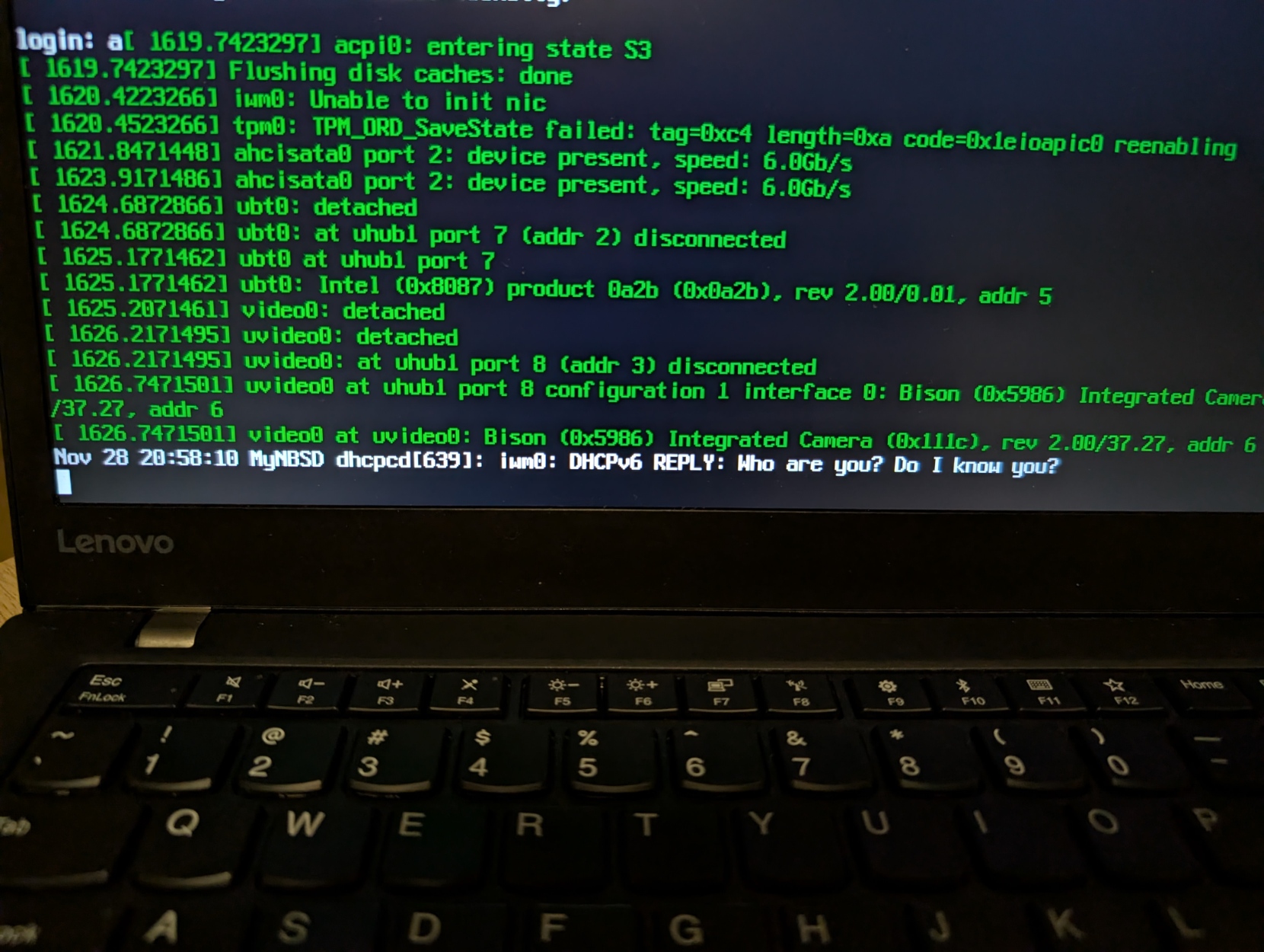
Feels like my laptop is trying to talk to me here!<br><br><a href="/tags/netbsd/" rel="tag">#NetBSD</a> <a href="/tags/bsd/" rel="tag">#BSD</a> <a href="/tags/runbsd/" rel="tag">#RUNBSD</a> <a href="/tags/unix/" rel="tag">#UNIX</a> <a href="/tags/foss/" rel="tag">#FOSS</a><br>
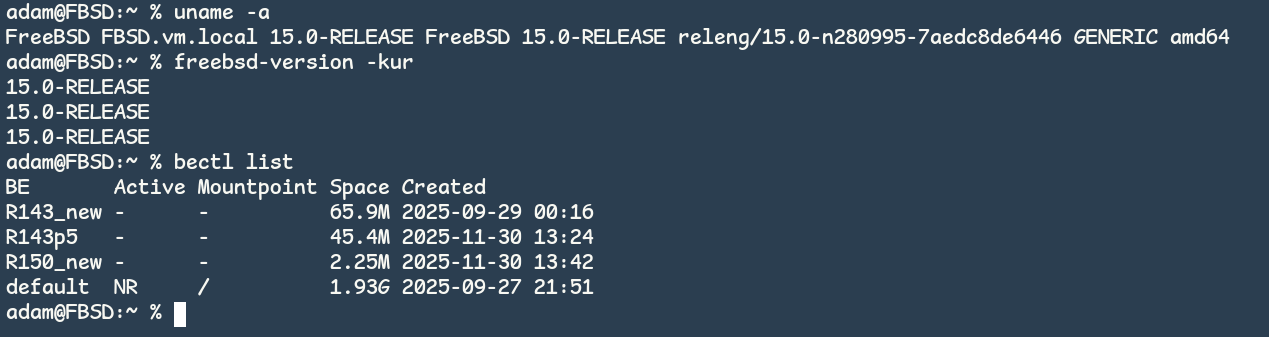
Just upgrade a VM of mine running <a href="/tags/freebsd/" rel="tag">#FreeBSD</a> 14.3 to 15.0 RELEASE, all went well in probably 20 minutes. Super fast, dead simple, and not frightening at all thanks to <a href="/tags/zfs/" rel="tag">#ZFS</a> BE backups. It felt so easy that I am even a bit bored.<br><br><a href="/tags/bsd/" rel="tag">#BSD</a> <a href="/tags/runbsd/" rel="tag">#RUNBSD</a> <a href="/tags/unix/" rel="tag">#Unix</a> <a href="/tags/foss/" rel="tag">#FOSS</a><br>
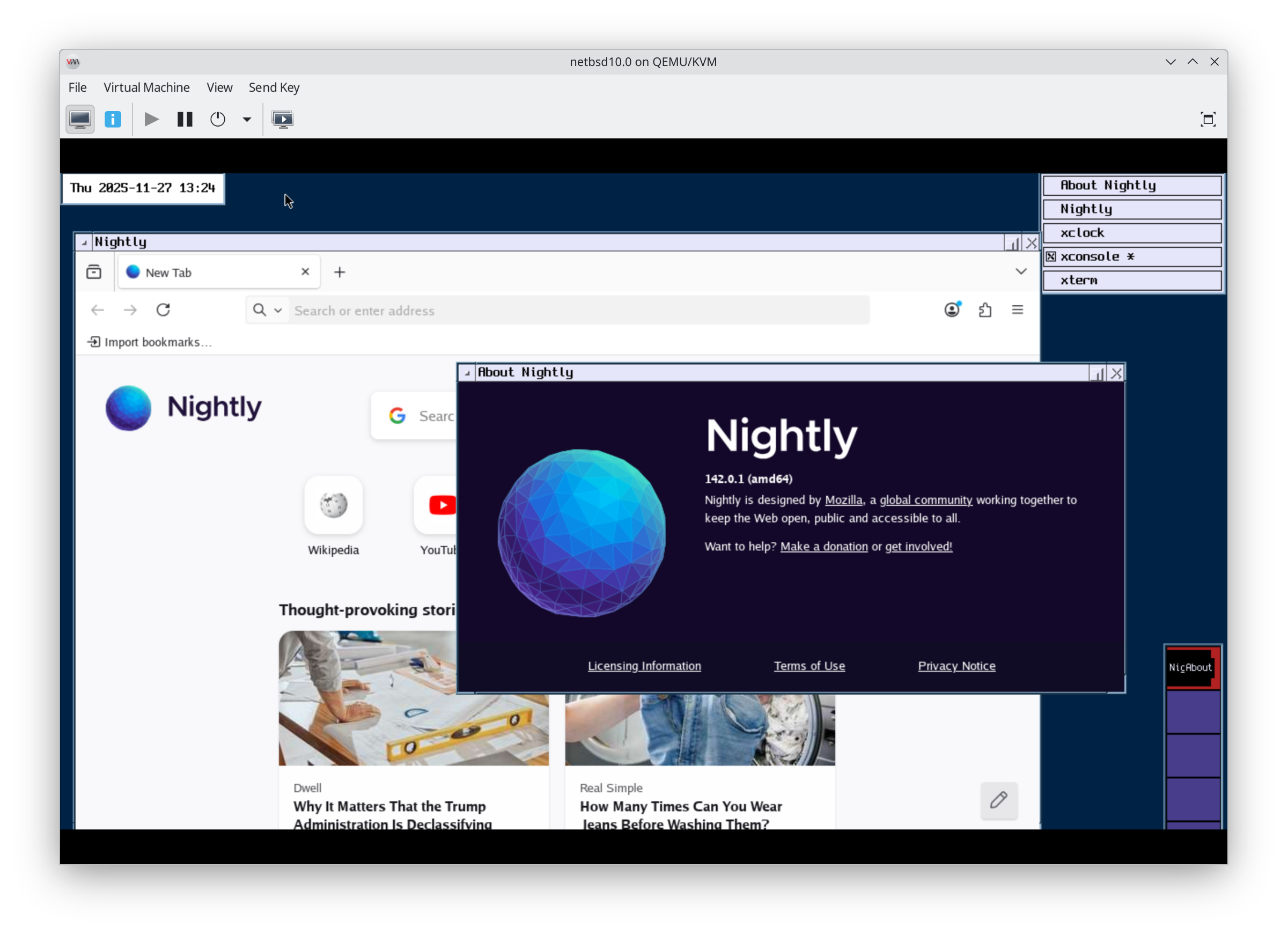
<p>I want this on hardware with network support and modern sleep for laptops. I know "Of course it runs NetBSD", but.....does it work well enough on a laptop?</p><p><a href="/tags/netbsd10/" rel="tag">#netbsd10</a> <a href="/tags/netbsd/" rel="tag">#netbsd</a> <a href="/tags/laptop/" rel="tag">#laptop</a> <a href="/tags/runbsd/" rel="tag">#runbsd</a> <a href="/tags/unix/" rel="tag">#unix</a></p>
<p>People who use NetBSD on their desktop, where do they live? What do they eat?<br>Don't miss the shocking revelations today at 06:66 on OSreporter!</p><p><a href="/tags/netbsd/" rel="tag">#NetBSD</a> <a href="/tags/runbsd/" rel="tag">#RunBSD</a></p>
<p>I've been gifted a Thinkpad X220 that's been lying dormant a number of years. </p><p>Instead of my usual Debian I _was_ going to install Arch, but now I'm thinking of making it a dedicated BSD machine. Going to give OpenBSD a go. <img src="https://neodb.social/media/emoji/fosstodon.org/openbsd.png" class="emoji" alt=":openbsd:" title=":openbsd:"> </p><p><a href="/tags/thinkpad/" rel="tag">#Thinkpad</a> <a href="/tags/openbsd/" rel="tag">#OpenBSD</a> <a href="/tags/runbsd/" rel="tag">#RunBSD</a></p>
<p>Dear friends of the BSD Cafe,</p><p>This idea has been in my mind since the very beginning of this adventure, almost two years ago. Over time, several people have suggested it. But until recently, I felt the timing just wasn’t right - for many reasons. Today, I believe it finally is.</p><p>So I’m happy to announce a new service: <br>The BSD Cafe Journal - <a href="https://journal.bsd.cafe" rel="nofollow"><span class="invisible">https://</span>journal.bsd.cafe</a></p><p>At first, I thought I’d use BSSG for it (I even added multi-author support with this in mind), but in the end, it didn’t feel like the right tool for the job.</p><p>The idea is to create a multi-author space, with content published on a fairly regular basis. A reference point for news, updates, tutorials, technical articles - a place to inform and connect.<br>Just like people in Italy used to stop by cafes to read the newspaper and chat about the day’s news, the BSD Cafe Journal aims to be a space for reading, sharing, and staying informed - all in the spirit of the BSD Cafe.</p><p>What it’s not:<br>It’s not here to replace personal blogs, or excellent newsletters like <span class="h-card"><a href="https://mastodon.bsd.cafe/@vermaden" class="u-url mention" rel="nofollow noopener noreferrer" target="_blank">@<span>vermaden</span></a></span> 's. And it’s not an aggregator.</p><p>What it is:<br>A place where authors can write original content, share links to posts on their own blogs or elsewhere, publish guides, offer insights, or dive into technical explanations. </p><p>The guiding principles are the same as always: positivity, constructive discussion, promoting BSDs and open source in general. No hype (sharing a cool new service is fine, posting non-stop about the latest trend is not), no drama, no politics. The goal is to bring people together, not divide them. To inform, not inflame.<br>Respect, tolerance, and inclusivity are key. Everyone should feel welcome reading the BSD Cafe Journal - never judged, offended, or excluded.</p><p>The platform I’ve chosen is WordPress, for several reasons: it’s portable (runs well on all BSDs), has great built-in role management (contributors, authors, etc.), and - last but not least - supports ActivityPub.<br>This means every author will have their own identity in the Fediverse (like: <span class="h-card"><a href="https://journal.bsd.cafe/author/stefano/" class="u-url mention" rel="nofollow noopener noreferrer" target="_blank">@<span>stefano</span></a></span> ) and can be followed directly, and it’ll also be possible to follow the whole Journal.</p><p>Original and educational content is encouraged, but it’s also perfectly fine to link to existing articles elsewhere. Personally, I’ll link my technical posts from ITNotes whenever I publish them there.</p><p>The goal is simple: a news-oriented site, rich in content, ad-free, respectful of privacy - all under the BSD Cafe umbrella.</p><p>Content coordination will happen in a dedicated Matrix room for authors. There’ll also be a public room for discussing ideas, giving feedback, and sharing suggestions.</p><p>Of course, I can’t do this alone. A journal with no content is just an empty shell.<br>So here’s my call for action:<br>Who’s ready to lend a hand? If you enjoy writing, explaining, sharing your knowledge - the Journal is waiting for you.</p><p><a href="/tags/bsdcafe/" rel="tag">#BSDCafe</a> <a href="/tags/bsdcafeservices/" rel="tag">#BSDCafeServices</a> <a href="/tags/bsdcafeupdates/" rel="tag">#BSDCafeUpdates</a> <a href="/tags/bsdcafeannouncements/" rel="tag">#BSDCafeAnnouncements</a> <a href="/tags/runbsd/" rel="tag">#RunBSD</a> <a href="/tags/freebsd/" rel="tag">#FreeBSD</a> <a href="/tags/netbsd/" rel="tag">#NetBSD</a> <a href="/tags/openbsd/" rel="tag">#OpenBSD</a> <a href="/tags/illumos/" rel="tag">#illumos</a> <a href="/tags/linux/" rel="tag">#Linux</a> <a href="/tags/oss/" rel="tag">#OSS</a> <a href="/tags/opensource/" rel="tag">#OpenSource</a> <a href="/tags/bcjournal/" rel="tag">#BCJournal</a> <a href="/tags/bsdcafejournal/" rel="tag">#BSDCafeJournal</a></p>
Edited 266d ago
Ciao, FediMeteo!<br><br>In the past few days FediMeteo seemed to be having some performance trouble. I dug into it and only found minor issues, until I realised the VM itself had fallen off a cliff. After several reboots it became clear that both bandwidth and I/O latency had dropped to absurd levels. I suspect the provider slapped a cap on it.<br><br>So I took the chance to move everything to another VM and provider, still at 4 euro per month. And starting today, forecasts will be delivered straight from Italy. The performance jump feels like going from a storm to clear skies.<br><br>FediMeteo’s mission goes on. More countries are coming (stay tuned!) and we will keep aiming to serve everything from a 4 euro VM. I do have powerful hardware available, but proving that the project can run on tiny resources is still part of the mission.<br><br><a href="/tags/fedimeteo/" rel="tag">#FediMeteo</a> <a href="/tags/fedimeteoannouncements/" rel="tag">#FediMeteoAnnouncements</a> <a href="/tags/fedimeteoservices/" rel="tag">#FediMeteoServices</a> <a href="/tags/vm/" rel="tag">#VM</a> <a href="/tags/runbsd/" rel="tag">#RunBSD</a> <a href="/tags/freebsd/" rel="tag">#FreeBSD</a><br>
Hello from <a href="/tags/openbsd/" rel="tag">#OpenBSD</a>!<br><br><a href="/tags/runbsd/" rel="tag">#RunBSD</a><br><a href="/tags/gottatrythemall/" rel="tag">#GottaTryThemAll</a><br><a href="/tags/ineedmorethinkpadslol/" rel="tag">#INeedMoreThinkpadsLOL</a><br>
Think it is time to give the <a href="/tags/iwlwifi/" rel="tag">#iwlwifi</a> driver a try on <a href="/tags/freebsd/" rel="tag">#FreeBSD</a> 15.0 for my Intel 8260 wireless card. So far so good, might get some speed gain compared with <a href="/tags/iwm/" rel="tag">#iwm</a> driver but I need to run a few days to make a conclusion. Wiki page here is helpful: <a href="https://wiki.freebsd.org/WiFi/Iwlwifi" rel="nofollow"><span class="invisible">https://</span>wiki.freebsd.org/WiFi/Iwlwifi</a><br><br><a href="/tags/bsd/" rel="tag">#BSD</a> <a href="/tags/runbsd/" rel="tag">#RUNBSD</a> <a href="/tags/foss/" rel="tag">#FOSS</a> <a href="/tags/unix/" rel="tag">#Unix</a><br>