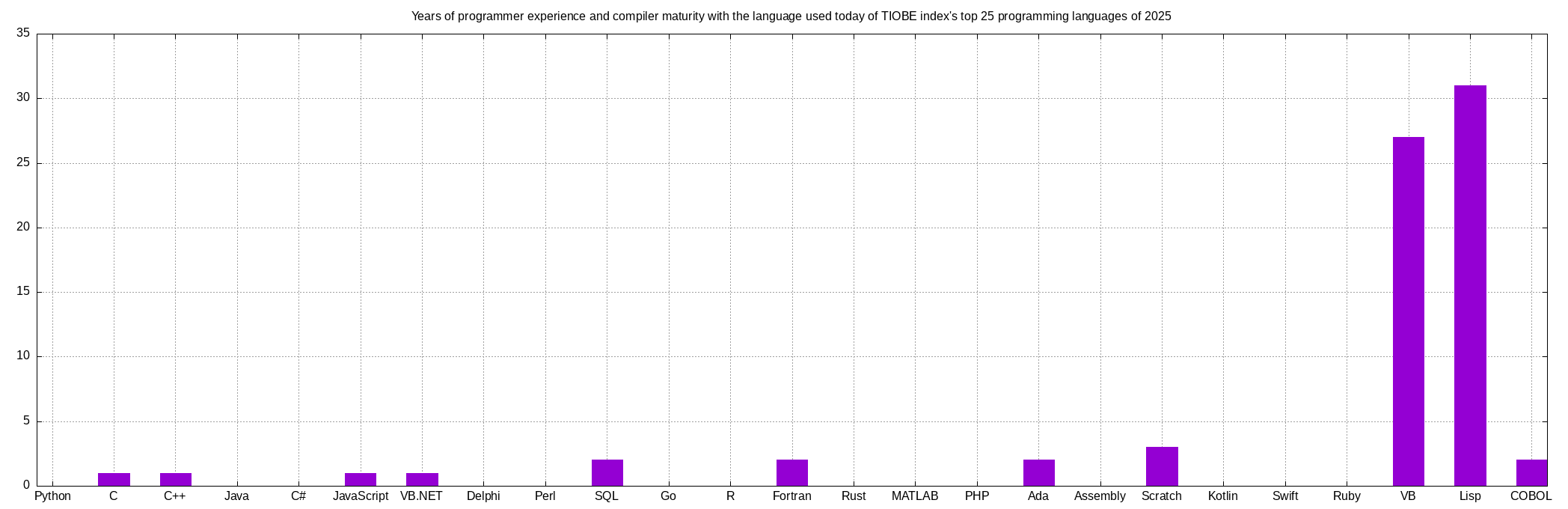
<p>I wrote a followup <a href="/tags/article/" rel="tag">#article</a> about <a href="/tags/lisp/" rel="tag">#lisp</a> 's position in the <a href="/tags/programming/" rel="tag">#programming</a> language <a href="/tags/tiobe/" rel="tag">#TIOBE</a> rankings top 25 for 2025 including notes from the article's thread.</p><p><a href="https://screwlisp.small-web.org/momentary/further-arguments-on-tiobe-lisp/" rel="nofollow" class="ellipsis" title="screwlisp.small-web.org/momentary/further-arguments-on-tiobe-lisp/"><span class="invisible">https://</span><span class="ellipsis">screwlisp.small-web.org/moment</span><span class="invisible">ary/further-arguments-on-tiobe-lisp/</span></a></p><p>where I give examples of possibly (not) including historic languages in the list, <a href="/tags/scheme/" rel="tag">#scheme</a> viewed as a middle-aged lisp,</p><p>speculation about Visual Basic '98 as another completely-stable and reliably supported similarly-to-lisp target,</p><p>examples of how the ANSI standardised language still evolves.</p>
Edited 143d ago