<p>The annual celebration of HTML, HTML Day 2025 is coming up on August 2.</p><p>"On Saturday, August 2nd, 2025, we'll be gathering in places around the world to write and celebrate HTML."</p><p>via <a href="https://xoxo.zone/@waxy/114921694060600175" rel="nofollow" class="ellipsis" title="xoxo.zone/@waxy/114921694060600175"><span class="invisible">https://</span><span class="ellipsis">xoxo.zone/@waxy/11492169406060</span><span class="invisible">0175</span></a></p><p><a href="/tags/theweb/" rel="tag">#TheWeb</a> <a href="/tags/internet/" rel="tag">#internet</a> <a href="/tags/indieweb/" rel="tag">#IndieWeb</a> <a href="/tags/htmlday/" rel="tag">#HTMLDay</a> <a href="/tags/htmlday2025/" rel="tag">#HTMLDay2025</a> <a href="/tags/html/" rel="tag">#html</a> <a href="/tags/personalwebsites/" rel="tag">#PersonalWebsites</a> <a href="/tags/poeticweb/" rel="tag">#PoeticWeb</a></p>
theweb
<p>In a January 1999 interview with The Guardian, Bowie tried to explain his approach to the internet as an artist.</p><p>"Interaction on the Web is a little like a mirror, like communicating with a manifestation of yourself. Because it is so chaotic, so decentralised, I find that using the Web becomes like communicating with a hardware version of me. It's not exactly a doppelgänger, but an alternative version of myself."</p><p><a href="https://cybercultural.com/p/online-identity-bowieworld-1999/" rel="nofollow" class="ellipsis" title="cybercultural.com/p/online-identity-bowieworld-1999/"><span class="invisible">https://</span><span class="ellipsis">cybercultural.com/p/online-ide</span><span class="invisible">ntity-bowieworld-1999/</span></a></p><p><a href="/tags/internet/" rel="tag">#internet</a> <a href="/tags/theweb/" rel="tag">#TheWeb</a> <a href="/tags/cyberculture/" rel="tag">#cyberculture</a> <a href="/tags/onlineidentity/" rel="tag">#OnlineIdentity</a> <a href="/tags/onlinecommunities/" rel="tag">#OnlineCommunities</a></p>
<p>Oh come on. </p><p>"We are observing stealth crawling behavior from Perplexity, an AI-powered answer engine. Although Perplexity initially crawls from their declared user agent, when they are presented with a network block, they appear to obscure their crawling identity in an attempt to circumvent the website’s preferences."</p><p><a href="https://blog.cloudflare.com/perplexity-is-using-stealth-undeclared-crawlers-to-evade-website-no-crawl-directives/" rel="nofollow" class="ellipsis" title="blog.cloudflare.com/perplexity-is-using-stealth-undeclared-crawlers-to-evade-website-no-crawl-directives/"><span class="invisible">https://</span><span class="ellipsis">blog.cloudflare.com/perplexity</span><span class="invisible">-is-using-stealth-undeclared-crawlers-to-evade-website-no-crawl-directives/</span></a></p><p>Via <a href="https://techhub.social/@Techmeme/114971052570561612" rel="nofollow" class="ellipsis" title="techhub.social/@Techmeme/114971052570561612"><span class="invisible">https://</span><span class="ellipsis">techhub.social/@Techmeme/11497</span><span class="invisible">1052570561612</span></a></p><p><a href="/tags/ai/" rel="tag">#AI</a> <a href="/tags/theweb/" rel="tag">#TheWeb</a> <a href="/tags/internet/" rel="tag">#internet</a> <a href="/tags/technology/" rel="tag">#technology</a> <a href="/tags/news/" rel="tag">#news</a> <a href="/tags/technews/" rel="tag">#TechNews</a></p>
<p>"Interaction on the Web is a little like a mirror, like communicating with a manifestation of yourself. Because it is so chaotic, so decentralised, I find that using the Web becomes like communicating with a hardware version of me. It’s not exactly a doppelgänger, but an alternative version of myself."</p><p><a href="https://cybercultural.com/p/internet-1999/" rel="nofollow" class="ellipsis" title="cybercultural.com/p/internet-1999/"><span class="invisible">https://</span><span class="ellipsis">cybercultural.com/p/internet-1</span><span class="invisible">999/</span></a></p><p><a href="/tags/internet/" rel="tag">#internet</a> <a href="/tags/theweb/" rel="tag">#TheWeb</a> <a href="/tags/history/" rel="tag">#history</a> <a href="/tags/technology/" rel="tag">#technology</a> <a href="/tags/cyberculture/" rel="tag">#cyberculture</a></p>
<p>"By the end of 2000, the web had settled into a strange dual state: the financial euphoria of the dot-com boom was gone, yet the culture of the web had never felt more alive."</p><p><a href="https://cybercultural.com/p/internet-2000/" rel="nofollow" class="ellipsis" title="cybercultural.com/p/internet-2000/"><span class="invisible">https://</span><span class="ellipsis">cybercultural.com/p/internet-2</span><span class="invisible">000/</span></a></p><p><a href="/tags/cyberculture/" rel="tag">#cyberculture</a> <a href="/tags/internet/" rel="tag">#internet</a> <a href="/tags/theweb/" rel="tag">#TheWeb</a></p>
<p>The Wayback Machine was launched 24 years ago!</p><p>"The Wayback Machine has a pulse, rhythmic and steady as it loops endlessly through the spaces of the web."</p><p><a href="https://thehistoryoftheweb.com/archiving-the-web/" rel="nofollow" class="ellipsis" title="thehistoryoftheweb.com/archiving-the-web/"><span class="invisible">https://</span><span class="ellipsis">thehistoryoftheweb.com/archivi</span><span class="invisible">ng-the-web/</span></a><br><a href="https://en.wikipedia.org/wiki/Wayback_Machine" rel="nofollow" class="ellipsis" title="en.wikipedia.org/wiki/Wayback_Machine"><span class="invisible">https://</span><span class="ellipsis">en.wikipedia.org/wiki/Wayback_</span><span class="invisible">Machine</span></a></p><p><a href="/tags/onthisday/" rel="tag">#OnThisDay</a> <a href="/tags/otd/" rel="tag">#OTD</a> <a href="/tags/history/" rel="tag">#history</a> <a href="/tags/internet/" rel="tag">#internet</a> <a href="/tags/theweb/" rel="tag">#TheWeb</a> <a href="/tags/internetarchive/" rel="tag">#InternetArchive</a> <a href="/tags/waybackmachine/" rel="tag">#WaybackMachine</a></p>
<p>"Nettime has been widely recognized for its seminal role stimulating and disseminating ideas about Netzkritik or Net Critique, net.art, and tactical media and pioneered practices such as "collaborative filtering"."</p><p><a href="https://en.wikipedia.org/wiki/Nettime" rel="nofollow"><span class="invisible">https://</span>en.wikipedia.org/wiki/Nettime</a></p><p>The internet mailing list Nettime was created in 1995, 30 years ago.</p><p><a href="https://nettime.org/Lists-Archives/nettime-l-9510/msg00000.html" rel="nofollow" class="ellipsis" title="nettime.org/Lists-Archives/nettime-l-9510/msg00000.html"><span class="invisible">https://</span><span class="ellipsis">nettime.org/Lists-Archives/net</span><span class="invisible">time-l-9510/msg00000.html</span></a></p><p><a href="/tags/internet/" rel="tag">#internet</a> <a href="/tags/theweb/" rel="tag">#TheWeb</a> <a href="/tags/history/" rel="tag">#history</a> <a href="/tags/internethistory/" rel="tag">#InternetHistory</a> <a href="/tags/otd/" rel="tag">#OTD</a> <a href="/tags/onthisday/" rel="tag">#OnThisDay</a> <a href="/tags/mailinglist/" rel="tag">#MailingList</a> <a href="/tags/netart/" rel="tag">#NetArt</a> <a href="/tags/nettime/" rel="tag">#nettime</a></p>
<p>"Geocities [which launched in November 1994] has a fascinating history. A roaring beginning, a dramatic climax, the most tragic of endings, and just a sprinkle of hope right at the end."</p><p><a href="https://thehistoryoftheweb.com/an-ode-to-geocities/" rel="nofollow" class="ellipsis" title="thehistoryoftheweb.com/an-ode-to-geocities/"><span class="invisible">https://</span><span class="ellipsis">thehistoryoftheweb.com/an-ode-</span><span class="invisible">to-geocities/</span></a></p><p><a href="/tags/geocities/" rel="tag">#geocities</a> <a href="/tags/internet/" rel="tag">#internet</a> <a href="/tags/theweb/" rel="tag">#TheWeb</a> <a href="/tags/internethistory/" rel="tag">#InternetHistory</a> <a href="/tags/history/" rel="tag">#history</a></p>
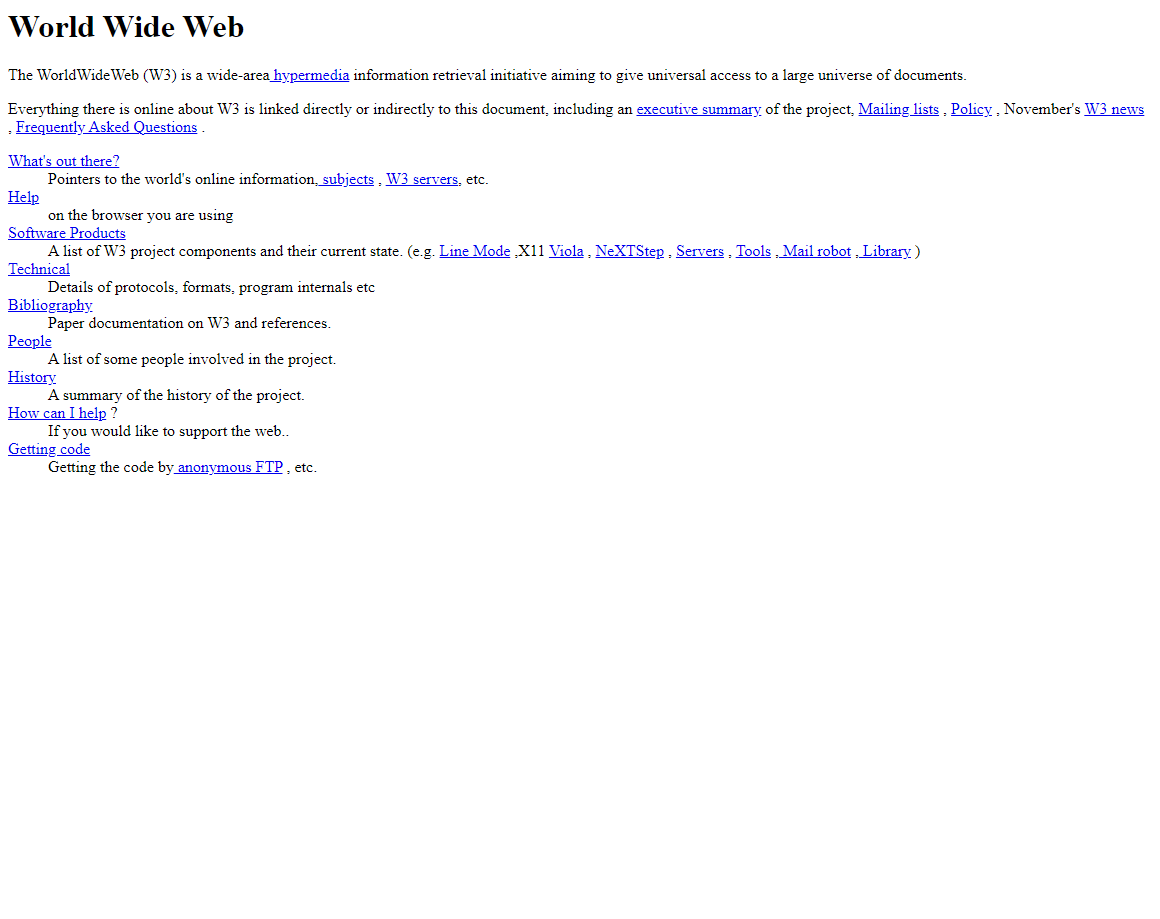
<p>"On 12 November 1990 [Tim Berners-Lee and Robert Cailliau] published a formal proposal outlining principal concepts and defining important terms behind the web. The document described a "hypertext project" called "WorldWideWeb" in which a "web" of "hypertext documents" could be viewed by “browsers”."</p><p><a href="https://home.cern/science/computing/where-web-was-born" rel="nofollow" class="ellipsis" title="home.cern/science/computing/where-web-was-born"><span class="invisible">https://</span><span class="ellipsis">home.cern/science/computing/wh</span><span class="invisible">ere-web-was-born</span></a></p><p><a href="https://www.w3.org/Proposal.html" rel="nofollow"><span class="invisible">https://</span>www.w3.org/Proposal.html</a></p><p><a href="/tags/worldwideweb/" rel="tag">#WorldWideWeb</a> <a href="/tags/hypertextproject/" rel="tag">#HypertextProject</a> <a href="/tags/theweb/" rel="tag">#TheWeb</a> <a href="/tags/internet/" rel="tag">#internet</a> <a href="/tags/techhistory/" rel="tag">#TechHistory</a> <a href="/tags/technology/" rel="tag">#technology</a> <a href="/tags/onthisday/" rel="tag">#OnThisDay</a> <a href="/tags/otd/" rel="tag">#OTD</a></p>
<p>"In the beginning, the Web was simple. When I first encountered it in early 1993 (working for O'Reilly's Global Network Navigator[...]), there was only one browser for viewing web pages and it ran exclusively on the Unix platform. There were about a dozen tags that made any difference. Designing a web page was a relatively simple task."</p><p><a href="https://cybercultural.com/p/1993-global-network-navigator/" rel="nofollow" class="ellipsis" title="cybercultural.com/p/1993-global-network-navigator/"><span class="invisible">https://</span><span class="ellipsis">cybercultural.com/p/1993-globa</span><span class="invisible">l-network-navigator/</span></a></p><p><a href="/tags/internet/" rel="tag">#internet</a> <a href="/tags/theweb/" rel="tag">#TheWeb</a> <a href="/tags/cyberculture/" rel="tag">#cyberculture</a> <a href="/tags/technology/" rel="tag">#technology</a> <a href="/tags/essay/" rel="tag">#essay</a></p>
<p>"By the end of 1994, there were roughly 10,000 websites on the web. It was still early days and most of the websites were quite basic in structure."</p><p><a href="https://cybercultural.com/p/1994-web-design/" rel="nofollow" class="ellipsis" title="cybercultural.com/p/1994-web-design/"><span class="invisible">https://</span><span class="ellipsis">cybercultural.com/p/1994-web-d</span><span class="invisible">esign/</span></a></p><p><a href="/tags/internet/" rel="tag">#internet</a> <a href="/tags/theweb/" rel="tag">#TheWeb</a> <a href="/tags/history/" rel="tag">#history</a> <a href="/tags/technology/" rel="tag">#technology</a> <a href="/tags/cyberculture/" rel="tag">#cyberculture</a></p>
<p>"That's my belief. It just takes a bit of guidance and access to understandable knowledge. That word 'understandable,' it's important. You don't introduce people to website building by using geek-speak. You have to talk human to human..."</p><p><a href="https://cybercultural.com/p/1994-cool-site-of-the-day/" rel="nofollow" class="ellipsis" title="cybercultural.com/p/1994-cool-site-of-the-day/"><span class="invisible">https://</span><span class="ellipsis">cybercultural.com/p/1994-cool-</span><span class="invisible">site-of-the-day/</span></a></p><p><a href="/tags/internet/" rel="tag">#internet</a> <a href="/tags/theweb/" rel="tag">#TheWeb</a> <a href="/tags/cyberculture/" rel="tag">#cyberculture</a></p>
<p>An article from last year that celebrates the 40th anniversary of ".com".</p><p>"Four decades ago, the first domain was registered and the initial batch of top-level domains came to be. Nearly a billion domains have been registered since then."</p><p><a href="https://www.dotcom.press/history-of-domains" rel="nofollow" class="ellipsis" title="www.dotcom.press/history-of-domains"><span class="invisible">https://</span><span class="ellipsis">www.dotcom.press/history-of-do</span><span class="invisible">mains</span></a></p><p><a href="https://en.wikipedia.org/wiki/.com" rel="nofollow"><span class="invisible">https://</span>en.wikipedia.org/wiki/.com</a></p><p><a href="/tags/internet/" rel="tag">#internet</a> <a href="/tags/theweb/" rel="tag">#TheWeb</a> <a href="/tags/history/" rel="tag">#history</a> <a href="/tags/technology/" rel="tag">#technology</a> <a href="/tags/dotcom/" rel="tag">#DotCom</a></p>