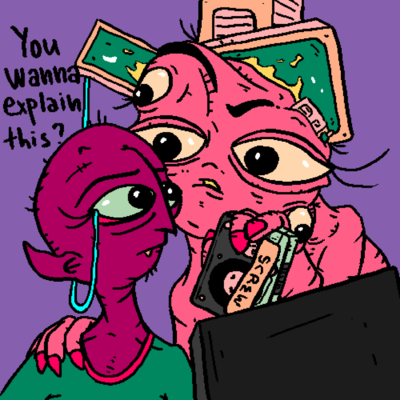
<p>This is how I feel when I ssh using my mobile phone.</p><p><a href="/tags/ssh/" rel="tag">#ssh</a> <a href="/tags/linux/" rel="tag">#linux</a> <a href="/tags/unix/" rel="tag">#unix</a> <a href="/tags/android/" rel="tag">#android</a> <a href="/tags/ios/" rel="tag">#ios</a></p>
unix

Having toyed around for a while in <a href="/tags/qemu/" rel="tag">#QEMU</a> <a href="/tags/vm/" rel="tag">#VM</a> boxes with <a href="/tags/freebsd/" rel="tag">#FreeBSD</a>, <a href="/tags/openbsd/" rel="tag">#OpenBSD</a> and <a href="/tags/netbsd/" rel="tag">#NetBSD</a> as well. I found that <a href="/tags/gpart/" rel="tag">#gpart</a> in FreeBSD is intuitive and easy to use for disk partition manipulation, followed by gpt in NetBSD. For me, powerful and flexible as fdisk is, it has always been mysteriously difficult and fighting.<br><a href="/tags/usebsd/" rel="tag">#UseBSD</a> <a href="/tags/runbsd/" rel="tag">#RUNBSD</a> <a href="/tags/bsd/" rel="tag">#BSD</a> <a href="/tags/foss/" rel="tag">#FOSS</a> <a href="/tags/unix/" rel="tag">#UNIX</a><br>
And oh boy all terms seem so foreign to me as a long time <a href="/tags/linux/" rel="tag">#Linux</a> user. The same disk is called ada0 with a partition like ada0p2 in <a href="/tags/freebsd/" rel="tag">#FreeBSD</a>, will be called something like sd0 with sd0h in <a href="/tags/openbsd/" rel="tag">#OpenBSD</a>, ld0 and dk2 in <a href="/tags/netbsd/" rel="tag">#NetBSD</a> . Then to experiment, all the <a href="/tags/dkctl/" rel="tag">#dkctl</a>, <a href="/tags/disklabel/" rel="tag">#disklabel</a> and <a href="/tags/fdisk/" rel="tag">#fdisk</a> commands are like blue and red wires on a dynamite you have to get rid of 😱. Linux distros nowadays seem to be going to the <a href="/tags/gdisk/" rel="tag">#gdisk</a> way which feels very much like <a href="/tags/gpart/" rel="tag">#gpart</a> in FreeBSD.<br><a href="/tags/usebsd/" rel="tag">#UseBSD</a> <a href="/tags/runbsd/" rel="tag">#RUNBSD</a> <a href="/tags/bsd/" rel="tag">#BSD</a> <a href="/tags/foss/" rel="tag">#FOSS</a> <a href="/tags/unix/" rel="tag">#UNIX</a> <a href="/tags/linux/" rel="tag">#Linux</a><br>
Edited 137d ago

<p>I'm writing a manifesto about techno-romantic Unixism 💾✨ (DM for preview)</p><p>One of the first people I sent it to was the operator of a telnet MUD where people talk to the radio DJ live, and Gopher is a keystroke away: <span class="h-card"><a href="https://gamerplus.org/@screwlisp" class="u-url mention" rel="nofollow noopener noreferrer" target="_blank">@<span>screwlisp</span></a></span> <br> 📻🐿️</p><p>They’re already there. 🌐<br><a href="/tags/gopher/" rel="tag">#gopher</a> <a href="/tags/unix/" rel="tag">#unix</a></p>
Another thing is, in <a href="/tags/freebsd/" rel="tag">#FreeBSD</a> and also <a href="/tags/linux/" rel="tag">#Linux</a>, using <a href="/tags/efibootmgr/" rel="tag">#efibootmgr</a> to change <a href="/tags/uefi/" rel="tag">#UEFI</a> boot entries is quite handy. But it is not available for <a href="/tags/openbsd/" rel="tag">#OpenBSD</a> and <a href="/tags/netbsd/" rel="tag">#NetBSD</a> . However seems NetBSD has got something cooking already in -current and it is called efi.<br><a href="/tags/usebsd/" rel="tag">#UseBSD</a> <a href="/tags/runbsd/" rel="tag">#RUNBSD</a> <a href="/tags/bsd/" rel="tag">#BSD</a> <a href="/tags/foss/" rel="tag">#FOSS</a> <a href="/tags/unix/" rel="tag">#UNIX</a><br>
So I read a bit on <a href="/tags/slackware/" rel="tag">#Slackware</a> <a href="/tags/linux/" rel="tag">#Linux</a>. but still curious. Is the Slackware does not handle dependency statement true? Or is it just not handled by default but if you use some third-party tools you get dependencies resolved apt/pacman style? Also related to this, I saw videos / tutorials on installing the systems, so it is generally recommended to simply install tons of packages you might not need in the first place just so when you need them or any other thing that might need something there as dependencies and you will have them already? Seems like trying to do a one-thing-fit-all style to me.<br><br><a href="/tags/foss/" rel="tag">#FOSS</a> <a href="/tags/unix/" rel="tag">#Unix</a> <a href="/tags/fediask/" rel="tag">#FediASK</a><br>
Edited 135d ago

<p>What command do you prefer for switching to root?</p><p>Edit: I realize now that I forgot a looot of options. So many ways to switch to a root shell. If only I could add more options to a mastodon poll in an edit...</p><p><a href="/tags/linux/" rel="tag">#linux</a> <a href="/tags/unix/" rel="tag">#unix</a> <a href="/tags/sysadmin/" rel="tag">#sysadmin</a> <a href="/tags/sudo/" rel="tag">#sudo</a></p>
<div class="poll">
<h3 style="display: none;">Options: <small>(choose one)</small></h3>
<ul>
<li>
<label class="poll-option">
<input style="display:none" name="vote-options" type="radio" value="0">
<span class="poll-number" title="25 votes">40%</span>
<span class="poll-option-text">sudo su</span>
</label>
</li>
<li>
<label class="poll-option">
<input style="display:none" name="vote-options" type="radio" value="0">
<span class="poll-number" title="26 votes">42%</span>
<span class="poll-option-text">sudo -i</span>
</label>
</li>
<li>
<label class="poll-option">
<input style="display:none" name="vote-options" type="radio" value="0">
<span class="poll-number" title="5 votes">8%</span>
<span class="poll-option-text">su root</span>
</label>
</li>
<li>
<label class="poll-option">
<input style="display:none" name="vote-options" type="radio" value="0">
<span class="poll-number" title="6 votes">10%</span>
<span class="poll-option-text">I use doas instead</span>
</label>
</li>
</ul>
<div class="poll-footer">
<span class="vote-total">62 votes</span>
—
<span class="vote-end">Ended 1y ago</span>
<span class="todo">Polls are currently display only</span>
</div>
</div>
Edited 1y ago

<p>❤️ With all the installations on <a href="/tags/gnu/" rel="tag">#GNU</a>/<a href="/tags/linux/" rel="tag">#Linux</a> (servers, vms, desktop, ... ), <a href="/tags/bsd/" rel="tag">#BSD</a> and <a href="/tags/unix/" rel="tag">#Unix</a> systems, <a href="/tags/macos/" rel="tag">#MacOS</a>, <a href="/tags/microsoft/" rel="tag">#Microsoft</a> <a href="/tags/windows/" rel="tag">#Windows</a> and WLS) I feel comfortable to claim there or way more than 1 billion installations of Vi*; often without people knowing about it.❤️</p><p>❤️ Thank you Bram Moolenaar, Christian Brabandt, the whole <a href="/tags/vim/" rel="tag">#Vim</a> community, and all the people from projects like <a href="/tags/neovim/" rel="tag">#NeoVIM</a>, <a href="/tags/nvi/" rel="tag">#Nvi</a>, <a href="/tags/busybox/" rel="tag">#Busybox</a> <a href="/tags/vi/" rel="tag">#Vi</a>, who develop and maintain their <a href="/tags/vim/" rel="tag">#vim</a> flavour. ❤️</p><p><a href="https://k7r.eu/thank-you-for-the-editor-of-the-beast/" rel="nofollow" class="ellipsis" title="k7r.eu/thank-you-for-the-editor-of-the-beast/"><span class="invisible">https://</span><span class="ellipsis">k7r.eu/thank-you-for-the-edito</span><span class="invisible">r-of-the-beast/</span></a> ❤️ <a href="/tags/ilovefs/" rel="tag">#ilovefs</a> ❤️</p>
Finally tried <a href="/tags/netbsd/" rel="tag">#NetBSD</a> 10.1 RELEASE baremetal on my <a href="/tags/thinkpad/" rel="tag">#ThinkPad</a> <a href="/tags/t470s/" rel="tag">#T470s</a>. Good news is most things seem to work out of box: WiFi, touchpad, i915 drived video card. Bad news is, suspend/wakeup (S3) not working. It appears suspend worked well since after issuing sysctl -w hw.acpi.sleep.state=3 the laptop went to sleep with blinking power led, fan stops. However, at wakeup keyboard just stops responding, even swtiching tty with Ctrl-Alt-Fn keys. WiFi usually wakes up just fine since I gain ssh session back shortly after wakeups. I will conclude a major issue for a system if suspend/wakeup won't work for a laptop. I simply cannot imagine having to poweroff a laptop every day before going to bed. It is kinda a sueprise to me since I assume ThinkPad laptops usually get along well with <a href="/tags/bsd/" rel="tag">#BSD</a> and <a href="/tags/linux/" rel="tag">#Linux</a> systems.<br><br>FYI, S3 suspend/wakeup works flawlessly with <a href="/tags/freebsd/" rel="tag">#FreeBSD</a> and <a href="/tags/openbsd/" rel="tag">#OpenBSD</a> on this laptop without any hack.<br><br><a href="/tags/bsd/" rel="tag">#BSD</a> <a href="/tags/runbsd/" rel="tag">#RunBSD</a> <a href="/tags/unix/" rel="tag">#Unix</a> <a href="/tags/foss/" rel="tag">#FOSS</a><br>

<p>Secondary: "Tianve" - HP 250 G3 <br>Kernel: 14.3-RELEASE-p4 amd64<br>Operating System: GHostBSD 25.02<br>KDE Plasma Version: 6.5.2<br>KDE Frameworks Version: 6.19.0<br>Qt Version: 6.9.3<br>Graphics Platform: Wayland</p><p><a href="https://bsd-hardware.info/?probe=102fa9b597" rel="nofollow" class="ellipsis" title="bsd-hardware.info/?probe=102fa9b597"><span class="invisible">https://</span><span class="ellipsis">bsd-hardware.info/?probe=102fa</span><span class="invisible">9b597</span></a></p><p><a href="/tags/ghostbsd/" rel="tag">#GhostBSD</a> <a href="/tags/freebsd/" rel="tag">#FreeBSD</a> <a href="/tags/runbsd/" rel="tag">#RunBSD</a> <a href="/tags/kde/" rel="tag">#KDE</a> <a href="/tags/plasma/" rel="tag">#Plasma</a> <a href="/tags/kde_plasma/" rel="tag">#kde_plasma</a> <a href="/tags/wayland/" rel="tag">#wayland</a> <a href="/tags/screenshot/" rel="tag">#screenshot</a> <a href="/tags/desktop/" rel="tag">#desktop</a> <a href="/tags/unix/" rel="tag">#unix</a></p>

Edited 132d ago
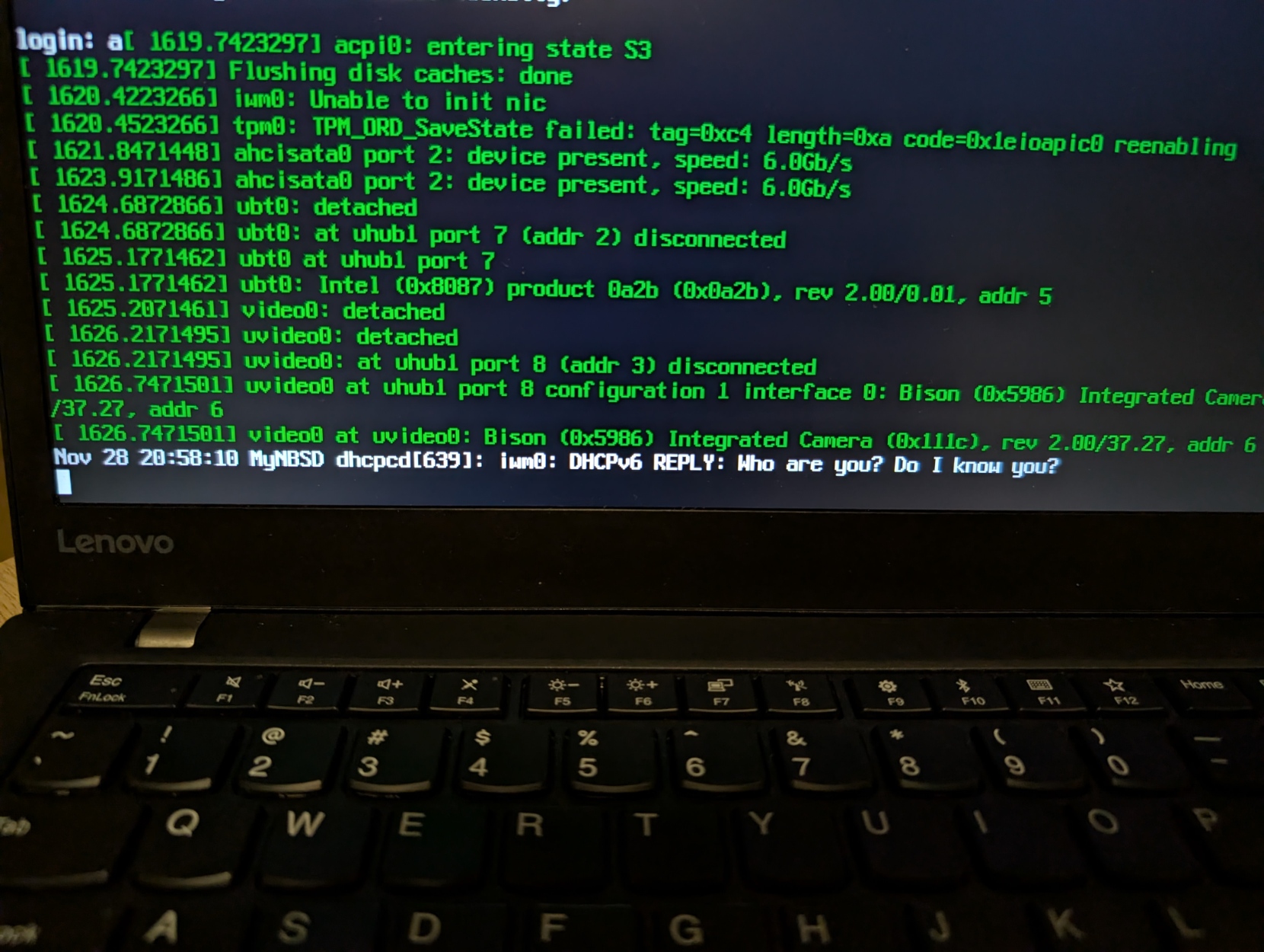
Feels like my laptop is trying to talk to me here!<br><br><a href="/tags/netbsd/" rel="tag">#NetBSD</a> <a href="/tags/bsd/" rel="tag">#BSD</a> <a href="/tags/runbsd/" rel="tag">#RUNBSD</a> <a href="/tags/unix/" rel="tag">#UNIX</a> <a href="/tags/foss/" rel="tag">#FOSS</a><br>
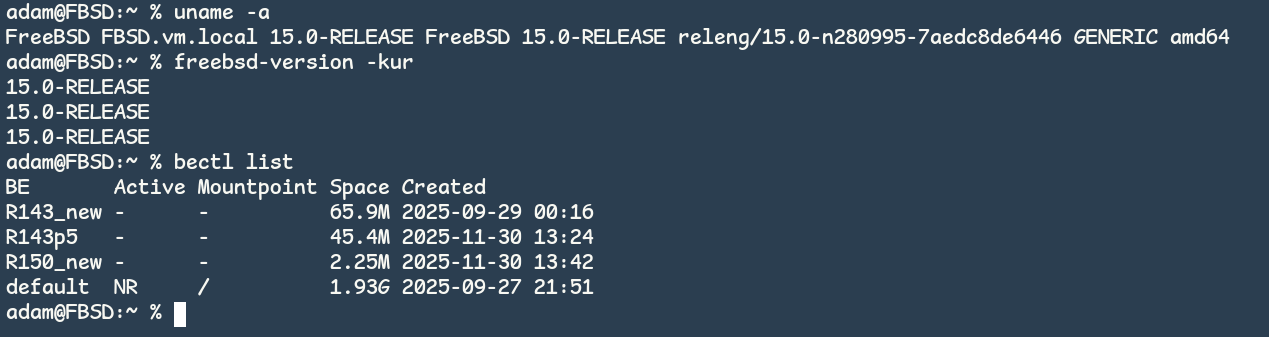
Just upgrade a VM of mine running <a href="/tags/freebsd/" rel="tag">#FreeBSD</a> 14.3 to 15.0 RELEASE, all went well in probably 20 minutes. Super fast, dead simple, and not frightening at all thanks to <a href="/tags/zfs/" rel="tag">#ZFS</a> BE backups. It felt so easy that I am even a bit bored.<br><br><a href="/tags/bsd/" rel="tag">#BSD</a> <a href="/tags/runbsd/" rel="tag">#RUNBSD</a> <a href="/tags/unix/" rel="tag">#Unix</a> <a href="/tags/foss/" rel="tag">#FOSS</a><br>

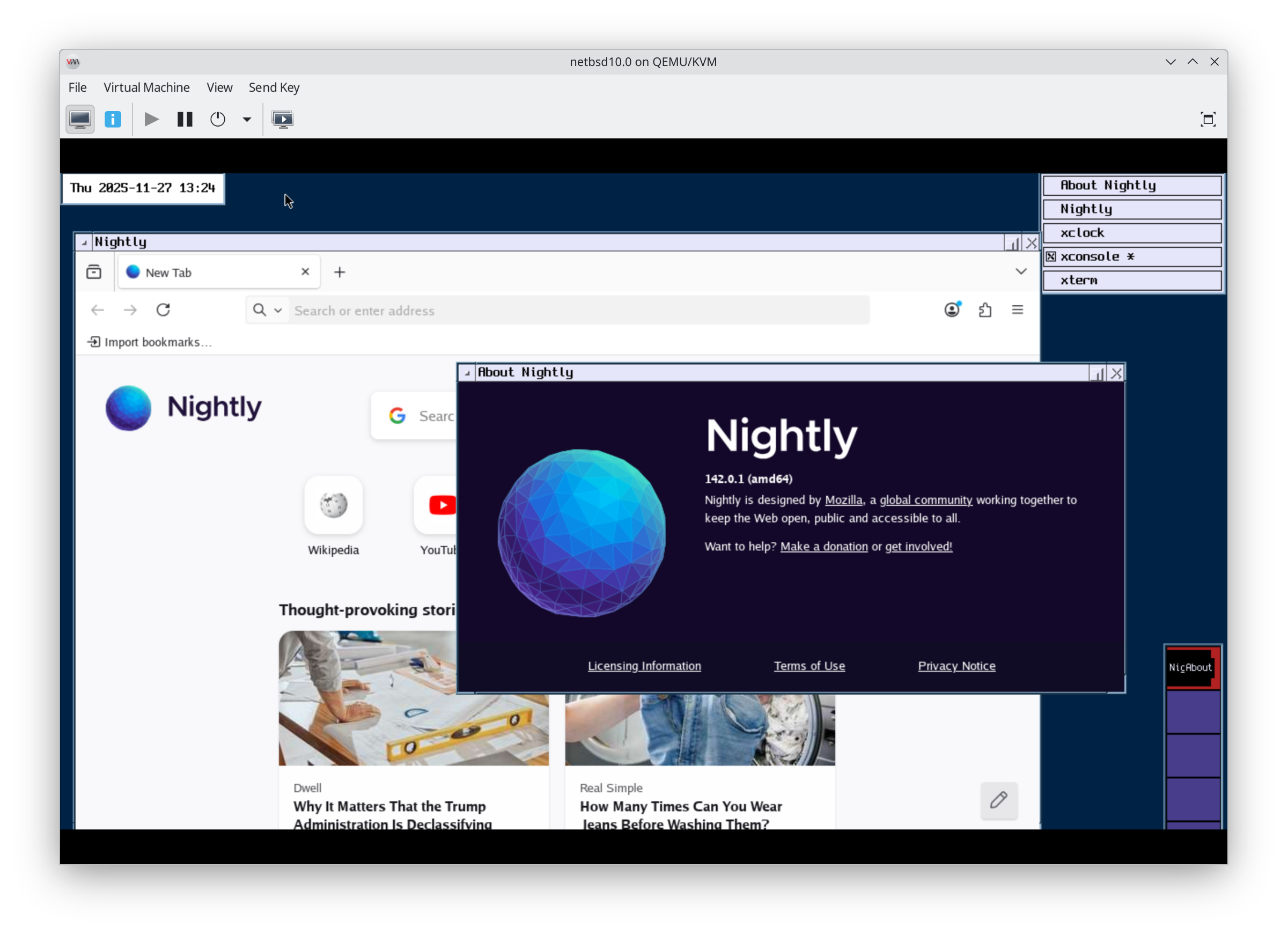
<p>I want this on hardware with network support and modern sleep for laptops. I know "Of course it runs NetBSD", but.....does it work well enough on a laptop?</p><p><a href="/tags/netbsd10/" rel="tag">#netbsd10</a> <a href="/tags/netbsd/" rel="tag">#netbsd</a> <a href="/tags/laptop/" rel="tag">#laptop</a> <a href="/tags/runbsd/" rel="tag">#runbsd</a> <a href="/tags/unix/" rel="tag">#unix</a></p>

<p>Determine Which Linux/Unix Init System is Being Used</p><p>Join this investigative adventure to determine the init system being used on GNU/Linux or Unix operating system using illustrated command examples.</p><p><a href="https://www.adamsdesk.com/posts/determine-init-system-use/" rel="nofollow" class="ellipsis" title="www.adamsdesk.com/posts/determine-init-system-use/"><span class="invisible">https://</span><span class="ellipsis">www.adamsdesk.com/posts/determ</span><span class="invisible">ine-init-system-use/</span></a></p><p><a href="/tags/blog/" rel="tag">#blog</a> <a href="/tags/linux/" rel="tag">#linux</a> <a href="/tags/unix/" rel="tag">#unix</a> <a href="/tags/commandline/" rel="tag">#commandline</a> <a href="/tags/terminal/" rel="tag">#terminal</a> <a href="/tags/opensource/" rel="tag">#OpenSource</a></p>
Edited 269d ago

Screenshots from developers: 2002 vs. 2015<br><br><a href="https://anders.unix.se/2015/12/10/screenshots-from-developers--2002-vs.-2015/" rel="nofollow" class="ellipsis" title="anders.unix.se/2015/12/10/screenshots-from-developers--2002-vs.-2015/"><span class="invisible">https://</span><span class="ellipsis">anders.unix.se/2015/12/10/scre</span><span class="invisible">enshots-from-developers--2002-vs.-2015/</span></a><br><br><a href="/tags/unix/" rel="tag">#Unix</a> <a href="/tags/linux/" rel="tag">#Linux</a> <a href="/tags/retro/" rel="tag">#Retro</a> <a href="/tags/nostalgic/" rel="tag">#Nostalgic</a><br>

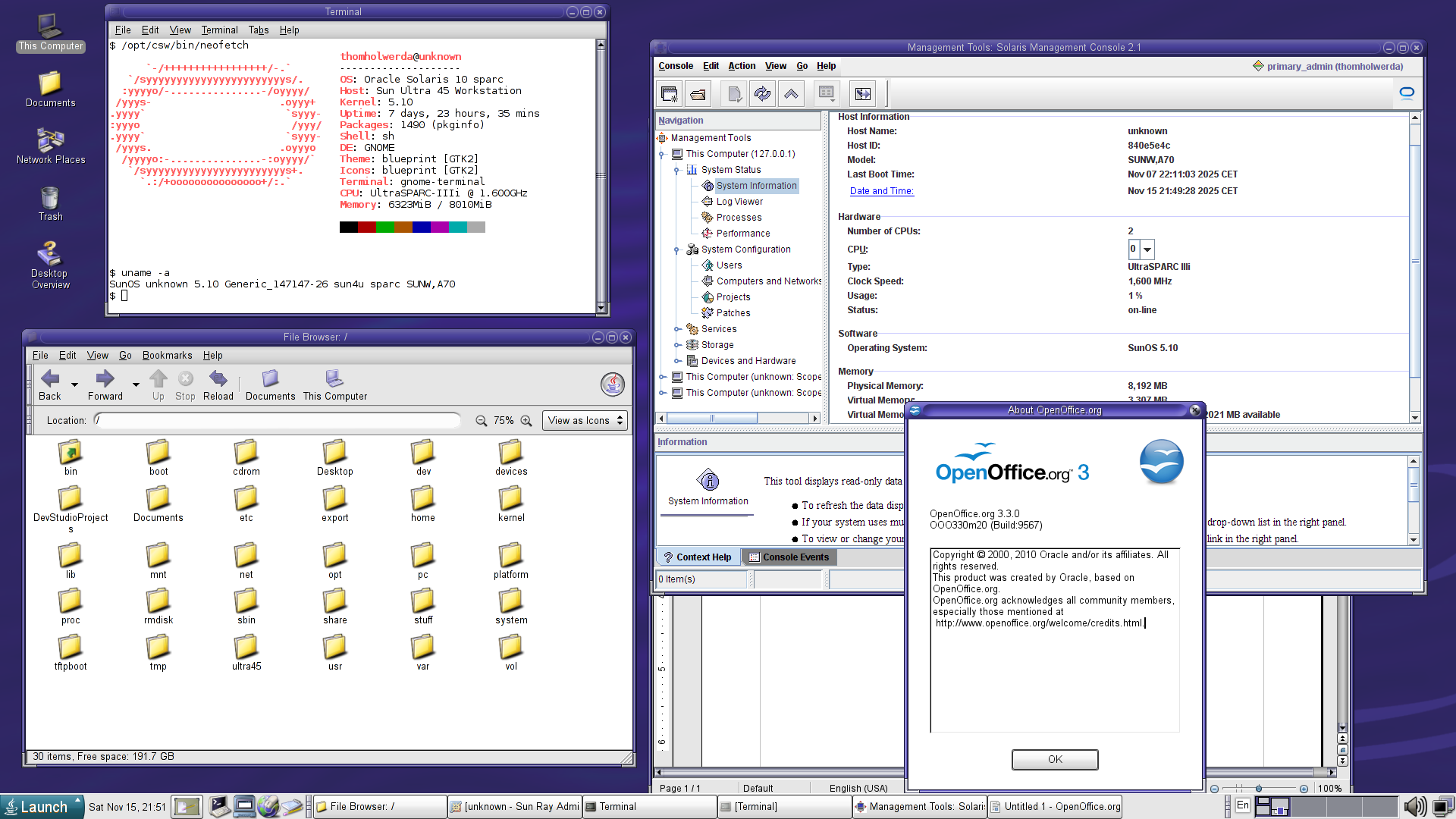
Living my best Sun Microsystems ecosystem life in 2025.[0]<br><br>[0] <a href="https://www.osnews.com/story/143570/living-my-best-sun-microsystems-ecosystem-life-in-2025/" rel="nofollow" class="ellipsis" title="www.osnews.com/story/143570/living-my-best-sun-microsystems-ecosystem-life-in-2025/"><span class="invisible">https://</span><span class="ellipsis">www.osnews.com/story/143570/li</span><span class="invisible">ving-my-best-sun-microsystems-ecosystem-life-in-2025/</span></a><br><a href="/tags/sun/" rel="tag">#sun</a> <a href="/tags/solaris/" rel="tag">#solaris</a> <a href="/tags/sparc/" rel="tag">#sparc</a> <a href="/tags/unix/" rel="tag">#unix</a><br>
Think it is time to give the <a href="/tags/iwlwifi/" rel="tag">#iwlwifi</a> driver a try on <a href="/tags/freebsd/" rel="tag">#FreeBSD</a> 15.0 for my Intel 8260 wireless card. So far so good, might get some speed gain compared with <a href="/tags/iwm/" rel="tag">#iwm</a> driver but I need to run a few days to make a conclusion. Wiki page here is helpful: <a href="https://wiki.freebsd.org/WiFi/Iwlwifi" rel="nofollow"><span class="invisible">https://</span>wiki.freebsd.org/WiFi/Iwlwifi</a><br><br><a href="/tags/bsd/" rel="tag">#BSD</a> <a href="/tags/runbsd/" rel="tag">#RUNBSD</a> <a href="/tags/foss/" rel="tag">#FOSS</a> <a href="/tags/unix/" rel="tag">#Unix</a><br>

Still using nvi on Slackware.<br><br>No plugins. No syntax highlighting. Just speed, predictability, and classic vi behavior, even with multi-GB files.<br><br>I wrote a short guide explaining why nvi still matters and how its architecture enables fast, low-memory editing.<br><br>📄 <a href="https://4c6e.xyz/code_notes.html" rel="nofollow"><span class="invisible">https://</span>4c6e.xyz/code_notes.html</a> (NVI Editor Guide)<br>📄 <a href="https://git.sr.ht/~r1w1s1/code-notes/blob/main/notes/NVI_Editor_Guide.txt" rel="nofollow" class="ellipsis" title="git.sr.ht/~r1w1s1/code-notes/blob/main/notes/NVI_Editor_Guide.txt"><span class="invisible">https://</span><span class="ellipsis">git.sr.ht/~r1w1s1/code-notes/b</span><span class="invisible">lob/main/notes/NVI_Editor_Guide.txt</span></a> (plain text)<br><br><a href="/tags/slackware/" rel="tag">#slackware</a> <a href="/tags/editor/" rel="tag">#editor</a> <a href="/tags/nvi/" rel="tag">#nvi</a> <a href="/tags/vi/" rel="tag">#vi</a> <a href="/tags/unix/" rel="tag">#unix</a> <a href="/tags/minimalism/" rel="tag">#minimalism</a><br>
Since <a href="/tags/netbsd/" rel="tag">#NetBSD</a> comes with a nicely configured <a href="/tags/ctwm/" rel="tag">#CTWM</a>. I copied their config files to <a href="/tags/freebsd/" rel="tag">#FreeBSD</a> and with a few small changes, mainly command path differences between the two, and now CTWM seems much better!<br><br><a href="/tags/runbsd/" rel="tag">#RunBSD</a> <a href="/tags/bsd/" rel="tag">#BSD</a> <a href="/tags/unix/" rel="tag">#Unix</a> <a href="/tags/foss/" rel="tag">#FOSS</a><br>
<p><a href="/tags/lispygopherclimate/" rel="tag">#lispyGopherClimate</a> <a href="/tags/lambdamoo/" rel="tag">#lambdaMOO</a> <a href="/tags/virtualreality/" rel="tag">#virtualReality</a> <a href="/tags/programming/" rel="tag">#programming</a> <a href="/tags/software/" rel="tag">#software</a><br><a href="https://archives.anonradio.net/202508130000_screwtape.mp3" rel="nofollow" class="ellipsis" title="archives.anonradio.net/202508130000_screwtape.mp3"><span class="invisible">https://</span><span class="ellipsis">archives.anonradio.net/2025081</span><span class="invisible">30000_screwtape.mp3</span></a> 0UTC Wed / Boston 8pm Tue</p><p>Talking to <span class="h-card"><a href="https://social.jlamothe.net/profile/me" class="u-url mention" rel="nofollow noopener noreferrer" target="_blank">@<span>me</span></a></span> , who programmed and hosts a popular sushi restaurant in virtual reality.</p><p><a href="https://jlamothe.net/" rel="nofollow"><span class="invisible">https://</span>jlamothe.net/</a></p><p>This is the fourth of a series of interviews, following <span class="h-card"><a href="https://social.solarpunk.au/users/vidak" class="u-url mention" rel="nofollow noopener noreferrer" target="_blank">@<span>vidak</span></a></span>'s permacomputer, <span class="h-card"><a href="https://hachyderm.io/@jeremy_list" class="u-url mention" rel="nofollow noopener noreferrer" target="_blank">@<span>jeremy_list</span></a></span>'s Habitat and <span class="h-card"><a href="https://functional.cafe/@kasper" class="u-url mention" rel="nofollow noopener noreferrer" target="_blank">@<span>kasper</span></a></span>'s Swooprace. Using Mashey's <a href="/tags/unix/" rel="tag">#unix</a> scale, Paradise sushi is a minor success.</p><p>As well as <a href="/tags/mud/" rel="tag">#MUD</a>, <a href="/tags/commonlisp/" rel="tag">#commonLisp</a> <a href="/tags/clim/" rel="tag">#CLIM</a> <a href="/tags/gamedev/" rel="tag">#gamedev</a> on <a href="/tags/itchio/" rel="tag">#itchio</a>.</p>

Edited 236d ago
<p>Axel: A Lightweight Command Line Interface Download Accelerator</p><p>Dicover and explore a download accelerator that can decrease download time using a free and open source command line interface program called Axel.</p><p><a href="https://www.adamsdesk.com/posts/download-accelerator-axel/" rel="nofollow" class="ellipsis" title="www.adamsdesk.com/posts/download-accelerator-axel/"><span class="invisible">https://</span><span class="ellipsis">www.adamsdesk.com/posts/downlo</span><span class="invisible">ad-accelerator-axel/</span></a></p><p><a href="/tags/blog/" rel="tag">#blog</a> <a href="/tags/fossfriday/" rel="tag">#FOSSFriday</a> <a href="/tags/freesoftware/" rel="tag">#FreeSoftware</a> <a href="/tags/opensource/" rel="tag">#OpenSource</a> <a href="/tags/commandline/" rel="tag">#commandline</a> <a href="/tags/linux/" rel="tag">#linux</a> <a href="/tags/unix/" rel="tag">#unix</a></p>

<p>Hide or Remove Unwanted Linux/Unix XDG Desktop Menu App Shortcuts</p><p>Learn how to hide or remove unwanted software applications in the XDG Desktop menu of a graphical environment on GNU/Linux or Unix operating systems.</p><p><a href="https://www.adamsdesk.com/posts/hide-remove-linux-unix-xdg-menu-app-shortcut/" rel="nofollow" class="ellipsis" title="www.adamsdesk.com/posts/hide-remove-linux-unix-xdg-menu-app-shortcut/"><span class="invisible">https://</span><span class="ellipsis">www.adamsdesk.com/posts/hide-r</span><span class="invisible">emove-linux-unix-xdg-menu-app-shortcut/</span></a></p><p><a href="/tags/blog/" rel="tag">#blog</a> <a href="/tags/linux/" rel="tag">#linux</a> <a href="/tags/unix/" rel="tag">#unix</a> <a href="/tags/xorg/" rel="tag">#XOrg</a> <a href="/tags/wayland/" rel="tag">#Wayland</a> <a href="/tags/technology/" rel="tag">#technology</a> <span class="h-card"><a href="https://floss.social/@XOrgFoundation" class="u-url mention" rel="nofollow noopener noreferrer" target="_blank">@<span>XOrgFoundation</span></a></span></p>


<p>GhostBSD is going to abandon Xorg after 15 years. Eric Turgeon explains why GhostBSD switched from Xorg to XLibre instead of Wayland.</p><p>Full details here: <a href="https://ostechnix.com/ghostbsd-switches-to-xlibre-over-wayland/" rel="nofollow" class="ellipsis" title="ostechnix.com/ghostbsd-switches-to-xlibre-over-wayland/"><span class="invisible">https://</span><span class="ellipsis">ostechnix.com/ghostbsd-switche</span><span class="invisible">s-to-xlibre-over-wayland/</span></a> </p><p><a href="/tags/ghostbsd/" rel="tag">#Ghostbsd</a> <a href="/tags/xlibre/" rel="tag">#Xlibre</a> <a href="/tags/xorg/" rel="tag">#Xorg</a> <a href="/tags/displayserver/" rel="tag">#Displayserver</a> <a href="/tags/freebsd/" rel="tag">#Freebsd</a> <a href="/tags/bsd/" rel="tag">#Bsd</a> <a href="/tags/unix/" rel="tag">#Unix</a></p>

<p>Best UNIX desktop environment</p><p><a href="/tags/unix/" rel="tag">#unix</a></p>
<div class="poll">
<h3 style="display: none;">Options: <small>(choose one)</small></h3>
<ul>
<li>
<label class="poll-option">
<input style="display:none" name="vote-options" type="radio" value="0">
<span class="poll-number" title="6 votes">26%</span>
<span class="poll-option-text">CDE/VUE</span>
</label>
</li>
<li>
<label class="poll-option">
<input style="display:none" name="vote-options" type="radio" value="0">
<span class="poll-number" title="4 votes">17%</span>
<span class="poll-option-text">Indigo Magic Desktop/IRIX Interactive Desktop</span>
</label>
</li>
<li>
<label class="poll-option">
<input style="display:none" name="vote-options" type="radio" value="0">
<span class="poll-number" title="2 votes">9%</span>
<span class="poll-option-text">OpenWindows</span>
</label>
</li>
<li>
<label class="poll-option">
<input style="display:none" name="vote-options" type="radio" value="0">
<span class="poll-number" title="11 votes">48%</span>
<span class="poll-option-text">twm, an xterm, and a Jolt Cola</span>
</label>
</li>
</ul>
<div class="poll-footer">
<span class="vote-total">23 votes</span>
—
<span class="vote-end">Ended 47d ago</span>
<span class="todo">Polls are currently display only</span>
</div>
</div>
<p>Resolve GNOME Shell v49 Failed to Start Gnome-Session-X11</p><p>Resolve the frustrating circumstance to the problem where GNOME Shell Display Manager version 49 fails to start unit gnome-session-x11.</p><p><a href="https://www.adamsdesk.com/posts/gnome-shell-49-failed-start-session-x11/" rel="nofollow" class="ellipsis" title="www.adamsdesk.com/posts/gnome-shell-49-failed-start-session-x11/"><span class="invisible">https://</span><span class="ellipsis">www.adamsdesk.com/posts/gnome-</span><span class="invisible">shell-49-failed-start-session-x11/</span></a></p><p><a href="/tags/blog/" rel="tag">#blog</a> <a href="/tags/gnome/" rel="tag">#GNOME</a> <a href="/tags/linux/" rel="tag">#linux</a> <a href="/tags/unix/" rel="tag">#unix</a> <a href="/tags/tech/" rel="tag">#tech</a></p>