經濟學
微观经济理论(第11版) 豆瓣
Microeconomic Theory: Basic Principles And Extensions (11/e)
作者: [美] Christopher Snyder / [美] Walter Nicholson 译者: 杨筠 / 李锐 出版社: 北京大学出版社 2015 - 8
本书向读者展现了一个全面、易懂的现代微观经济学的全貌,对所有主要经济理论的结论给出了清晰、直观的解释,并强调了对许多微观经济学问题都适用的数学模型,让读者对经济模型建立直觉,同时为读者提供学习过程中所需的数学工具。书中还加入了很多代入具体数值的案例、较为高深的练习题和对实证问题的扩展讨论,向读者展示微观经济理论。
Two's Company, Three Is Complexity 豆瓣
作者: Neil F. Johnson 出版社: Oneworld Publications 2007
Preface
It is 2050, and you are watching Who Wants to be a Billionaire? The contestant is one question away from the jackpot. Up comes his
question: “What is the name of the theory that scientists started developing at the beginning of the twenty-first century, and
which helped the world overcome traffic congestion, financial market crashes, terrorist attacks, pandemic viruses, and cancer?” The contestant cannot believe his luck. What an easy question! But he is so nervous that his mind temporarily goes blank. He starts to consider option A: “They are all still unsolved problems” – but then quickly realizes that this is a dumb answer. Instead, he uses his last lifeline to ask the audience. The audience responds unanimously and instantaneously with option B: “The Theory of Complexity”. Without hesitation, he goes with option B. The host hands him the cheque, and the world has yet another billionaire.
Pure fantasy? Maybe not.
In this book, we will go on a journey to the heart of Complexity, an emerging science which looks set to trigger the next great wave of advances in everything from medicine and biology through to economics and sociology. Complexity Science also comes with the
prospect of solving a wide range of important problems which face us as individuals and as a Society. Consequently, it is set to permeate through every aspect of our lives.
There is, however, one problem. We don’t yet have a fullyfledged “theory” of Complexity. Instead, I will use this book to assemble all the likely ingredients of such a theory within a common framework, and then analyze a wide range of real-world applications within this same common framework. It will then require someone from the future – perhaps one of the younger readers of this book – to finally put all these pieces into place.
Complexity Science is a double-edged sword in the best possible sense. It is truly “big science” in that it embodies some of the hardest, most fundamental and most challenging open problems in academia. Yet it also manages to encapsulate the major practical issues which face us every day from our personal lives and health, through to global security. Making a pizza is complicated, but not complex. The same holds for filling out your tax return, or mending a bicycle puncture. Just follow the instructions step by step, and you will eventually be able to go from start to finish without too much trouble. But imagine trying to do all three at the same time. Worse still, suppose that the sequence of steps that you follow in one task actually depends on how things are progressing with the other two. Difficult? Well, you now have an indication of what Complexity is all about. With that in mind, now substitute those three interconnected tasks for a situation in which three interconnected people each try to follow their own instincts and strategies while reacting to the actions of the others. This then gives an idea of just how Complexity
might arise all around us in our daily lives.
While I was writing this book, I had the following “wish-list” in my head concerning its goals:
1. To provide a book which a wide cross-section of people would want to read and would enjoy reading – regardless of age,
background or level of scientific knowledge.
2. To introduce readers to the exciting range of real-world scenarios in which Complexity Science can prove its worth.
3. To provide the book on Complexity that “I never had but always needed”. In other words, to provide an easily readable yet thorough guide to this important scientific revolution.
4. To provide a book that my kids could read – or rather, a book that they would actually choose to read all by themselves. This is a very important goal, since Complexity will likely become the science of interest for future generations.
5. To provide a book which is just as readable on a plane or bus as in a library. As such, it should also make sense when read in short chunks.
6. To provide a book which provides professional scientists,economists, and policy-makers with a new perspective on
open problems in their field, and to help stimulate new Complexity-based interdisciplinary research projects.
However, as I finish the book and offer it up to potential readers,I realize that the above wish-list can essentially be reduced to just
one item: I would wish that you enjoy reading this book, and that it might provide you with fresh thoughts and insights for dealing
with the complex world in which we live, and which our children will inherit.
There are some practicalities concerning the book’s content and layout which I would like to explain. The language, examples and
analogies are kept simple since the focus of the book is to explain what Complexity Science is all about, and why it is so important for
us all. I therefore avoid delving into too much detail in the main text. Instead, the Appendix describes how to access the technical
research papers upon which the discussions in the book are based, and gives a list of Internet websites containing additional information about Complexity research around the world. Having said this, I won’t pull any punches in the sense that I tackle all the topics
which I believe to be relevant. Part 1 of the book takes us through the theoretical underpinnings of Complexity, while Part 2
delves into its real-world applications. Some of the territory is only just beginning to be explored, with very few answers available
for the questions being posed. From the perspective of other scientific revolutions throughout history this might seem to be par
for the course. However we are not talking about history here –instead, we are looking at work which is emerging at the forefront
of a new discipline. For this reason we will be highlighting where such research is heading, rather than where it has been.
But why should you believe what I write about Complexity? This is a crucially important question given that Complexity Science is still being developed and its potential applications explored. Unfortunately many accounts of Complexity in the popular press are second-hand, i.e. they are typically written by people who have done little, if any, research on Complexity themselves and are instead reporting on their interpretation of
other people’s work. Given the relatively immature nature of the field, I believe that such indirect interpretations are potentially
dangerous. For this reason, I will base the book’s content around my own research group’s experience in Complexity. This has
various advantages: (i) it reflects my own understanding of the Complexity field; (ii) it represents what I believe to be the most
relevant and important topics; (iii) it will hopefully give the reader a sense of what it is like to be at the “pit-face” in such a
challenging area of research; and (iv) it ensures that any reader can challenge me directly on any claims that I make, and can
demand an informed answer. To facilitate this process of public scrutiny, a complete list of the relevant scientific research reports
is presented in the latter part of the Appendix. I also encourage any readers who wish to email me with questions, to do so at
[email protected]
福利经济学(上下) 豆瓣
作者: [英] A.C.庇古 译者: 朱泱 / 张胜纪 出版社: 商务印书馆 2006 - 9
《福利经济学(套装上下册)》内容简介:福利经济学是西方经济学家从福利观点或最大化原则出发,对经济体系的运行予以社会评价的经济学分支学科。福利经济学主要是以一定的价值判断为出发点,也就是根据已确定的社会目标,建立理论体系;以边际效用基数论或边际效用序数论为基础,建立福利概念;以社会目标和福利理论为依据,制定经济政策方案。《福利经济学(套装上下册)》着重对福利经济学中的外部经济理论、次优理论、相对福利学说、公平和效率交替学说、宏观福利理论等领域进行了讨论。这些“新”理论企图说明,可以通过政府干预价格和产量,实现资源的合理配置。
Capitalism 豆瓣
作者: George Reisman 出版社: TJS Books 1996 - 11
瑞斯曼(George Reisman)的巨著《资本主义》(Capitalism,1998年出版)指出,政府诱导货币及信用扩张的情形,好几世纪之前便已存在。瑞斯曼在书中指出,好几个世纪以来,“政府……本着扩张银行信用……能够创造真正的资本财富,进而创造繁荣的理念行事……生意人因为想要获得低利率,也就是他们所谓的‘容易钱’,因此会敦促政府这么做;当政府这么做时,企业界便报以热烈的掌声,但这么做带来的后果并非繁荣,而是景气起伏循环。”
因应景气循环的激进措施,绝对令一般读者目瞪口呆,在专业的经济学家中也一样不受欢迎。瑞斯曼的主张是采取百分之百的金本位或银本位制,也就是说,中央银行发行的所有钞票及存单,都必须存放百分之百等值黄金或白银。瑞斯曼解释,通过政府完全不加以干预的自由金融政策,这项制度将可长可久。
是的,传统的经济学理论认为中央银行之所以成立,是因为没有加以管制的自由银行体系会导致不稳定;但这样的银行体系从来不被允许存在过。
这里要理解的问题是,为什么真正自由的银行体系可以行得通?瑞斯曼的观察是,人为的信用扩张仍是合法且有可能的,但“它所有希望达到的目的都不会实现。”有关此看法以及其他相关的论点,主要是在《金钱与花钱》及《黄金 vs 通膨》两章里进行探讨,这两章几乎已经是正常情况下一本书的长度。
这本书被称为是经济学著作中的《战争与和平》,任何对经济学可能会遇到的问题,你都可以在这本书里找到答案。
捆住市场的手 豆瓣
The Hesitant Hand: Taming Self-Interest in the History of Economic Ideas
作者: 【美】斯蒂夫•G. 梅德玛(Steven G. Medema) 译者: 启蒙编译所 出版社: 中央编译出版社 2014 - 3
亚当•斯密于1776年提出了一个观点,彻底颠覆了传统的经济学理论。他宣称,人们追逐私利的行为只受市场本身的调节,而不受政府的管控。这种追逐私利的行为就像一只看不见的手,将对市场进行自动的调节,从而使整个社会最大程度地获益。《捆住市场的手》这本书回顾了亚当•斯密之后两百年的经济学者是怎样挑战或再次肯定斯密的理论的。一些学者坚持认为,在市场不稳定的情况下,需要政府代替整个社会对市场进行干预。另一些学者则认为,政府的干预最终会给市场和社会造成损害。
斯蒂夫•G. 梅德玛探讨的这个主题,200年来,有可能是现代经济学领域中被人们争论最多的一个议题。梅德玛详尽地回顾了19世纪40年代到20世纪50年代市场失灵理论,以及随后对市场失灵理论进行批驳的芝加哥学派和弗吉尼亚学派的观点。从约翰•密尔到亨利•西季威克和庇古所代表的剑桥传统的福利经济学派,再到对剑桥学派提出挑战的罗纳德•科斯,最后是重新肯定亚当•斯密学说的批评家们,梅德玛向我们详细列举了关于市场控制的各种争议。他在书中向我们展示了,在边际革命之后——和亚当•斯密之前的前古典主义学者一样——新古典主义经济学家相信政府可以有效地缓解利己主义所带来的不良后果,芝加哥和弗吉尼亚学派则严厉地批驳了这种观点,证明利己主义同样能够影响政府,并在诸多并不完善的替代方案中为人们提供了一种相对合理的选择。
《捆住市场的手》还描写了政府是怎样一直致力于从经济上解决利己主义对公众利益造成的负面影响,及其采取的具体措施。
专家推荐
亚当•斯密认为市场机制相当于一只看不见的手,这种机制能成功地约束人们自利的行为,自18世纪后期以来,亚当•斯密的这种理论已经成为我们的政策争论的中心……梅德玛的《捆住市场的手》中详细描述了亚当•斯密时代至今200年间,人们就他的理论进行的争论……我向读者强烈推荐《捆住市场的手》。
——R.B.埃米特,《选择》杂志
《捆住市场的手》向读者介绍了自古希腊以来(特别是自亚当•斯密的时代以来)人类社会经济福利的演化情况,在某种程度上,这本书具有很强的专业性。但同时……我发现《捆住市场的手》也是一本发人深省的优秀著作。在福利、市场失灵和国家作用等诸多问题上,不同年代的人在不同角度上对福利的理解和评价的确能给当代人许多有益的启示。
——黛安•科伊尔,《开明经济学家》
这是一本出色的著作。它既涉及了经济学中的一个重要议题,文笔又引人入胜,让人丝毫不觉得枯燥。
——彼得•格鲁尼维根,《经济史回顾》杂志
这是一本引人入胜的好书,有趣、博学、公正,文字流畅。总之,我从这本书里学到了很多。
——丹尼斯•奥布莱恩,英国杜伦大学名誉教授
这是一部能使许多读者感兴趣的著作,简明易懂,观点清晰,它甚至能吸引一部分通常对历史不感兴趣的经济学家。梅德玛在书中详细讲述了不同时代的经济学家对利己主义的不同态度,以及它怎样改变了人们对于政府和市场的认知。
——罗杰.E.贝克豪斯,英国伯明翰大学
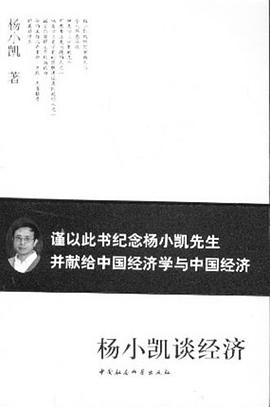
杨小凯谈经济 豆瓣 谷歌图书
作者: 杨小凯 出版社: 中国社会科学出版社 2004 - 9
本书是开创新兴古典经济学与超边际分析学派的一代宗师――杨小凯先生的绝笔之作。虽然他自称为非主流经济学派者,但正如诺贝尔将获得者布坎南等人所宣称的:在中国,杨小凯是真正最好的经济学家,他对发展经济学的贡献是不可抹杀的。本书融汇了杨教授诸多开拓性理论的分析精华,再现了他处于学术之巅的风采。如今,杨先生已撒手西去,留下了亟待发展的学派,就让我们以本书作为对先生毕生致力于学术研究的追思与悼念,去继续先生未竞的事业。
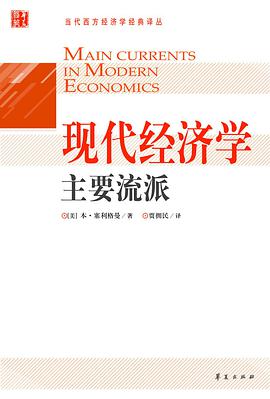
现代经济学主要流派 豆瓣
作者: 本·塞利格曼 译者: 贾拥民 出版社: 华夏出版社 2010 - 4
《现代经济学主要流派》一书是经济学思想史领域实至名归的经典之作,系统地梳理和评价了自1870年以来经济学思想的发展和演变。这一巨著到今天为止仍然是非常“现代”的,毫不过时,《现代经济学主要流派》在对约翰·斯图亚特·穆勒以来的古典经济学稍作回溯后,起旨一编便是“对形式主义的反叛”。古典主义者遭到了德国历史学派、马克思主义者和制度主义者的攻击。此后,通过由杰文斯、奥地利学派、约翰·贝茨·克拉克重新发现的边际主义,传统得以重申。由瓦尔拉斯和帕累托给出的均衡经济学分析,经希克斯和萨缪尔森等人的发展,成为经济学思想的主流。塞利格曼把现代经济学说的根本特征刻画出来了,那就是为技术而技术。
在熊彼特、凯恩斯、斯拉法,琼·罗宾逊夫人和张伯伦等经济学家共同强调市场竞争的不完全性之后,新古典学派经济学家重新提出了许多自足的模型,古典的形式主义回来,“复仇”了。
如今经济学受到技术的影响如此之深远,以至于我们的下一代也许不得不再来一次“重新发现”,才能找到让它冲开技术之樊篱的出路。塞利格曼这《现代经济学主要流派》正是一个非常好的开端。
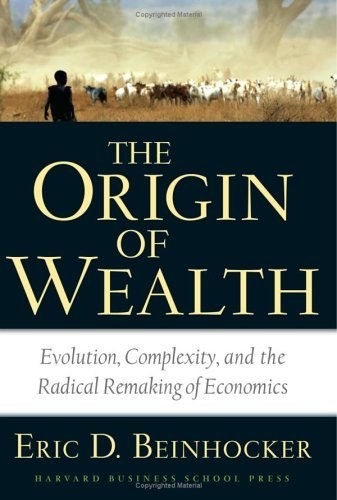
The Origin of Wealth 豆瓣 Goodreads
作者: Eric D. Beinhocker 出版社: Harvard Business School Press 2006 - 6
In the Origin of Wealth, Eric Beinhocker offers a thorough and convincing new way to think about economic growth and business management. The author begins by exploring the roots of modern economic theory and ultimately declares it outmoded and wrong. Instead, he suggests, markets and growth can best be explained by drawing on the emerging field of complexity economics: the study of markets and social systems as complex adaptive systems. Although biological metaphors in business have become familiar (i.e., organizations are living organisms), Beinhocker moves beyond metaphor to explain the revolutions in science that will inevitably change the way we think about economics, competition, and business. The Origin of Wealth raises important questions such as: How can one create strategy in uncertain and fast moving environments? Why is it hard for large organizations to be innovative and how should we organize for better results? What role should governments play in this new era?
纯粹经济学要义 豆瓣
作者: [法] 莱昂﹒瓦尔拉斯 译者: 蔡受百 出版社: 商务印书馆 1989 - 5
本书作者是十九世纪晚期西方边际主义经济学的奠基人之一。本书是其代表作,也是西方边际主义经济学的经典著作,在西方经济学发展史上占重要地位。全书共八篇,分别论述了经济学的对象、商品交换理论、生产和再生产理论、流通理论以及发展问题和非完全竞争问题等。书中还运用了许多数学公式和几何图形,帮助阐明理论问题。
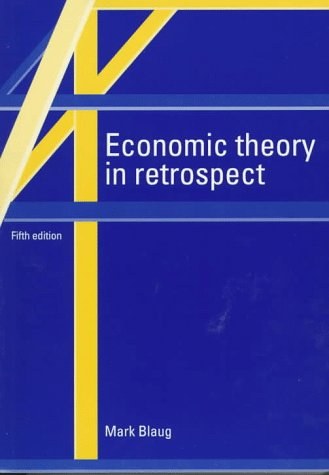
Economic Theory in Retrospect 豆瓣
作者: Mark Blaug 出版社: Cambridge University Press 1997 - 3
This is a history of economic thought from Adam Smith to John Maynard Keynes--but it is a history with a difference. Firstly, it is history of economic theory, not of economic doctrines. Secondly, it includes detailed Reader's Guides to nine of the major texts of economics in the effort to encourage students to become acquainted at first hand with the writings of all the great economists. This fifth edition adds new Reader's Guides to Walras' Elements of Pure Economics and Keynes' General Theory of Employment, Interest and Money as well as major additions to the chapters on marginal productivity theory, general equilibrium theory and welfare economics.
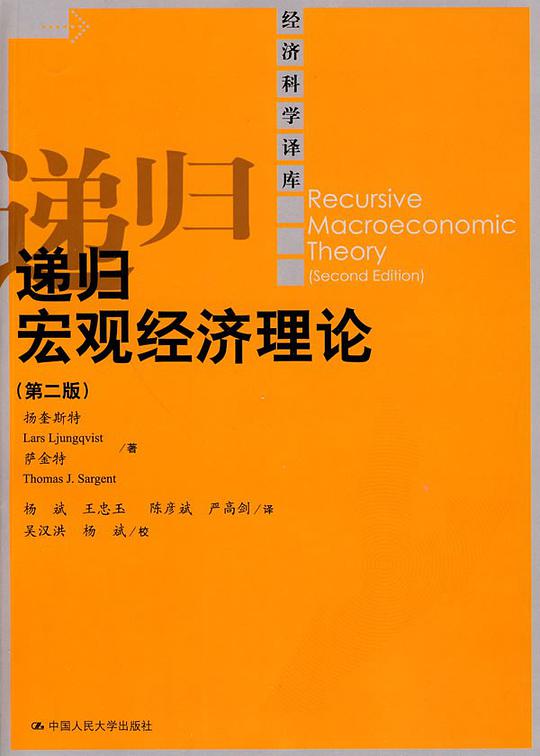
递归宏观经济理论 豆瓣
作者: 扬奎斯特(Lars Ljungqvist) / 萨金特(Thomas J.Sargent) 出版社: 中国人民大学出版社 2010 - 1
《递归宏观经济理论(第2版)》内容简介:在刻画和求解动态宏观经济学中的复杂问题时,递归方法是一个强有力的工具。在《递归宏观经济理论》一书中,既有关于递归方法的基本介绍,也有关于递归方法的高级内容,同时还包含了各种计算工具和应用实例。在《递归宏观经济理论(第2版)》第二版中,作者对于第一版的一半以上的内容进行了根本性的修订,同时还包含了七章全新的涉及更广泛题材的内容。对于《递归宏观经济理论(第2版)》第二版而言,无论是修订部分,还是全新章节,涵盖的都是当前的热门论题,并藉此进一步阐明了递归方法的魅力。
对于《递归宏观经济理论(第2版)》第一版的原有章节所做的根本性修订包括,关于递归均衡的存在性的更好的处理,关于上鞅收敛定理的进一步解释,以及当存在不完全市场时,处理经济中的最优税收问题的扩展方法。第二版中的全新内容包括了一章引论,这一章概述了全书所讨论的各种论题之间的共性;包括了两章全新的内容,这两章提供了关于最优增长模型的完整内容及其在宏观经济学和财政方面的一些基本应用;其他的全新章节涉及的内容还有,如何在线性经济中构造和计算斯塔克贝格计划或拉姆齐计划,没有承诺的可持续的风险分担均衡以及递归合同在国际贸易领域中的应用等。《递归宏观经济理论(第2版)》绝大部分章节的最后都包含了练习题,并且《递归宏观经济理论(第2版)》最后还提供了两个技术附录,介绍泛函分析和控制与滤波方面的基本内容。
徽州千年契约文书 豆瓣
作者: 中国社会科学院历史研究所收藏整理 / 王鈺欣 周紹泉主編 出版社: 石家庄 : 花山文艺出版社 1993
本书收录了安徽省徽州清代和民国时期的租佃文约、田土契约、合同文书、卖身契、典当文约、税契凭证、赋税票据等的契约文书。宋元明编(1—20册),清民国编(1—20册),共40册
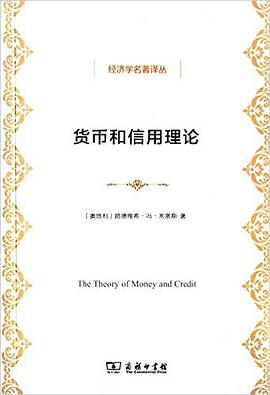
货币和信用理论 豆瓣
The theory of Money and Gredit
作者: [奥地利] 路德维希·冯·米塞斯 译者: 樊林洲 出版社: 商务印书馆 2015 - 10
本书把货币同微观经济理论结合起来,论证了货币的边际效用与其他商品的效用,以及货币的供给如何相互作用而最终决定货币价格。作者提出的“递归定理”解释了货币的起源,把货币整合到市场经济和个体行动分析的整体理论框架中,解决了“奥地利学派循环”的难题。同时研究了货币的性质和价值,以及决定货币政策的效应。本书是奥地利学派经济思想的奠基之作。
An Introduction to the Theory of Mechanism Design 豆瓣
作者: Tilman Borgers / Daniel Krahmer 出版社: Oxford University Press 2015 - 6
What is the best way to auction an asset? How should a group of people organize themselves to ensure the best provision of public goods? How should exchanges be organized? In An Introduction to the Theory of Mechanism Design, Tilman Börgers addresses these questions and more through an exploration of the economic theory of mechanism design. Mechanism design is reverse game theory. Whereas game theory takes the rules of the game as a given and makes predictions about the behavior of strategic players, the theory of mechanism design goes a step further and selects the optimal rules of the game.
A relatively new economic theory, mechanism design studies the instrument itself as well as the results of the instrument. An Introduction to the Theory of Mechanism Design provides rigorous but accessible explanations of classic results in the theory of mechanism design, such as Myerson's theorem on expected revenue maximizing auctions, Myerson and Satterthwaite's theorem on the impossibility of ex post efficient bilateral trade with asymmetric information, and Gibbard and Satterthwaite's theorem on the non-existence of dominant strategy voting mechanisms. Börgers also provides an examination of the frontiers of current research in the area with an original and unified perspective that will appeal to advanced students of economics.
"Tilman Borgers offers the first book-length introduction into the theory of mechanism design. Written in a very personal and masterful style, he carefully covers the main developments in theory of mechanism design-the theory of how to choose the rules of the game-over the past decades. It will be an ideal textbook for advanced undergraduate and graduate courses for many years to come."
Dirk Bergemann, Douglass and Marion Campbell Professor of Economics and Chair, Yale University
"Tilman Borgers gives a beautifully lucid and elegant development of mechanism design in this wonderful book. His masterful exposition provides a unified and cohesive treatment of modern mechanism design, starting from first principles and working through topics at the leading edge of the research frontier. This book is a delight and an invaluable resource for those new to the field and experts alike."
Chris Shannon, Richard and Lisa Steiny Professor of Economics and Professor of Mathematics, University of California, Berkeley
"This book provides an integrated treatment of the theory of mechanism design by a leading practitioner in this area. It covers the core theory together with chapters on recent developments in robust mechanism design and dynamic mechanism design. The core theory is built up in an original and pedagogically successful way, starting with screening in chapter 2 and immediately using those tools to develop leading applications of Bayesian mechanism design-auctions, bilateral trade, and public goods-in chapter 3. These results can then naturally be adapted to dominant strategies in chapter 4. Chapters 5, 6, and 7 then deal with the general theories of incentive compatibility, Bayesian mechanism design, and dominant strategy mechanism design.
The first seven chapters of the book focus on the quasi-linear environments studied in most economic applications, with more general environments ('non-transferable utility') postponed to chapter 8. This ordering of material reflects not the historical development of the subject but a natural and effective path to learn the material. Borgers develops a unified treatment of core material without attempting to be exhaustive. Valuable endnotes at the end of each chapter then explain the historical context and relation to the literature more broadly. It will serve as an excellent textbook for graduate students and advanced undergraduates, and an invaluable reference for researchers."
Stephen Morris, Professor of Economics, Princeton University