歐洲
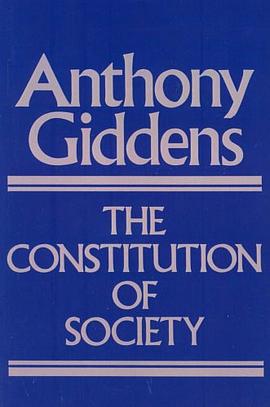
The Constitution of Society
Douban
Anthony Giddens
publishing house:
Polity
1991
- 1
Anthony Giddens has been in the forefront of developments in social theory for the past decade. In The Constitution of Society he outlines the distinctive position he has evolved during that period and offers a full statement of a major new perspective in social thought, a synthesis and elaboration of ideas touched on in previous works but described here for the first time in an integrated and comprehensive form. A particular feature is Giddensa s concern to connect abstract problems of theory to an interpretation of the nature of empirical method in the social sciences. In presenting his own ideas, Giddens mounts a critical attack on some of the more orthodox sociological views. The Constitution of Society is an invaluable reference book for all those concerned with the basic issues in contemporary social theory.
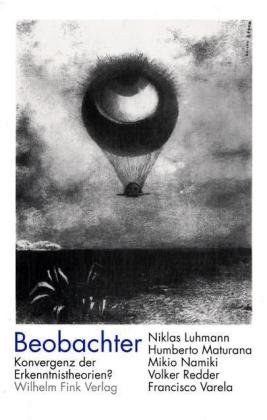
Beobachter. Konvergenz der Erkenntnistheorien?
Douban
Niklas Luhmann
/
Humberto R. Maturana
…
publishing house:
Fink (Wilhelm)
2003
- 7

Gesellschaft verstehen. Soziologische Exkursionen
Douban
Armin Nassehi
publishing house:
Murmann Verlag gmbH
2011
- 2
Der soziologische Diskurs der Moderne
Douban
Armin Nassehi
publishing house:
Suhrkamp Verlag
2009
- 5


Die Zeit der Gesellschaft
Douban
Armin Nassehi
publishing house:
VS Verlag für Sozialwissenschaften
2008
- 7
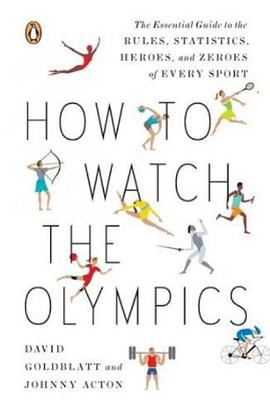
How to Watch the Olympics
DoubanThe Olympics is the world's biggest sporting event - and it moves centre stage for London 2012. Yet the sports the world is familiar with - football, cricket, rugby, baseball, motor sports - are either missing or have a token presence. In their place are games that most of us have not a clue how to play or to watch. Which is where this witty, insightful book comes into play, offering the back story behind each Olympics sport and, by means of fiendishly clever diagrams and prose, explaining the rules and finer points. Once you've read David Goldblatt and Johnny Acton's accounts, you'll be on tenterhooks to see whether the Danish or the Koreans triumph at handball, just what the Italian fencers are up to, and if Greco-Roman wrestling really is like a game of chess.

Niklas Luhmann – beobachtet
Douban
Peter Fuchs
publishing house:
VS Verlag für Sozialwissenschaften
2004
- 9
Systemtheorie, insbesondere diejenige Spielart, die Niklas Luhmann entwickelt hat, ist sehr abstrakt, labyrinthisch verfasst und so geartet, dass Leser/innen u. a. eine umfassende (leider nicht nur soziologische) Vorbildung haben müssen, um sie zu verstehen.Der Autor versucht, in diese 'widerborstige' Theorie einzuführen, ohne ihr Niveau fahrlässig zu unterschreiten. Dabei wird ein Trick benutzt: Die Theorie wird in einer Simulation von Kommunikation (von der sie ja handelt) entfaltet. Der Text realisiert, wovon er spricht, er ist sein eigenes Beispiel und darin tautologisch. Und weil er sich an Kommunikationen entwickelt, an denen sehr verschiedene Personen beteiligt sind, unterläuft er die Gefahr des Dogmatismus und verwirklicht - versuchsweise - ein Stück Wissenschaftsliteratur, das mit dem belehrenden Einführungscharakter ein spielerisches Moment verbindet, was wohl heißt: Offenheit für mögliche Anschlüsse.

Die Wende - Wie die Renaissance begann
Douban
Stephen Greenblatt
publishing house:
Siedler Verlag
2012
- 4
The Swerve
Douban
Stephen Greenblatt
publishing house:
W. W. Norton & Company
2011
- 9
Winner of the 2012 Pulitzer Prize for Non-Fiction
Winner of the 2011 National Book Award for Non-Fiction One of the world's most celebrated scholars, Stephen Greenblatt has crafted both an innovative work of history and a thrilling story of discovery, in which one manuscript, plucked from a thousand years of neglect, changed the course of human thought and made possible the world as we know it.
Nearly six hundred years ago, a short, genial, cannily alert man in his late thirties took a very old manuscript off a library shelf, saw with excitement what he had discovered, and ordered that it be copied. That book was the last surviving manuscript of an ancient Roman philosophical epic, On the Nature of Things , by Lucretius—a beautiful poem of the most dangerous ideas: that the universe functioned without the aid of gods, that religious fear was damaging to human life, and that matter was made up of very small particles in eternal motion, colliding and swerving in new directions.
The copying and translation of this ancient book-the greatest discovery of the greatest book-hunter of his age-fueled the Renaissance, inspiring artists such as Botticelli and thinkers such as Giordano Bruno; shaped the thought of Galileo and Freud, Darwin and Einstein; and had a revolutionary influence on writers such as Montaigne and Shakespeare and even Thomas Jefferson. 16 pages full-color illustrations