歐洲
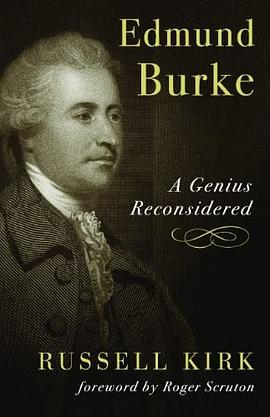
Edmund Burke
Douban
Russell Kirk
publishing house:
Intercollegiate Studies Institute
2009
In this, the liveliest and most accessible one-volume life of Edmund Burke, Russell Kirk ingeniously combines into a living whole the private and the public Burke. He gives us a fresh assessment of the great statesman, who enjoys even greater influence today than in his own time. Russell Kirk was a leading figure in the post-World War II revival of American interest in Edmund Burke. Today, no one who takes seriously the problems of society dares remain indifferent to "the first conservative of our time of troubles." In Russell Kirk’s words: "Burke’s ideas interest anyone nowadays, including men bitterly dissenting from his conclusions. If conservatives would know what they defend, Burke is their touchstone; and if radicals wish to test the temper of their opposition, they should turn to Burke." Kirk lucidly unfolds Burke’s philosophy, showing how it revealed itself in concrete historical situations during the eighteenth century and how Burke, through his philosophy, "speaks to our age."
This volume makes vivid the four great struggles in the life of Burke: his efforts to reconcile England with the American colonies; his involvements in cutting down the domestic power of George III; his prosecution of Warren Hastings, the Governor General of India; and his resistance to Jacobinism, the French Revolution’s "armed doctrine." In each of these great phases of his public life, Burke fought with passionate eloquence and relentless logic for justice and for the proper balance of order and freedom. With sure instinct born of his sympathy and understanding, Kirk gives us the incisive quotation, the illuminating highlight, the moving, all-too-human elements that bring Burke and his age to vivid life. Thanks to Russell Kirk’s skillful evocations, Edmund Burke in these pages becomes our contemporary. "Because corruption and fanaticism assail our era as sorely as they did Burke’s time, the resonance of Burke’s voice still is heard amidst the howl of our winds of abstract doctrine."
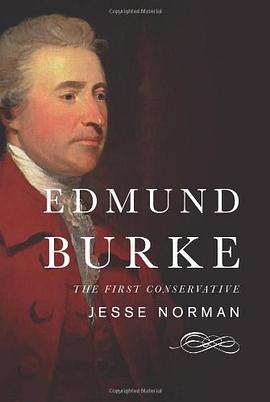
Edmund Burke
Douban Goodreads
Jesse Norman
publishing house:
Basic Books
2013
- 5
other title:
Edmund Burke: The First Conservative
Edmund Burke is both the greatest and the most underrated political thinker of the past three hundred years. A brilliant 18th-century Irish philosopher and statesman, Burke was a fierce champion of human rights and the Anglo-American constitutional tradition, and a lifelong campaigner against arbitrary power. Revered by great Americans including Presidents Theodore Roosevelt and Woodrow Wilson, Burke has been almost forgotten in recent years. But as politician and political philosopher Jesse Norman argues in this penetrating biography, we cannot understand modern politics without him. As Norman reveals, Burke was often ahead of his time, anticipating the abolition of slavery and arguing for free markets, equality for Catholics in Ireland, and responsible government in India, among many other things. He was not always popular in his own lifetime, but his ideas about power, community, and civic virtue have endured long past his death. Indeed, Burke engaged with many of the same issues politicians face today, including the rise of ideological extremism, the loss of social cohesion, the dangers of the corporate state, and the effects of revolution on societies.
He offers us now a compelling critique of liberal individualism, and a vision of society based not on a self-interested agreement among individuals, but rather on an enduring covenant between generations. Burke won admirers in the American colonies for recognizing their fierce spirit of liberty and for speaking out against British oppression, but his greatest triumph was seeing through the utopian aura of the French Revolution. In repudiating that revolution, Burke laid the basis for much of the robust conservative ideology that remains with us to this day: one that is adaptable and forward-thinking, but also mindful of the debt we owe to past generations and our duty to preserve and uphold the institutions we have inherited. He is the first conservative. A rich, accessible, and provocative biography, Edmund Burke describes Burke's life and achievements alongside his momentous legacy, showing how Burke's analytical mind and deep capacity for empathy made him such a vital thinker--both for his own age, and for ours.
Knock oder der Triumph der Medizin
Douban
Jules Romains
publishing house:
Reclam, Philipp, jun. GmbH, Verlag
1997
Intellectuals
Douban
Paul Johnson
publishing house:
Phoenix
2005
- 3
Veteran political commentator, scholar and former editor of The New Statesman Paul Johnson has collected all the nasty, cruel and disgusting episodes in the lives of the mighty dead in order to question their "moral and judgmental credentials to give advice to humanity on how to conduct its affairs."
Intellectuals, according to Johnson, often possess a defining set of characteristic traits; they are lying, cheating, hypocritical, megalomaniacs who combine an abstract love of humanity with an exploitative, selfish and cruel treatment of those who were closest to them. Rousseau, Shelley, Marx, Ibsen, Tolstoy, Hemingway, Bertrand Russell, Brecht, Sartre, Lillian Hellman, Norman Mailer and Kenneth Tynan are put under the spotlight and damned as moral exemplars and truth-tellers while Edmund Wilson, Evelyn Waugh and Orwell provide the necessary foil of intellectual integrity.
This is a voyeuristic, gossip-mongering, ruthless and completely compelling book that leaves a bad taste in the mouth if you consume it at one sitting. Fortunately--since it's a collection of short biographical essays or exposès one can dip in where one likes. Intellectuals is well researched and has the polished concision one might expect from a veteran journalist and scholar. It also has the advantage of dealing with subject matter that is fascinating in itself--the extravagant personalities and spectacular immoralities of some of our most revered figures. Intellectuals doesn't always work as dispassionate intellectual history--for instance the overview of intellectual trends since the 1960s in the final chapter "The Flight of Reason" seems forced--but as a set of exposès it is splendid. --Larry Brown

Escape from Freedom
The Fear of Freedom Douban Goodreads
Erich Fromm
publishing house:
Holt Paperbacks
1994
- 9
If humanity cannot live with the dangers and responsibilities inherent in freedom, it will probably turn to authoritarianism. This is the central idea of Escape from Freedom, a landmark work by one of the most distinguished thinkers of our time, and a book that is as timely now as when first published in 1941. Few books have thrown such light upon the forces that shape modern society or penetrated so deeply into the causes of authoritarian systems. If the rise of democracy set some people free, at the same time it gave birth to a society in which the individual feels alienated and dehumanized. Using the insights of psychoanalysis as probing agents, Fromm’s work analyzes the illness of contemporary civilization as witnessed by its willingness to submit to totalitarian rule.

Die Furcht vor der Freiheit
Douban
Erich Fromm
/
[美国] 埃里希·弗洛姆
publishing house:
Deutscher Taschenbuch Verlag
1993
- 3
What Is This Thing Called Science?
Douban Goodreads
Alan Chalmers
publishing house:
Open University Press
1999
- 2
This indispensable new edition brings Chalmers' popular text up to date with contemporary trends and confirms its status as the best introductory textbook on the philosophy of science.
Over the last 25 years this account to dethrone empiricist thought has become both a bestseller and a standard university text with translations into fifteen languages.
This revised and extended edition offers a concise and illuminating treatment of major developments in the field over the last two decades, with the same accessible style which ensured the popularity of previous editions. Of particular importance is the examination of Bayesianism and the new experimentalism, as well as new chapters on the nature of scientific laws and recent trends in the realism versus anti-realism debate.
"Crisp, lucid and studded with telling examples… As a handy guide to recent alarums and excursions (in the philosophy of science) I find this book vigorous, gallant and useful."
New Scientist

Reise mit Wittgenstein in den Norden
Douban
David H Pinsent
/
Allan Janik
…
publishing house:
Wien, Bozen, Folio Verlag,
1994
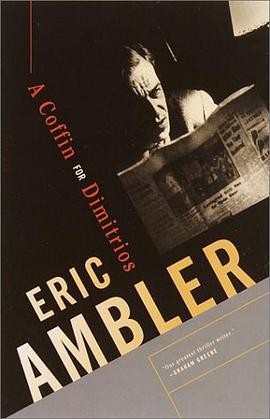
A Coffin for Dimitrios
Douban
Eric Ambler
publishing house:
Vintage
2001
- 10
A chance encounter with a Turkish colonel with a penchant for British crime novels leads mystery writer Charles Latimer into a world of sinister political and criminal maneuvers throughout the Balkans in the years between the world wars. Hoping that the career of the notorious Dimitrios, whose body has been identified in an Istanbul morgue, will inspire a plot for his next novel, Latimer soon finds himself caught up in a shadowy web of assassination, espionage, drugs, and treachery.
Principia Ethica
Douban
G. E. Moore
publishing house:
CreateSpace Independent Publishing Platform
2011
- 10

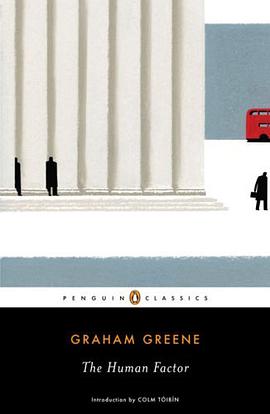
The Human Factor
DoubanA morally complex and mature work from a modern master IN THIS later novel by Graham Greenea featuring a new introductionathe author continues to explore moral and theological dilemmas through psychologically astute character studies and exciting drama on an international stage. In "The Human Factor" A high- level operative of the British Secret Service acts as a double agent to benefit his family.
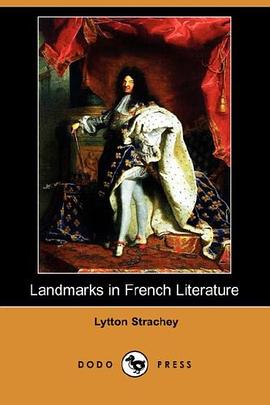
Landmarks in French Literature
Douban
Strachey, Lytton
2008
- 3
Giles Lytton Strachey (1880-1932) was a British writer and critic. He is best known for establishing a new form of biography in which psychological insight and sympathy are combined with irreverence and wit. From time to time throughout his life Strachey studied Italian, German, and French. Landmarks in French Literature was published in 1912. By 1916 Strachey's theory of biography was fully developed and mature. He was being greatly influenced by Dostoevsky. His first great success, and his most famous achievement, was Eminent Victorians (1918), a collection of four short biographies of Victorian heroes. This work was followed in the same style by Queen Victoria (1921). Amongst his other works are Books and Characters: French and English (1922), Elizabeth and Essex: A Tragic History (1928), Portraits in Miniature (1931) and Characters and Commentaries (1933).