CS
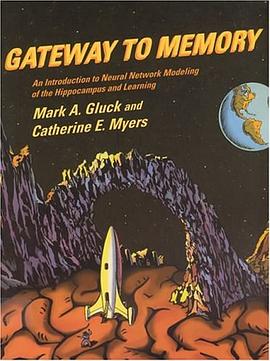
Gateway to Memory
Douban
Mark A. Gluck / Catherine E. Myers publishing house: A Bradford Book 2001 - 8
This book is for students and researchers who have a specific interest in learning and memory and want to understand how computational models can be integrated into experimental research on the hippocampus and learning. It emphasizes the function of brain structures as they give rise to behavior, rather than the molecular or neuronal details. It also emphasizes the process of modeling, rather than the mathematical details of the models themselves.The book is divided into two parts. The first part provides a tutorial introduction to topics in neuroscience, the psychology of learning and memory, and the theory of neural network models. The second part, the core of the book, reviews computational models of how the hippocampus cooperates with other brain structures--including the entorhinal cortex, basal forebrain, cerebellum, and primary sensory and motor cortices--to support learning and memory in both animals and humans. The book assumes no prior knowledge of computational modeling or mathematics. For those who wish to delve more deeply into the formal details of the models, there are optional "mathboxes" and appendices. The book also includes extensive references and suggestions for further readings.
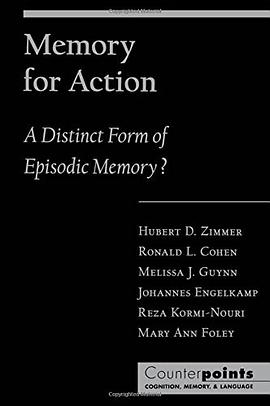
Memory for Action
Douban
Hubert D. Zimmer / Ronald L. Cohen … publishing house: Oxford University Press 2001 - 6
In eight chapters by leading researchers, Memory for Action presents our actual knowledge on memory for actions and the opposing explanaions for these phenomena. It gives an overview of the results from laboratory research on action memory and on memory for activities in social contexts, and presents recent results on memory for intended actions. Additionally, these results are put in relation to the information and to the brain modules which are necessary for successful control of actions.
Cortex and Mind
Douban
Joaquín M. Fuster publishing house: Oxford University Press, USA 2005 - 8
This book presents a unique synthesis of the current neuroscience of cognition by one of the world's authorities in the field. The guiding principle to this synthesis is the tenet that the entirety of our knowledge is encoded by relations, and thus by connections, in neuronal networks of our cerebral cortex. Cognitive networks develop by experience on a base of widely dispersed modular cell assemblies representing elementary sensations and movements. As they develop cognitive networks organize themselves hierarchically by order of complexity or abstraction of their content. Because networks intersect profusely, sharing commong nodes, a neuronal assembly anywhere in the cortex can be part of many networks, and therefore many items of knowledge. All cognitive functions consist of neural transactions within and between cognitive networks. After reviewing the neurobiology and architecture of cortical networks (also named cognits), the author undertakes a systematic study of cortical dynamics in each of the major cognitive functions - perception, memory, attention, language, and intelligence. In this study, he makes use of a large body of evidence from a variety of methodologies, in the brain of the human as well as the nonhuman primate. The outcome of his interdisciplinary endeavor is the emergence of a structural and dynamic order in the cerebral cortex that, though still sketchy and fragmentary, mirrors with remarkable fidelity the order in the human mind.
Memory and the Computational Brain
Douban
Gallistel, Randy publishing house: Blackwell Pub 2009 - 5
Memory and the Computational Brain offers a provocative argument that goes to the heart of neuroscience, proposing that the field can and should benefit from the recent advances of cognitive science and the development of information theory over the course of the last several decades. A provocative argument that impacts across the fields of linguistics, cognitive science, and neuroscience, suggesting new perspectives on learning mechanisms in the brain Proposes that the field of neuroscience can and should benefit from the recent advances of cognitive science and the development of information theory Suggests that the architecture of the brain is structured precisely for learning and for memory, and integrates the concept of an addressable read/write memory mechanism into the foundations of neuroscience Based on lectures in the prestigious Blackwell-Maryland Lectures in Language and Cognition, and now significantly reworked and expanded to make it ideal for students and faculty
The Hippocampus Book
Douban
Andersen, Per (EDT)/ Morris, Richard (EDT)/ Amaral, David (EDT)/ Bliss, Tim (EDT)/ O'Keefe, John (EDT) publishing house: Oxford University Press 2006 - 11
The hippocampus is one of a group of remarkable structures embedded within the medial temporal lobe of the brain. Long known to be important for memory, it has been a prime focus of neuroscience research for many years. The Hippocampus Book promises to facilitate developments in the field in a major way by bringing together, for the first time, contributions by leading international scientists working on hippocampal anatomy, physiology, and function. This authoritative volume offers the most comprehensive, up-to-date account of what the hippocampus does, how it does it and what happens when things go wrong. At the same time, it illustrates how research focusing on this single brain structure has revealed principles of wider generality for the whole brain in relation to anatomical connectivity, synaptic plasticity, cognition and behaviour, and computational algorithms. Well-organised in its presentation of both theory and experimental data, this peerless work vividly illustrates the astonishing progress that has been made in unravelling the workings of the brain. The Hippocampus Book is destined to take a central place on every neuroscientist's bookshelf.
人工智能简史
Douban
尼克 publishing house: 人民邮电出版社 2017
本书全面讲述人工智能的发展史,几乎覆盖人工智能学科的所有领域,包括人工智能的起源。、自动定理证明、专家系统、神经网络、自然语言处理、遗传算法、深度学习、强化学习、超级智能、哲学问题和未来趋势等,以宏阔的视野和生动的语言,对人工智能进行了全面回顾和深度点评。 本书作者和书中诸多人物或为师友或相熟相知,除了详实的考证还有有趣的轶事。本书既适合专业人士了解人工智能鲜为人知的历史,也适合对人工智能感兴趣的大众读者作为入门的向导。
Numerical Optimization
Douban
Jorge Nocedal / Stephen Wright publishing house: Springer 2006 - 7
Optimization is an important tool used in decision science and for the analysis of physical systems used in engineering. One can trace its roots to the Calculus of Variations and the work of Euler and Lagrange. This natural and reasonable approach to mathematical programming covers numerical methods for finite-dimensional optimization problems. It begins with very simple ideas progressing through more complicated concepts, concentrating on methods for both unconstrained and constrained optimization.
Simulating the Evolution of Language
Douban
Parisi, D. publishing house: Springer 2001
This book is the first to provide a comprehensive survey of the computational models and methodologies used for studying the evolution and origin of language and communication. Comprising contributions from the most influential figures in the field, it presents and summarises the state-of-the-art in computational approaches to language evolution, and highlights new lines of development.Essential reading for researchers and students in the fields of evolutionary and adaptive systems, language evolution modelling and linguistics, it will also be of interest to researchers working on applications of neural networks to language problems. Furthermore, due to the fact that language evolution models use multi-agent methodologies, it will also be of great interest to computer scientists working on multi-agent systems, robotics and internet agents.
Surfaces and Essences
Douban Goodreads
Douglas Hofstadter / Emmanuel Sander publishing house: Basic Books 2013 - 4 other title: Surfaces and Essences: Analogy as the Fuel and Fire of Thinking
<b> <i>Analogy is the core of all thinking.</i> </b><br /><br />This is the simple but unorthodox premise that Pulitzer Prize–winning author Douglas Hofstadter and French psychologist Emmanuel Sander defend in their new work. Hofstadter has been grappling with the mysteries of human thought for over thirty years. Now, with his trademark wit and special talent for making complex ideas vivid, he has partnered with Sander to put forth a highly novel perspective on cognition.<br /><br />We are constantly faced with a swirling and intermingling multitude of ill-defined situations. Our brain’s job is to try to make sense of this unpredictable, swarming chaos of stimuli. How does it do so? The ceaseless hail of input triggers analogies galore, helping us to pinpoint the essence of what is going on. Often this means the spontaneous evocation of words, sometimes idioms, sometimes the triggering of nameless, long-buried memories.<br /><br />Why did two-year-old Camille proudly exclaim, “I undressed the banana!”? Why do people who hear a story often blurt out, “Exactly the same thing happened to me!” when it was a completely different event? How do we recognize an aggressive driver from a split-second glance in our rearview mirror? What in a friend’s remark triggers the offhand reply, “That’s just sour grapes”? What did Albert Einstein see that made him suspect that light consists of particles when a century of research had driven the final nail in the coffin of that long-dead idea?<br /><br />The answer to all these questions, of course, is <i>analogy-making</i>—the meat and potatoes, the heart and soul, the fuel and fire, the gist and the crux, the lifeblood and the wellsprings of thought. Analogy-making, far from happening at rare intervals, occurs at all moments, defining thinking from top to toe, from the tiniest and most fleeting thoughts to the most creative scientific insights.<br /><br />Like <i>Gödel, Escher, Bach</i> before it, <i>Surfaces and Essences</i> will profoundly enrich our understanding of our own minds. By plunging the reader into an extraordinary variety of colorful situations involving language, thought, and memory, by revealing bit by bit the constantly churning cognitive mechanisms normally completely hidden from view, and by discovering in them one central, invariant core—the incessant, unconscious quest for strong analogical links to past experiences—this book puts forth a radical and deeply surprising new vision of the act of thinking.<br />
The Symbolic Species
Douban
Terrence W. Deacon publishing house: W. W. Norton & Company 1998 - 4
This revolutionary book provides fresh answers to long-standing questions of human origins and consciousness. Drawing on his breakthrough research in comparative neuroscience, Terrence Deacon offers a wealth of insights into the significance of symbolic thinking: from the co-evolutionary exchange between language and brains over two million years of hominid evolution to the ethical repercussions that followed man's newfound access to other people's thoughts and emotions. Informing these insights is a new understanding of how Darwinian processes underlie the brain's development and function as well as its evolution. In contrast to much contemporary neuroscience that treats the brain as no more or less than a computer, Deacon provides a new clarity of vision into the mechanism of mind. It injects a renewed sense of adventure into the experience of being human.