New German Cinema

140 movies   5 tv shows  

This is a source list I made for my brand-new (as of 2026) <a href="https://boxd.it/PPFGu">Werner HerzAugust Challenge</a>, celebrating both Herzog and the New German Cinema movement.

This list is shuffled together from two other Letterboxd lists of New German Cinema films: <a href="https://boxd.it/1zk98">One from film professor Dawn Fratini</a>, and <a href="https://boxd.it/gKHJ6">another one by Ramanthis</a>, as well as the partial filmography given in the <a href="https://en.wikipedia.org/wiki/New_German_Cinema">Wikipedia article</a> on New German Cinema.

Although Wikipedia states that the New German Cinema movement lasted only 20 years between 1962 to 1982, this list includes several titles from much later, either by the same set or filmmakers or otherwise somehow related.

Brutality in Stone (1961) [Movie] Douban TMDB IMDb WikiData
Brutalität in Stein
director: 亚历山大·克鲁格 / 彼得·沙莫尼 actor: 汉斯·克拉林 / Christian Marschall
other title: 石中的残暴 / Brutalität in Stein
In his experimental short film "Brutalität in Stein" (Brutality in Stone), Alexander Kluge demonstrates how Nazi architecture used dimensions of inhuman and super-human scale to bolster the regime's politics of the same kind. Shots of huge neo-classical architectural structures from the Nazi period are confronted with equally anti-human national-socialist language as a voice-over.
The Bread of Those Early Years (1962) [Movie] Douban IMDb TMDB WikiData
Das Brot der frühen Jahre
director: Herbert Vesely actor: Christian Doermer / Karen Blanguernon
other title: 昔日的面包 / Das Brot der frühen Jahre
A young electrical engineer, engaged to his boss's daughter and on the way to a secure existence, breaks out of his usual life when he meets a childhood friend.
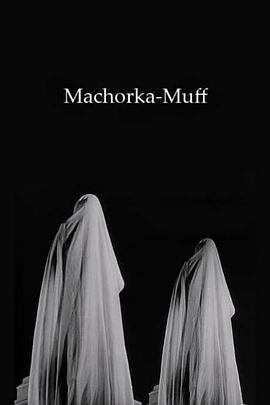
Machorka-Muff (1963) [Movie] Douban TMDB IMDb WikiData
Machorka-Muff
director: 让-马里·斯特劳布 / 达尼埃尔·于伊耶 actor: Erich Kuby / Renate Lang
other title: 马霍卡-莫夫 / 마쇼르카-머프
Straub-Huillet’s adaptation of Heinrich Böll’s biting satire Bonn Diary presents the reflections of a reactivated officer who is summon ed to the West German capital by the Ministry of Defense to establish an Academy for Military Memories. Straub considered his film to be an intervention against German rearmament in the Adenauer era: "Machorka-Muff is the story of a rape, the rape of a country on which an army has been imposed, a country which would have been happier without one."
In "Machorka-Muff," Mr. Straub, employing the cold, somewhat expressionistic but always loquacious approach of his other films, comes closest to underlining the almost subliminal irony of his themes. He briefly outlines, through the performance of Colonel Machorka-Muff, a former Nazi who is reinstated in the Adenauer regime, the unchanging thinking of the Nazi and/or the military mind. As the colonel of the title, Dr. Johannes Eckhardt is properly cold and convincing as the believer in the rights of the soldier. Although it is the shortest and earliest of Mr. Straub's films, it is both the most lucid of his works and the most clearly indicative of his potential as an imaginative filmmaker.
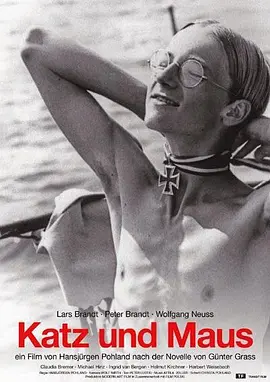
Cat and Mouse (1967) [Movie] Douban IMDb TMDB WikiData
Katz und Maus
director: 汉斯·于尔根·波兰德 actor: Lars Brandt
other title: Katz und Maus / 猫与鼠
In 1966, a former gymnast returns to his hometown Danzig, which is now a part of Poland. He begins to reflect on one of his classmates, Joachim Mahlke, who disappeared during World War II. Mahlke was initially marked as an outsider due to his oversized Adam’s apple, but when he turned out to be a great diver, the in-crowd embraced him. Then he steals a Knight’s Cross from a soldier and is expelled from school. Volunteering for war service, he earns a medal himself and hopes his reputation will be rehabilitated. But the school principal refuses and Mahlke deserts from the army…
Lebenszeichen (1968) [Movie] Douban IMDb TMDB WikiData
Lebenszeichen
8.1 (21 ratings) director: 沃纳·赫尔佐格 actor: 彼得·布罗格尔 / 沃尔夫冈·施通普夫
other title: 生命的标记 / 生命的讯息
During World War II, three German soldiers are withdrawn from combat when one of them, Stroszek, is wounded. They are assigned to a small coastal community on the Greek island of Kos while Stroszek recuperates. The men become increasingly stir crazy in their uneventful new assignment. Stroszek eventually goes mad.
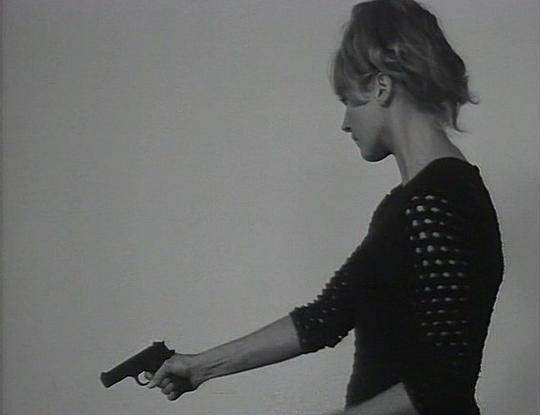
The Bridegroom, the Actress, and the Pimp (1968) [Movie] Douban IMDb TMDB WikiData
Bräutigam, die Komödiantin und der Zuhälter
7.0 (6 ratings) director: Jean-Marie Straub / Danièle Huillet actor: Irm Hermann / Kristin Peterson
other title: 新郎,女骗子和皮条客 / Bräutigam, die Komödiantin und der Zuhälter
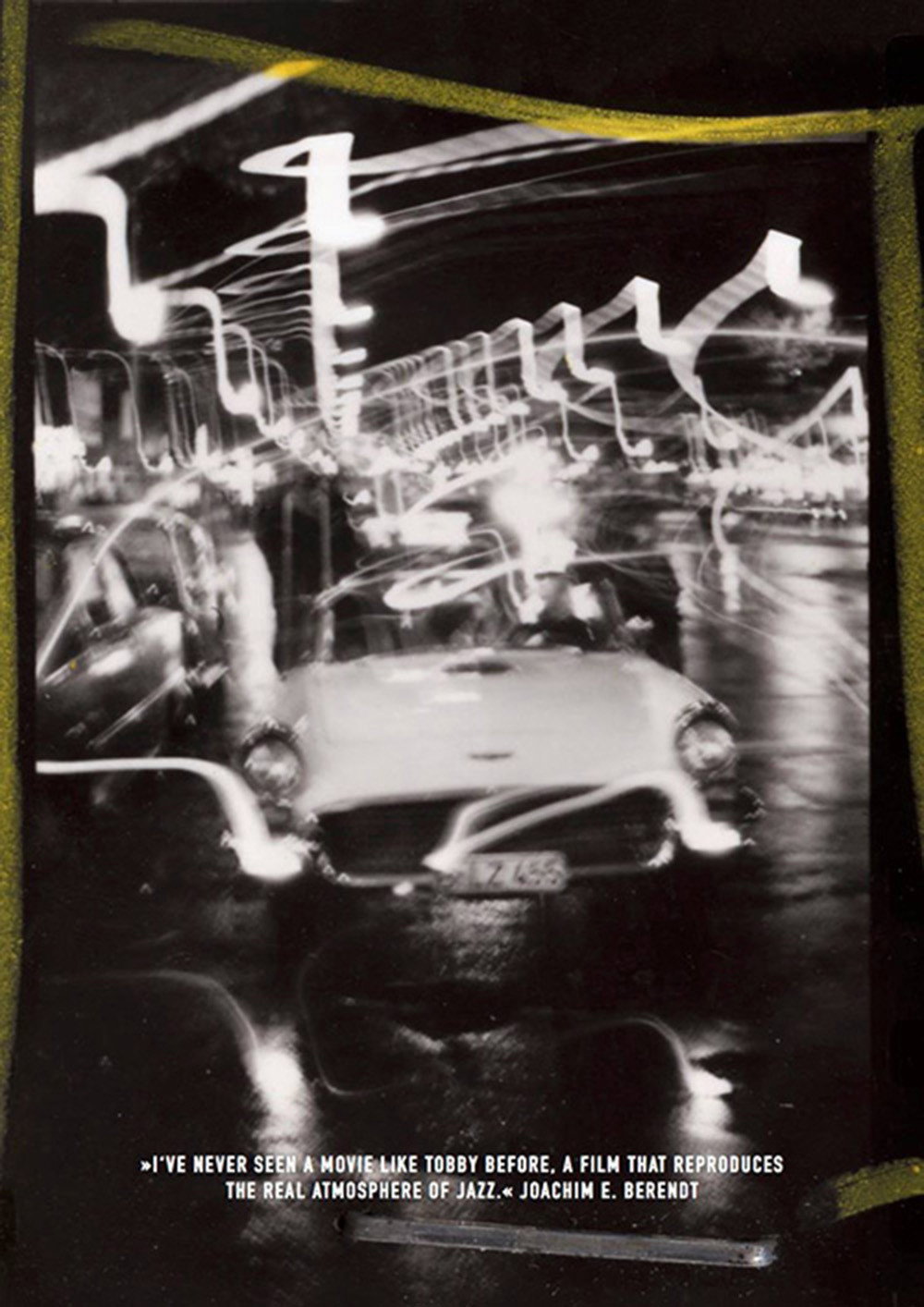
Three sequences are linked together in this short film by Straub; the first sequence is a long tracking shot from a car of prostitutes plying their trade on the night-time streets of Germany; the second is a staged play, cut down to 10 minutes by Straub and photographed in a single take; the final sequence covers the marriage of James and Lilith, and Lilith's subsequent execution of her pimp, played by Rainer Werner Fassbinder.
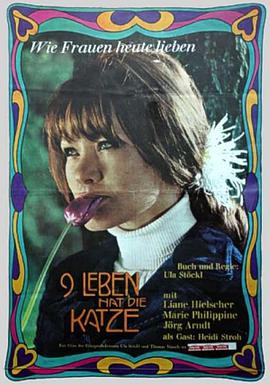
The Cat Has Nine Lives (1968) [Movie] Douban WikiData IMDb TMDB
Neun Leben hat die Katze
8.0 (7 ratings) director: Ula Stöckl actor: Liane Hielscher / Kristine De Loup
other title: 猫有九条命 / Neun Leben hat die Katze
In the summer of 1967, journalist Katharina is visited in Munich by her French friend Anne. They take day trips and visit cafés, acquaintances, and parties. In a series of conversations between them and other women, they talk about the chances for female emancipation in a male-dominated society.
Scarabea - How Much Land Does a Man Need? (1969) [Movie] Douban TMDB IMDb WikiData
Scarabea - wieviel Erde braucht der Mensch?
other title: 斯卡拉贝 - 一个人究竟需要多少土地? / Scarabea - wieviel Erde braucht der Mensch?
German Film Awards
Year Result Award Category/Recipient(s)
1969 Won Film Award in Gold Outstanding Individual Achievement: Actor
Walter Buschhoff
Outstanding Individual Achievement: Cinematography
Petrus R. Schlömp
Hunting Scenes from Bavaria (1969) [Movie] Douban IMDb TMDB WikiData
Jagdszenen aus Niederbayern
director: 彼得·弗莱施曼 actor: Martin Sperr / Angela Winkler
other title: 巴伐利亚打猎即景 / Jagdszenen aus Niederbayern
ynopsis from Time Out Film Guide: Between the seemingly idyllic opening and closing scenes depicting a rural community, first at church, then at the village festival, Fleischmann attacks that community's prejudices and ignorance without remorse. His very precisely observed portrait of Bavarian life begins with little more than a display of the villagers' constant ribbing, bawdy humour, continuous gossip, and more than a hint of their slow-wittedness. With the return of a young man, their idle malice and childish clowning, always on the edge of unpleasantness, receive some focus: quite without foundation, the lad is victimised as a homosexual. The crippling conformity of their ingrained conservatism leads the villagers to reject anything 'different': a young widow is ostracised, more for her crippled lover and idiot son than her morals; a teacher is frozen out because she's educated; the casual destruction of the young 'homosexual' is given no more thought than the cutting up of a pig. Not Germany in the '30s but the '70s; nevertheless the political parallels are clear. An impressive film.
Baal (1970) [Movie] Douban IMDb TMDB WikiData
Baal
director: 沃尔克·施隆多夫 actor: 赖纳·维尔纳·法斯宾德 / 玛加蕾特·冯·特罗塔
other title: 太阳神 / 바알
Volker Schlöndorff transposes Bertolt Brecht’s late-expressionist work to latter-day 1969. Poet and anarchist Baal lives in an attic and reads his poems to cab drivers. At first feted and later rejected by bourgeois society, Baal roams through forests and along motorways, greedy for schnapps, cigarettes, women and men: ‘You have to let out the beast, let him out into the sunlight.’ After impregnating a young actress he soon comes to regard her as a millstone round his neck. He stabs a friend to death and dies alone. ‘You are useless, mangy and wild, you beast, you crawl through the lowest boughs of the tree.’
The film takes youthful impetuousness and hatred of oppression as its subject and also ponders the cult of genius and sexual morals. Rainer Werner Fassbinder simultaneously plays both Baal and himself and is surrounded by many actors who were later to perform in his own films. After the film was broadcast on West German television, Brecht’s widow Helene Weigel prohibited any further screenings, arguing that the social circumstances engendering Baal’s rebelliousness had not been adequately explained.
Reply Quote July 23, 2026