New German Cinema
140 movies 5 tv shows
This is a source list I made for my brand-new (as of 2026) <a href="https://boxd.it/PPFGu">Werner HerzAugust Challenge</a>, celebrating both Herzog and the New German Cinema movement.
This list is shuffled together from two other Letterboxd lists of New German Cinema films: <a href="https://boxd.it/1zk98">One from film professor Dawn Fratini</a>, and <a href="https://boxd.it/gKHJ6">another one by Ramanthis</a>, as well as the partial filmography given in the <a href="https://en.wikipedia.org/wiki/New_German_Cinema">Wikipedia article</a> on New German Cinema.
Although Wikipedia states that the New German Cinema movement lasted only 20 years between 1962 to 1982, this list includes several titles from much later, either by the same set or filmmakers or otherwise somehow related.
The State of Things (1982) [Movie] IMDb Douban TMDB WikiData
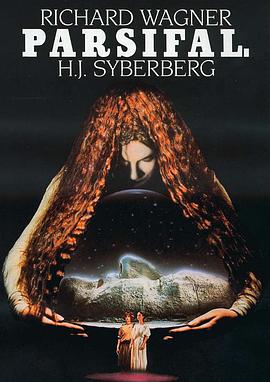
Der Stand der DingeParsifal (1982) [Movie] Douban IMDb WikiData TMDB
ParsifalParsifal (1982)
Richard Wagner's last opera has remained controversial since its first performance for its unique, and, for some, unsavory blending of religious and erotic themes and imagery. Based on one of the medieval epic romances of King Arthur and the search for the holy grail (the chalice touched by the lips of Christ at the last supper), it recounts over three long acts how a "wild child" unwittingly invades the sacred precincts of the grail, fulfilling a prophecy that only such a one can save the grail's protectors from a curse fallen upon them. Interpreters of the work have found everything from mystical revelation to proto-fascist propaganda in it. Hans-Jurgen Syberberg's production doesn't avoid either aspect, but tries synthesize them by seeking their roots in the divided soul of Wagner himself. The action unfolds on a craggy landscape which turns out to be a gigantic enlargement of the composer's death mask, among deliberately tatty theatrical devices: puppets, scale models, magic-lantern projections. The eponymous hero is sung by the specified tenor voice (Reiner Goldberg) but mimed on screen by a male and a female performer alternately, reflecting what the director takes to be the creator's own sexual conflicts. Syberberg's pacing, dictated by the majestic pace of Wagner's score, is slow, but enlivened by constant subtle shifts in point of view, and memorable performances by actress Edith Clever as the villainess/heroine Kundry (sung by Yvonne Minton), orchestra conductor Armin Jordan as the remorseful knight Amfortas (sung by Wolfgang Schoene), and Robert Lloyd (the faithful retainer Gurnemanz).
Summary written by Roger Downey
Room 666 (1982) [Movie] Douban TMDB IMDb WikiData
Chambre 666Kamikaze '89 (1982) [Movie] Douban TMDB IMDb WikiData
Kamikaze 1989Rainer Werner Fassbinder: Last Works (1982) [Movie] Douban TMDB IMDb
Rainer Werner Fassbinder - Letzte ArbeitenLast Five Days (1982) [Movie] Douban TMDB IMDb WikiData
Fünf letzte TageSheer Madness (1983) [Movie] TMDB IMDb Douban WikiData
Heller WahnOlivia (1983) [Movie] Douban IMDb WikiData TMDB
OliviaThe Power of Emotion (1983) [Movie] Douban TMDB IMDb WikiData
Die Macht der GefühleAlexander Kluge: The Power of Feeling
When I started working on The Power of Feeling, I was not in a rational state. I did not say, I have a subject and now I will make a film about it. Instead I was spellbound and observed in my direct surroundings, for example, how feelings move. I have not really dealt with the theme of my mother's death and the fact that she was the one who taught me "how feelings move." Nor have I dealt with how she died. That was an entire palette of feelings: "All feelings believe in a happy end," and everyone believes tacitly that they will live forever: The entire palette is somehow optimistic, a positive attitude towards life having been put on the agendaas long as she was young, as long as her body held out, from one day to the next she collapsed. She just suddenly collapsed, like in an opera where disaster takes the stage in the fifth act. It felt as if I had observed an air raid or a disaster.
The film The Power of Feeling is not about feelings, but rather their organization: how they can be organized by chance, through outside factors, murder, destiny; how they are organized, how they encounter the fortune they are seeking.What is all this organization of feelings about? Generally feelings tend to be a dictatorship. It is a dictatorship of the moment. The strong feeling I am having right now suppresses the others. For thoughts this would not be the case. One thought attracts others like a magnet. People therefore need affirmation by other people to be sure about their own feelings (to counteract the acquisition of their feelings through outside forces). Through the interaction of many people, for example, in public, the various feelings also have a magnetic attraction to one another just like thoughts do. Feelings communicate through their manifestation in public.
The cinema is the public seat of feelings in the 20th century. The organization is set up thusly: Even sad feelings have a happy outcome in the cinema. It is about finding comfort: In the 19th century the opera house was the home to feelings. An overwhelming majority of operas had a tragic end. You observed a victim.
I am convinced that there is a more adventuresome combination: Feelings in both the opera and traditional cinema are powerless in the face of destiny's might. In the 20th century feelings barricaded themselves behind this comfort, in the 19th century they entrenched themselves in the validity of the lethal seriousness.