语言学是一个学科群
102 books
Linguistics deals with language and the various issues concerning language. It is a conglomerate composed of over 70 academic subjects, covering seven major areas: language structure, language function, language application, human language learning, machine language learning, language and physiology, and language and cognition. Linguistics as an academic subject in its very nature can be categorized under three themes: scientifi c, technological and artistic. It thus transcends humanities, social sciences and natural sciences. The objective of linguistic studies is to understand the rules and regulations of languages. Language technology is about the application and exploitation of language for instrumental purposes with an aim to benefit the human race; the artistic aspects of language and its writing system can be utilized for fostering the aesthetic sense of the public. To understand the nature of linguistics is significant and far reaching as it is conducive in integrating linguistic theories and disciplinary framework of linguistics study, so that it enables us to shift the focus of seeking to answer fundamental questions concerning constructing models of linguistic knowledge to practical application. More generally, this shift also contributes to rectifying discipline categories that are currently adopted in Chinese universities, ultimately leading to furthering linguistic studies. The outcome of linguistic studies should be made applicable in other academic subject and society.

Place Names [Book] Google Books
The Syntax of Vietnamese Tense, Aspect, and Negation [Book] Google Books
Symbols [Book] Google Books
This book presents the first systematic study of graphical symbol systems, including a history of graphical symbols from the Paleolithic onwards, a taxonomy of non-linguistic systems – systems that are not tied to spoken language – and a survey of more than 25 such systems. One important feature of many non-linguistic systems is that, as in written language, symbols may be combined into complex “messages” if the information the system represents is itself complex. To illustrate, the author presents an in-depth comparison of two systems that had very similar functions, but very different structure: European heraldry and Japanese kamon.
Writing first appeared in Mesopotamia about 5,000 years ago and is believed to have evolved from a previous non-linguistic accounting system. The exact mechanism is unknown, but crucial was the discovery that symbols can represent the sounds of words, not just the meanings. The book presents a novel neurologically-inspired hypothesis that writing evolved in an institutional context in which symbols were “dictated”, thus driving an association between symbol and sound, and provides a computational simulation to support this hypothesis. The author further discusses some common fallacies about writing and non-linguistic systems, and how these relate to widely cited claims about statistical “evidence” for one or another system being writing. The book ends with some thoughts about the future of graphical symbol systems.
The intended audience includes students, researchers, lecturers, professionals and scientists from fields like Natural Language Processing, Machine Learning, Archaeology and Semiotics, as well as general readers interested in language and/or writing systems and symbol systems.
Dictionary and Thesaurus of Tocharian A [Book] Google Books
Dictionary and Thesaurus of Tocharian a [Book] Goodreads
Perspectives on information structure in Austronesian languages [Book] Google Books
Language, Science, and Structure [Book] Google Books
Linguistics presents a unique and challenging subject matter for the philosophy of science. As a special science, its formalisation and naturalisation inspired what many consider to be a scientific revolution in the study of mind and language. Yet radical internal theory change, multiple competing frameworks, and issues of modelling and realism have largely gone unaddressed in the field. Nefdt develops a structural realist perspective on the philosophy of linguistics which aims to confront the aforementioned topics in new ways while expanding the outlook toward new scientific connections and novel philosophical insights. On this view, languages are real patterns which emerge from complex biological systems. Nefdt's exploration of this novel view will be especially valuable to those working in formal and computational linguistics, cognitive science, and the philosophies of science, mathematics, and language.
Grammaire nouvelle de l'ancien français [Book] Google Books
Le français médiéval par les textes [Book] Google Books
Et non autrement. Marginalisation et résistance des langues de France (XVIe-XVIIe siècle) [Book] Google Books
Cette marginalisation de la différence linguistique se heurte à la réalité de terrain pour l’Église de la Contre-Réforme qui développe des stratégies différentes selon les régions, engagée au Pays basque, mitigée, voire hostile, ailleurs. Finalement, ce sont les poètes qui choisissent d’écrire dans ces langues, comme l’occitan, qui en assurent la défense la plus efficace, posant cependant la question de l’autonomie de cette production littéraire par rapport aux schémas dominants français.
アジア・太平洋における日本語の過去と現在 [Book] Google Books
執筆者:今村圭介、ダニエル・ロング、朝日祥之、甲斐ますみ、黄永熙、甲賀真広、合津美穂、真田信治、髙木丈也、張守祥、白暁萌、李舜炯
Evolution of Direct Discourse Marking from Classical to Late Latin [Book] Google Books
A Grammar of Meskwaki [Book] Google Books
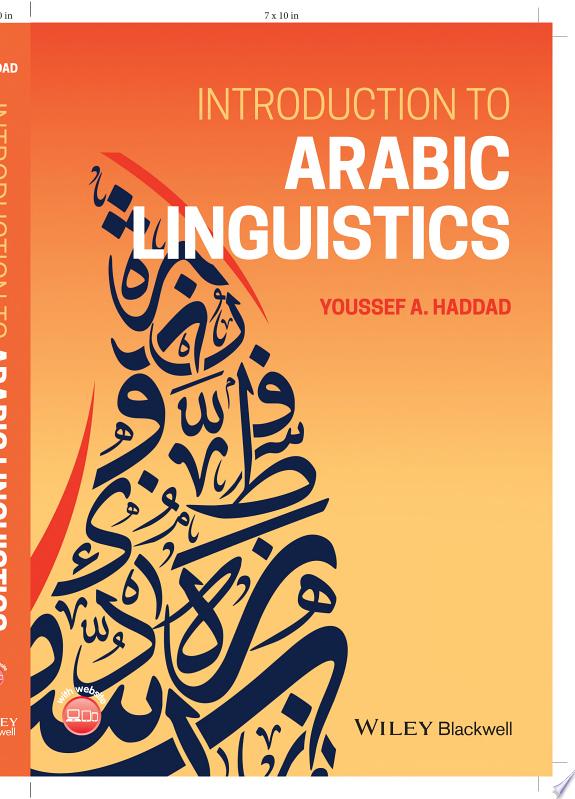
Introduction to Arabic Linguistics [Book] Google Books
Probabilistic Approaches to Linguistic Theory [Book] Google Books
During the last two decades, computational linguists, in concert with other researchers in AI, have turned to machine learning and statistical techniques to capture features of natural language and aspects of the learning process that are not easily accommodated in classical algebraic frameworks. These developments are producing a revolution in linguistics in which traditional symbolic systems are giving way to probabilistic and deep learning approaches. This collection features articles that provide background to these approaches, and their application in syntax, semantics, pragmatics, morphology, psycholinguistics, neurolinguistics, and dialogue modeling. Each chapter provides a self-contained introduction to the topic that it covers, making this volume accessible to graduate students and researchers in linguistics, NLP, AI, and cognitive science.