
watchlist_extended
11620 movies 175 tv shows
all the films in lists I liked


Crimson Gold (2003) [Movie] Douban TMDB IMDb WikiData
طلای سرخ
other title:
深红的金子
/
طلای سرخ
…
Pizza man Hussein is a daily witnesses to the unjust distribution of wealth in his native Iran. One day, he finds a purse filled with shockingly expensive receipts from an upscale jewelry store. He attempts to bring the purse back to the store, but because of his working-class attire, he's not allowed inside. Then, during a delivery, a rich man invites Hussein into his extravagant mansion – an event that spurs Hussein to make a desperate bid for wealth.

Go Further (2003) [Movie] TMDB WikiData IMDb
Go Further
other title:
What Every Young Person Should Know
"Go Further" explores the idea that the single individual is the key to large-scale transformational change. The film follows actor Woody Harrelson as he takes a small group of friends on a bio-fueled bus-ride down the Pacific Coast Highway. Their goal? To show the people they encounter that there are viable alternatives.

The Same River Twice (2003) [Movie] IMDb WikiData TMDB
The Same River Twice
director:
Robb Moss
From peyote to prozac, a sensitive portrait of five former hippies now approaching middle age.
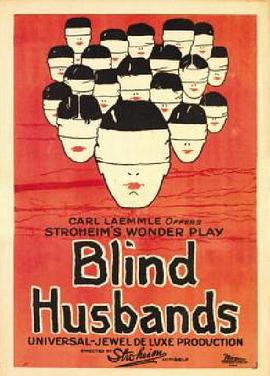
Blind Husbands (1919) [Movie] Douban IMDb WikiData TMDB
Blind Husbands
director:
埃里克·冯·施特罗海姆
actor:
萨姆·德·格拉斯
/
Francelia Billington
…
other title:
盲目的丈夫们
/
Blinde Ehemänner
…
Two differences between this Austrian version and the generally available American version are immediately obvious: they differ both in their length and in the language of the intertitles. The American version is only 1,883 metres long - at 18 frames per second a difference of some 7 minutes to the Austrian version with 2,045 metres. Whereas we originally presumed only a negligible difference, resulting from the varying length of the intertitles, a direct comparison has nevertheless shown that the Austrian version differs from the American version both in the montage and in the duration of individual scenes. Yet how could it happen that the later regional distribution of a canonical US silent film was longer than the "original version"?
The prevalent American version of Blind Husbands does not correspond to the version shown at the premiere of 1919. This little-known fact was already published by Richard Koszarski in 1983. The film was re-released by Universal Pictures in 1924, in a version that was 1,365 feet (416 metres) shorter. At 18 frames per second, this amounts to a time difference of 20 minutes! "Titles were altered, snippets of action removed and at least one major scene taken out entirely, where von Steuben and Margaret visit a small local chapel." (Koszarski)
From the present state of research we can assume that all the known American copies of the film derive from this shortened re-release version, a copy of which Universal donated to the Museum of Modern Art in 1941. According to Koszarski the original negative of the film was destroyed sometime between 1956 and 1961 and has therefore been irretrievably lost. This information casts an interesting light on the Austrian version, which can be dated to the period between the summer of 1921 and the winter of 1922. Furthermore, the copy is some 200 metres longer than the US version of 1924. If one follows the details given by Richard Koszarski and Arthur Lennig, this means that, as far as both its date and its length are concerned, the Austrian version lies almost exactly in the middle between the (lost) version shown at the premiere and the re-released one.A large part of the additional length of the film can be traced to cuts that were made to the 1924 version in almost every shot. Koszarski describes how the beginning and the end of scenes were trimmed, in order to "speed up" the film. However, more exciting was the discovery that the Austrian version contains shots that are missing in the American one - shots/countershots, intertitles - and furthermore shows differences in its montage (i.e. the placing of the individual shots within a sequence). All this indicates that Die Rache der Berge constitutes the oldest and most completely preserved material of the film.
The prevalent American version of Blind Husbands does not correspond to the version shown at the premiere of 1919. This little-known fact was already published by Richard Koszarski in 1983. The film was re-released by Universal Pictures in 1924, in a version that was 1,365 feet (416 metres) shorter. At 18 frames per second, this amounts to a time difference of 20 minutes! "Titles were altered, snippets of action removed and at least one major scene taken out entirely, where von Steuben and Margaret visit a small local chapel." (Koszarski)
From the present state of research we can assume that all the known American copies of the film derive from this shortened re-release version, a copy of which Universal donated to the Museum of Modern Art in 1941. According to Koszarski the original negative of the film was destroyed sometime between 1956 and 1961 and has therefore been irretrievably lost. This information casts an interesting light on the Austrian version, which can be dated to the period between the summer of 1921 and the winter of 1922. Furthermore, the copy is some 200 metres longer than the US version of 1924. If one follows the details given by Richard Koszarski and Arthur Lennig, this means that, as far as both its date and its length are concerned, the Austrian version lies almost exactly in the middle between the (lost) version shown at the premiere and the re-released one.A large part of the additional length of the film can be traced to cuts that were made to the 1924 version in almost every shot. Koszarski describes how the beginning and the end of scenes were trimmed, in order to "speed up" the film. However, more exciting was the discovery that the Austrian version contains shots that are missing in the American one - shots/countershots, intertitles - and furthermore shows differences in its montage (i.e. the placing of the individual shots within a sequence). All this indicates that Die Rache der Berge constitutes the oldest and most completely preserved material of the film.

Diagonal Symphony (1924) [Movie] WikiData Douban IMDb TMDB
Symphonie Diagonale
7.3 (14 ratings)
director:
维京·艾格林
other title:
对角交响曲
/
Symphonie Diagonale
…
A tilted figure, consisting largely of right angles at the beginning, grows by accretion, with the addition of short straight lines and curves which sprout from the existing design. The figure vanishes and the process begins again with a new pattern, each cycle lasting one or two seconds. The complete figures are drawn in a vaguely Art Deco style and could be said to resemble any number of things, an ear, a harp, panpipes, a grand piano with trombones, and so on, only highly stylized. The tone is playful and hypnotic.

Moscow Laughs (1934) [Movie] Douban IMDb WikiData TMDB
Веселые ребята
director:
格里高利·亚历山德罗夫
actor:
Leonid Utyosov
/
Lyubov Orlova
other title:
快乐的家伙们
/
Веселые ребята
…
Merry Fellows was the first Soviet musical comedy. Set in Odessa and Moscow in the 1930's. Shepherd Kostya Potekhin (Utyosov) is mistaken for an international concert star. He falls in love with Anyuta (Orlova) and plays the "star" for her. In a cascade of comic musical numbers he becomes the leader of a Jazz-Band and gives a hilarious show at the Odessa Music Hall. Now he is destined to perform at the Bolshoi Theatre in Moscow. Written by Steve Shelokhonov


Fantastic Night (1942) [Movie] IMDb WikiData TMDB
La Nuit fantastique
other title:
La Nuit fantastique
/
奇幻之夜
…
Denis, a poor student in philosophy, works as a night porter in the Paris market of Les Halles in order to pay for his studies. Constantly weary, he falls asleep and dreams of a beautiful girl in white, Irène, with whom he falls in love.

Canyon Passage (1946) [Movie] Douban IMDb WikiData TMDB
Canyon Passage
director:
Jacques Tourneur
actor:
达纳·安德鲁斯
/
布莱恩·唐莱维
…
other title:
峡谷航道
/
패시지 계곡
…
"Jacques Tourneur at work in color on Western landscapes is something to behold. The credits roll over a matte of a damp day in Portland (slanting rooftops, a ship’s half-seen mast, boards over a muddy street) that’s practically a Grafström, the Oregon Trail that follows is finely-drawn watercolor. The nascent commune of Jacksonville would be Fordian, except that Dana Andrews’ negation of piety ("A man can choose his own gods") and Andy Devine’s acknowledgement of Indian rights ("We’re on their land. They ain’t likely to forget that") challenge Manifest Destiny. Overlapping triangles -- Andrews-Susan Hayward-Patricia Roc, Andrews-Hayward-Brian Donlevy, Andrews-Roc-Victor Cutler, Hayward-Donlevy-Rose Hobart. Hoagy Carmichael with mandolin amid the ramblers and settlers is wastrel, commentator, mediator, and voyeur ("...a little store and lots of time"). The cabin-rising sequence tips its hat to Hathaway’s Trail of the Lonesome Pine, and was studied by Weir. The wedding bash celebrates wholeness but these are forces in tenuous balance, Donlevy voices Tourneur’s ambivalence ("The illusion of peace is upon it") moments before the Indians materialize via a single reverse shot that seems to introduce a parallel world. Another space-expanding reverse shot, this time embodying tensions from within rather than from without, takes place right before Andrews’ brawl with Ward Bond, cutting from a medium-shot of the two at the saloon counter to another revealing the townspeople in the wings, waiting for the spectacle. (The fight, remarkably bloody and ugly, hinges on the haunted image of the disoriented Bond smashing his fist into a wooden pole. Hayward sits with the cheering crowd.) A film of "thin margins": The saloon doubles as a hanging courtroom, the garden becomes an inferno. The view of a dazed Roc wandering in the woods after the slaughter is from I Walked with a Zombie, and finds its way into Demme’s Beloved; Stars in My Crown revisits the territory with hope for harmony, but Wichita and Great Day in the Morning know better."

Late Chrysanthemums (1954) [Movie] Douban IMDb WikiData TMDB
晩菊
other title:
晚菊
/
Bangiku
…
With delicate, unobtrusive strokes, Naruse evokes both the humor and bitterness of his characters’ dilemmas, in this bleak, compelling poignant portrait of a quartet of aging geishas contemplating their troubles with men and money.

Pete Kelly's Blues (1956) [Movie] Douban IMDb WikiData TMDB
Pete Kelly's Blues
Calle Mayor (1956) [Movie] Douban IMDb WikiData TMDB
Calle Mayor
director:
胡安·安东尼奥·巴尔登
actor:
贝琪·布莱尔
/
José Suárez
…
other title:
马约尔大街
/
老街
…
Prologue:let's put it straight.Betsy Blair is miscast.Is this because she played Borgnine's so called ugly girl in the Oscar-winning "Marty" (1955)?Perhaps so ,but her beaming face ,her luminous smile,her intense longing for happiness are anything but unattractive .She's not Ava Gardner,by a long shot,but she easily outshines her would be handsome lover.
Prologue 2:Is it possible,considering the high rating of "calle mayor",that nobody -Spanish users,get a life!It's your culture!- felt like writing about this unfairly overlooked gem? "Calle Mayor" (Grand Rue,Hauptstrasse,Main Street)is the place where ,in a provincial town,people meet,talk and wait.All a woman has to do , Tonia says ,is wait wait wait ,behind her window,at the ball,or on "calle mayor".Isobel has been waiting for eighteen years for a man,because,in the fifties in Spain (and in Europa as well),the only way a woman had is marriage.Or she would become a wallflower and a spinster.
"Calle mayor" is a trap :the omnipresence of religion can be felt here there and everywhere ,with the church bells marking out the hours in a town that has stood still for years,with the nuns pacing up and down the street ,asking for a few pesetas more for their good works.A group of men ,not so young anymore,is searching for something to do.A good joke would be nice to kill time :so they ask one of them to pretend he's in love with Isobel ,the thirty-five year old woman-at the time,it was much too late !-.Isobel begins to live in a dream,and the buck cannot bring himself to tell her the truth (out of pity?he does not know himself)..I say it again,Betsy Blair,although excellent was not the right choice :first she's not Spanish ,and mainly she 's not ugly .So it does not always work well,because,if we were in the man's shoes,we would fall in love head over heals with her.But this must not prevent you from watching Juan Bardem's sensitive work:his depiction of the provincialism is absorbing , the sad landscapes on the edge of town or this little railway station where the tragedy is resolved are masterfully filmed.
Juan Bardem was a committed artist.He was arrested before he finished "Calle Mayor" and later he produced Bunuel's masterpiece "Viridiana".It's really too bad that ,now that Spanish cinema triumphs again with Amenabar ,Bardem's name should be virtually forgotten.
Prologue 2:Is it possible,considering the high rating of "calle mayor",that nobody -Spanish users,get a life!It's your culture!- felt like writing about this unfairly overlooked gem? "Calle Mayor" (Grand Rue,Hauptstrasse,Main Street)is the place where ,in a provincial town,people meet,talk and wait.All a woman has to do , Tonia says ,is wait wait wait ,behind her window,at the ball,or on "calle mayor".Isobel has been waiting for eighteen years for a man,because,in the fifties in Spain (and in Europa as well),the only way a woman had is marriage.Or she would become a wallflower and a spinster.
"Calle mayor" is a trap :the omnipresence of religion can be felt here there and everywhere ,with the church bells marking out the hours in a town that has stood still for years,with the nuns pacing up and down the street ,asking for a few pesetas more for their good works.A group of men ,not so young anymore,is searching for something to do.A good joke would be nice to kill time :so they ask one of them to pretend he's in love with Isobel ,the thirty-five year old woman-at the time,it was much too late !-.Isobel begins to live in a dream,and the buck cannot bring himself to tell her the truth (out of pity?he does not know himself)..I say it again,Betsy Blair,although excellent was not the right choice :first she's not Spanish ,and mainly she 's not ugly .So it does not always work well,because,if we were in the man's shoes,we would fall in love head over heals with her.But this must not prevent you from watching Juan Bardem's sensitive work:his depiction of the provincialism is absorbing , the sad landscapes on the edge of town or this little railway station where the tragedy is resolved are masterfully filmed.
Juan Bardem was a committed artist.He was arrested before he finished "Calle Mayor" and later he produced Bunuel's masterpiece "Viridiana".It's really too bad that ,now that Spanish cinema triumphs again with Amenabar ,Bardem's name should be virtually forgotten.

The Spies (1957) [Movie] Douban IMDb WikiData TMDB
Les espions
other title:
间谍
/
Les espions
…
A doctor at a run-down psychiatric hospital is offered a large sum of money to shelter a new patient. Soon the place is full of suspicious and secretive characters, all apparently international secret agents trying to find out who and what the patient is.

Don Quixote (1992) [Movie] Douban IMDb TMDB
Don Quijote de Orson Welles
director:
奥逊·威尔斯
actor:
Francisco Reiguera
/
Akim Tamiroff
…
other title:
奥逊·威尔斯的堂吉诃德
/
Don Quijote de Orson Welles
…
Finished by Jesus Franco and Patxi Irigoyen in 1992. (Orson Welles died in 1985).
In the 1950s, Orson Welles shot some scenes featuring himself as "Orson Welles, the film director" and then little girl 'Patricia McCormack' as a child named "Dulcie" (after Dulcinea), which will be introduced by Welles in the world of Don Quixote. These scenes aren't present in this Jesus Franco version.
According to Spanish film critic Juan Cobos, who had watched an early rough cut of the movie while Orson Welles was still filming material for it, this new version cut and reshaped by Jesus Franco doesn't resemble Welles' vision at all.
The film doesn't include all known footage of Don Quixote. There is footage being privately held in at least two collections in Europe.
In the unfinished doc, Filming the Trial, Orson Welles said that if Don Quixote was ever finished, he would have called it "When are you going to finish Don Quixote?"
Unlike other unfinished Orson Welles films, Don Quixote's incomplete state was not because of lack of finances. Welles always considered his Don Quixote a "private exercise". Or as he put it, he worked on it like an author works on a novel; under no obligations, no time constraints, and could finish it whenever he feels like it.
Orson Welles began filming this picture in 1955 and worked on it off and on over the years.
In the 1950s, Orson Welles shot some scenes featuring himself as "Orson Welles, the film director" and then little girl 'Patricia McCormack' as a child named "Dulcie" (after Dulcinea), which will be introduced by Welles in the world of Don Quixote. These scenes aren't present in this Jesus Franco version.
According to Spanish film critic Juan Cobos, who had watched an early rough cut of the movie while Orson Welles was still filming material for it, this new version cut and reshaped by Jesus Franco doesn't resemble Welles' vision at all.
The film doesn't include all known footage of Don Quixote. There is footage being privately held in at least two collections in Europe.
In the unfinished doc, Filming the Trial, Orson Welles said that if Don Quixote was ever finished, he would have called it "When are you going to finish Don Quixote?"
Unlike other unfinished Orson Welles films, Don Quixote's incomplete state was not because of lack of finances. Welles always considered his Don Quixote a "private exercise". Or as he put it, he worked on it like an author works on a novel; under no obligations, no time constraints, and could finish it whenever he feels like it.
Orson Welles began filming this picture in 1955 and worked on it off and on over the years.

A Soft Note on a Sharp Scale (1961) [Movie] Douban WikiData IMDb TMDB
Komal Gandhar
director:
李维克·伽塔克
actor:
Abanish Bandyopadhyay
/
Supriya Choudhury
…
other title:
降E调
/
Komal Gandhar
…
Through the microcosmic perspectivising of a group of devoted and uncompromising IPTA workers, Ghatak with his signature style touches on varied issues of partition, idealism, corruption, the interdependence of art and life, the scope of art, and class-struggle.

The Crown Jewels of Iran (1965) [Movie] Douban IMDb TMDB
Ganjine-haye gohar
director:
艾布拉希姆·格勒斯坦
actor:
Ebrahim Golestan
other title:
伊朗皇室珠宝
/
Ganjine-haye gohar
…
When the Shah-era Ministry of Culture asked Ebrahim Golestan for a documentary on Iran’s crown jewels, they didn’t expect an acidic indictment of the regime’s politics. Previously released only in a diluted version, this vanguard masterpiece can now be seen for the first time in its unexpurgated original version.
Ebrahim GOLESTAN (1922, Iran) grew up in a well-to-do family. He founded his own film studio, Golestan Films, in 1957. After meeting the controversial Iranian artist Forugh Farrokhzadher in 1958, he became a close associate hers. Inspired by her to pursue his own artistic vision, he began directing his own short documentaries. In 1965 he released his first feature, BRICK AND MIRROR. His second feature, THE SECRETS OF THE TREASURE OF THE FINN VALLEY (1974), would prove to be his last film: Golestan left Iran in 1975, settling in the United Kingdom and focusing completely on his writing.
Ebrahim GOLESTAN (1922, Iran) grew up in a well-to-do family. He founded his own film studio, Golestan Films, in 1957. After meeting the controversial Iranian artist Forugh Farrokhzadher in 1958, he became a close associate hers. Inspired by her to pursue his own artistic vision, he began directing his own short documentaries. In 1965 he released his first feature, BRICK AND MIRROR. His second feature, THE SECRETS OF THE TREASURE OF THE FINN VALLEY (1974), would prove to be his last film: Golestan left Iran in 1975, settling in the United Kingdom and focusing completely on his writing.

Kyiv Frescoes (1965) [Movie] Douban TMDB WikiData IMDb
Киевские фрески
director:
谢尔盖·帕拉杰诺夫
actor:
Tengiz Archvadze
/
Vladimir Artman
…
other title:
基辅壁画
/
Киевские фрески
…
Edited screen tests of Parajanov's unfinished film. On the twentieth anniversary of the liberation of Kiev from the Nazis, a film director pays a stevedore to deliver a bunch of flowers to a general. By accident the director gives the wrong address and the stevedore delivers the flowers to a war widow who is currently working at an art museum.

Umbracle (1972) [Movie] Douban IMDb WikiData TMDB
Umbracle
director:
佩雷·波尔塔贝利亚
actor:
克里斯托弗·李
/
Jeannine Mestre
other title:
长廊
/
長廊
In Umbracle, an aleatory horror film that paints a critical image of Francoist Spain, Portabella continues his exploration of the language of experimental cinema and develops his aesthetic of combining documentary with reenactment. He worked with Christopher Lee to produce an "ideal and predetermined cliché[d]" image of an actor: "Lee offered to perform my ideas with pleasure. I even managed to get him to do the hardest thing an actor can do: nothing."
Low-budget horror-film star Christopher Lee makes a second appearance as the iconic centerpiece of a Portabella film (CUADECUC--VAMPIR was his first), this time as an imposing but ghostly figure wandering the streets of Barcelona. Through film clips that evoke Chaplin and other silent-era comedians, Dadaist poetry, and mysterious melodrama, Portabella makes a bid for unfettered artistic freedom calculated to scramble the brains of Franco-regime censors.
Pere Portabella (b. 1929, Barcelona) is a veteran Spanish filmmaker whose narrative features—rich in interludes, plot diversions, atmosphere, and unexpected synchronies between sight and sound—limn the avant-garde and expand the expressive potential of cinema. Portabella, who began his cinematic career as a producer of fiction films implicitly critical of General Francisco Franco, had his passport revoked when Luis Bunuel's Viridiana (1961), which he helped to make, "embarrassed" Spain at the Cannes Film Festival in 1962. When democracy returned to Spain, Portabella served as a senator in the Catalan government. However, throughout his various careers, Portabella continued to make cinema, investigating meaning in the moving image and flexing the notion of genre—particularly for horror films, fantasy films, and thrillers. MoMA first screened a Portabella work—Vampir Cuadecuc (1970)—on January 27 and 28, 1972, in its Cineprobe program. After a thirty-five year absence, the Department of Film is honored to welcome Portabella back to introduce the New York premiere of his recently completed The Silence before Bach (2007). Roundtable discussions will also be held at New York University, September 27–28. All films directed by Portabella.
Low-budget horror-film star Christopher Lee makes a second appearance as the iconic centerpiece of a Portabella film (CUADECUC--VAMPIR was his first), this time as an imposing but ghostly figure wandering the streets of Barcelona. Through film clips that evoke Chaplin and other silent-era comedians, Dadaist poetry, and mysterious melodrama, Portabella makes a bid for unfettered artistic freedom calculated to scramble the brains of Franco-regime censors.
Pere Portabella (b. 1929, Barcelona) is a veteran Spanish filmmaker whose narrative features—rich in interludes, plot diversions, atmosphere, and unexpected synchronies between sight and sound—limn the avant-garde and expand the expressive potential of cinema. Portabella, who began his cinematic career as a producer of fiction films implicitly critical of General Francisco Franco, had his passport revoked when Luis Bunuel's Viridiana (1961), which he helped to make, "embarrassed" Spain at the Cannes Film Festival in 1962. When democracy returned to Spain, Portabella served as a senator in the Catalan government. However, throughout his various careers, Portabella continued to make cinema, investigating meaning in the moving image and flexing the notion of genre—particularly for horror films, fantasy films, and thrillers. MoMA first screened a Portabella work—Vampir Cuadecuc (1970)—on January 27 and 28, 1972, in its Cineprobe program. After a thirty-five year absence, the Department of Film is honored to welcome Portabella back to introduce the New York premiere of his recently completed The Silence before Bach (2007). Roundtable discussions will also be held at New York University, September 27–28. All films directed by Portabella.

Rendezvous at Bray (1971) [Movie] Douban IMDb TMDB WikiData
Rendez-vous à Bray
director:
安德烈·德尔沃
actor:
安娜·卡里娜
/
马修·加里瑞
…
other title:
相约巴依
/
Rendez-vous à Bray
…
1971 film