Jean-Luc Godard — Actor (87)
To Alter the Image (1982) [Movie] Douban
Changer d'image - Lettre à la bien-aimée
other title: 图像转换 / Changer d'image - Lettre à la bien-aimée
In 1981, after the presidential elections in France, and the arrival of the french socialists in gouvernement, the french TV asks to Godard to make a movie about the idea of change.
Godard, finally, made a short movie in which he explains that , between images and power, or politic, there's always some manipulation.
Godard compares himself as a french resistant during the WWII, tortured by Gestapo, suffering of lack of freedom with the actual TV.
A great short.
孩子扮俄国人 (1993) [Movie] Douban
Les Enfants jouent à la Russie
director: 让-吕克·戈达尔 actor: 拉斯洛·绍博 / 让-吕克·戈达尔
other title: Les Enfants jouent à la Russie / 孩子们玩俄罗斯游戏
A famous French filmmaker (Jean-Luc Godard) is hired by a major Hollywood producer (László Szabó) to make a documentary on the state of post-Cold War Russia. The filmmaker, though, subverts the project by stubbornly remaining in France and casting himself as the title character of Dostoyevsky's "The Idiot," offering up a series of typically Godardian musings on art, politics, the nature of images and the future of cinema.
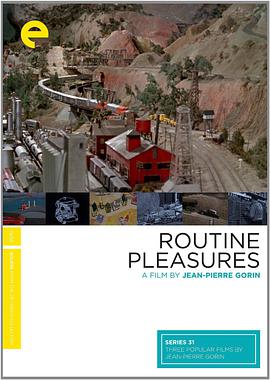
Routine Pleasures (1986) [Movie] Douban IMDb TMDB
Routine Pleasures
director: 让-皮埃尔·戈兰 actor: Jean-Pierre Gorin / Manny Farber
other title: 寻常快乐
Description: NY TIMES REVIEW
JEAN-PIERRE GORIN, its French-born director, describes ''Routine Pleasures'' as a film essay about ''America - under-budget and in a shoe box,'' which is accurate as far as it goes.
The film is also a funny, very personal meditation on the activities of a group of model-railroad buffs in Del Mar, Calif., crosscut with random examples of the wit and wisdom of the seminal film critic Manny Farber, two of whose paintings are also examined in detail.
''Routine Pleasures" makes a point of never quite coming to a point. It's a movie that ponders possibilities and then moves on to other possibilities. It examines the vaguely interconnecting obsessions of the model railroaders and those of Mr. Farber, whose appreciation for Hollywood B-movies of the 1930's, especially those that deal with blue-collar workers, predates the ''discovery'' of those films by the Cahiers du Cinema critics in the 1950's and 1960's.
Mr. Gorin is fascinated and amused by the dedication of the model railroaders, a small group of men, age 16 to 70-odd, who meet twice a week in a former airplane hangar where they've constructed an elaborate, small-gauge railroad system.
On Tuesday nights they run their trains - freight and passenger -through delicately reproduced, miniature landscapes, cities and railroad yards, keeping to schedules measured in miniature time. Every six minutes equals an hour on the clocks by which they run their system. Thursday nights are devoted to repairing and refurbishing the rolling stock, the tracks and the scenery, and to trading railroad stories. One of the best of these is about a man whose mysterious, utterly American fate was always to order apple pie in a restaurant that had just run out.
Mr. Farber, who has been a friend to Mr. Gorin ever since the director came here from France in the 1970's, is seen only in still pictures, and as he is reflected in two of his oil paintings, ''Birthplace: Douglas, Ariz.,'' 1979, and ''Have a Chew on Me,'' 1983. Mr. Gorin, however, quotes him at length (and sometimes, because of Mr. Gorin's accent, not all too intelligibly), in attempting to draw parallels between Mr. Farber's ideas on America, art and movies and the railroaders' passion for living out their twice-weekly fantasies.
Scale is one of the themes. ''Life isn't too big a deal,'' Mr. Gorin quotes Mr. Farber as saying, ''and shouldn't be painted as such.'' Mr. Farber's two paintings are filled with representations of specific objects, people and events. The model railroaders' dreams are realized in scaled-down representations of real trains running through real places on real schedules.
''Routine Pleasures'' isn't strong on coherence, but coherence isn't what this sort of film is all about. It's meant to provoke questions rather than to answer them, which effectively deflects all criticism. Possibly far more provocative than this chatty, handsomely photographed essay would have been two separate films - one about the model railroaders and one about Manny Farber. But those two films might have turned out far more routine and far less pleasurable than this one.
''Routine Pleasures'' is Mr. Gorin's second American feature, following his expert 1980 documentary, ''Poto and Cabengo.'' Once known primarily as Jean-Luc Godard's collaborator during his Maoist years (''Tout Va Bien,'' ''Letter to Jane,'' ''Vladimir and Rosa,'' among others), Mr. Gorin is now clearly a film maker with his own style and obsessions, as well as a man with his own sense of humor. Eclectic Essay ROUTINE PLEASURES, directed by Jean-Pierre Gorin; written by Mr. Gorin and Patrick Amos; cinematography by Babette Mangolte; edited by Mr. Gorin, Miss Mangolte and Mr. Amos; produced by ZDF, Institut National de la Communication Audiovisuelle, Channel Four Television, London, and Jean-Pierre Gorin Productions.
我们时代的电影 (1964) [TV] Douban
Cinema, de notre temps
Chaque documentaire traite d'un cinéaste, voire d'une école cinématographique (la Nouvelle Vague...), ou d'une question particulière liée au cinéma (Critique et cinéma...). Le choix des réalisateurs, comme les questions abordées sont très empreintes de la vision des Cahiers du cinéma dont André S. Labarthe est l'un des anciens rédacteurs, Janine Bazin étant par ailleurs l'épouse d'André Bazin, fondateur de la revue.
Sur le plan du traitement audiovisuel, les documentaires sont assez hétérogènes et tentent d'ailleurs de s'accorder au style du réalisateur concerné : une caméra portée en plan séquence pour John Cassavetes, une conversation en voiture pour Abbas Kiarostami... D'une manière générale, les documentaires se gardent de comporter une voix-off et cherchent à donner la parole aux réalisateurs, pénétrer son univers, sans forcément recourir à l'interview.
La série démarre en 1964 sur l'ORTF et se poursuit aujourd'hui sur Arte. En 1989, à l'occasion de sa reprise par Arte, la collection est rebaptisée Cinéma, de notre temps.
灾难片 (2018) [Movie] Douban
Film catastrophe
director: Paul Grivas actor: 让-吕克·戈达尔
other title: Film catastrophe
Early 2010 Jean Luc Godard shots Film Socialisme incognito aboard the Concordia cruise ship. Thee years later the same ship wrecks in the Mediterranean sea.
传单电影 (2014) [Movie] Douban TMDB IMDb
Cinétracts
director: 让-吕克·戈达尔 actor: 让-吕克·戈达尔 / 切·格瓦拉
other title: Cinétracts / シネトラクト
A series of 41 documentary shorts, directed (without credit) by several famous French filmmakers and each running between two and four minutes. Each "tract" espouses a leftist political viewpoint through the filmed depiction of real-life events, including workers' strikes and the events of Paris in May '68.
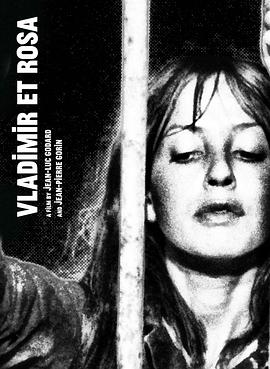
Vladimir and Rosa (1971) [Movie] Douban TMDB IMDb WikiData
Vladimir et Rosa
director: 吉加·维尔托夫小组 / Jean-Luc Godard actor: 伊夫·阿封索 / Juliet Berto
other title: 弗拉基米尔和罗莎 / Vladimir et Rosa
In Godard and Gorin's free interpretation of the Chicago Eight trial, Judge Hoffman becomes Judge Himmler (who doodles notes on Playboy centerfolds), the Chicago Eight become microcosms of French revolutionary society, and Godard and Gorin play Lenin and Karl Rosa, respectively, discussing politics and how to show them through the cinema.
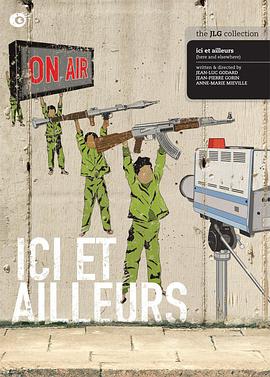
Here and Elsewhere (1976) [Movie] Douban IMDb WikiData TMDB
Ici et ailleurs
8.5 (8 ratings) director: 让-吕克·戈达尔 / 让-皮埃尔·戈兰 actor: 让-吕克·戈达尔
other title: 此处与彼处 / Ici et ailleurs
Here and Elsewhere takes its name from the contrasting footage it shows of the fedayeen and of a French family watching television at home. Originally shot by the Dziga Vertov Group as a film on Palestinian freedom fighters, Godard later reworked the material alongside Anne-Marie Miéville.
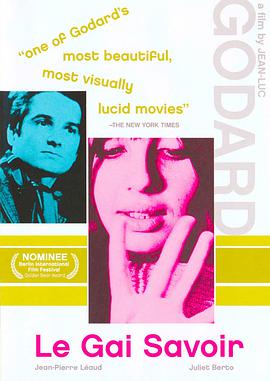
Joy of Learning (1969) [Movie] Douban TMDB IMDb WikiData
Le gai savoir
other title: 快乐的知识 / Le gai savoir
While alone in an abandoned television studio, two militants, Emile Rousseau and Patricia Lumumba, have a discourse on language. Referring to spoken word as "the enemy"--the weapon used by the establishment to confuse liberation movements--the two deconstruct the meanings of sounds and images in an attempt to "return to zero" and truly experience the joy of learning.
信的影像 (2014) [Movie] Douban
Khan Khanne
7.8 (12 ratings) director: 让-吕克·戈达尔 actor: 让-吕克·戈达尔
other title: Khan Khanne / Letter in Motion
Jean-Luc Godard did not attend the world premiere of his new film, ADIEU AU LANGAGE (GOODBYE TO LANGUAGE), at Cannes. But instead, he sent a letter in motion to Gilles Jacob and Thierry Fremaux, the directors of the Festival.
Made public the 21/05/2014.
A Story of Water (1961) [Movie] Douban WikiData IMDb TMDB
Une histoire d'eau
6.5 (28 ratings) director: 让-吕克·戈达尔 / 弗朗索瓦·特吕弗 actor: 让-克劳德·布里亚利 / Caroline Dim
other title: 水的故事 / Une histoire d'eau
18min
A young woman is going to Paris by bus, but when she steps out of her house she discovers that her garden and the whole village is flooded with water. With a boat and a bike she succeeds to reach a dry spot in the village. There a young man in a car offers her a lift. They drive around in circles, trying to find a way out of the area, but all ways are blocked by the water. Concurrently with the ever rising water the emotions within the two young people also start rising. At last they find their way out of the flooded area. When they reach Paris and the young woman looks up at the Eiffel Tower, she knows that she is going to spend the night with this man.