The Flying Dutchman — Director (31)
How Yukong Moved the Mountains (1976) [Movie] IMDb TMDB WikiData
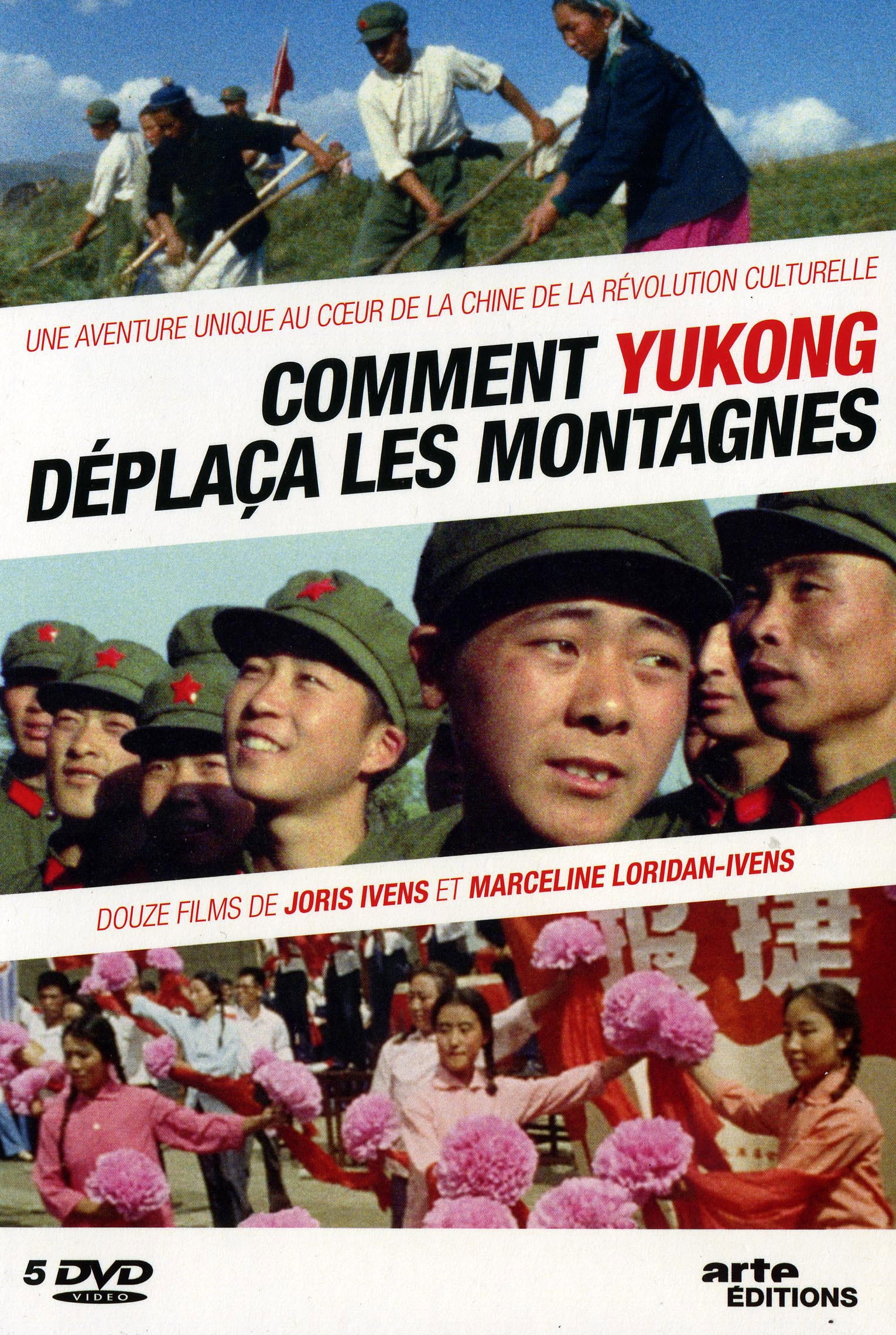
Comment Yukong déplaça les montagnes
other title: Comment Yukong déplaça les montagnes / 愚公移山
From 1972 until 1974, Joris Ivens and Marceline Loridan, along with a Chinese film crew, documented the last days of the Cultural Revolution, marking the end of an era. The vast amount of footage they shot was edited into 14 films of varying lengths. Focusing on ordinary people spread over a wide geographic area—many of whom were living and working in collectives—the filmmakers recorded a unique moment in history, and also captured some of the more enduring aspects of Chinese culture.
Bold Adventure (1956) [Movie] Douban
Les Aventures de Till l'espiègle
other title: 乌兰斯匹格传奇 / Les Aventures de Till l'espiègle
乌兰斯匹格滑稽多智,疾恶如仇,倜傥不羁。其父被西班牙统治者迫害致死,身负血海深仇的他为了民族解放和信仰自由顽强斗争。
Letters from China (1958) [Movie] Douban
Before Spring
6.8 (5 ratings) director: 尤里斯·伊文思
other title: 早春 / Before Spring
影片由“冬”“早春”“春节”三个部分构成:内蒙古海拉尔的风雪中套马,大马车拉着皮、毛在风雪中奔驰,沙漠中驼队在运输,小羊羔在母羊身边吃奶,孩子们在打雪仗的,一家玻璃窗上一位小姑娘吹化的冰花;乍暖还寒的雾蒙蒙的太湖上,鸭子在嬉戏,飘浮着的船只,湖边春暖花开;春节前孩子们放风筝,耍龙舞、吹糖人、表演“双推磨”,大娘烧团圆饭等。影片构图追求一种中国画的效果。
The Spanish Earth (1937) [Movie] Douban
The Spanish Earth
director: 尤里斯·伊文思 actor: 曼努埃尔·阿扎尼亚·迪亚斯 / José Díaz
other title: 西班牙土地
伊文思(1898~1989)
Ivens,Joris
荷兰电影导演。1898年11月18日生于奈梅亨 ,1989年6月28日卒于巴黎。1927年创办荷兰第一个电影俱乐部。在先锋派电影的影响下,他早期影片带有抒情的唯美主义倾向 ,如《桥》、《雨》等。1930年摄制了表现荷兰人民填海造田的著名纪录片《须德海》。此后,在世界各地拍摄纪录片 ,如纪录比利时煤矿工人大罢工的《博里纳日》、反映西班牙战争的《西班牙的土地》、表现中国抗日战争的《四万万人民》和纪录第二次世界大战的《认识你的敌人:日本》等 。战后,在苏联、波兰、巴西、中国、法国、意大利、马里 、古巴、越南等国拍摄了大量纪录片,如《和平一定在全世界胜利》、《世界青年联欢节》、《激流之歌》、《五支歌》、《塞纳河畔》、《天空、土地》、《愚公移山》等。由于他在世界各地拍片,故有“飞行的荷兰人”之称。1946年因拍摄澳大利亚工人拒绝为荷兰船只装卸武器的影片而被荷兰政府禁止出入荷兰,禁令直到1966年才撤销。1955年获得世界和平奖金,1978年英国皇家艺术学院授予他荣誉博士称号 ,1986年又获法国荣誉军团勋章。
印度尼西亚在呼唤 (1946) [Movie] Douban
Indonesia Calling
other title: Indonesia Calling
1946 在澳大利亚逗留期间,在悉尼的码头工人协助下,秘密拍摄《印度尼西亚在呼唤》,记述澳大利亚码头工人拒绝为荷兰船只卸装运往印度尼西亚的武器等情况。荷兰当局不仅禁映这部影片,而且借口护照问题,对伊文思采取了进入国境的“惩罚性措施”。
Appointed by the Dutch government as a Film Commissioner of the Dutch East Indies, Joris Ivens was supposed make educational and informational films and to film the liberation of Indonesia. However, when he arrived in Sydney and found out that the Dutch government had no intentions to make Indonesia an independent country, but restore the pre-war colonial situation in Indonesia, if necessary with military violence, and this being in contradiction with the information he'd been given and the Atlantic Charter treaty, Joris Ivens resigned his post and made this film. He stated that the Dutch were not working on Indonesia's independence, but on a re-colonization of it. The film is clandestinely shot in the harbours of Sydney, where the port workers unions boycot the Dutch ships filled with military supplies and summon the workers to turn down labour on these ships.
Power and the land (1940) [Movie] Douban
Power and the land
director: Joris Ivens actor: 威廉·亚当斯 / 斯蒂芬·文森特·贝内特
other title: 权力与土地 / 电力与土地
Know Your Enemy - Japan (1945) [Movie] Douban IMDb
Know Your Enemy - Japan
other title: 认识你的敌人日本 / 了解你的敌人—日本
Using diagrams, cartoons and film footage, the film examines Japan's social structure and presents a geographical and historical basis for understanding Japan's and the United States' involvement in the war. A written prologue to the documentary acknowledges the honorable and loyal service of the Nisei (Japanese-Americans) during World War II. Scenes of Japanese ceremonies, industry, city and rural life, military training and combat are shown. The narration traces Japanese ideological history beginning with Emperor Jimmu, the first God-Emperor, whose divine command was "Let us extend our capital and cover the eight corners of the world under one roof." As Emperor Hirohito is a direct descendant of Jimmu, he is recognized as a God-Emperor and idealized as a ruler who governs all areas of life and is revered without question. Shinto is Japan's main religion and affects every aspect of life. For believers, the ghosts of the dead exist on earth to guide the living, and those who died in battle are considered warrior gods. A history of the Japanese warlords and their samurai, whose code of honor sanctioned treachery, doublecross and ambush, is presented. Japan's first unsuccessful attempt at world conquest was made in 1592. The growth of Christianity in Japan around the same time was eventually halted, and the country remained isolated for 200 years until in 1853, when the U.S. extended trade opportunities. Since then, Japan has modernized its technology, reorganized the political structure, and inducted the common man into prestigious military service. Government controlled compulsory education and "thought police," are used to manage the Japanese people. On 18 Sep 1931, Japan launched its campaign and gained control of Manchuria. Since then, it has conquered Manila, Hong Kong, Singapore, Nanking and Corregidor, has attacked Pearl Harbor and has tortured and mistreated its American and Filipino prisoners. By the close of the film, however, the U.S. is launching a successful counteroffensive and is concentrating the full power of its Air Force, Army and Navy to destroy Japan's ability to wage war.
Komsomolsk (1983) [Movie] Douban
Komsomolsk
director: Joris Ivens
other title: 英雄之歌 / Song of Heroes
Documentary about the building of blast furnaces by the communist youth workers organisation Komsomol, constructed as part of the first five year plan of Stalin's Soviet Union. The film is set Magnitogorsk in the de Ural, where an industrial city of over 200.000 people was built in just a few years, and in the Kubas basin in Siberia. The film is a tribute to the achievements of the volunteers, the Komsomol, but does not show the dark side of history: the thousands of imprisoned Kulach doing hard labour under terrible conditions. Influenced by the Russian filmmaker Vsevolod Pudovkin, Ivens tells the story by following one non-fiction character, a non-actor, who re-enacted the scenes. this form of 'personalised story', which we would call docudrama, reappears after this first attempt in Komsomol in many Ivens films.
Rotterdam-Europoort (1966) [Movie] Douban
Rotterdam-Europoort
director: 尤里斯·伊文思 actor: 伊夫·蒙当 / Gerrit Kouwenaar
other title: 鹿特丹: 欧洲之港
1966 被迫侨居国外20余年的伊文思被准予回到祖国荷兰,他决定拍摄一部反映港口城市鹿特丹的影片《鹿特丹—欧洲之港》。伊文思在影片中没有象一般纪录片那样表现鹿特丹港的繁忙景象而是以荷兰民间传说“飞翔的荷兰人”为主线,表现了一个具有叛逆性格的荷兰的形象。另外,他在祖国逗留期间荷兰文化大臣拟向伊文思颁发荣誉奖金,伊文思本人拒绝接受。
Instructional film about the (former) biggest harbour in the world, with a hybrid format. Well known Ivens themes are revisited, like The Flying Dutchman in the fiction part of the film, who returns to the modern day Rotterdam, that has recovered very well after the devastating bombardments in the second world war.
Valparaiso (1965) [Movie] Douban WikiData IMDb TMDB
...A Valparaíso
8.2 (6 ratings) director: 尤里斯·伊文思 actor: 罗歇·皮戈
other title: 瓦尔帕莱索 / ...A Valparaíso
In 1962 Joris Ivens was invited to Chile for teaching and filmmaking. Together with students he made …A Valparaíso, one of his most poetic films. Contrasting the prestigious history of the seaport with the present the film sketches a portrait of the city, built on 42 hills, with its wealth and poverty, its daily life on the streets, the stairs, the rack railways and in the bars. Although the port has lost its importance, the rich past is still present in the impoverished city. The film echoes this ambiguous situation in its dialectical poetic style, interweaving the daily life reality (of 1963) with the history of the city and changing from black and white to colour, finally leaving us with hopeful perspective for the children who are playing on the stairs and hills of this beautiful town.
17th Parallel: Vietnam In War (1968) [Movie] Douban IMDb WikiData TMDB
Le 17e parallèle: La guerre du peuple
director: 尤里斯·伊文思 / 玛索琳娜·罗尔丹·伊文思
other title: 十七度纬线 / Le 17e parallèle: La guerre du peuple
Long documentary about the everyday life in Vinh Linh and other villages near the 17th parallel, the demarcation line between North and South Vietnam. This area was bombed heavily bombarded during the Vietnam war, which forced the villagers to live partly underground. The film shows the ingenuity and the determination of the North-Vietnamese people to defend their country and their own land. The shocking but 'clean' images, the pace of the editing (to illustrate the slow pace of life in an agricultural community) and the synchronous sound of the ongoing bombardments in the background, gives this film also cinematographic importance.
The war in Vietnam, here filmed from the perspective of the people suffering from the conflict, is the subject of this documentary. Adults and children live and die, and the young are indoctrinated to refer to Americans as "pirates." An American serviceman is captured and paraded through a small village before being sent to Hanoi. The everyday lives of the Vietnamese and their struggles to survive are illustrated without propaganda, allowing the events and the camera to tell their stories. A complex labyrinth of underground tunnels contains homes, hospitals and hiding places from the barrage of bombs and gunfire.
Le 17ème Parallele (The Seventeenth Parallel) (1968) sees Ivens using light 16 mm cameras and synchronised sound for the first time, although he is still constructing his films around central characters, bending reality to the camera. But the result is a powerful account, in black and white, of life in the underground villages of the Vietnamese army, farming among the shell holes and watching for in-coming bombs. A downed US airman is paraded through the village, and children learn how to shout “hands up!” in English.
Philips Radio (1931) [Movie] Douban TMDB IMDb WikiData
Philips Radio
other title: 菲利浦收音机 / 工业交响曲
1931年,应苏联导演普多夫金的邀请赴苏联访问了3个月,伊文思在那里做了几十次演讲,并放映了自己的影片,也观看了杜甫仁科等苏联电影工作者的作品。回荷兰后,应“菲利浦电器公司”之请,拍摄了宣传片《工业交响曲》(又名《菲利浦收音机》)。他不顾厂方严格的限制,在影片中揭示了高度机械化劳动对工人的身体和精神造成的损害。
one of the most important ivens' works. Philips Radio is considered the third important Dutch avant-garde film of Joris Ivens, after The Bridge and Rain. The film was commissioned by Philips in order to show the modern production process of radio's in the factories and offices in Eindhoven. Only in a later stage of the shootings it was decided to use the latest film sound technologies in studios in France and make the first Dutch sound film.
The Football Incident (1976) [Movie] Douban TMDB IMDb WikiData
Une histoire de ballon
director: 尤里斯·伊文思 / Marceline Loridan Ivens
other title: 球的故事 / Une histoire de ballon
A César award winning documentary about a high school in Beijing where a student throws a ball in the direction of the teacher who had just asked them to stop playing. The class then meets to discuss this problem.
海岸之风 (1966) [Movie] Douban
Le mistral
director: 尤里斯·伊文思 actor: 罗歇·皮戈
other title: Le mistral / Pour le mistral
One of Joris Ivens' most poetic films is his first attempt to film the wind. With a beautiful photography, a powerful editing and a poetic commentary the film tries to make the wind visible and tangible. It starts in black and white, continues in colour and ends in cinemascope to illustrate the force of the upcoming Mistral wind that blows in the south of France. The original scenario was much more elaborate and ambitious and fits Ivens' lifelong wish to film the impossible: the wind. It was difficult to find a producer for this film, for most people were rather sceptical to finance a film with an invisible main character. Finally Claude Nedjar was willing to produce the film, which despite many financial problems was finished in 1965.