Dziga Vertov — Director (32)
真实电影第20号 (1924) [Movie] Douban
Кино-Правда No 20
other title: Кино-Правда No 20 / Kino-pravda no. 20 - Pionerskaia pravda
This Kino-pravda episode follows squad of Pioneers in two trips.
First one, is a trip to the vilage. Camera shows few scenes of riding train. We see some folk dancing and next Pioneers go to work in the wood-shed and on the field. Their are tought that "Ten kto rabotayet, ten Lenin, a kto ne pabotayet, ten len." - "He who works is Lenin, he who doesn't - idler." After hard work youngsters get deserved dinner.
Second trip is a visit in zoo. We see a lot of animals runnig loose, and boys and girls interacting with some of them. Particulary interesting is scene where few snakes creep through Pioneer girl.
真实电影第1号 (1922) [Movie] Douban
Кино-Правда No 1
director: Dziga Vertov
other title: Кино-Правда No 1 / Kino-pravda no. 1
Working mainly during the 1920s, Vertov promoted the concept of kino-pravda, or film-truth, through his newsreel series. His driving vision was to capture fragments of actuality which, when organized together, showed a deeper truth which could not be seen with the naked eye. In the "Kino-Pravda" series, Vertov focused on everyday experiences, eschewing bourgeois concerns and filming marketplaces, bars, and schools instead, sometimes with a hidden camera, without asking permission first.
Anniversary of the Revolution (1919) [Movie] Douban
Годовщина революции
other title: 革命纪念日 / Годовщина революции
《革命纪念日》是一部十分珍贵地展现了俄罗斯十月革命的影像资料,它展现了俄罗斯从1917年二月到1918年十一月份政权更替的历史。在电影中包含了二月革命;临时政府的建立;1917年八月在莫斯科举行的国家会议;在彼得格勒(现圣彼得堡)和莫斯科的十月革命的原况;驱散俄罗斯立宪会议;布列斯特协约;夺回喀山以及托洛茨基沿伏尔加河的行程。这部纪录片长期被认为已经遗失,在2018年由尼古拉·伊兹沃洛夫(Nikolai Izvolov)恢复原貌。
Stride, Soviet! (1926) [Movie] Douban TMDB IMDb WikiData
Шагай, Совет!
director: Dziga Vertov
other title: 前进吧,苏维埃! / Шагай, Совет!
Commissioned by the Moscow Soviet as a documentary and information film for the citizens of Moscow prior to municipal elections, film is a tableau of Soviet life and achievements in the period of reconstruction following the Civil War of 1917-1921.
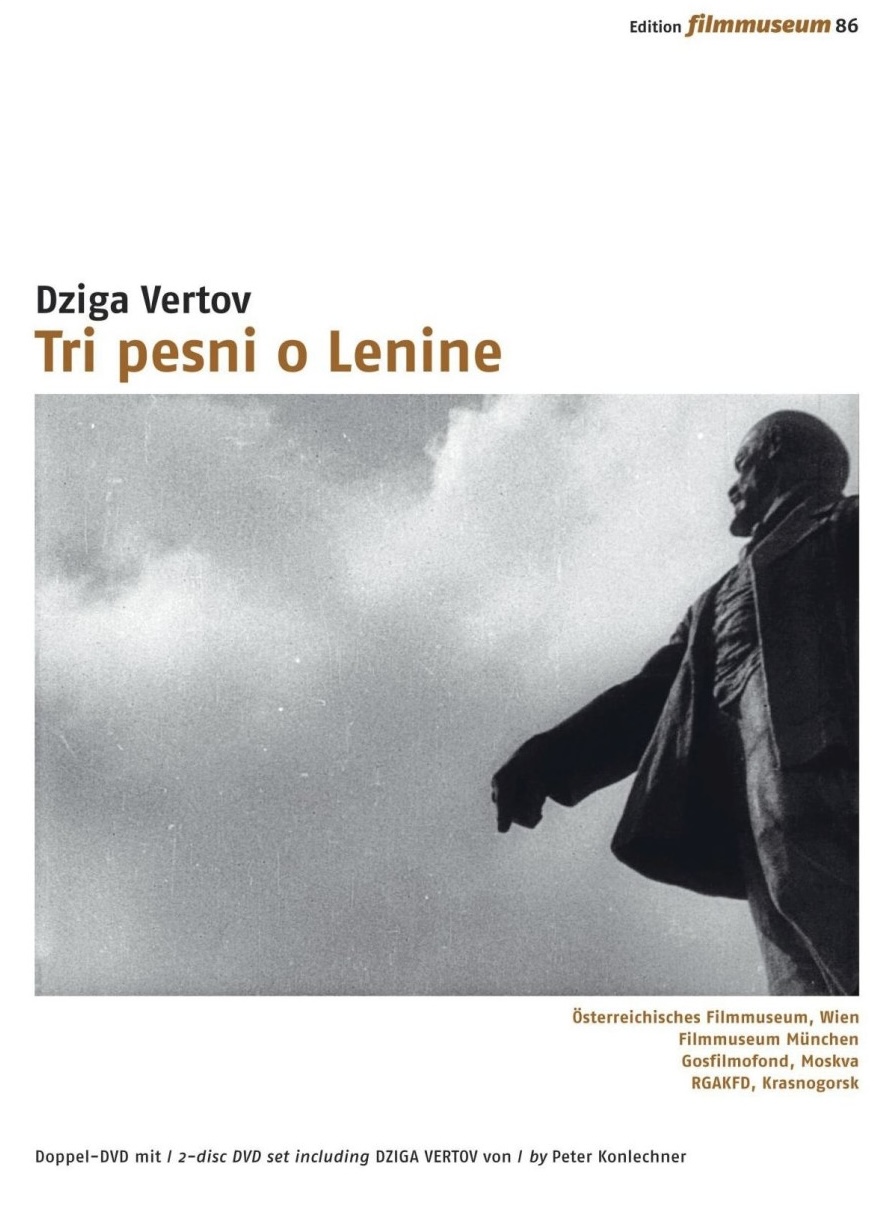
Three Songs About Lenin (1934) [Movie] Douban
Три песни о Ленине
director: 吉加·维尔托夫 actor: Dolores Ibárruri / Nadezhda Krupskaya
other title: 列宁的三首歌 / Три песни о Ленине
全片完全由导演所要宣传的政治思想和导演的情绪控制。第一首歌表现有了列宁之后各族人民的幸福生活,第二首歌表达了对列宁之死的哀恸,第三首歌则描绘了在列宁思想的引导下全国人民的社会主义建设。
The Symphony of the Don Basin (1931) [Movie] Douban TMDB IMDb WikiData
Энтузиазм: Симфония Донбасса
8.2 (5 ratings) director: 吉加·维尔托夫
other title: 热情·顿巴斯交响曲 / Энтузиазм: Симфония Донбасса
Dziga Vertov's Entuziazm is considered a masterpiece of early sound film and of Soviet avant-garde cinema. Dealing with the Five Year Plan of the late 1920s, it was praised by artists like Charlie Chaplin, was subsequently forgotten, and rediscovered by the avant-garde movement of the 1960s.
This edition presents the film, for the first time on DVD, in two versions: the print preserved in the former Soviet Union's Gosfilmofond as well as Peter Kubelka's fascinating restoration which - by re-syncing the image and sound - allows the viewer to experience what Vertov considered the new language of sound cinema. In Restoring Entuziazm, Peter Kubelka - filmmaker and co-founder of the Austrian Film Museum - demonstrates the principles of his restoration work und discusses Vertov's concepts of cinema. The Extras section presents two more rare documents from the Austrian Film Museum's Vertov collection.
Enthusiasm: Symphony of the Donbas, Vertov's paean to the Soviet first Five-Year Plan for economic development (1928-32), clearly has a "three-movement" form. Beginning with an overture on the elimination of all the old detritus impeding full socialist construction (particularly religion and alcoholism), the film moves into a middle section that passes through many of the stages of heavy industrial production to culminate in a final movement, where the products of industrialization flow back to the USSR (most notably to the countryside) and are celebrated.
The film is classicly Vertovian in its reflection upon its own constructed nature. Like Man with a Movie Camera, Enthusiasm seems to begin twice: the music we hear (and watch) being heard in the film's first shot is later repeated, with the woman auditor replaced by a male conductor in a radio studio. The production, transmission, organization and audition of sound enter our own conscious reception of the film. Thus Enthisiasm is a three-levelled film, with the audience's auditory experience, the film as a sound-image construct, and the documentary character of the film's basic materials all co-present and woven together as part of a reflexive texture remarkable at this early date in the history of sound film, and inspirational for many later experimenters, including Peter Kubelka and Richard Serra.
One-Sixth of the World (1926) [Movie] WikiData IMDb Douban TMDB
Шестая часть мира
other title: 世界的六分之一 / Шестая часть мира
Description: A Sixth Part of the World is Vertov's "state of the USSR report", an extraordinary compilation of images from throughout the Soviet Union that chronicles the spread of the Bolshevik Revolution as well as the technological changes affecting the lives of Soviet citizens. Constructed like a piece of music (a contrapuntal structure, recurring themes, crescendos and diminuendos, prestos and lentos, etc.), A Sixth Part of the World is a film of undiminished power and formal artistry.
Source :
Kinoglaz (1924) [Movie] Douban WikiData IMDb TMDB
Кино-глаз
8.2 (12 ratings) director: 吉加·维尔托夫
other title: 电影眼睛 / Кино-глаз
This documentary promoting the joys of life in a Soviet village centers around the activities of the Young Pioneers. These children are constantly busy, pasting propaganda posters on walls, distributing hand bills, exhorting all to "buy from the cooperative" as opposed to the Public Sector, promoting temperance, and helping poor widows. Experimental portions of the film, projected in reverse, feature the un-slaughtering of a bull and the un-baking of bread.