Éva Pataki — Playwright (5)
Little Vilma: The Last Diary (2000) [Movie] TMDB WikiData IMDb
Kisvilma
other title: Kisvilma / Little Vilna: The Last Diary
The movie is inspired by writer-director Márta Mészáros' own childhood. The film is a grim reminder of horrible days under Stalinist period when several innocent people were persecuted for no fault. A good film which allow people to know how people in Europe were tortured before second world war by dictators and authoritarian regimes.
The Unburied Man (2004) [Movie] Douban WikiData TMDB IMDb
A Temetetlen halott
other title: A Temetetlen halott / 未埋葬的人
Imre Nagy led Hungary's 1956 revolution and was executed after its defeat. His name remained taboo for some 30 years, his political activity the subject of controversy and heated debate – up until his complete personal rehabilitation and that of his political legacy. THE UNBURIED MAN was among the first gestures to pay tribute to him and grant him a public “appearance”. The film, however, is not set in the tumultuous days of the revolution but instead depicts the last period of Nagy’s life, from his time inside his refuge at the Yugoslav Embassy up to his secret execution, in what proves to be a singularly intimate encounter with a key personality of 20th-century European history.
The Seventh Room (1996) [Movie] Douban WikiData IMDb TMDB
A hetedik szoba
director: 玛塔·梅萨罗什 actor: 玛雅·摩根斯特恩 / Elide Melli
other title: 第七房间 / A hetedik szoba
This movie is based on the life of Saint Edith Stein. She was a German nun of Jewish descent who had converted to Catholicism. Much of her early life was spent as an outspoken academic. There, according to the movie, she feuded with Joseph Heller, a fellow professor with right wing beliefs. In 1933, after Jews were no longer allowed to teach, she became a nun in the Spartan-like Carmelite order. But when World War II heated up, Heller, who had become an important Nazi official, took his revenge. He had her deported to Auschwitz
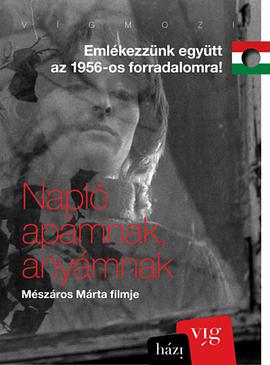
Diary for My Father and My Mother (1990) [Movie] Douban IMDb TMDB WikiData
Napló apámnak, anyámnak
director: 玛塔·梅萨罗什 actor: 茹饶·钦科齐 / 扬·诺维茨基
other title: 留给父母的日记 / Napló apámnak, anyámnak
During a costume party on New Years Eve, a group of revelers join a celibration drinking and cheering in the New Year. One party goer, having drank too much, sticks her head out the window and hollars bitterly against the regeim in which they live. Within seconds uniformed police knock at the door and insist on searching the papers of all the group present. The partygoes look dumbfounded, looking ridiculous in their costumes and brutish policemen search them.
This is the nightmarish world of Hungary on New Years 1957 in the startling "Diary for my Mother and Father."
This story follows a young student, who is orphaned as she grows to adulthood in the shaddow of the 1956 Hungarian uprising. Coming from the communist intellegensia, he sees her friends and family react differently. Her lover, a married factory manager supports the patriots and later assists fellow workers in staging a strike. Meanwhile her sister and others express anger at being forced from their homes during the revolution and continue to express a hatred for the rebels afterwards. But in the end they realize that for all people, real life is not possible after the revolt and its brutal suppression by the Soviets and their collaborators.
Diary for My Lovers (1987) [Movie] Douban IMDb TMDB WikiData
Napló szerelmeimnek
director: 玛塔·梅萨罗什 actor: 茹饶·钦科齐 / 扬·诺维茨基
other title: 留给吾爱的日记 / Napló szerelmeimnek
A continuation of "Diary for My Children," the film picks up in 1950, when Juli, the diarist, is 18 and determined to become a movie director.