other title:
世界末日
/
Verdens undergang
…
A comet, passing by the earth, causes rioting, social unrest, and major disasters that destroy the world in this World War I-era film. This Danish feature about a comet that destroys northwest Europe, leaving only a single man and a woman who meet in a church, is beautifully photographed, with many lovely shots and a fluid camera. Of course, the capitalists try to make extra money out of the panic, and of course the lower classes -- as exemplified by the common folks in a mining town -- break into the home of the wealthy capitalist the evening the comet hits in order to gain vengeance, interrupting a ballet in the process. All this is standard stuff for the better sf of the era: Wells, Verne and so forth.
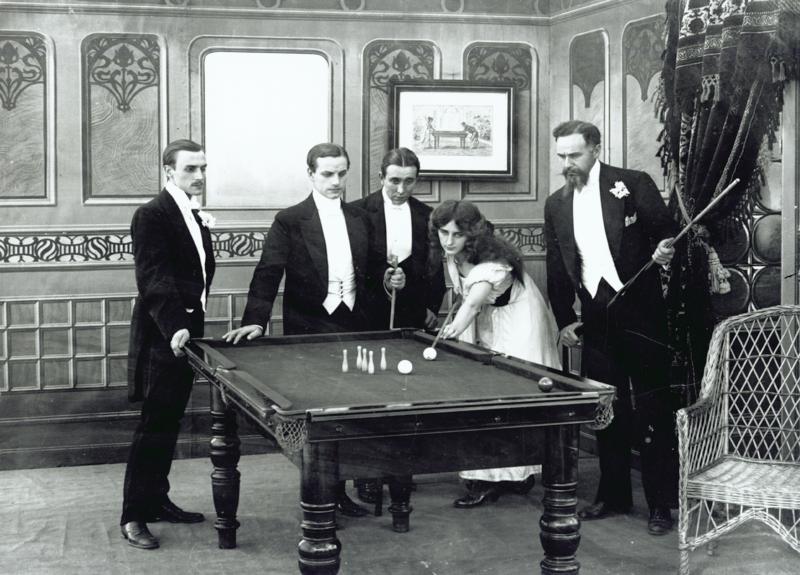
A mine foreman has two daughters, the fair Edith and the dark Dina. Edith falls in love with the ship's mate Reymers, while Dina runs away with the unscrupulous capitalist Stoll. When the rumor spreads that a comet is on a collision course with Earth, Stoll exploits the situation to make a killing on the stock market. On the eve of the comet's impact, Stoll gathers his friends for a great orgy, but enraged workers storm his grand villa, egged on by Dina's jilted ex-fiance. He, Stoll and Dina all perish. Fire rains down from the sky, and the seas flood the land. The Earth is laid waste. Only two survive: Edith and Reymers, and the film ends with their miraculous reunion. Inspired by the fear evoked by Halley's comet in 1910, this film was clearly adressed to a public in an age of war where the old order was collapsing. It carries great conviction, thanks to excellent acting and clever use of locations. The camerawork is first class; throughout, the film's images are carefully and elegantly composed. To create scenes of Earth-shattering disaster that would carry conviction must have been the greatest challenge for Blom and his technicians. Special-effects technology was practically non-existent, and financial resources were not unlimited, but the scenes of the cataclysm are surprisingly effective. Fiery sparks rain down from above, quickly shrouding everything in a pall of smoke. While this is obviously an economical solution to the problem of showing the disaster, the effect is eerie, unsettling, and convincingly apocalyptic. Most important of all, the ending, which in summary may sound prepostrously contrived, is in fact dramatically fitting and genuinely moving.