Douglas Hodge — Actor (16)
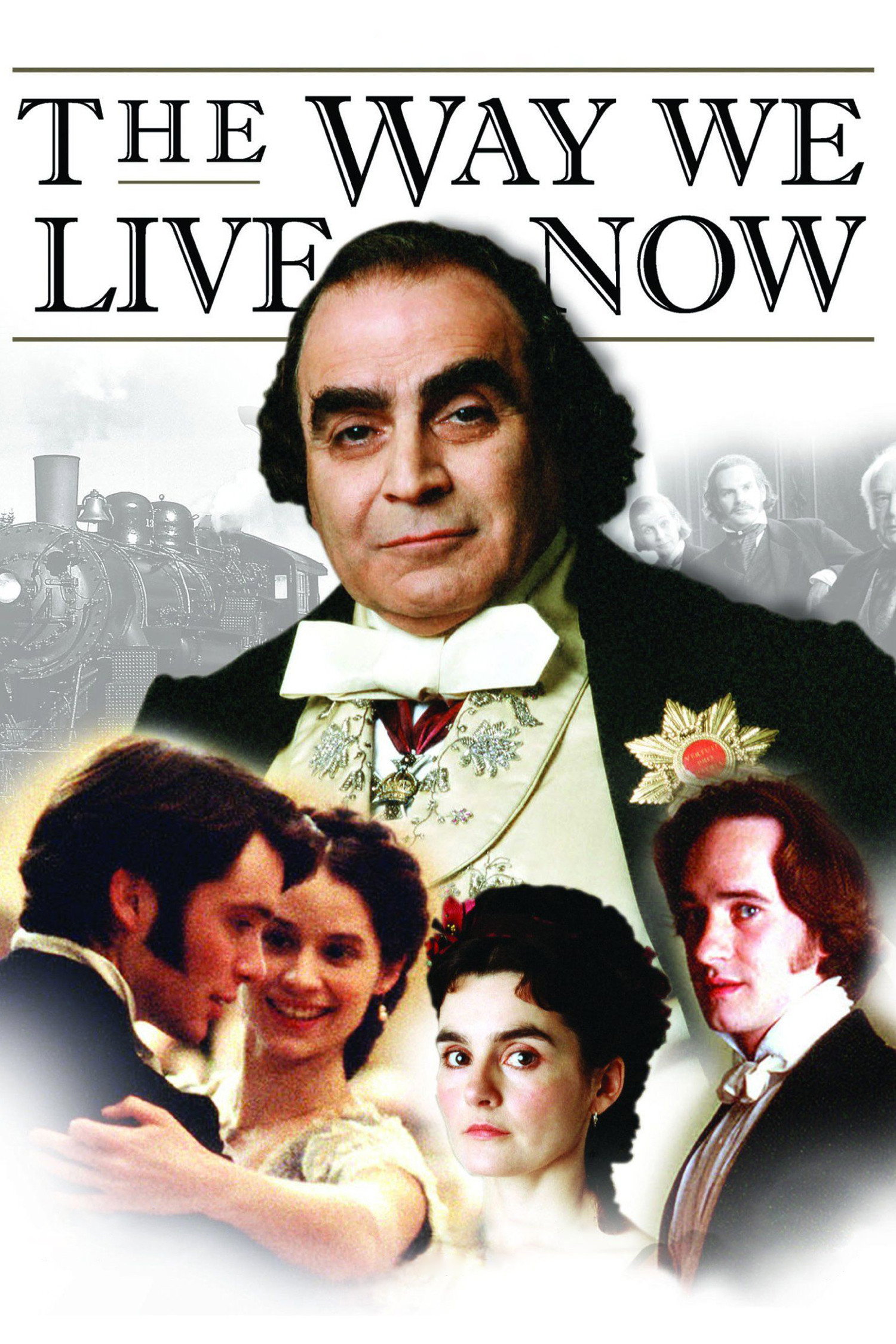
The Way We Live Now (2001) [TV] TMDB WikiData IMDb
The Way We Live Now
other title:
紅塵浮生錄
Anthony Trollope’s epic tale of Victorian power and corruption, set in the 1870s. Within weeks of his arrival in London, financier Augustus Melmotte announces a railway is to be built from Salt Lake City to the Gulf of Mexico and entices distinguished members of England's land-rich, cash-poor aristocracy into his web. Many are eager to sell their ailing land parcels to afford moving to London proper and naïve speculators are all lured in with promises of an instant fortune.



Box Hill (2025) [Movie] Skybridge TMDB IMDb WikiData Douban
Pillion
other title:
后座
/
后座力(台)
…
弱不禁风的男子Colin(哈利·米尔林 Harry Melling 饰)遇上英俊无比的摩托车俱乐部首领Ray(亚历山大·斯卡斯加德 Alexander Skarsgård 饰),Ray将Colin收为他的submissive,并带他走近一群古怪的酷儿摩托车手,过程中各种收割童贞。但随着Colin深入Ray的那个充满规则和神秘的世界,他开始质疑自己是否真正适合这种当全天候submissive的生活。他是真的找到了自己的使命,还是仅仅用一种“窒息”的人生换了另一种?

Betrayal 1998 London版 [Performance] Douban
part of Performance: Betrayal
theater:
National Theatre
director:
Trevor Nunn
The years between 1968 and 1977 occur in reverse order; scenes within years 1977 and 1973 move forward.
1977
Scene One: Pub. 1977. Spring.
Emma and Jerry meet for the first time in two years. For 7 years they had an affair and a secret flat, and Jerry says no-one else knew. Now Emma is having an affair with Casey, an author whose agent is Jerry and whose publisher is Robert, Emma’s husband. Emma says she found out last night that Robert has betrayed her with other women for years, and admits she revealed her affair with Jerry.
Scene Two: Jerry's House. Later the same day.
Jerry meets Robert to talk about the affair. Robert reveals that in fact he learned about it 4 years ago. Since then their friendship has continued, albeit without playing squash.
1975
Scene Three: Flat. 1975. Winter.
It is the end of Jerry and Emma’s affair. They rarely meet, and Emma’s hopes that the flat would be a different kind of home are unfulfilled. They agree to give it up.
1974
Scene Four: Robert and Emma's House. Living room. 1974. Autumn.
Jerry visits Robert and Emma at home. He reveals that Casey has left his wife and is living nearby. Jerry and Robert plan to play squash, but Jerry reveals that first he is visiting New York with Casey.
1973
Scene Five: Hotel Room. 1973. Summer.
Robert and Emma are on holiday, intending to visit Torcello tomorrow. Emma is reading a book by Spinks, another author whose agent is Jerry. Robert says he refused to publish it because there is not much more to say about betrayal. Robert has discovered that Emma has received a private letter from Jerry. Emma admits they are having an affair.
Scene Six: Flat. 1973. Summer.
Emma has returned from the holiday with Robert in Venice. She has bought a tablecloth for the flat. Jerry reveals that despite the affair he continues to lunch with Robert.
Scene Seven: Restaurant. 1973. Summer.
Robert gets drunk over lunch with Jerry. He says he hates modern novels, and that he went to Torcello on his own and read Yeats.
1971
Scene Eight: Flat. 1971. Summer.
Emma wants to know whether Jerry’s wife suspects his affair, and announces that while Jerry was in America she became pregnant with Robert’s child.
1968
Scene Nine: Robert and Emma's House. Bedroom. 1968. Winter.
During a party Jerry surprises Emma in her bedroom and declares his love for her. He tells Robert he is his oldest friend as well as his best man.
1977
Scene One: Pub. 1977. Spring.
Emma and Jerry meet for the first time in two years. For 7 years they had an affair and a secret flat, and Jerry says no-one else knew. Now Emma is having an affair with Casey, an author whose agent is Jerry and whose publisher is Robert, Emma’s husband. Emma says she found out last night that Robert has betrayed her with other women for years, and admits she revealed her affair with Jerry.
Scene Two: Jerry's House. Later the same day.
Jerry meets Robert to talk about the affair. Robert reveals that in fact he learned about it 4 years ago. Since then their friendship has continued, albeit without playing squash.
1975
Scene Three: Flat. 1975. Winter.
It is the end of Jerry and Emma’s affair. They rarely meet, and Emma’s hopes that the flat would be a different kind of home are unfulfilled. They agree to give it up.
1974
Scene Four: Robert and Emma's House. Living room. 1974. Autumn.
Jerry visits Robert and Emma at home. He reveals that Casey has left his wife and is living nearby. Jerry and Robert plan to play squash, but Jerry reveals that first he is visiting New York with Casey.
1973
Scene Five: Hotel Room. 1973. Summer.
Robert and Emma are on holiday, intending to visit Torcello tomorrow. Emma is reading a book by Spinks, another author whose agent is Jerry. Robert says he refused to publish it because there is not much more to say about betrayal. Robert has discovered that Emma has received a private letter from Jerry. Emma admits they are having an affair.
Scene Six: Flat. 1973. Summer.
Emma has returned from the holiday with Robert in Venice. She has bought a tablecloth for the flat. Jerry reveals that despite the affair he continues to lunch with Robert.
Scene Seven: Restaurant. 1973. Summer.
Robert gets drunk over lunch with Jerry. He says he hates modern novels, and that he went to Torcello on his own and read Yeats.
1971
Scene Eight: Flat. 1971. Summer.
Emma wants to know whether Jerry’s wife suspects his affair, and announces that while Jerry was in America she became pregnant with Robert’s child.
1968
Scene Nine: Robert and Emma's House. Bedroom. 1968. Winter.
During a party Jerry surprises Emma in her bedroom and declares his love for her. He tells Robert he is his oldest friend as well as his best man.

一笼傻鸟 2010 Broadway Revival版 [Performance] Douban
part of Performance: 一笼傻鸟
theater:
Longacre Theatre
director:
Terry Johnson
other title:
2010 Broadway Revival版
playwright:
Arthur Laurents
composer:
Harvey Fierstein
actor:
Kelsey Grammer
/
Douglas Hodge
…
故事发生在法国南部地中海沿岸的St. Tropez 小镇中,一间名为<La Cage Aux Follex>的夜总会。这是一间专门表演猛男变装皇后秀的夜总会,变装歌舞团的团名就叫Les Cagelles。夜总会长久以来生意还过得去,旧雨新知们三不五时会去捧场,老板Georges 跟他的同志伴侣Albin 就像一般夫妻一样,过着拌嘴吵架又幸福快乐的小生活。一天,Georges 的儿子Jean-Michel 突然回家来告诉他老爸一个惊讶的消息,他爱上了一个女孩,他们决定要共度一生,他们订婚了!女孩的父母亲即将在几天后前来拜访,一切都很突然,而且最惨的是,对方的父亲是极右派政党「传统家庭与道德党」的党魁,如果被他发现他女婿家竟然是个开夜总会的同志家庭,一切就完蛋了!于是夜总会和家中都开始了一阵兵荒马乱的掩饰,同时,Jean-Michel 要求他「妈妈」 Albin 为了他的订婚期末考而躲起来消失一阵子,这令含辛茹苦从小拉拔Jean-Michel 长大、将他视如己出的Albin 情何以堪。隔天,Georges 决定成全儿子,并且花了一番功夫才说服Albin 假扮成「艾尔叔叔」,Albin 在万般别扭之下重新学习如何「当个男子汉」,为了宝贝儿子的幸福豁出去了。然而,就在对方父母到达之前,Jean-Michel 的生母临时无法现身,眼看一切努力就要破功的时候,Albin 又跳了出来,戴上假发、转换角色,以他最擅长的变装皇后技巧,「假扮」成Jean-Michel 的母亲而又化解了一次危机。就在这次的订婚期末考即将于低空及格,两家人在高级餐厅用餐、餐后也和乐融融地唱歌跳舞时,Albin 过于激动,假发被自己扯了下来,身分曝光,一切努力灰飞烟灭。
事迹败露之后,对方父母严厉地逼迫女儿离开Jean-Micheel 永不再见面,女儿也很震惊,但仍深爱Jean-Michel 而愿意接受他和他家庭背景的一切。 Jean-Michel 这时深深体会到Albin 为了他所作的付出和牺牲,也接受和认同了自己的同志家庭背景。在此同时,大批媒体来到夜总会,抢着报导「传统家庭与道德党」党魁出没夜总会的八卦,迫使党魁在不得已之下,为了维护自己的名誉,避开媒体从后门遁逃,并默认了女儿的婚姻。一切圆满结束!
事迹败露之后,对方父母严厉地逼迫女儿离开Jean-Micheel 永不再见面,女儿也很震惊,但仍深爱Jean-Michel 而愿意接受他和他家庭背景的一切。 Jean-Michel 这时深深体会到Albin 为了他所作的付出和牺牲,也接受和认同了自己的同志家庭背景。在此同时,大批媒体来到夜总会,抢着报导「传统家庭与道德党」党魁出没夜总会的八卦,迫使党魁在不得已之下,为了维护自己的名誉,避开媒体从后门遁逃,并默认了女儿的婚姻。一切圆满结束!

No Man's Land 1993年伦敦版 [Performance] Douban
part of Performance: No Man's Land
theater:
Almeida Theatre
director:
David Leveaux
The first act opens with Hirst's offering a drink to Spooner: "As it is?" – that is, neat (UK) or straight (U.S.) – and Spooner's reply: "As it is, yes please, absolutely as it is" (15). During the first act, Spooner claims to be a fellow poet and to have known his more illustrious literary host and mutual acquaintances and relationships in the past. Toward the end of act one, Hirst's keepers (quasi-body guards) "vagabond cock" Foster and Briggs seek to fend off the self-insinuating Spooner, leading Hirst "out of the room (52) and away from him. The act ends with a "Blackout" – visually demonstrating Foster's taunt: "Listen. You know what it's like when you're in a room with the light on and then suddenly the light goes out? I'll show you. It's like this. ... He turns the light out" (53).
During Act Two, in his increasingly inebriated state, Hirst may mistake or feign recognition of Spooner as an Oxbridge classmate from the 1930s, an apparently false impression which Spooner nevertheless encourages (68–78), leading both of them into a series of increasingly questionable reminiscences, which Hirst finally and abruptly undercuts: "This is outrageous! Who are you? What are you doing in my house?" going on to accuse Spooner of being an impostor: "You are clearly a lout. The Charles Wetherby I knew was a gentleman. I see a figure reduced. I am sorry for you. Where is the moral ardour that sustained you once? Gone down the hatch." – allusively and both wistfully and comically combining the clichés "Gone with the wind" and "Down the hatch," after which, Briggs "enters, pours whisky and soda, gives it to" Hirst, who "looks at it" and then says, "Down the hatch. Right down the hatch. (He drinks.)" (78). Hirst proclaims, "Let us change the subject. Pause. For the last time." (91), but immediately asks, "What have I said?" That leads the characters to debate what Hirst's phrase for the last time precisely "means" (91–94), leaving all of them, according to Spooner, "in no man's land. Which never moves, which never changes, which never grows older, but which remains forever icy and silent." Following the illustrative "Silence", Hirst utters the play's final words and provides its final action: "I'll drink to that" (95): "He drinks," paralleling the opening words of the first act ("As it comes?"), and the play ends, ambiguously, with a "SLOW FADE" of lights (95).
During Act Two, in his increasingly inebriated state, Hirst may mistake or feign recognition of Spooner as an Oxbridge classmate from the 1930s, an apparently false impression which Spooner nevertheless encourages (68–78), leading both of them into a series of increasingly questionable reminiscences, which Hirst finally and abruptly undercuts: "This is outrageous! Who are you? What are you doing in my house?" going on to accuse Spooner of being an impostor: "You are clearly a lout. The Charles Wetherby I knew was a gentleman. I see a figure reduced. I am sorry for you. Where is the moral ardour that sustained you once? Gone down the hatch." – allusively and both wistfully and comically combining the clichés "Gone with the wind" and "Down the hatch," after which, Briggs "enters, pours whisky and soda, gives it to" Hirst, who "looks at it" and then says, "Down the hatch. Right down the hatch. (He drinks.)" (78). Hirst proclaims, "Let us change the subject. Pause. For the last time." (91), but immediately asks, "What have I said?" That leads the characters to debate what Hirst's phrase for the last time precisely "means" (91–94), leaving all of them, according to Spooner, "in no man's land. Which never moves, which never changes, which never grows older, but which remains forever icy and silent." Following the illustrative "Silence", Hirst utters the play's final words and provides its final action: "I'll drink to that" (95): "He drinks," paralleling the opening words of the first act ("As it comes?"), and the play ends, ambiguously, with a "SLOW FADE" of lights (95).
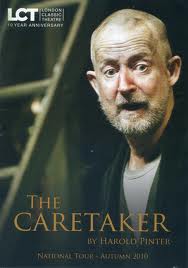
The Caretaker 2000 London版 [Performance] Douban
part of Performance: The Caretaker
theater:
Comedy Theatre
director:
Patrick Marber
Act I
A night in winter
[Scene 1]
Aston has invited Davies, a homeless man, into his apartment after rescuing him from a bar fight (7–9). Davies comments on the apartment and criticizes the fact that it is cluttered and badly kept. Aston attempts to find a pair of shoes for Davies but Davies rejects all the offers. Once he turns down a pair that doesn’t fit well enough and another that has the wrong colour laces. Early on, Davies reveals to Aston that his real name is not "Bernard Jenkins", his "assumed name", but really "Mac Davies" (19–20, 25). He claims that his papers validating this fact are in Sidcup and that he must and will return there to retrieve them just as soon as he has a good pair of shoes. Aston and Davies discuss where he will sleep and the problem of the "bucket" attached to the ceiling to catch dripping rain water from the leaky roof (20–21) and Davies "gets into bed" while "ASTON sits, poking his [electrical] plug (21).
[Scene 2]
The LIGHTS FADE OUT. Darkness.
LIGHTS UP. Morning. (21) As Aston dresses for the day, Davies awakes with a start, and Aston informs Davies that he was kept up all night by Davies muttering in his sleep. Davies denies that he made any noise and blames the racket on the neighbors, revealing his fear of foreigners: "I tell you what, maybe it were them Blacks" (23). Aston informs Davies that he is going out but invites him to stay if he likes, indicating that he trusts him (23–24), something unexpected by Davies; for, as soon as Aston does leave the room (27), Davies begins rummaging through Aston's "stuff" (27–28) but he is interrupted when Mick, Aston’s brother, unexpectedly arrives, "moves upstage, silently," "slides across the room" and then suddenly "seizes Davies' "arm and forces it up his back," in response to which "DAVIES screams," and they engage in a minutely-choreographed struggle, which Mick wins (28–29), ending Act One with the "Curtain" line, "What's the game?" (29).
Act II
[Scene 1]
A few seconds later
Mick demands to know Davies' name, which the latter gives as "Jenkins" (30), interrogates him about how well he slept the night before (30), wonders whether or not Davies is actually "a foreigner"—to which Davies retorts that he "was" indeed (in Mick's phrase) "Born and bred in the British Isles" (33)—going on to accuse Davies of being "an old robber […] an old skate" who is "stinking the place out" (35), and spinning a verbal web full of banking jargon designed to confuse Davies, while stating, hyperbolically, that his brother Aston is "a number one decorator" (36), either an outright lie or self-deceptive wishful thinking on his part. Just as Mick reaches the climactic line of his diatribe geared to put the old tramp off balance—"Who do you bank with?" (36), Aston enters with a "bag" ostensibly for Davies, and the brothers debate how to fix the leaking roof and Davies interrupts to inject the more practical question: "What do you do . . . when that bucket's full?" (37) and Aston simply says, "Empty it" (37). The three battle over the "bag" that Aston has brought Davies, one of the most comic and often-cited Beckettian routines in the play (38–39). After Mick leaves, and Davies recognises him to be "a real joker, that lad" (40), they discuss Mick's work in "the building trade" and Davies ultimately discloses that the bag they have fought over and that he was so determined to hold on to "ain't my bag" at all (41). Aston offers Davies the job of Caretaker, (42–43), leading to Davies' various assorted animadversions about the dangers that he faces for "going under an assumed name" and possibly being found out by anyone who might "ring the bell called Caretaker" (44).
[Scene 2]
THE LIGHTS FADE TO BLACKOUT.
THEN UP TO DIM LIGHT THROUGH THE WINDOW.
A door bangs.
Sound of a key in the door of the room.
DAVIES enters, closes the door, and tries the light switch, on, off, on, off.
It appears to Davies that "the damn light's gone now," but, it becomes clear that Mick has sneaked back into the room in the dark and removed the bulb; he starts up "the electrolux" and scares Davies almost witless before claiming "I was just doing some spring cleaning" and returning the bulb to its socket (45). After a discussion with Davies about the place being his "responsibility" and his ambitions to fix it up, Mick also offers Davies the job of "caretaker" (46–50), but pushes his luck with Mick when he observes negative things about Aston, like the idea that he "doesn't like work" or is "a bit of a funny bloke" for "Not liking work" (Davies' camouflage of what he really is referring to), leading Mick to observe that Davies is "getting hypocritical" and "too glib" (50), and they turn to the absurd details of "a small financial agreement" relating to Davies' possibly doing "a bit of caretaking" or "looking after the place" for Mick (51), and then back to the inevitable call for "references" and the perpetually-necessary trip to Sidcup to get Davies' identity "papers" (51–52).
[Scene 3]
Morning
Davies wakes up and complains to Aston about how badly he slept. He blames various aspects of the apartment's set up. Aston suggests adjustments but Davies proves to be callous and inflexible. Aston tells the story of how he was checked into a mental hospital and given electric shock therapy, but when he tried to escape from the hospital he was shocked while standing, leaving him with permanent brain damage; he ends by saying, "I've often thought of going back and trying to find the man who did that to me. But I want to do something first. I want to build that shed out in the garden" (54–57). Critics regard Aston's monologue, the longest of the play, as the "climax" of the plot.[3] In dramaturgical terms, what follows is part of the plot's "falling action".
Act III
[Scene 1]
Two weeks later [… ]Afternoon.
Davies and Mick discuss the apartment. Mick relates "(ruminatively)" in great detail what he would do to redecorate it (60). When asked who "would live there," Mick's response "My brother and me" leads Davies to complain about Aston's inability to be social and just about every other aspect of Aston's behaviour (61–63). Though initially invited to be a "caretaker," first by Aston and then by Mick, he begins to ingratiate himself with Mick, who acts as if he were an unwitting accomplice in Davies' eventual conspiracy to take over and fix up the apartment without Aston's involvement (64) an outright betrayal of the brother who actually took him in and attempted to find his "belongings"; but just then Aston enters and gives Davies yet another pair of shoes which he grudgingly accepts, speaking of "going down to Sidcup" in order "to get" his "papers" again (65–66).
[Scene 2]
That night
Davies brings up his plan when talking to Aston, whom he insults by throwing back in his face the details of his treatment in the mental institution (66–67), leading Aston, in a vast understatement, to respond: "I . . . I think it's about time you found somewhere else. I don't think we're hitting it off" (68). When finally threatened by Davies pointing a knife at him, Aston tells Davies to leave: "Get your stuff" (69). Davies, outraged, claims that Mick will take his side and kick Aston out instead and leaves in a fury, concluding (mistakenly): "Now I know who I can trust" (69).
[Scene 3]
Later
Davies reenters with Mick explaining the fight that occurred earlier and complaining still more bitterly about Mick's brother, Aston (70–71). Eventually, Mick takes Aston's side, beginning with the observation "You get a bit out of your depth sometimes, don't you?" (71). Mick forces Davies to disclose that his "real name" is Davies and his "assumed name" is "Jenkins" and, after Davies calls Aston "nutty", Mick appears to take offense at what he terms Davies' "impertinent thing to say," concludes, "I'm compelled to pay you off for your caretaking work. Here's half a dollar," and stresses his need to turn back to his own "business" affairs (74). When Aston comes back into the apartment, the brothers face each other," "They look at each other. Both are smiling, faintly" (75). Using the excuse of having returned for his "pipe" (given to him earlier through the generosity of Aston), Davies turns to beg Aston to let him stay (75–77). But Aston rebuffs each of Davies' rationalisations of his past complaints (75–76). The play ends with a "Long silence" as Aston, who "remains still, his back to him [Davies], at the window, apparently unrelenting as he gazes at his garden and makes no response at all to Davies' futile plea, which is sprinkled with many dots (". . .") of elliptical hesitations (77–78).
A night in winter
[Scene 1]
Aston has invited Davies, a homeless man, into his apartment after rescuing him from a bar fight (7–9). Davies comments on the apartment and criticizes the fact that it is cluttered and badly kept. Aston attempts to find a pair of shoes for Davies but Davies rejects all the offers. Once he turns down a pair that doesn’t fit well enough and another that has the wrong colour laces. Early on, Davies reveals to Aston that his real name is not "Bernard Jenkins", his "assumed name", but really "Mac Davies" (19–20, 25). He claims that his papers validating this fact are in Sidcup and that he must and will return there to retrieve them just as soon as he has a good pair of shoes. Aston and Davies discuss where he will sleep and the problem of the "bucket" attached to the ceiling to catch dripping rain water from the leaky roof (20–21) and Davies "gets into bed" while "ASTON sits, poking his [electrical] plug (21).
[Scene 2]
The LIGHTS FADE OUT. Darkness.
LIGHTS UP. Morning. (21) As Aston dresses for the day, Davies awakes with a start, and Aston informs Davies that he was kept up all night by Davies muttering in his sleep. Davies denies that he made any noise and blames the racket on the neighbors, revealing his fear of foreigners: "I tell you what, maybe it were them Blacks" (23). Aston informs Davies that he is going out but invites him to stay if he likes, indicating that he trusts him (23–24), something unexpected by Davies; for, as soon as Aston does leave the room (27), Davies begins rummaging through Aston's "stuff" (27–28) but he is interrupted when Mick, Aston’s brother, unexpectedly arrives, "moves upstage, silently," "slides across the room" and then suddenly "seizes Davies' "arm and forces it up his back," in response to which "DAVIES screams," and they engage in a minutely-choreographed struggle, which Mick wins (28–29), ending Act One with the "Curtain" line, "What's the game?" (29).
Act II
[Scene 1]
A few seconds later
Mick demands to know Davies' name, which the latter gives as "Jenkins" (30), interrogates him about how well he slept the night before (30), wonders whether or not Davies is actually "a foreigner"—to which Davies retorts that he "was" indeed (in Mick's phrase) "Born and bred in the British Isles" (33)—going on to accuse Davies of being "an old robber […] an old skate" who is "stinking the place out" (35), and spinning a verbal web full of banking jargon designed to confuse Davies, while stating, hyperbolically, that his brother Aston is "a number one decorator" (36), either an outright lie or self-deceptive wishful thinking on his part. Just as Mick reaches the climactic line of his diatribe geared to put the old tramp off balance—"Who do you bank with?" (36), Aston enters with a "bag" ostensibly for Davies, and the brothers debate how to fix the leaking roof and Davies interrupts to inject the more practical question: "What do you do . . . when that bucket's full?" (37) and Aston simply says, "Empty it" (37). The three battle over the "bag" that Aston has brought Davies, one of the most comic and often-cited Beckettian routines in the play (38–39). After Mick leaves, and Davies recognises him to be "a real joker, that lad" (40), they discuss Mick's work in "the building trade" and Davies ultimately discloses that the bag they have fought over and that he was so determined to hold on to "ain't my bag" at all (41). Aston offers Davies the job of Caretaker, (42–43), leading to Davies' various assorted animadversions about the dangers that he faces for "going under an assumed name" and possibly being found out by anyone who might "ring the bell called Caretaker" (44).
[Scene 2]
THE LIGHTS FADE TO BLACKOUT.
THEN UP TO DIM LIGHT THROUGH THE WINDOW.
A door bangs.
Sound of a key in the door of the room.
DAVIES enters, closes the door, and tries the light switch, on, off, on, off.
It appears to Davies that "the damn light's gone now," but, it becomes clear that Mick has sneaked back into the room in the dark and removed the bulb; he starts up "the electrolux" and scares Davies almost witless before claiming "I was just doing some spring cleaning" and returning the bulb to its socket (45). After a discussion with Davies about the place being his "responsibility" and his ambitions to fix it up, Mick also offers Davies the job of "caretaker" (46–50), but pushes his luck with Mick when he observes negative things about Aston, like the idea that he "doesn't like work" or is "a bit of a funny bloke" for "Not liking work" (Davies' camouflage of what he really is referring to), leading Mick to observe that Davies is "getting hypocritical" and "too glib" (50), and they turn to the absurd details of "a small financial agreement" relating to Davies' possibly doing "a bit of caretaking" or "looking after the place" for Mick (51), and then back to the inevitable call for "references" and the perpetually-necessary trip to Sidcup to get Davies' identity "papers" (51–52).
[Scene 3]
Morning
Davies wakes up and complains to Aston about how badly he slept. He blames various aspects of the apartment's set up. Aston suggests adjustments but Davies proves to be callous and inflexible. Aston tells the story of how he was checked into a mental hospital and given electric shock therapy, but when he tried to escape from the hospital he was shocked while standing, leaving him with permanent brain damage; he ends by saying, "I've often thought of going back and trying to find the man who did that to me. But I want to do something first. I want to build that shed out in the garden" (54–57). Critics regard Aston's monologue, the longest of the play, as the "climax" of the plot.[3] In dramaturgical terms, what follows is part of the plot's "falling action".
Act III
[Scene 1]
Two weeks later [… ]Afternoon.
Davies and Mick discuss the apartment. Mick relates "(ruminatively)" in great detail what he would do to redecorate it (60). When asked who "would live there," Mick's response "My brother and me" leads Davies to complain about Aston's inability to be social and just about every other aspect of Aston's behaviour (61–63). Though initially invited to be a "caretaker," first by Aston and then by Mick, he begins to ingratiate himself with Mick, who acts as if he were an unwitting accomplice in Davies' eventual conspiracy to take over and fix up the apartment without Aston's involvement (64) an outright betrayal of the brother who actually took him in and attempted to find his "belongings"; but just then Aston enters and gives Davies yet another pair of shoes which he grudgingly accepts, speaking of "going down to Sidcup" in order "to get" his "papers" again (65–66).
[Scene 2]
That night
Davies brings up his plan when talking to Aston, whom he insults by throwing back in his face the details of his treatment in the mental institution (66–67), leading Aston, in a vast understatement, to respond: "I . . . I think it's about time you found somewhere else. I don't think we're hitting it off" (68). When finally threatened by Davies pointing a knife at him, Aston tells Davies to leave: "Get your stuff" (69). Davies, outraged, claims that Mick will take his side and kick Aston out instead and leaves in a fury, concluding (mistakenly): "Now I know who I can trust" (69).
[Scene 3]
Later
Davies reenters with Mick explaining the fight that occurred earlier and complaining still more bitterly about Mick's brother, Aston (70–71). Eventually, Mick takes Aston's side, beginning with the observation "You get a bit out of your depth sometimes, don't you?" (71). Mick forces Davies to disclose that his "real name" is Davies and his "assumed name" is "Jenkins" and, after Davies calls Aston "nutty", Mick appears to take offense at what he terms Davies' "impertinent thing to say," concludes, "I'm compelled to pay you off for your caretaking work. Here's half a dollar," and stresses his need to turn back to his own "business" affairs (74). When Aston comes back into the apartment, the brothers face each other," "They look at each other. Both are smiling, faintly" (75). Using the excuse of having returned for his "pipe" (given to him earlier through the generosity of Aston), Davies turns to beg Aston to let him stay (75–77). But Aston rebuffs each of Davies' rationalisations of his past complaints (75–76). The play ends with a "Long silence" as Aston, who "remains still, his back to him [Davies], at the window, apparently unrelenting as he gazes at his garden and makes no response at all to Davies' futile plea, which is sprinkled with many dots (". . .") of elliptical hesitations (77–78).

大鼻子情圣 [Performance]
Cyrano de Bergerac
genre:
theater
playwright:
Edmond Rostand
/
Edmond Rostand, Martin Crimp
other title:
Cyrano de Bergerac
/
西哈诺
director:
Jamie Lloyd
/
David Leveaux
…
actor:
Douglas Hodge
/
Clémence Poésy
/
Patrick Page
/
Kyle Soller
/
Max Baker
Cyrano is a poet, philosopher and swordsman of incredible wit, but his sizable nose renders him too shy to pursue the beautiful Roxane. Instead, he provides the poetry and eloquence to woo her vicariously through his inarticulate friend Christian.

大鼻子情圣 [Performance] Douban
Cyrano de Bergerac
genre:
theater
playwright:
Edmond Rostand
/
Edmond Rostand, Martin Crimp
other title:
Cyrano de Bergerac
/
西哈诺
director:
Jamie Lloyd
/
David Leveaux
…
actor:
Douglas Hodge
/
Clémence Poésy
/
Patrick Page
/
Kyle Soller
/
Max Baker
Cyrano is a poet, philosopher and swordsman of incredible wit, but his sizable nose renders him too shy to pursue the beautiful Roxane. Instead, he provides the poetry and eloquence to woo her vicariously through his inarticulate friend Christian.

开火 (1994) [Movie] Douban
Open Fire
director:
保罗·格林格拉斯
actor:
鲁珀特·格雷夫斯
/
Douglas Hodge
…
other title:
Open Fire
An authentic story from 1983: The young police officer Finn is awarded a medal for the courage he showed in arresting a dangerous criminal. Meanwhile transvestite David Martin is released once again from prison - he's provocative and aggressive, escaped from prison twice. When he's caught again during a burglary, he shoots one of the police officers. Until 1983 he advances to the most wanted criminal in UK. After a chase through half of London, a suspect is shot by police officer Finn - an innocent, as it turns out, so Finn is suspended. The case becomes a police scandal, when he's even accused of murder.


The Night Manager (2016) [TV] IMDb Eggplant.place TMDB WikiData
The Night Manager
Middlemarch (1994) [TV] Douban
Middlemarch
影片《米德镇的春天》的背景是政局动汤不安的十九世纪英国,讲述的是一个由爱情、政治和苦闷热情相互交织而成的故事。片中两位主演均表现出了各自特有的功力,将一个单纯而又复杂情感漩涡搅得既精彩而又生动。
野心勃勃的年轻医师李盖特到米德镇新的医院任职,镇上的年轻女子多萝西雅也正积极的寻找生命意义。而她却深深受到年长又充满书卷气的爱德华所吸引而无法自拔。但他们的梦想很快就受到婚姻和世俗礼教的严格考验。
野心勃勃的年轻医师李盖特到米德镇新的医院任职,镇上的年轻女子多萝西雅也正积极的寻找生命意义。而她却深深受到年长又充满书卷气的爱德华所吸引而无法自拔。但他们的梦想很快就受到婚姻和世俗礼教的严格考验。
