Eduardo Arozamena — Actor (9)
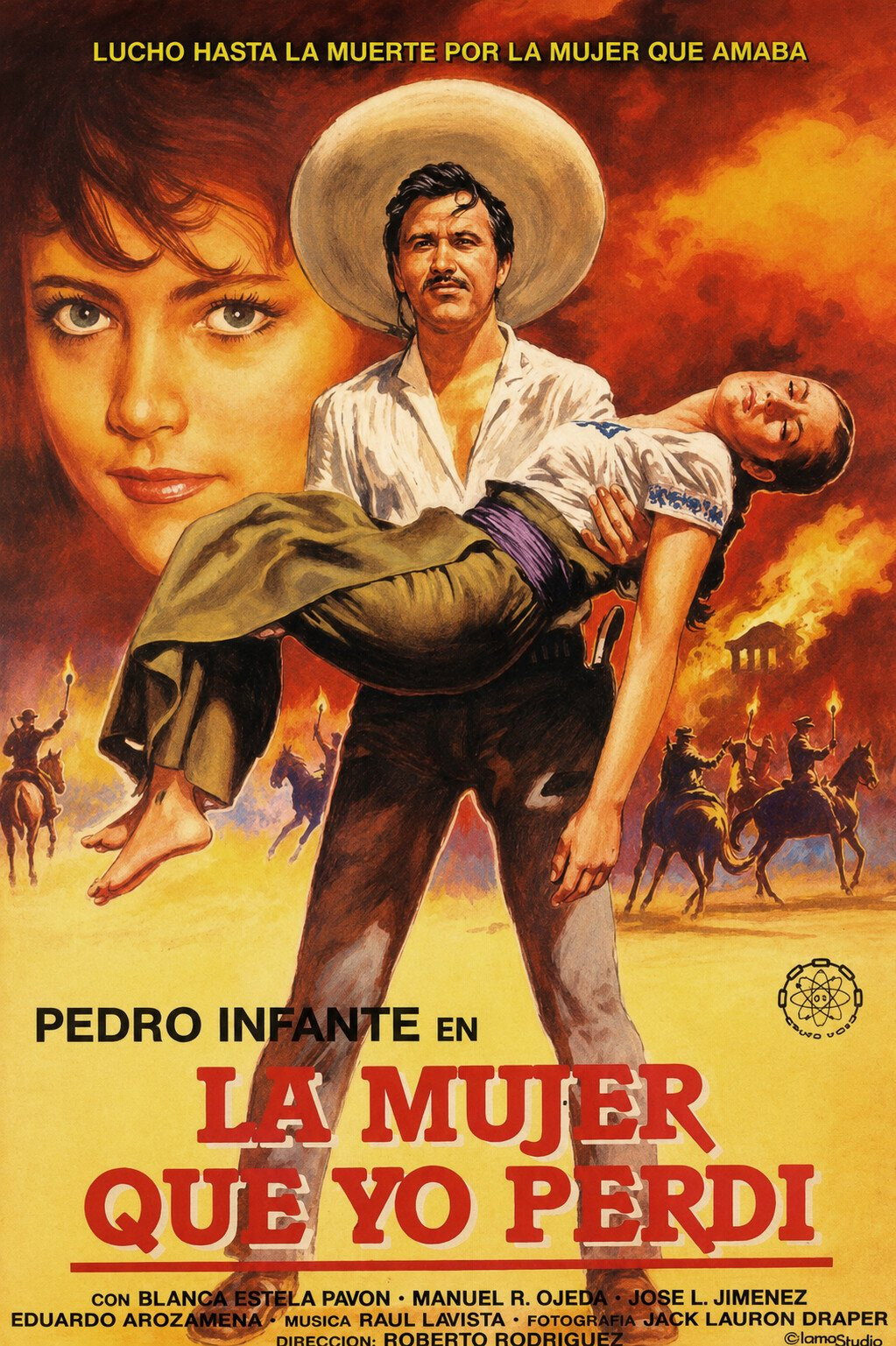
The Woman I Lost (1949) [Movie] TMDB IMDb WikiData
La Mujer Que Yo Perdí
other title: La Mujer Que Yo Perdí / La mujer que yo perdí
A political revolutionary fights against injustice, his adoring wife by his side. But only in her death does he realize the depth of her love for him and their country. A dramatic romance from the 23 film library of the most iconic classic Mexican film and recording star, Pedro Infante.
You’re Missing the Point (1940) [Movie] IMDb WikiData TMDB
Ahí está el detalle
director: Juan Bustillo Oro actor: Cantinflas / Joaquín Pardavé
other title: Cantinflas em Calças Pardas / Voici le point
Cantinflas, the boyfriend of the servant of a rich industrial man, gets into the house in order to kill a mad dog. Suddenly this man appears so the servant tells him that Cantinflas is his wife's brother (Leonardo), who had been lost for years. The rich man then remembers that his father in law's testament could only be paid when all brothers get together, so treats Cantinflas, a real bum, as a king.
Wild Flower (1943) [Movie] IMDb WikiData TMDB
Flor silvestre
director: Emilio Fernández actor: 多洛雷斯·德尔里奥 / 比德洛·阿门德里兹
other title: Flor silvestre / 野花
The film features Fernandez himself as a character named Rogellio Torres. The lion's share of the footage, however, is devoted to the romance between Esperanza, granddaughter of a common laborer, and Jose Luis Castro, the firebrand son of a landowner. Joining a revolutionary movements, Castro is disowned by his father, but Esperanza remains loyally by his side. Later on, Castro's father is killed by outlaws; in seeking vengeance, he sacrifices his own life, while Esperanza carries on his revolutionary work with their young son in tow.
Black Angustias (1950) [Movie] TMDB IMDb WikiData
La negra Angustias
director: Matilde Landeta actor: María Elena Marqués / Agustín Isunza
other title: La negra Angustias / La Negra Angustias
1949 film directed by Matilde Landeta
One Day of Life (1950) [Movie] TMDB IMDb WikiData
Un día de vida
director: Emilio Fernández actor: Columba Domínguez / Roberto Cañedo
other title: Un día de vida
A story about two men caught in the Mexican revolution: close friends before, but now on the opposite sides. One of them is military officer, while the other one expects capital punishment. The prisoner's mother comes to visit his son, unaware that his former best friend is now his enemy.
Enamorada (1946) [Movie] Douban WikiData TMDB IMDb
Enamorada
director: 埃米利奥·费尔南德斯 actor: María Félix / 比德洛·阿门德里兹
other title: 一见钟情 / 사랑에 빠진 여인
Armendáriz was terrific in this. I won't repeat the praises from prior reviews, I concur.
My only problem with this film is that it wasn't true to the revolution. In that sense, it was indeed a Fernandez film as neither was he true to the revolution. He gave a Cristero slant to the issues of Church/State and redistribution of wealth. Just take it as a love story set in the revolutionary period and try to ignore the political bias. Jeeze, you'd think he'd have shown more gratitude having been pardoned by Lázaro Cárdenas for his treason.
Pedro Armendáriz, María Felix and the town of Cholula were the great stars of this film. The exteriors were certainly shot in Cholula.
There were some snippets of revolutionary period music (La Adelita and El Tren) and an anachronistic performance of Malageña Salerosa when he had mariachi serenade María Felix. That song is so lovely, I didn't mind.
Doña Bárbara (1943) [Movie] Douban TMDB IMDb WikiData
Doña Bárbara
director: 费尔南多·德·福恩特斯 actor: María Félix / Julián Soler
other title: 唐娜·芭芭拉
I have just seen this movie for the 12-15th time and I still find something extraordinarily fascinating every time I watch it. This movie is based on a novel by Venezuela's Romulo Gallegos one of Latin America best writer. The movie is so profound, because you can see so many aspects of the human being in it. You can find hate, witchcraft, religion, love, impotency and repentance, mainly because of the ignorance of people. This movie develops in the great Venezuela Savannahs, where the law of the stronger prevailed. The dialogs, so strong and captivating, are possible due to Gallegos very strong command of the Spanish Language and the slang of the peasants of that region. As I have mentioned before for a couple of other movies, this one is best appreciated if you understand Spanish. I may see it again another dozen times, and I am sure I would still enjoy it, as I hope you may too. This movie is officially rated as the 75th in importance in the Mexican Cinematography, to which I TOTALLY DISAGREE.