26fall - Migration & Empire

4 books  

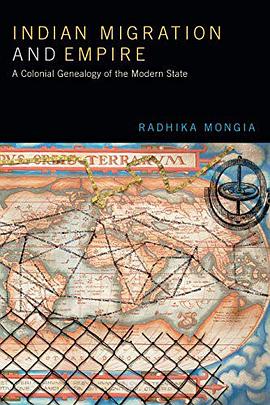
Indian Migration and Empire [Book] Douban
author: Radhika Mongia publishing house: Duke University Press 2018
How did states come to monopolize control over migration? What do the processes that produced this monopoly tell us about the modern state? In Indian Migration and Empire Radhika Mongia provocatively argues that the formation of colonial migration regulations was dependent upon, accompanied by, and generative of profound changes in normative conceptions of the modern state. Focused on state regulation of colonial Indian migration between 1834 and 1917, Mongia illuminates the genesis of central techniques of migration control. She shows how important elements of current migration regimes, including the notion of state sovereignty as embodying the authority to control migration, the distinction between free and forced migration, the emergence of passports, the formation of migration bureaucracies, and the incorporation of kinship relations into migration logics, are the product of complex debates that attended colonial migrations. By charting how state control of migration was critical to the transformation of a world dominated by empire-states into a world dominated by nation-states, Mongia challenges positions that posit a stark distinction between the colonial state and the modern state to trace aspects of their entanglements.
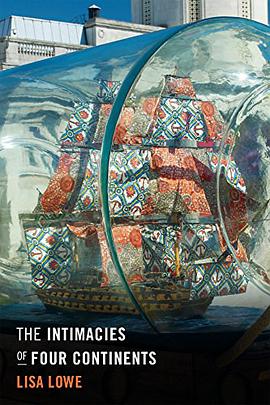
The Intimacies of Four Continents [Book] Douban Goodreads
author: Lisa Lowe publishing house: Duke University Press Books 2015 - 6
In this uniquely interdisciplinary work, Lisa Lowe examines the relationships between Europe, Africa, Asia, and the Americas in the late eighteenth- and early nineteenth- centuries, exploring the links between colonialism, slavery, imperial trades and Western liberalism. Reading across archives, canons, and continents, Lowe connects the liberal narrative of freedom overcoming slavery to the expansion of Anglo-American empire, observing that abstract promises of freedom often obscure their embeddedness within colonial conditions. Race and social difference, Lowe contends, are enduring remainders of colonial processes through which “the human” is universalized and “freed” by liberal forms, while the peoples who create the conditions of possibility for that freedom are assimilated or forgotten. Analyzing the archive of liberalism alongside the colonial state archives from which it has been separated, Lowe offers new methods for interpreting the past, examining events well documented in archives, and those matters absent, whether actively suppressed or merely deemed insignificant. Lowe invents a mode of reading intimately, which defies accepted national boundaries and disrupts given chronologies, complicating our conceptions of history, politics, economics, and culture, and ultimately, knowledge itself.
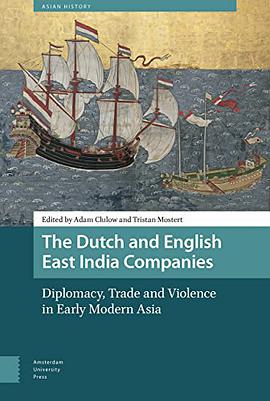
The Dutch and English East India Companies [Book] Douban
author: Adam Clulow (ed.) / Tristan Mostert (ed.) publishing house: Amsterdam University Press 2018 - 8
The Dutch and English East India Companies were formidable organizations that were gifted with expansive powers that allowed them to conduct diplomacy, wage war and seize territorial possessions. But they did not move into an empty arena in which they were free to deploy these powers without resistance. Early modern Asia stood at the center of the global economy and was home to powerful states and sprawling commercial networks. The companies may have been global enterprises, but they operated in a globalized region in which they encountered a range of formidable competitors. This groundbreaking collection of essays explores the place of the Dutch and English East India Companies in Asia and the nature of their engagement with Asian rulers, officials, merchants, soldiers, and brokers. With contributions from some of the most innovative historians in the field, The Dutch and English East India Companies: Diplomacy, Trade and Violence in Early Modern Asia presents new ways to understand these organizations by focusing on their diplomatic, commercial, and military interactions with Asia.
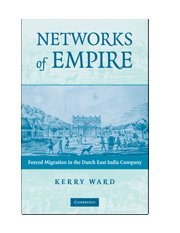
Networks of Empire [Book] Douban
author: Kerry Ward publishing house: 劍橋大學出版社 2008
Ward argues that the Dutch East India Company empire manifested itself through multiple networks that amalgamated spatially and over time into an imperial web whose sovereignty was effectively created and maintained but always partial and contingent. Networks of Empire proposes that early modern empires were comprised of durable networks of trade, administration, settlement, legality, and migration whose regional circuits and territorially and institutionally based nodes of regulatory power operated not only on land and sea but discursively as well. Rights of sovereignty were granted to the Company by the States General in the United Provinces. Company directors in Europe administered the exercise of sovereignty by Company servants in its chartered domain. The empire developed in dynamic response to challenges waged by individuals and other sovereign entities operating within the Indian Ocean grid. By closely examining the Dutch East India Company's network of forced migration this book explains how empires are constituted through the creation, management, contestation, devolution and reconstruction of these multiple and intersecting fields of partial sovereignty.
Reply Quote Sept. 14, 2026