watchlist_extended
11620 movies 175 tv shows
all the films in lists I liked

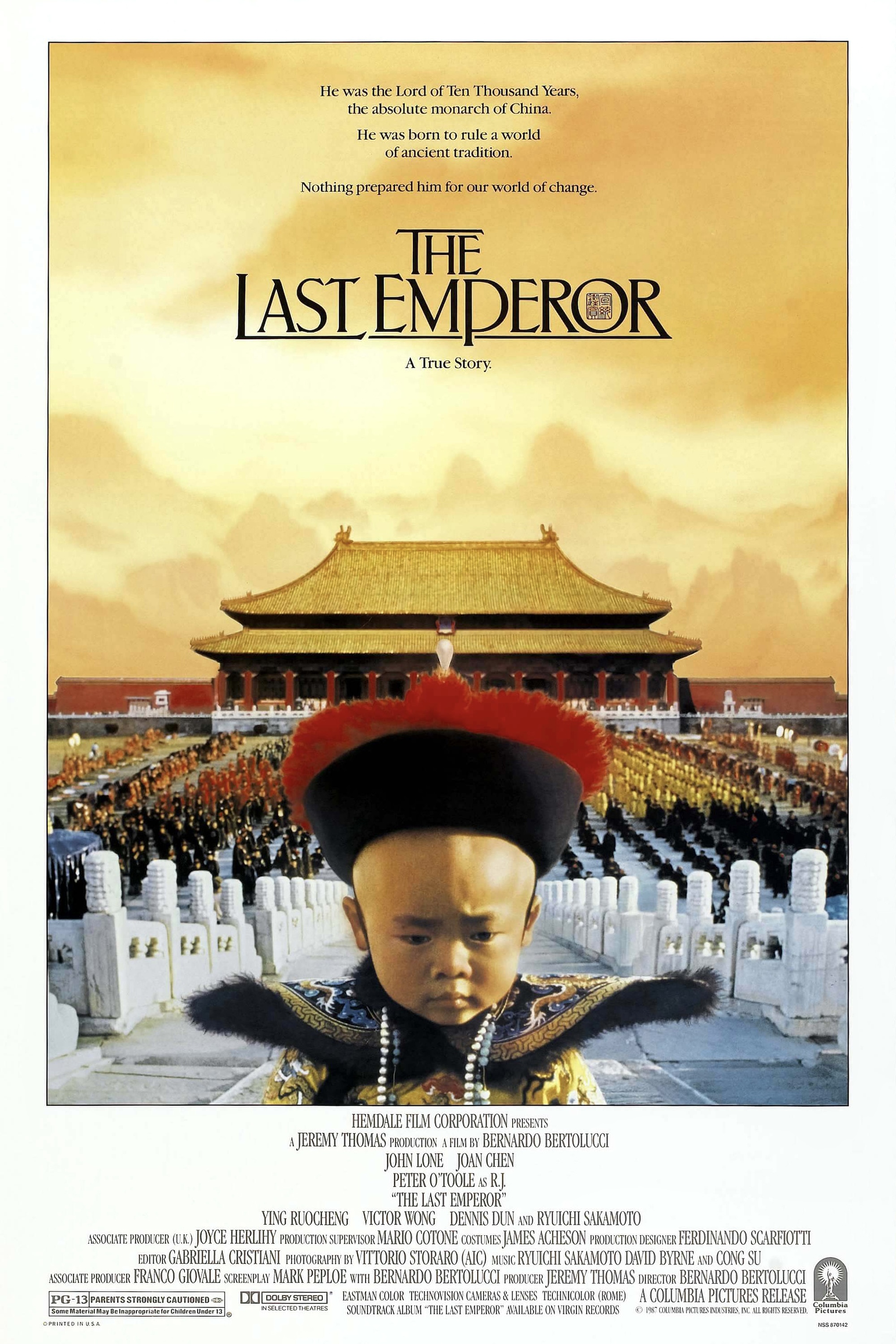
The Last Emperor (1987) [Movie] WikiData IMDb TMDB Douban Min reol +2
The Last Emperor
other title:
末代皇帝
/
末代皇帝溥仪(港)
…
A dramatic history of Pu Yi, the last of the Emperors of China, from his lofty birth and brief reign in the Forbidden City, the object of worship by half a billion people; through his abdication, his decline and dissolute lifestyle; his exploitation by the invading Japanese, and finally to his obscure existence as just another peasant worker in the People's Republic.
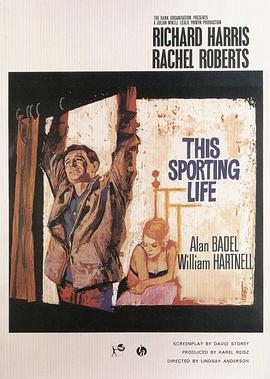
This Sporting Life (1963) [Movie] WikiData IMDb TMDB Douban
This Sporting Life
director:
林赛·安德森
actor:
理查德·哈里斯
/
瑞秋·罗伯茨
…
other title:
如此运动生涯
/
超级的男性
…
In Northern England in the early 1960s, Frank Machin is mean, tough and ambitious enough to become an immediate star in the rugby league team run by local employer Weaver.
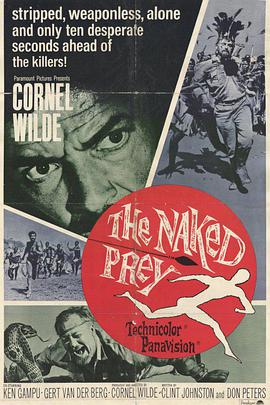
The Naked Prey (1965) [Movie] WikiData IMDb TMDB Douban
The Naked Prey
7.0 (6 ratings)
director:
柯纳·王尔德
actor:
柯纳·王尔德
/
赫特·范登贝赫
…
other title:
裸杀万里追
/
벌거벗은 사냥감
…
A group of men are on safari. One of the party refuses to give a gift to a tribe they encounter. The tribe is offended, seizes the party, and one-by-one, kills all but one of the safari members in various creative and horrifying ways. The last surviving member is given "The Lion's Chance" by the tribal leader to be hunted down by a party of tribal warriors.
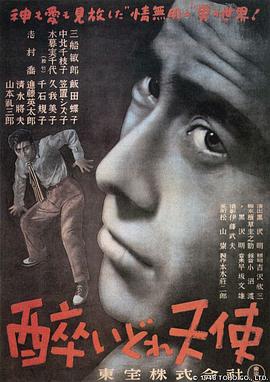
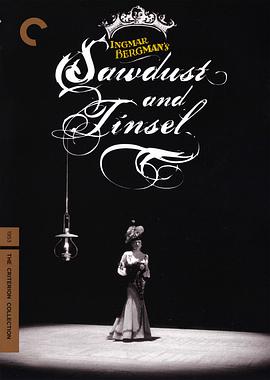

Berlin Alexanderplatz (柏林亚历山大广场) (1980) [TV] TMDB Douban
Berlin Alexanderplatz Season 1 part of TV Series: Berlin Alexanderplatz
该电视剧改编自德国作家阿尔弗雷德•德布林的同名小说,故事发生在1920年代末的德国柏林。
因杀死与自己同居的妓女艾达,强壮、暴力、酗酒的弗朗兹•毕伯科夫(Günter Lamprecht )被判入狱四年,刑满释放后,他立誓要做一个正直的好人,可是因为不知从何做起,他终日在亚历山大广场附近游荡。不久,他拥有了出狱后的第一个女人,并为了她开始尝试各种体力活,但很快便被生活愚弄,这令性格里有一面相当单纯的他非常受打击,离开了原来的生活圈子。
和形形色色的人打过交道后,弗朗兹重回原来的生活环境,并在常去的小酒馆结识伦霍尔德(Peter Kollek)。伦霍尔德虽然说话结结巴巴,弗朗兹仍觉得他魅力非凡,开始对他盲目信任和依赖,甚至与他制定秘密的游戏协议,答应接手他玩腻的女人。游戏进行当中,弗朗兹展现出多情的一面,为了一个女人单方将协议撕毁,令伦霍尔德对他记恨在心,不久,伦霍尔德利用他对自己的信任,将他拉入小偷集团,害他失去一条胳膊。但截肢后,弗朗兹并没有报复的欲望。
弗朗兹的保护人兼旧女友爱娃(Hanna Schygulla)介绍单纯、美丽的女孩米兹(Karin Baal)与他认识,弗朗兹与之相爱并走出绝望,不过因为失去劳动能力,他只能靠米兹卖身养活。伦霍尔德无法忍受弗朗兹的幸福生活,生出无动机的邪念,再次利用弗朗兹对他“无动机的纯粹的爱(法斯宾德语)”,将弗朗兹又一次拉入小偷集团,并开始想方设法勾引米兹,试图将弗朗兹的生活彻底推上绝路。
因杀死与自己同居的妓女艾达,强壮、暴力、酗酒的弗朗兹•毕伯科夫(Günter Lamprecht )被判入狱四年,刑满释放后,他立誓要做一个正直的好人,可是因为不知从何做起,他终日在亚历山大广场附近游荡。不久,他拥有了出狱后的第一个女人,并为了她开始尝试各种体力活,但很快便被生活愚弄,这令性格里有一面相当单纯的他非常受打击,离开了原来的生活圈子。
和形形色色的人打过交道后,弗朗兹重回原来的生活环境,并在常去的小酒馆结识伦霍尔德(Peter Kollek)。伦霍尔德虽然说话结结巴巴,弗朗兹仍觉得他魅力非凡,开始对他盲目信任和依赖,甚至与他制定秘密的游戏协议,答应接手他玩腻的女人。游戏进行当中,弗朗兹展现出多情的一面,为了一个女人单方将协议撕毁,令伦霍尔德对他记恨在心,不久,伦霍尔德利用他对自己的信任,将他拉入小偷集团,害他失去一条胳膊。但截肢后,弗朗兹并没有报复的欲望。
弗朗兹的保护人兼旧女友爱娃(Hanna Schygulla)介绍单纯、美丽的女孩米兹(Karin Baal)与他认识,弗朗兹与之相爱并走出绝望,不过因为失去劳动能力,他只能靠米兹卖身养活。伦霍尔德无法忍受弗朗兹的幸福生活,生出无动机的邪念,再次利用弗朗兹对他“无动机的纯粹的爱(法斯宾德语)”,将弗朗兹又一次拉入小偷集团,并开始想方设法勾引米兹,试图将弗朗兹的生活彻底推上绝路。
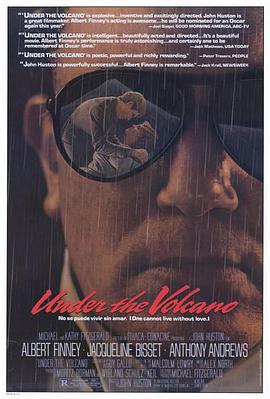
Under the Volcano (1984) [Movie] WikiData IMDb TMDB Douban
Under the Volcano
other title:
在火山下
/
火山之下
…
Against a background of war breaking out in Europe and the Mexican fiesta Day of Death, we are taken through one day in the life of Geoffrey Firmin, a British consul living in alcoholic disrepair and obscurity in a small southern Mexican town in 1939. The consul's self-destructive behaviour, perhaps a metaphor for a menaced civilization, is a source of perplexity and sadness to his nomadic, idealistic half-brother, Hugh, and his ex-wife, Yvonne, who has returned with hopes of healing Geoffrey and their broken marriage.
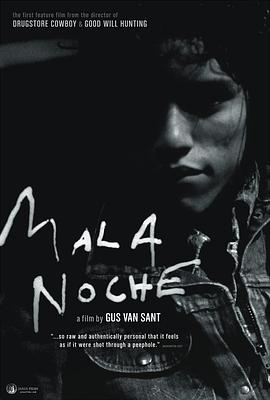
Mala Noche (1986) [Movie] WikiData IMDb TMDB Douban
Mala Noche
other title:
夜深沉,爱难吟
/
追流云的少年
…
1985 film by Gus Van Sant
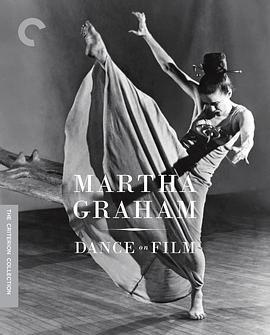
Night Journey (1960) [Movie] IMDb TMDB Douban
Night Journey
director:
亚历山大·罕密德
actor:
玛莎·葛莱姆
/
Bertram Ross
…
other title:
夜之旅
In 1956 Nathan kroll, a violinist turned radio composer and producer, asked Martha Graham if he could make a movie about her and her work. Absolutely not, she said. Like many choreographers of her time, she felt that dance could not be successfully filmed. Furthermore, she was frightened of movie cameras, the more so, no doubt, since she was now in her sixties, and showing her age. Unlike stage shows, movies have close-ups. Kroll persisted, however, and Graham finally consented to make the film that came to be entitled A Dancer’s World. The format they agreed on was a free sort of lecture-demonstration. In short dances choreographed by Graham, her company would demonstrate her technique, and give some idea of her art. Between those segments Graham would appear and comment.
During the filming of the dancers, all went well, but when it came time for Graham to step in front of the camera, she panicked. Agnes de Mille, in her biography Martha, describes the scene: “She hung onto the barre, clung to the walls. She couldn’t think what to do with her hands, with her robes, with her feet.” Finally she escaped into her dressing room and locked the door. Her company manager, LeRoy Leatherman, got down on the floor and pleaded with her through the crack under the door. There was no response. The film crew packed up their cameras and went home.
But Kroll eventually persuaded Graham to try again, and he came up with a way to relax her. She would be filmed in her dressing room, ostensibly preparing to go onstage. That way her hands would be occupied: she could fix her hair, put on makeup. So this is what she does in A Dancer’s World, meanwhile describing her profession in the exalted phraseology, replete with quotations from modern poetry, that was natural to her. Her way of speaking dates the film, as do other matters: her massive chignon, the black servant, in a maid’s uniform, who hands her her clothes. But such things are true to the period, which was also one of the most exciting moments in the history of American art. It was in the 1950s that American artists captured the flag of international modernism. Graham, who was raised in Pennsylvania and California and trained in the decorative and “exotic” dancing dominant in the early decades of the twentieth century, founded her company in New York in 1926 and went on to alter American (and international) dance permanently, bending it to modernism’s severe lines and perilous emotions. A Dancer’s World illuminates the trenchant style that placed her at the front of the midcentury vanguard. The historian John Mueller called it “one of the most beautiful dance films ever made.”
After A Dancer’s World Kroll asked Graham if he could film two famous works that she had made in the preceding decade, Appalachian Spring, from 1944, and Night Journey, from 1947. These films were made for educational television, as A Dancer’s World had been, and first aired in 1958 and 1961, respectively. They serve as apt sequels to the earlier project in that they illustrate the ideals Graham enunciated there: spontaneity, simplicity, and emotional truth. They also map the territory of her imagination. Graham had many subjects, but two above all. One was America, forever torn, as she saw it, between a Puritan heritage and a bold, pioneering spirit. This is what Appalachian Spring is about. The other matter that Graham returned to again and again was Greek mythology, and that is the subject of Night Journey, which retells the story of Sophocles’ Oedipus Rex: how Oedipus, the Prince of Thebes, unwittingly kills his father and marries his mother, Jocasta, with calamitous results. Spanning both divisions of Graham’s repertory, the American and the ancient Greek, is a kind of over topic: the conquest of fear. Repeatedly in her work Graham portrayed a woman called to a high destiny and forced to overcome fear before she could answer that summons. This concern was altogether personal. Graham believed that she had been given “lonely, terrifying gifts” (her words)—a sort of divine command to penetrate into the interior of the human spirit, no matter what comfortless truths she might find there. The heroines of both Appalachian Spring and Night Journey are stricken by fear, and Graham made those roles for herself.
In Appalachian Spring a young pioneer couple, the Husbandman and the Bride—accompanied by a kindly older neighbor, the so-called Pioneering Woman, a revivalist-preacher, and a bevy of the preacher’s female admirers—come to take possession of their new home. So the story is quite simple, but Graham was a modernist, and in her work, as in Proust’s or Joyce’s, narration is seldom straightforward. It is a collision of past, present, and future, not necessarily in that order. In the middle of Appalachian Spring the couple go through a marriage ceremony, a reprise of an event that presumably occurred before the piece opens; they also have a baby, something that certainly has not yet happened. As in so many of Graham’s pieces, the emotions are revealed primarily through solos. We get a solo by the Husbandman, full of boyish energy (he rides a horse, he farms his land); a solo by the Revivalist, warning the couple against sin; a solo by the Pioneering Woman, with big, open-legged jumps, reassuring the couple that sexual love is no sin; and solos for the Bride, expressing both her happiness and her hesitation. There is also a duet—a sweet sort of barn dance for the newlyweds (a memory from their courtship, perhaps)—and several incursions by the ensemble, in this case comic characters, to break up the solos and comment on them. The love that the bouncy maidens of the corps bear their preacher is silly; the love that the Husbandman and the Bride feel for each other is serious, and carries the weight of the piece’s subject: the triumph of hope over fear. Of all Graham’s works, Appalachian Spring is probably the most beloved, and not just for her contributions. Aaron Copland’s score, which she commissioned, is now a classic, a concert piece. A love song to America, it seems to survey the broad plains, stopping at the little white churches—Copland quotes the Shaker hymn “Simple Gifts”—and then moving on. Another beauty of Appalachian Spring is Isamu Noguchi’s minimal-ist set: the bare outlines of the house, plus a chair, a bench, and a fence. Noguchi became Graham’s most frequent and admired set designer, the true servant of her austere vision.
Night Journey, the dance, had its premiere only two and a half years after Appalachian Spring, and it is a close cousin. It too has a stream-of-consciousness narration: Jocasta, as she is about to kill herself, remembering what has happened to her. It too contains soul-delving solos, broken up by ensemble dances. Here, however, the ensemble is a darker element. As the story was taken from Greek tragedy, so the corps is the equivalent of Greek tragedy’s chorus. They tell us how to feel: afraid mostly. In this piece Graham pushed her habitual economy to its limits. The rope that Jocasta holds when we first see her is not only the means by which she will kill herself. It is also the umbilical cord that ties her to Oedipus as her son, and the bond of love that, incest taboos notwithstanding, ties her to him as her husband. Another remarkable feature of Night Journey is its sexual frankness. Oedipus strides around in short shorts, slapping his groin. Jocasta opens her thighs and goes into contractions. In the years following World War II, psychoanalysis became very popular in the United States, and Graham embraced this daring theory. In the forties she began seeing a Jungian analyst, and Night Journey reflects that experience.
Night Journey and Appalachian Spring were autobiographical not just in their dwelling on fear but in more specific ways. In its early years Graham’s company was exclusively female. Then in 1938 a handsome, well-educated young man, Erick Hawkins, came to study at her school. She hired him and soon took him to bed. Appalachian Spring was a love letter to Hawkins. He was the original Husbandman to her Bride. Night Journey, too, was a letter to him, of a different sort. Their relationship was stormy. Though Hawkins was fifteen years younger than Graham, he considered himself her peer as a performer (he demanded equal billing), and he intended to rival her as a choreographer. Reportedly she was terrified by the extent to which she loved him, and allowed him to tyrannize her and the company. She created the role of Oedipus in Night Journey for him, and the transactions between Oedipus and Jocasta—his domination of her (he looms over her, steps on her), her treatment of him as both son and lover, and her death as a result of this passion—were born of her feelings for Hawkins. They married in 1948, and then the relationship got worse. He left her two years later. Once he was gone, her career took a downturn and never fully recovered.
In the late 1950s and early 1960s, when these movies were made, Graham was old to be performing the lead in Night Journey, not to speak of the role of the young bride in Appalachian Spring, but it is doubtful that she would have allowed the dances to be filmed had she not starred in them. Dancing was life to her. (She did not retire from the stage until she was seventy-four.) She reportedly enjoyed the filming. “I am not a collaborator,” she used to say, but according to Stuart Hodes, the Husbandman in the film of Appalachian Spring, she collaborated calmly and happily with the director, Peter Glushanok. Still, it is a great shame that Nathan Kroll did not get to her earlier. In these movies her spine no longer bends easily; she has trouble getting her leg up. Nevertheless, one can still see the concentration and pride, the sense of a high fate, that made her such a celebrated dancer. And she still does hard steps: whipping pirouettes, hinge falls.
We can also see in these films how wonderful her company was in the 1950s and 1960s: Paul Taylor as the seer, Tiresias, in Night Journey, before he left to do his own choreography; Matt Turney, so open and unaffected, as the Pioneering Woman in Appalachian Spring; Bertram Ross, with his strong, beautiful legs, as Oedipus in Night Journey. (Ross said that his fan mail often contained improper suggestions; one is not surprised.) And in the choreography, we can discern, at a distance, the dancers for whom the roles were created—for example, Merce Cunningham, a great jumper, as the Revivalist, and Hawkins, young and ambitious, as the Husbandman. However late they came in Graham’s life, these films encapsulate much of what made her company the crown of mid-twentieth-century modern dance.
They also affected the history of dance on camera. Though the filming techniques in Appalachian Spring and Night Journey are not highly experimental—the movies are quite faithful to the stage versions—the beauty of these productions helped to overcome choreographers’ misgivings about letting their work be filmed. In the 1970s, many dance artists (including Graham) were contacting television producers. Those producers, at Thirteen/WNET’s Dance in America and elsewhere, went on to develop new techniques for filming dance. Today we are used to seeing dance artistically presented on television and in movies. The Graham films helped to make that happen. They also influenced the history of live dance, by bringing the work of a great choreographer and her company to audiences outside the big cities. Most choreographers do not grow up in New York, and many have said that they were first drawn to dance, as children, by films and television. The years of the “dance boom” in America were the 1960s and ’70s. That the Graham movies were made at the beginning of that period is surely no accident.
Joan Acocella is the dance critic of the New Yorker. Among her books are Mark Morris and Twenty-eight Artists and Two Saints, a collection of essays.
During the filming of the dancers, all went well, but when it came time for Graham to step in front of the camera, she panicked. Agnes de Mille, in her biography Martha, describes the scene: “She hung onto the barre, clung to the walls. She couldn’t think what to do with her hands, with her robes, with her feet.” Finally she escaped into her dressing room and locked the door. Her company manager, LeRoy Leatherman, got down on the floor and pleaded with her through the crack under the door. There was no response. The film crew packed up their cameras and went home.
But Kroll eventually persuaded Graham to try again, and he came up with a way to relax her. She would be filmed in her dressing room, ostensibly preparing to go onstage. That way her hands would be occupied: she could fix her hair, put on makeup. So this is what she does in A Dancer’s World, meanwhile describing her profession in the exalted phraseology, replete with quotations from modern poetry, that was natural to her. Her way of speaking dates the film, as do other matters: her massive chignon, the black servant, in a maid’s uniform, who hands her her clothes. But such things are true to the period, which was also one of the most exciting moments in the history of American art. It was in the 1950s that American artists captured the flag of international modernism. Graham, who was raised in Pennsylvania and California and trained in the decorative and “exotic” dancing dominant in the early decades of the twentieth century, founded her company in New York in 1926 and went on to alter American (and international) dance permanently, bending it to modernism’s severe lines and perilous emotions. A Dancer’s World illuminates the trenchant style that placed her at the front of the midcentury vanguard. The historian John Mueller called it “one of the most beautiful dance films ever made.”
After A Dancer’s World Kroll asked Graham if he could film two famous works that she had made in the preceding decade, Appalachian Spring, from 1944, and Night Journey, from 1947. These films were made for educational television, as A Dancer’s World had been, and first aired in 1958 and 1961, respectively. They serve as apt sequels to the earlier project in that they illustrate the ideals Graham enunciated there: spontaneity, simplicity, and emotional truth. They also map the territory of her imagination. Graham had many subjects, but two above all. One was America, forever torn, as she saw it, between a Puritan heritage and a bold, pioneering spirit. This is what Appalachian Spring is about. The other matter that Graham returned to again and again was Greek mythology, and that is the subject of Night Journey, which retells the story of Sophocles’ Oedipus Rex: how Oedipus, the Prince of Thebes, unwittingly kills his father and marries his mother, Jocasta, with calamitous results. Spanning both divisions of Graham’s repertory, the American and the ancient Greek, is a kind of over topic: the conquest of fear. Repeatedly in her work Graham portrayed a woman called to a high destiny and forced to overcome fear before she could answer that summons. This concern was altogether personal. Graham believed that she had been given “lonely, terrifying gifts” (her words)—a sort of divine command to penetrate into the interior of the human spirit, no matter what comfortless truths she might find there. The heroines of both Appalachian Spring and Night Journey are stricken by fear, and Graham made those roles for herself.
In Appalachian Spring a young pioneer couple, the Husbandman and the Bride—accompanied by a kindly older neighbor, the so-called Pioneering Woman, a revivalist-preacher, and a bevy of the preacher’s female admirers—come to take possession of their new home. So the story is quite simple, but Graham was a modernist, and in her work, as in Proust’s or Joyce’s, narration is seldom straightforward. It is a collision of past, present, and future, not necessarily in that order. In the middle of Appalachian Spring the couple go through a marriage ceremony, a reprise of an event that presumably occurred before the piece opens; they also have a baby, something that certainly has not yet happened. As in so many of Graham’s pieces, the emotions are revealed primarily through solos. We get a solo by the Husbandman, full of boyish energy (he rides a horse, he farms his land); a solo by the Revivalist, warning the couple against sin; a solo by the Pioneering Woman, with big, open-legged jumps, reassuring the couple that sexual love is no sin; and solos for the Bride, expressing both her happiness and her hesitation. There is also a duet—a sweet sort of barn dance for the newlyweds (a memory from their courtship, perhaps)—and several incursions by the ensemble, in this case comic characters, to break up the solos and comment on them. The love that the bouncy maidens of the corps bear their preacher is silly; the love that the Husbandman and the Bride feel for each other is serious, and carries the weight of the piece’s subject: the triumph of hope over fear. Of all Graham’s works, Appalachian Spring is probably the most beloved, and not just for her contributions. Aaron Copland’s score, which she commissioned, is now a classic, a concert piece. A love song to America, it seems to survey the broad plains, stopping at the little white churches—Copland quotes the Shaker hymn “Simple Gifts”—and then moving on. Another beauty of Appalachian Spring is Isamu Noguchi’s minimal-ist set: the bare outlines of the house, plus a chair, a bench, and a fence. Noguchi became Graham’s most frequent and admired set designer, the true servant of her austere vision.
Night Journey, the dance, had its premiere only two and a half years after Appalachian Spring, and it is a close cousin. It too has a stream-of-consciousness narration: Jocasta, as she is about to kill herself, remembering what has happened to her. It too contains soul-delving solos, broken up by ensemble dances. Here, however, the ensemble is a darker element. As the story was taken from Greek tragedy, so the corps is the equivalent of Greek tragedy’s chorus. They tell us how to feel: afraid mostly. In this piece Graham pushed her habitual economy to its limits. The rope that Jocasta holds when we first see her is not only the means by which she will kill herself. It is also the umbilical cord that ties her to Oedipus as her son, and the bond of love that, incest taboos notwithstanding, ties her to him as her husband. Another remarkable feature of Night Journey is its sexual frankness. Oedipus strides around in short shorts, slapping his groin. Jocasta opens her thighs and goes into contractions. In the years following World War II, psychoanalysis became very popular in the United States, and Graham embraced this daring theory. In the forties she began seeing a Jungian analyst, and Night Journey reflects that experience.
Night Journey and Appalachian Spring were autobiographical not just in their dwelling on fear but in more specific ways. In its early years Graham’s company was exclusively female. Then in 1938 a handsome, well-educated young man, Erick Hawkins, came to study at her school. She hired him and soon took him to bed. Appalachian Spring was a love letter to Hawkins. He was the original Husbandman to her Bride. Night Journey, too, was a letter to him, of a different sort. Their relationship was stormy. Though Hawkins was fifteen years younger than Graham, he considered himself her peer as a performer (he demanded equal billing), and he intended to rival her as a choreographer. Reportedly she was terrified by the extent to which she loved him, and allowed him to tyrannize her and the company. She created the role of Oedipus in Night Journey for him, and the transactions between Oedipus and Jocasta—his domination of her (he looms over her, steps on her), her treatment of him as both son and lover, and her death as a result of this passion—were born of her feelings for Hawkins. They married in 1948, and then the relationship got worse. He left her two years later. Once he was gone, her career took a downturn and never fully recovered.
In the late 1950s and early 1960s, when these movies were made, Graham was old to be performing the lead in Night Journey, not to speak of the role of the young bride in Appalachian Spring, but it is doubtful that she would have allowed the dances to be filmed had she not starred in them. Dancing was life to her. (She did not retire from the stage until she was seventy-four.) She reportedly enjoyed the filming. “I am not a collaborator,” she used to say, but according to Stuart Hodes, the Husbandman in the film of Appalachian Spring, she collaborated calmly and happily with the director, Peter Glushanok. Still, it is a great shame that Nathan Kroll did not get to her earlier. In these movies her spine no longer bends easily; she has trouble getting her leg up. Nevertheless, one can still see the concentration and pride, the sense of a high fate, that made her such a celebrated dancer. And she still does hard steps: whipping pirouettes, hinge falls.
We can also see in these films how wonderful her company was in the 1950s and 1960s: Paul Taylor as the seer, Tiresias, in Night Journey, before he left to do his own choreography; Matt Turney, so open and unaffected, as the Pioneering Woman in Appalachian Spring; Bertram Ross, with his strong, beautiful legs, as Oedipus in Night Journey. (Ross said that his fan mail often contained improper suggestions; one is not surprised.) And in the choreography, we can discern, at a distance, the dancers for whom the roles were created—for example, Merce Cunningham, a great jumper, as the Revivalist, and Hawkins, young and ambitious, as the Husbandman. However late they came in Graham’s life, these films encapsulate much of what made her company the crown of mid-twentieth-century modern dance.
They also affected the history of dance on camera. Though the filming techniques in Appalachian Spring and Night Journey are not highly experimental—the movies are quite faithful to the stage versions—the beauty of these productions helped to overcome choreographers’ misgivings about letting their work be filmed. In the 1970s, many dance artists (including Graham) were contacting television producers. Those producers, at Thirteen/WNET’s Dance in America and elsewhere, went on to develop new techniques for filming dance. Today we are used to seeing dance artistically presented on television and in movies. The Graham films helped to make that happen. They also influenced the history of live dance, by bringing the work of a great choreographer and her company to audiences outside the big cities. Most choreographers do not grow up in New York, and many have said that they were first drawn to dance, as children, by films and television. The years of the “dance boom” in America were the 1960s and ’70s. That the Graham movies were made at the beginning of that period is surely no accident.
Joan Acocella is the dance critic of the New Yorker. Among her books are Mark Morris and Twenty-eight Artists and Two Saints, a collection of essays.
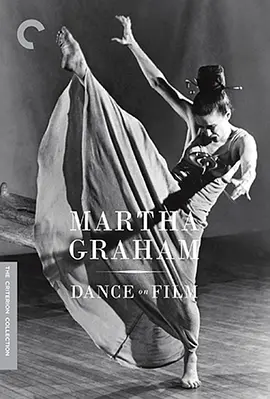
A Dancer's World (1957) [Movie] WikiData IMDb TMDB Douban
A Dancer's World
director:
Peter Glushanok
actor:
玛莎·葛莱姆
/
Robert Cohan
…
other title:
舞蹈家的世界
/
A Dancer’s World
Dancer, Choreographer, and Teacher Martha Graham offers insight into her theories about dance while the members of her world famous troupe display a number of their dance techniques in performance.
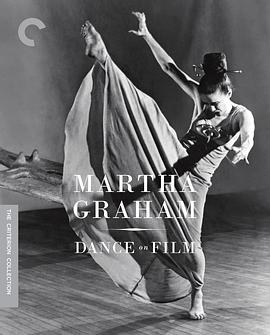
Appalachian Spring (1958) [Movie] WikiData IMDb TMDB Douban
Appalachian Spring
director:
Peter Glushanok
actor:
玛莎·葛莱姆
/
Helen McGehee
…
other title:
阿巴拉契亚的春天
A filmed version of Aaron Copland's most famous ballet, with its original star, who also choreographed.

Robinson Crusoe on Mars (1964) [Movie] WikiData IMDb TMDB Douban
Robinson Crusoe on Mars
director:
拜伦·哈斯金
actor:
保罗·曼迪
/
维克多·伦丁
…
other title:
鲁宾逊太空历险
/
화성의 로빈슨 크루소
…
Stranded on Mars with only a monkey as a companion, an astronaut must figure out how to find oxygen, water, and food and companionship on the lifeless planet.
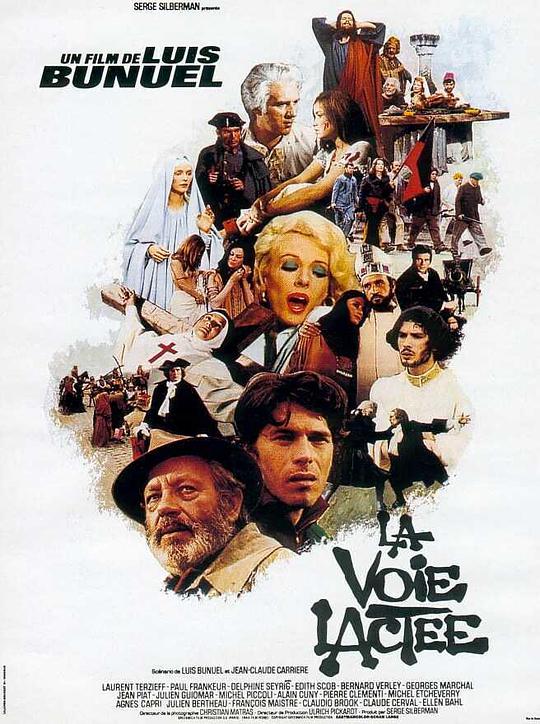
The Milky Way (1969) [Movie] WikiData IMDb TMDB Douban
La voie lactée
other title:
银河
/
La voie lactée
…
Two men, part tramp, part pilgrim, are on their way to Santiago de Compostela in Spain. On their way they meet a whole assortment of people—some truculent, some violent, and some bizarre; they experience many adventures—some mysterious, some erotic, some even supernatural.

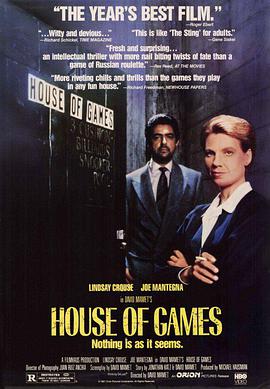
House of Games (1987) [Movie] WikiData IMDb TMDB Douban
House of Games
7.3 (11 ratings)
director:
大卫·马梅
actor:
林赛·克洛斯
/
乔·曼特纳
…
other title:
赌场
/
赌馆
…
A psychiatrist comes to the aid of a compulsive gambler and is led by a smooth-talking grifter into the shadowy but compelling world of stings, scams, and con men.
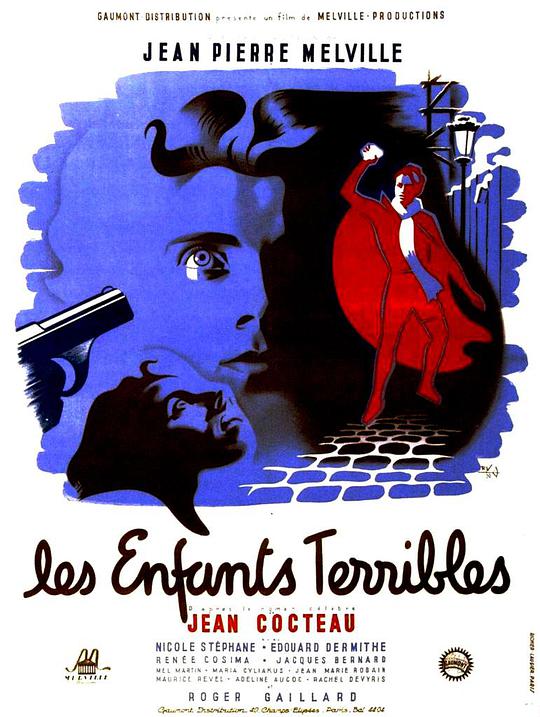
The Strange Ones (1950) [Movie] WikiData IMDb TMDB Douban
Les enfants terribles
other title:
可怕的孩子们
/
Les enfants terribles
…
影片改编自1929年发表的让·考克多的自传体小说,讲述一对姐弟的非正常生活。他们之间进行着外人看起来过分的游戏,但对于他们来说又是必要的。在新人走进他们的生活之后,嫉妒和欺骗产生了。
让-皮埃尔·梅尔维尔曾执导《独行杀手》《红圈》等着名影片。他并非科班出身,因为喜欢电影自组独立制片公司开始从事创作。但当时他忽视法国电影界传统的制片方式,很受到各方面的注意,特别是受到诗人让考克多的赏识。因此考克多提供一千七百万法郎的制片费,请他导演他的小说《可怕的孩子们》,结果很成功,而被誉为战后法国电影界最有才华的新人,被视为法国新潮电影间接的先驱者。
Elisabeth is very protective of her teenage brother Paul, who is injured in a snowball fight at school and has to rest in bed most of the time. The siblings are inseparable, living in the same room, fighting, playing secret games, and rarely leaving the house; though Paul's friend Gerard often stays with them. One day Elisabeth brings home Agathe to live with them also. She bears a strong resemblance to Dargelos, a schoolboy whom Paul had a crush on, and who injured him. Paul and Agathe become attracted to each other, causing Elizabeth to be very jealous.
大致意思是关于兄妹和介入者的感情纠葛,贝托鲁奇的《戏梦巴黎》部分灵感源于此片。
让-皮埃尔·梅尔维尔曾执导《独行杀手》《红圈》等着名影片。他并非科班出身,因为喜欢电影自组独立制片公司开始从事创作。但当时他忽视法国电影界传统的制片方式,很受到各方面的注意,特别是受到诗人让考克多的赏识。因此考克多提供一千七百万法郎的制片费,请他导演他的小说《可怕的孩子们》,结果很成功,而被誉为战后法国电影界最有才华的新人,被视为法国新潮电影间接的先驱者。
Elisabeth is very protective of her teenage brother Paul, who is injured in a snowball fight at school and has to rest in bed most of the time. The siblings are inseparable, living in the same room, fighting, playing secret games, and rarely leaving the house; though Paul's friend Gerard often stays with them. One day Elisabeth brings home Agathe to live with them also. She bears a strong resemblance to Dargelos, a schoolboy whom Paul had a crush on, and who injured him. Paul and Agathe become attracted to each other, causing Elizabeth to be very jealous.
大致意思是关于兄妹和介入者的感情纠葛,贝托鲁奇的《戏梦巴黎》部分灵感源于此片。