Erich von Stroheim — Actor (27)
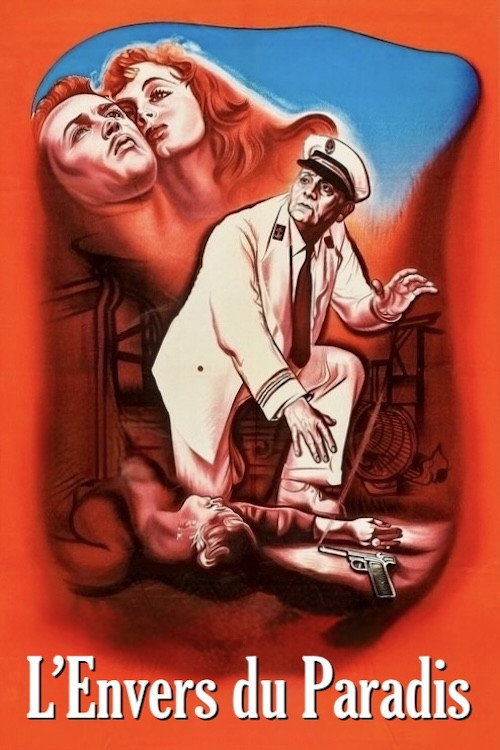
Other Side of Paradise (1953) [Movie] WikiData IMDb TMDB
L'envers du Paradis
other title: L'envers du Paradis / L'envers du paradis
Complicated intrigues fester in the warmth of Segnac, a charming village on the Cô te d'Azur. The hô teliers' daughter, Violaine, has only a few months to live and loves Blaise d'Orliac, who is closely watched by his mistress Michèle. Old O'Hara is platonically in love with Violaine and encourages Blaise's meetings with the young girl. Michèle interferes. Blaise kills her. O'Hara believes Violaine is guilty and wants to accuse himself. Violaine, on the verge of death, exonerates Blaise. M. Dautrand, who was playing the part of a holiday painter but is really a police officer, decides after reading the girl's diary to leave Blaise in peace. Violaine dies happily.
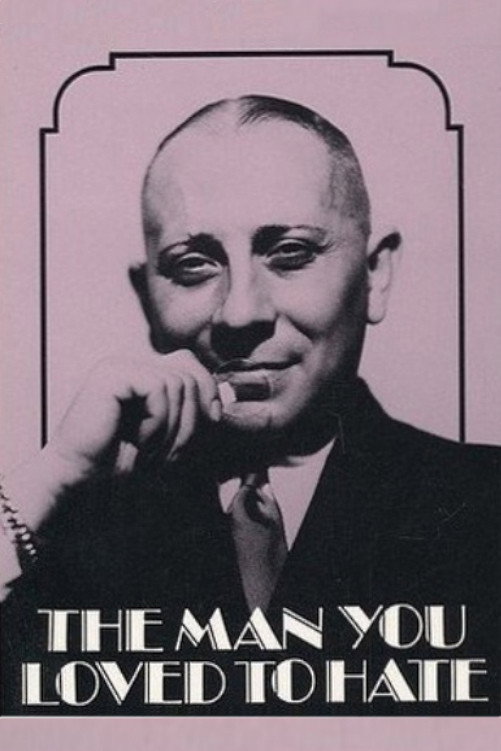
The Man You Loved to Hate (1979) [Movie] IMDb TMDB
The Man You Loved to Hate
other title: Erich von Stroheim - Der Mann mit dem bösen Blick / 你们都爱恨的那个人
A formidable presence both in front of and behind the camera, German auteur Erich von Stroheim is the subject of this in-depth documentary. Renowned for villainous roles as well as for his meticulous filmmaking approach, von Stroheim had a prolific decades-spanning career, which is detailed in interviews and photographs. Most notably, clips of his most celebrated works and even some of his lesser-known productions are presented.
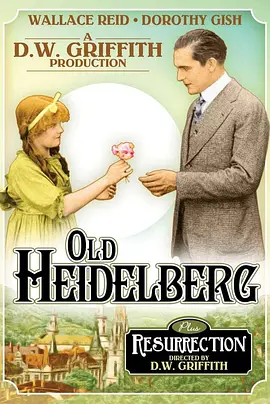
Old Heidelberg (1915) [Movie] IMDb Douban
Old Heidelberg
director: 约翰·艾默森 actor: 多萝西·吉许 / 华莱士·里德
other title: 海德堡旧梦
Karl Heinrich is the heir to the throne of the small European principality of Rutania, but he's a lonely child, not allowed to play with other children and knowing little about life outside the castle. When he reaches maturity, he is sent to attend the University of Heidelberg, and finds fellowshi with classmates and a blossoming love with Katie Ruder, his only friend during childhood and the niece of an innkeeper. However, political turmoil in Rutania forces him to return. War is declared. Heinrich returns to Heidelberg one last time to bid a somber farewell to his beloved Katie.
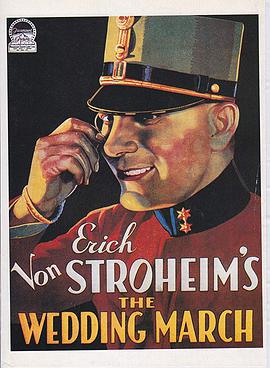
The Wedding March (1928) [Movie] WikiData IMDb TMDB Douban
The Wedding March
other title: 婚礼进行曲 / 结婚进行曲
The setting is Vienna in 1914 before the outbreak of war. The aristocratic and somewhat jaded Prince Nicki, pursued by all the ladies, begins a flirtation with Mitzi, a crippled harpist who works in a suburban wine-garden, and who is in turn idolized by Schani, an uncouth and violently jealous butcher. Their first encounter significantly takes place in front of St. Stephen's Cathedral on Corpus Christi day, with Nicki among the emperor's cavalry regiment. Later, in the refracted light of falling apple blossoms in the wine-garden--scenes of a distilled, ethereal beauty--Nicki gradually wins her faith and love. Meanwhile, amidst the sumptuous and corrupt milieu of the family palace, Nicki is drawn into complicity against his will, as his unscrupulous mother informs him he must marry Cecelia, the daughter of a wealthy commoner, in order to revive the family fortune. Mitzi has a vision of The Iron Man (a symbol of the declining power and position of the Hapsburg dynasty) and falls before the crucifix in fear; but her love remains steadfast, and she protests her faith though abused by her mother and Schani. Infuriated by her rejection, Schani threatens to kill Nicki on his wedding day unless Mitzi agrees to marry him. Following the processional splendor of the cathedral wedding, Schani appears to carry out his threat, but Mitzi arrives in time to stop him; and through the downpouring rain Nicki sadly gazes on his true love in the crowd as he drives away with his bride.
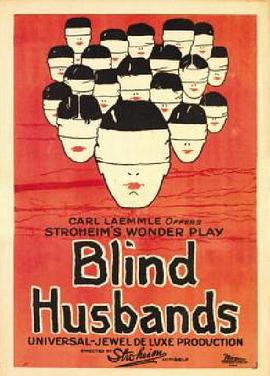
Blind Husbands (1919) [Movie] WikiData IMDb TMDB Douban
Blind Husbands
director: 埃里克·冯·施特罗海姆 actor: 萨姆·德·格拉斯 / Francelia Billington
other title: 盲目的丈夫们 / Blinde Ehemänner
Two differences between this Austrian version and the generally available American version are immediately obvious: they differ both in their length and in the language of the intertitles. The American version is only 1,883 metres long - at 18 frames per second a difference of some 7 minutes to the Austrian version with 2,045 metres. Whereas we originally presumed only a negligible difference, resulting from the varying length of the intertitles, a direct comparison has nevertheless shown that the Austrian version differs from the American version both in the montage and in the duration of individual scenes. Yet how could it happen that the later regional distribution of a canonical US silent film was longer than the "original version"?
The prevalent American version of Blind Husbands does not correspond to the version shown at the premiere of 1919. This little-known fact was already published by Richard Koszarski in 1983. The film was re-released by Universal Pictures in 1924, in a version that was 1,365 feet (416 metres) shorter. At 18 frames per second, this amounts to a time difference of 20 minutes! "Titles were altered, snippets of action removed and at least one major scene taken out entirely, where von Steuben and Margaret visit a small local chapel." (Koszarski)
From the present state of research we can assume that all the known American copies of the film derive from this shortened re-release version, a copy of which Universal donated to the Museum of Modern Art in 1941. According to Koszarski the original negative of the film was destroyed sometime between 1956 and 1961 and has therefore been irretrievably lost. This information casts an interesting light on the Austrian version, which can be dated to the period between the summer of 1921 and the winter of 1922. Furthermore, the copy is some 200 metres longer than the US version of 1924. If one follows the details given by Richard Koszarski and Arthur Lennig, this means that, as far as both its date and its length are concerned, the Austrian version lies almost exactly in the middle between the (lost) version shown at the premiere and the re-released one.A large part of the additional length of the film can be traced to cuts that were made to the 1924 version in almost every shot. Koszarski describes how the beginning and the end of scenes were trimmed, in order to "speed up" the film. However, more exciting was the discovery that the Austrian version contains shots that are missing in the American one - shots/countershots, intertitles - and furthermore shows differences in its montage (i.e. the placing of the individual shots within a sequence). All this indicates that Die Rache der Berge constitutes the oldest and most completely preserved material of the film.
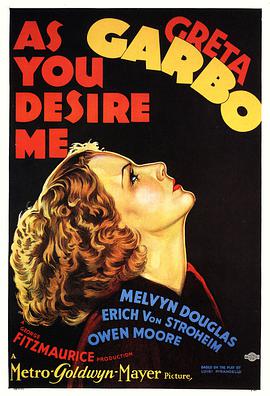
如你所愿 (1933) [Movie] Douban
As You Desire Me
director: 乔治·菲兹莫里斯 actor: 葛丽泰·嘉宝 / 茂文·道格拉斯
other title: As You Desire Me / 悉听尊便
在布达佩斯酒馆卖艺的扎拉(嘉宝 饰演)是一个得不到满足、沉迷于酒精的美丽女人。平日里,她被许多男人所追求,与小说家卡尔·索尔特住在一起。一天,一个陌生的男人托尼找上门来,宣称扎拉的真名是玛丽亚,是他好友布鲁诺的妻子。他还说,扎拉在十年前,也就是第一次世界大战的时候,失去了记忆。扎拉虽然对此毫无印象,但还是跟随托尼决定回去看看,这让索尔特大为光火。
布鲁诺现在是意大利的陆军军官,他竭尽全力唤起玛丽亚对昔日时光的记忆。不过,没有一个人真的能确认扎拉就是玛丽亚。而这时,索尔特又现身告诉庄园中的人玛丽亚其实另有其人。布鲁诺和所有人一起绝望的寻找着真相……
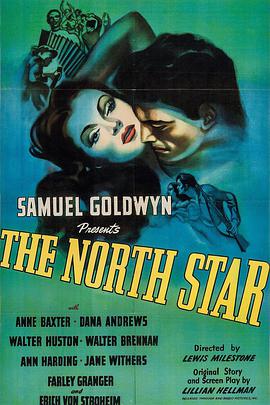
The North Star (1943) [Movie] Douban
The North Star
director: 刘易斯·迈尔斯通 actor: 安妮·巴克斯特 / 达纳·安德鲁斯
other title: 屠城浴血战 / 反攻洛血战
1941年6月学校刚刚放假,乌克兰一个村庄的五位年轻人步行去基辅旅行,途中正遇上德军大举入侵苏联,他们遭到德军飞机轰炸、扫射,村庄被占领。大部分男人逃到小山里参加了游击队,这几个年轻人在村镇上一边与德军周旋,一边冒着生命危险为游击队提供武器弹药...
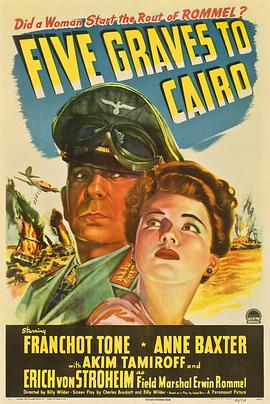
Five Graves to Cairo (1943) [Movie] WikiData IMDb TMDB Douban
Five Graves to Cairo
7.3 (6 ratings) director: 比利·怀尔德 actor: 法兰奇·汤恩 / 安妮·巴克斯特
other title: 开罗谍报战 / 大败罗美尔(港)
The British Army, retreating ahead of victorious Rommel, leaves a lone survivor on the Egyptian border who finds refuge at a remote desert hotel. He assumes the identity of a recently deceased waiter and is helped by the hotel's owner, despite protest from the French chambermaid, who fears the imminent arrival of Rommel and the Germans.