Peter Hofmann — 演员 (6)
尼伯龙人的指环 1979-1980年拜罗伊特音乐节版 [演出] 豆瓣
所属 演出: 尼伯龙人的指环
语言: german 德语 剧团: Bayreuther Festspielorchester 拜罗伊特音乐节管弦乐团 ; Bayreuther Festspielchor 拜罗伊特音乐节合唱团 剧院: Bayreuther Festspielhaus 拜罗伊特音乐节剧院 导演: Patrice Chéreau
其它标题: 1979-1980年拜罗伊特音乐节版 编剧: Richard Wagner 作曲: Richard Wagner 演员: Gwyneth Jones / Manfred Jung
The plot revolves around a magic ring that grants the power to rule the world, forged by the Nibelung dwarf Alberich from gold he stole from the Rhine maidens in the river Rhine. The Ring itself as described by Wagner is a Rune-magic taufr ("tine", or "talisman") intended to rule the feminine multiplicative power by a fearful magical act termed as 'denial of love' ("Liebesverzicht"). With the assistance of the god Loge, Wotan – the chief of the gods – steals the ring from Alberich, but is forced to hand it over to the giants, Fafner and Fasolt in payment for building the home of the gods, Valhalla, or they will take Freia, who provides the gods with the golden apples that keep them young. Wotan's schemes to regain the ring, spanning generations, drive much of the action in the story. His grandson, the mortal Siegfried, wins the ring by slaying Fafner (who slew Fasolt for the ring) – as Wotan intended – but is eventually betrayed and slain as a result of the intrigues of Alberich's son Hagen, who wants the ring for himself. Finally, the Valkyrie Brünnhilde – Siegfried's lover and Wotan's daughter who lost her immortality for defying her father in an attempt to save Siegfried's father Sigmund – returns the ring to the Rhine maidens as she commits suicide on Siegfried's funeral pyre. Hagen is drowned as he attempts to recover the ring. In the process, the gods and Valhalla are destroyed.
Details of the storylines can be found in the articles on each music drama.
Wagner created the story of the Ring by fusing elements from many German and Scandinavian myths and folk tales. The Old Norse Edda supplied much of the material for Das Rheingold, while Die Walküre was largely based on the Völsunga saga. Siegfried contains elements from the Eddur, the Völsunga saga and Thidrekssaga. The final Götterdämmerung, draws from the 12th-century German poem, the Nibelungenlied, which appears to have been the original inspiration for the Ring.
The Ring has been the subject of myriad interpretations. For example, George Bernard Shaw, in The Perfect Wagnerite, argues for a view of The Ring as an essentially socialist critique of industrial society and its abuses. Robert Donington in Wagner's Ring And Its Symbols interprets it in terms of Jungian psychology, as an account of the development of unconscious archetypes in the mind, leading towards individuation.
罗恩格林 [演出] 豆瓣
Lohengrin
类型: 歌剧 编剧: Richard Wagner
其它标题: Lohengrin 导演: August Everding / Werner Herzog 演员: Peter Hofmann / Éva Marton / Leif Roar / Leonie Rysanek / John Macurdy
Place: Antwerp, on the Scheldt
Time: 10th century
Summary
The people of the Duchy of Brabant are divided by quarrels and political infighting; also, a devious hostile power left over from the region's pagan past is seeking to subvert the prevailing monotheistic government and to return the Duchy to pagan rule. A mysterious knight, sent by God and possessing superhuman charisma and fighting ability, arrives to unite and strengthen the people, and to defend the innocent noble woman Elsa from a false accusation of murder, but he imposes a condition: the people must follow him without knowing his identity. Elsa in particular must never ask his name, or his heritage, or his origin. The conspirators attempt to undermine her faith in her rescuer, to create doubt among the people, and to force him to leave.
Act 1
King Henry the Fowler has arrived in Brabant, where he has assembled the German tribes in order to expel the marauding Hungarians from his dominions. He also needs to settle a dispute involving the disappearance of the child-Duke Gottfried of Brabant. The Duke's guardian, Count Friedrich von Telramund, has accused the Duke's older sister, Elsa, of murdering her brother in order to become Duchess of Brabant. Telramund calls upon the King to punish Elsa and to make him the new Duke of Brabant.
The King calls for Elsa to answer Telramund's accusation. Elsa does not answer the King's inquiries, only lamenting her brother's fate. The King declares that he cannot resolve the matter and will leave it to God's judgment through ordeal by combat. Telramund, a strong and seasoned warrior, agrees enthusiastically. When the King asks Elsa who shall be her champion, Elsa describes a knight she has beheld in her dreams (Narrative: "Alone in dark days").
Twice the Herald calls for a champion to step forward, but gets no response. Elsa kneels and prays that God may send her champion to her. A boat drawn by a swan appears on the river and in it stands a knight in shining armour. He disembarks, dismisses the swan, respectfully greets the king, and asks Elsa if she will have him as her champion and marry him. Elsa kneels in front of him and places her honour in his keeping. He asks only one thing in return for his service: Elsa must never ask him his name or where he has come from. Elsa agrees to this.
Telramund's supporters advise him to withdraw because he cannot prevail against the Knight's powers, but he proudly refuses. The chorus prays to God ("Herr und Gott") for victory for the one whose cause is just. Ortrud, Telramund's wife, does not join the prayer, but privately expresses confidence that Telramund will win. The combat commences. The unknown Knight defeats Telramund but spares his life. Taking Elsa by the hand, he declares her innocent. The crowd exits, cheering and celebrating.
Act 2
Night in the courtyard outside the cathedral
Telramund and Ortrud, banished from court, listen unhappily to the distant party-music. Ortrud reveals that she is a pagan witch (daughter of Radbod Duke of Frisia), and tries to revive Telramund's courage, assuring him that her people (and he) are destined to rule the kingdom again. She plots to induce Elsa to violate the mysterious knight's only condition.
When Elsa appears on the balcony before dawn, she hears Ortrud lamenting and pities her. As Elsa descends to open the castle door, Ortrud prays to her pagan gods, Wodan and Freia, for malice, guile, and cunning, in order to deceive Elsa and restore pagan rule to the region. Ortrud warns Elsa that since she knows nothing about her rescuer, he could leave at any time as suddenly as he came, but Elsa is sure of the Knight's virtues. The two women go into the castle. Left alone outside, Telramund vows to bring about the Knight's downfall.
The sun rises and the people assemble. The Herald announces that Telramund is now banished, and that anyone who follows Telramund shall be considered an outlaw by the law of the land. In addition, he announces that the King has offered to make the unnamed knight the Duke of Brabant; however, the Knight has declined the title, and prefers to be known only as "Protector of Brabant".[11] The Herald further announces that the Knight will lead the people to glorious new conquests, and will celebrate the marriage of himself and Elsa. In the back of the crowd, four noblemen quietly express misgivings to each other because the Knight has rescinded their privileges and is calling them to arms. Telramund secretly draws the four noblemen aside and assures them that he will regain his position and stop the Knight, by accusing him of sorcery.
As Elsa and her attendants are about to enter the church, Ortrud rushes to the front of the procession and challenges Elsa to explain who the Knight is and why anyone should follow him. Their conversation is interrupted by the entrance of the King with the Knight. Elsa tells both of them that Ortrud was interrupting the ceremony. The King tells Ortrud to step aside, then leads Elsa and the Knight toward the church. Just as they are about to enter the church, Telramund enters. He claims that his defeat in combat was invalid because the Knight did not give his name (trial by combat traditionally being open only to established citizens), then accuses the Knight of sorcery. He demands that the Knight must reveal his name; otherwise the King should rule the trial by combat invalid. The Knight refuses to reveal his identity and claims that only one person in the world has the right to make him do so: his beloved Elsa, and she has pledged not to exercise that right. Elsa, though visibly shaken and uncertain, assures him of her confidence. King Henry refuses Telramund's questions, and the nobles of Brabant and Saxony praise and honor the Knight. Elsa falls back into the crowd where Ortrud and Telramund try to intimidate her, but the Knight forces them both to leave the ceremony, and consoles Elsa. Elsa takes one last look at the banished Ortrud, then enters the church with the wedding procession.
Act 3
Scene 1: The bridal chamber
Elsa and her new husband are ushered in with the well-known bridal chorus, and they express their love for each other. Ortrud's words, however, have made an impression on Elsa; she laments that her name sounds so sweet on her husband's lips but she cannot utter his name. She asks him to tell her his name when no one else is around, but at all instances he refuses. Finally, despite his warnings, she asks the Knight the fatal questions. Before the Knight can answer, Telramund and his four recruits rush into the room in order to attack him. The Knight defeats and kills Telramund. Then, he sorrowfully turns to Elsa and asks her to follow him to the King, to whom he will now reveal his secrets.
Scene 2: On the banks of the Scheldt (as in Act 1)
The troops arrive equipped for war. Telramund's corpse is brought in. Elsa comes forward, then the Knight. He tells the King that Elsa has broken her promise, and discloses his identity ("In fernem Land") by recounting the story of the Holy Grail and of Monsalvat. He reveals himself as Lohengrin, Knight of the Grail and son of King Parsifal, sent to protect an unjustly accused woman. The laws of the Holy Grail say that Knights of the Grail must remain anonymous. If their identity is revealed. they must return home.
As Lohengrin sadly bids farewell to Elsa, the swan-boat reappears. Lohengrin tells Elsa that if she had kept her promise, she could have recovered her lost brother, and gives her his sword, horn and ring, for he is to become the future leader of Brabant. As Lohengrin tries to get in the boat, Ortrud appears. She tells Elsa that the swan is actually Gottfried, Elsa's brother, whom she cursed to become a swan. The people consider Ortrud guilty of witchcraft. Lohengrin prays and the swan turns back into young Gottfried. Lohengrin declares him the Duke of Brabant. Ortrud sinks as she sees her plans thwarted.
A dove descends from heaven and, taking the place of the swan at the head of the boat, leads Lohengrin to the castle of the Holy Grail. Elsa is stricken with grief and falls to the ground dead.
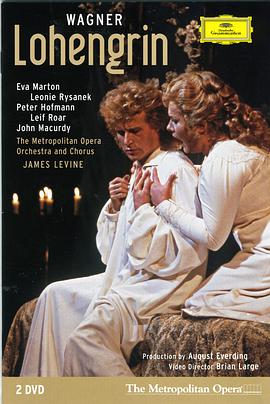
罗恩格林 1986年大都会歌剧团版 [演出] 豆瓣
所属 演出: 罗恩格林
语言: 德语 german 剧团: Metropolitan Opera Orchestra 大都会歌剧团管弦乐团 ; Metropolitan Opera Chorus 大都会歌剧团合唱团 剧院: Metropolitan Opera House 大都会歌剧院 导演: August Everding
其它标题: 1986年大都会歌剧团版 编剧: Richard Wagner 作曲: Richard Wagner 演员: Peter Hofmann / Éva Marton
Place: Antwerp, on the Scheldt
Time: 10th century
Summary
The people of the Duchy of Brabant are divided by quarrels and political infighting; also, a devious hostile power left over from the region's pagan past is seeking to subvert the prevailing monotheistic government and to return the Duchy to pagan rule. A mysterious knight, sent by God and possessing superhuman charisma and fighting ability, arrives to unite and strengthen the people, and to defend the innocent noble woman Elsa from a false accusation of murder, but he imposes a condition: the people must follow him without knowing his identity. Elsa in particular must never ask his name, or his heritage, or his origin. The conspirators attempt to undermine her faith in her rescuer, to create doubt among the people, and to force him to leave.
Act 1
King Henry the Fowler has arrived in Brabant, where he has assembled the German tribes in order to expel the marauding Hungarians from his dominions. He also needs to settle a dispute involving the disappearance of the child-Duke Gottfried of Brabant. The Duke's guardian, Count Friedrich von Telramund, has accused the Duke's older sister, Elsa, of murdering her brother in order to become Duchess of Brabant. Telramund calls upon the King to punish Elsa and to make him the new Duke of Brabant.
The King calls for Elsa to answer Telramund's accusation. Elsa does not answer the King's inquiries, only lamenting her brother's fate. The King declares that he cannot resolve the matter and will leave it to God's judgment through ordeal by combat. Telramund, a strong and seasoned warrior, agrees enthusiastically. When the King asks Elsa who shall be her champion, Elsa describes a knight she has beheld in her dreams (Narrative: "Alone in dark days").
Twice the Herald calls for a champion to step forward, but gets no response. Elsa kneels and prays that God may send her champion to her. A boat drawn by a swan appears on the river and in it stands a knight in shining armour. He disembarks, dismisses the swan, respectfully greets the king, and asks Elsa if she will have him as her champion and marry him. Elsa kneels in front of him and places her honour in his keeping. He asks only one thing in return for his service: Elsa must never ask him his name or where he has come from. Elsa agrees to this.
Telramund's supporters advise him to withdraw because he cannot prevail against the Knight's powers, but he proudly refuses. The chorus prays to God ("Herr und Gott") for victory for the one whose cause is just. Ortrud, Telramund's wife, does not join the prayer, but privately expresses confidence that Telramund will win. The combat commences. The unknown Knight defeats Telramund but spares his life. Taking Elsa by the hand, he declares her innocent. The crowd exits, cheering and celebrating.
Act 2
Night in the courtyard outside the cathedral
Telramund and Ortrud, banished from court, listen unhappily to the distant party-music. Ortrud reveals that she is a pagan witch (daughter of Radbod Duke of Frisia), and tries to revive Telramund's courage, assuring him that her people (and he) are destined to rule the kingdom again. She plots to induce Elsa to violate the mysterious knight's only condition.
When Elsa appears on the balcony before dawn, she hears Ortrud lamenting and pities her. As Elsa descends to open the castle door, Ortrud prays to her pagan gods, Wodan and Freia, for malice, guile, and cunning, in order to deceive Elsa and restore pagan rule to the region. Ortrud warns Elsa that since she knows nothing about her rescuer, he could leave at any time as suddenly as he came, but Elsa is sure of the Knight's virtues. The two women go into the castle. Left alone outside, Telramund vows to bring about the Knight's downfall.
The sun rises and the people assemble. The Herald announces that Telramund is now banished, and that anyone who follows Telramund shall be considered an outlaw by the law of the land. In addition, he announces that the King has offered to make the unnamed knight the Duke of Brabant; however, the Knight has declined the title, and prefers to be known only as "Protector of Brabant".[11] The Herald further announces that the Knight will lead the people to glorious new conquests, and will celebrate the marriage of himself and Elsa. In the back of the crowd, four noblemen quietly express misgivings to each other because the Knight has rescinded their privileges and is calling them to arms. Telramund secretly draws the four noblemen aside and assures them that he will regain his position and stop the Knight, by accusing him of sorcery.
As Elsa and her attendants are about to enter the church, Ortrud rushes to the front of the procession and challenges Elsa to explain who the Knight is and why anyone should follow him. Their conversation is interrupted by the entrance of the King with the Knight. Elsa tells both of them that Ortrud was interrupting the ceremony. The King tells Ortrud to step aside, then leads Elsa and the Knight toward the church. Just as they are about to enter the church, Telramund enters. He claims that his defeat in combat was invalid because the Knight did not give his name (trial by combat traditionally being open only to established citizens), then accuses the Knight of sorcery. He demands that the Knight must reveal his name; otherwise the King should rule the trial by combat invalid. The Knight refuses to reveal his identity and claims that only one person in the world has the right to make him do so: his beloved Elsa, and she has pledged not to exercise that right. Elsa, though visibly shaken and uncertain, assures him of her confidence. King Henry refuses Telramund's questions, and the nobles of Brabant and Saxony praise and honor the Knight. Elsa falls back into the crowd where Ortrud and Telramund try to intimidate her, but the Knight forces them both to leave the ceremony, and consoles Elsa. Elsa takes one last look at the banished Ortrud, then enters the church with the wedding procession.
Act 3
Scene 1: The bridal chamber
Elsa and her new husband are ushered in with the well-known bridal chorus, and they express their love for each other. Ortrud's words, however, have made an impression on Elsa; she laments that her name sounds so sweet on her husband's lips but she cannot utter his name. She asks him to tell her his name when no one else is around, but at all instances he refuses. Finally, despite his warnings, she asks the Knight the fatal questions. Before the Knight can answer, Telramund and his four recruits rush into the room in order to attack him. The Knight defeats and kills Telramund. Then, he sorrowfully turns to Elsa and asks her to follow him to the King, to whom he will now reveal his secrets.
Scene 2: On the banks of the Scheldt (as in Act 1)
The troops arrive equipped for war. Telramund's corpse is brought in. Elsa comes forward, then the Knight. He tells the King that Elsa has broken her promise, and discloses his identity ("In fernem Land") by recounting the story of the Holy Grail and of Monsalvat. He reveals himself as Lohengrin, Knight of the Grail and son of King Parsifal, sent to protect an unjustly accused woman. The laws of the Holy Grail say that Knights of the Grail must remain anonymous. If their identity is revealed. they must return home.
As Lohengrin sadly bids farewell to Elsa, the swan-boat reappears. Lohengrin tells Elsa that if she had kept her promise, she could have recovered her lost brother, and gives her his sword, horn and ring, for he is to become the future leader of Brabant. As Lohengrin tries to get in the boat, Ortrud appears. She tells Elsa that the swan is actually Gottfried, Elsa's brother, whom she cursed to become a swan. The people consider Ortrud guilty of witchcraft. Lohengrin prays and the swan turns back into young Gottfried. Lohengrin declares him the Duke of Brabant. Ortrud sinks as she sees her plans thwarted.
A dove descends from heaven and, taking the place of the swan at the head of the boat, leads Lohengrin to the castle of the Holy Grail. Elsa is stricken with grief and falls to the ground dead.
女武神 1980年拜罗伊特音乐节版 [演出] 豆瓣
所属 演出: 女武神
语言: german 德语 剧团: Bayreuther Festspielorchester 拜罗伊特音乐节管弦乐团 剧院: Bayreuther Festspielhaus 拜罗伊特音乐节剧院 导演: Patrice Chéreau
其它标题: 1980年拜罗伊特音乐节版 编剧: Richard Wagner 作曲: Richard Wagner 演员: Gwyneth Jones / Peter Hofmann
Prior history
During the lengthy time that has passed since the gods entered Valhalla at the end of Das Rheingold, Fafner has used the Tarnhelm to assume the form of a dragon, and guards the gold and the ring in the depths of the forest. Wotan has visited Erda seeking wisdom, and by her has fathered a daughter, Brünnhilde; he has fathered eight other daughters, possibly also by Erda. These, with Brünnhilde, form the Valkyries, whose task is to recover heroes fallen in battle and bring them to Valhalla, where they will protect the fortress from Alberich's assault should the dwarf recover the ring. Wotan has also wandered the earth, and with a woman of the Völsung race has fathered the twins Siegmund and Sieglinde, who have grown up separately and unaware of each other. From the Volsungs Wotan hopes for a hero who, unencumbered by the gods' treaties, will obtain the ring from Fafner.
Act 1
As a storm rages, Siegmund finds shelter from his enemies in a large dwelling built around a massive ash-tree. Unarmed and wounded, he collapses with exhaustion. Sieglinde enters; she tells Siegmund that she is the wife of Hunding, and that he may rest here until Hunding's return. As they talk, they look at each other with growing interest and emotion. Siegmund gets ready to leave, telling Sieglinde that misfortune follows him and he does not want to bring it on her; she replies that misfortune dwells with her already.
Hunding returns, and questions Siegmund's presence. Calling himself Wehwalt ("woeful"), Siegmund explains that he grew up in the forest with his parents and twin sister. One day he found their home burned down, his mother killed and his sister gone. Recently he fought with the relatives of a girl being forced into marriage. His weapons were destroyed, the bride was killed, and he was forced to flee. Hunding reveals that he is one of Siegmund's pursuers; Siegmund may stay, he says, but they must fight in the morning. Before leaving, Sieglinde gives a meaningful glance to a particular spot on the tree in which, the firelight reveals, a sword is buried to the hilt.
Sieglinde returns, having drugged Hunding's drink. She reveals that she was forced into the marriage and that during their wedding feast, an old man appeared and plunged a sword into the trunk of the ash tree which neither Hunding nor any of his companions have been able to remove. She is longing for the hero who will draw the sword and save her. When Siegmund expresses his love for her, she reciprocates, and when he speaks the name of his father, Wälse, she recognises him as Siegmund, and realises that the sword was left for him. Siegmund then draws the sword from the tree. She reveals herself as Sieglinde, his twin sister. Siegmund names the sword "Nothung" and declares that it will be her protection. The two sing of their passionate love for each other, as the act ends.
Act 2
On a high mountain ridge, Wotan instructs Brünnhilde, his Valkyrie daughter, to protect Siegmund in his forthcoming battle with Hunding. Fricka arrives, and in her role as goddess of family values demands that Siegmund and Sieglinde be punished for their adultery and incest. She scorns Wotan's argument that he requires Siegmund as a "free hero", who can further his plans to recover the ring from Fafner, uninhibited by Wotan's contracts. She retorts that Siegmund is not free but is Wotan's pawn, whose every move the god seeks to direct. Defeated by Fricka's logic, Wotan reluctantly agrees that he will not protect Siegmund. After Fricka leaves, the troubled Wotan gives Brünnhilde the full backstory, and with great sorrow rescinds his earlier instruction; he orders her to give the victory to Hunding, and then departs.
Siegmund and Sieglinde now enter, and Sieglinde faints, consumed with guilt and exhaustion. Brünnhilde tells Siegmund of his impending death; he refuses to follow Brünnhilde to Valhalla when she tells him Sieglinde cannot accompany him. Siegmund still believes that his father's sword will assure him of victory over Hunding, but Brünnhilde tells him it has lost its power. Siegmund threatens to kill both Sieglinde and himself. Much moved, Brünnhilde decides to defy her father and grant victory to Siegmund.
Hunding's call is heard; he arrives, and attacks Siegmund. Under Brünnhilde's power Siegmund begins to overpower Hunding, but Wotan appears and shatters Siegmund's sword with his spear. Hunding then stabs him to death. Brünnhilde gathers up the fragments of the sword and flees on horseback with Sieglinde. Contemptuously, Wotan strikes Hunding dead, and swearing that Brünnhilde will be punished for her defiance, sets out in pursuit of her.
Act 3
The Valkyries congregate on the mountain-top, each carrying a dead hero and chattering excitedly. Brünnhilde arrives with Sieglinde, and begs her sisters for help, but they dare not defy Wotan. Sieglinde tells Brünnhilde that without Siegmund she no longer wishes to live. Brünnhilde informs her that she is pregnant by Siegmund, and urges her to remain alive for the child's sake, and to name the child Siegfried. Brünnhilde gives the fragments of the sword Nothung to Sieglinde, who thanks her for her loyalty and comfort, and resolves to save the child. As she departs, Wotan is heard approaching with great wrath.
When Wotan arrives, the Valkyries vainly try to hide Brünnhilde. He faces her and declares her punishment: she is to be stripped of her Valkyrie status and become a mortal woman, to be held in defenceless sleep on the mountain, prey to any man who finds her. The other Valkyries protest, but when Wotan threatens them with the same, they flee. In a long discourse with Wotan Brünnhilde explains that she decided to protect Siegmund knowing that this was Wotan's true desire. Wotan consents to her request that he surround her resting place with a circle of fire that will protect her from all but the bravest of heroes. He bids her a loving farewell and lays her sleeping form down on a rock. He then summons Loge, the demigod of fire, who creates a circle of flames around her. Before slowly departing, Wotan pronounces that anyone with fear shall never pass through the fire.