James Benning — Director (51)

Movie
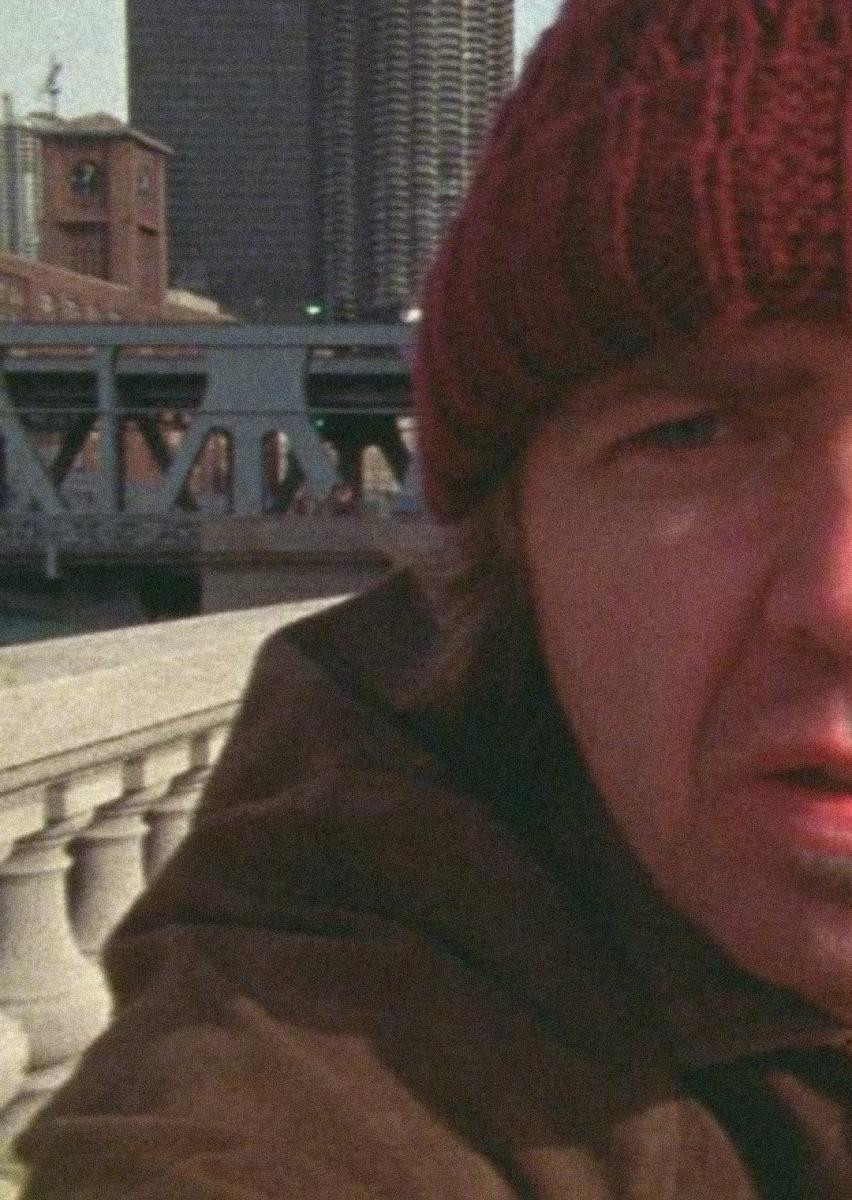
Chicago Loop (1976)
Chicago Loop IMDb TMDBIn three virtuosic sequences created entirely in-camera, Benning alternates contrary camera movements in a trio of Chicago locations with increasing rapidity to a point where they first fracture and then merge in the viewer’s eye. Preserved by the Academy Film Archive in partnership with Austrian Film Museum in 2013.

Movie
8½ x 11 (1974)
8½ x 11 IMDb TMDB"Benning's landscape works, with their meticulous, reverential compositions, have been located in the history of American realist painting and photography, and also belong to the tradition of American nature writing...The formal elegance of the compositions somehow becomes surreal over time, as we look into, instead of at, the place. This tendency locates Benning in the history of experimental filmmakers concerned with interrogating visual perception." - Danni Zuvela
Movie
Eight Bridges (2026)
Eight Bridges IMDb Douban
other title:
穿州過省八座橋(港)
/
八座桥
…
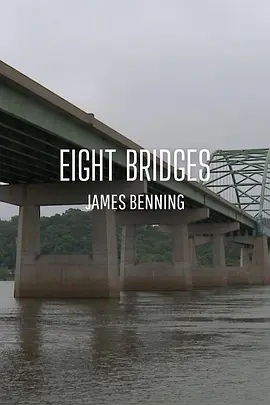
Shots of 8 bridges from the continental United States - the Golden Gate Bridge from Sausalito, California; the Rio Grande Gorge Bridge from Arroyo Hondo, New Mexico; the Edmund Pettus Bridge from Selma, Alabama; the Seven Mile Bridge from Little Duck Key, Florida; the George Washington Bridge from Fort Lee, New Jersey; the Dubuque-Wisconsin Bridge from Dubuque, Iowa; the High Bridge from Valley City, North Dakota; the Astoria-Megler Bridge from Astoria, Oregon.

Movie
Little Boy (2025)
Little Boy IMDb TMDB Douban
other title:
小男孩
/
소년
A film looking at the past to warn about the future, from a little boy's point of view. A companion to ‘American Dreams (lost and found)’ (1984)
Movie
Allensworth (2022)
Allensworth Douban
other title:
古镇十二屋(港)
/
艾伦斯沃思
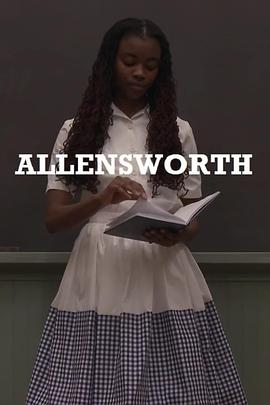
In 1908, Allensworth became the first self-administered African-American municipality in California. In lengthy shots, Benning surveys the buildings (school, church, library) of the now-abandoned town and looks for the traces of a Black cultural history.
源自:

Movie
Los (2001)
Los IMDb TMDB Douban
other title:
洛杉矶
/
로스
Los Angeles is depicted in 35 stationary shots, each 2 1/2 minutes long, in this non-narrative film.
Nearing the completion of El Valley Centro, I began planning an urban companion piece, Los, that was to be a portrait of Los Angeles. It seemed logical, for the politics of water certainly run from the Valley to the City. Los would have the same structure as El Valley Centro and would look and listen with the same intensity. The two films would be connected with the last shot of El Valley Centro pumping water out of the Valley over Wheeler Ridge while the first shot of Los would show Mulholland’s first spillway (still in use) bringing water into LA.
James Benning, December 2001
Conceptual-art portrait of Los Angeles County, comprising 35 two-minute shots of streams, hills, buildings, factories, gardens, highways, rivers, cattle, trains, people, the ocean, a cemetery, the skyline, policemen, back streets, a jail, soccer players… Bennings’ camera remains static, and in the absence of commentary the only sounds we hear are whatever’s audible in each of these places: snatches of dialogue, distant background music, the rumble of cars and trains.
Benning has been one of American leading avant-garde film-makers for over 20 years, but remains barely known by the wider cinemagoing public, especially abroad – partly because he doesn’t allow his works to be available on video. And while Los is no-one’s idea of ‘commercial’ film-making, Benning’s low profile is an indictment of the timid policies of our supposedly adventurous arthouses: this is much too fascinating a use of film for it to be relegated to art galleries.
Los can be taken as 35 short movies, each of them saying something about the county, each of them posing some question about Benning’s technique, providing Viewing becomes an active, enthralling experience – even when there’s apparently ‘nothing happening’ on screen. It soon becomes clear that the timing, order and contents of each image has been very precisely calculated, and in many cases it’s what we can’t see that’s the ‘subject’ of the shot. The penultimate shot is of ‘homeless people’, and at one point an unseen passerby exclaims “What the f*ck are you lookin’ at, stupid motherf*cker?” But there are no answers – everything about the film is a matter of subjective interpretation, and every response is equally valid. Benning’s gaze transforms the whole of ‘greater’ Los Angeles into a vast work of art, in the process making it even ‘greater’ still – and this is only the central part of a projected ‘Southern California’ trilogy.
The film is full of engrossing incidental details, cross-references, tantalising clues that might mean everything or nothing. Early one we see a DKNY advertising billboard owned by a company named ‘Outdoor Systems’, and this phrase sums up Benning’s real subject – the human and natural processes that combine to form the bizarre anomaly we know as LA: a huge cloud of dust rising from a brush fire; the evening lights of cars zooming along a six-lane highway; the flight path of a landing jet-plane. This is a game with specific rules of form (the length and horizon-lines of each shot are similar) and content (each shot must contain some aspect of human activity; each shot must be outdoors) and, finally, memory test. We’re exposed to each of the images for so long, that by the end, when Benning brings up a series of captions identifying the locations of each, we can run through the whole movie again, in our mind.
Needless to say, Los won’t be to all tastes – in today’s market-oriented climate, such a project necessarily runs the risk of ‘pretentiousness’ accusations – but it’s surprising how quickly you adjust to the film’s unique rhythms, and this is a very straightforward, accessible kind of experimentalism. In terms of an artist using cinema to express himself, it dwarfs almost all this year’s ‘conventional’ releases: if any film of 2001 can possibly change the way its audiences think about and view their world, it’s James Benning’s mysterious, majestic, magical Los.

Movie
Sogobi (2002)
Sogobi IMDb TMDB Douban
other title:
索古比
/
소고비
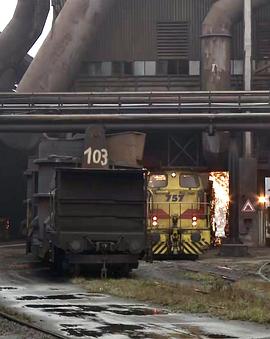
As soon as Los was completed I added Sogobi to make it a trilogy, the urban and rural portraits needed the Californian wilderness to put them in perspective. Following the same structure Sogobi would look and listen to that wilderness. The first shot of Sogobi would relate to the last shot of Los, and the last shot of Sogobi would return to the first shot of El Valley Centro, revealing its mystery. The entire trilogy would become an interrelated puzzle.
Movie
Grand Opera: An Historical Romance (1978)
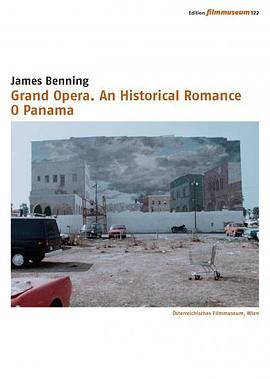
DoubanA transitional film at the end of his first decade of filmmaking, James Benning’s Grand Opera introduces a degree of storytelling to his previously more formalist devices. Benning calls the film his “first attempt at writing my own kind of history” and, in a sense, it also serves to write himself into history, acutely measuring his place as a Midwestern experimental filmmaker, then based in Oklahoma, in relationship to the avant-garde scene situated in New York. The film thus features homages to the prominent experimental cinema of the time, including a spoof of Wavelength, as well as cameos from Michael Snow, Hollis Frampton and Yvonne Rainer. Woven with these sequences are other characteristic Benning gambits – a compilation of every house he ever lived in, a preoccupation with the history of Pi, and the looming threat that a building will explode.
Movie
Casting a Glance (2007)
Casting a Glance WikiData IMDb TMDB Douban
other title:
一目了然
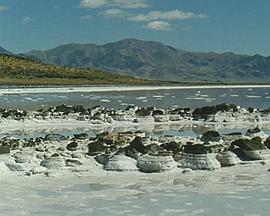
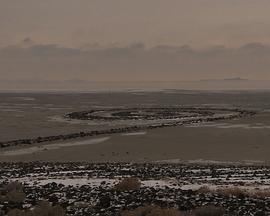
"Between May 2005 and January 2007 I made 16 trips to the Spiral Jetty, Robert Smithson’s monumental earthwork located on the Great Salt Lake, Utah. casting a glance maps the Jetty back onto its 37-year history. From morning to night, its allusive, shifting appearance may be the result of a passing weather system or simply the changing angle of the sun. Seasonal shifts and changes in water level alter salt crystal growth, the amount of algae in the water, and the presence of wildlife. Sounds may come from a navy jet, wildlife, lapping or splashing water, a visitor’s car radio, converging thunderstorms—or be a total silence..." James Benning

Movie
The United States of America (1975)
The United States of America WikiData IMDb TMDB Douban
詹姆斯·班宁
/
贝蒂·戈登
actor:
James Benning
/
Bette Gordon
other title:
美利堅合眾國(1975年電影)
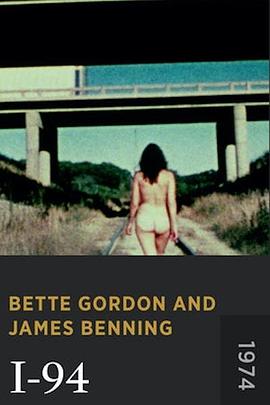
A true masterpiece of 70s cinema, more remarkable today than ever before. A conceptual bicentennial film dealing with spatial and temporal relationships between two travelers, their car, and the geographic, political, and social changes from New York to Los Angeles. The space within each frame is at the same time continuous and elliptical.
Movie
Stemple Pass (2012)
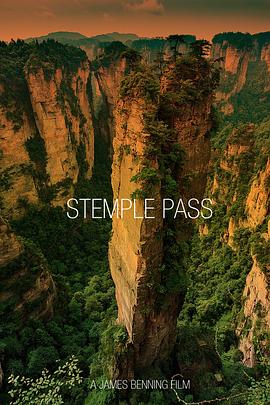
DoubanAn isolated cabin set amongst a group of small trees, a forest rising up behind it that grows progressively thicker to cover the mountain peak beyond. Four static shots, each from the same angle and each half an hour in length: spring, fall, winter and finally summer. Birdsong, flies, mist over the peak, rain, snow, a sunset. A voice that periodically intrudes on these tranquil scenes, reading out passages from the writings of infamous anti-technology terrorist Ted Kaczynski, the cabin being a replica of his own one. Accounts of living on hunted meat, small acts of vandalism, homemade bombs, fingers being blown off, remorse or lack of it, the beauty of nature, environmental destruction, the repressive current order. The relationship between text and image winds its way between association, correlation and contrast; fascination gives way to disgust, indignation to identification. Yet by the close, text and image have re-converged to ravishing effect. As the sun’s rays weaken and the trees gradually turn red and then black, the senses have been sharpened in just the way Kaczynski describes: a heightened, almost blissful feel for nature that emerges from pure duration.
Movie
Telemundo (2019)
Telemundo Douban
other title:
世界电视
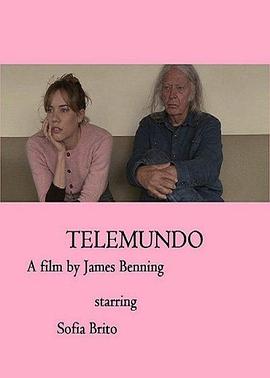
Two people watch a film being broadcast on Telemundo, a Spanish-language television station. The sound of the film along with commercials can be heard. They occasionally talk to each other, but never about the film. One is a 74-year-old man, the other a 33-year-old woman. He tells stories, she is full of wisdom.
Movie
American Dreams: Lost and Found (1984)
American Dreams: Lost and Found Douban
other title:
美国梦
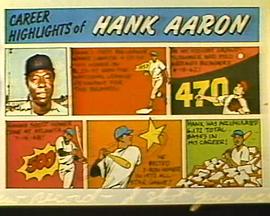
"... A description of the form of AMERICAN DREAMS is deceptively simple: along a narrow border at the bottom of the screen a handwritten transcription of Arthur Bremer's diary crawls from right to left; a series of chronological baseball cards from the career of Hank Aaron are shown in a steady cadence, first the front (usually a photo), then the reverse side (batting statistics, etc.). Finally, overtitles indicate by year the sources of the soundtrack's fragmentary speeches and songs. ... AMERICAN DREAMS is far from unrestricted in its horizons. A clear 'sense of the ending' is limited by two inevitable acts: Bremer will shoot Wallace; Aaron will break Babe Ruth's record. As a work energized by an autobiographical impulse, Benning nonetheless hides himself in the shadows of time. It isn't necessary to know that Bremer was Benning's neighbor in Milwaukee or that the filmmaker counts among his greatest achievements pitching batting practice to the Milwaukee Braves in 1962. As externally shaped and motivated as it appears to be, AMERICAN DREAMS is marked by a dark and self-conscious meeting of personal and public desires ...." - Paul Arthur, The Appearance of History in Recent Avant-Garde Film.
American Dreams is chock full of concrete, discrete elements that comprise an American iconography of the past three decades. The film encourages a kind of perverse nostalgia for 'the good old days': Nixon's 'you don't have Nixon to kick around any more'; Elvis' response to questions about his gyrating style and the rumour that once he shot his mother; Patty Hearst's 'Tania' statement; Senator Ribicoff's reference to 'Gestapo tactics in the streets of Chicago'. All of which is punctuated by the music of the period and set against a composite image of Hank Aaron memorabilia (arranged chronologically, 1954-76, the span of the champion home-run hitter's major league career), and the sordid diary jottings of the would-be assassin, Arthur Bremer.
Movie
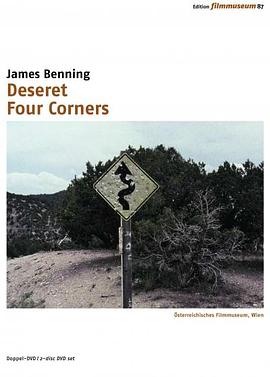
Four Corners (1997)
Four Corners IMDb TMDB Douban
詹姆斯·班宁
actor:
Hartmut Bitomsky
/
James Benning
…
other title:
四角地带
"Sometimes dreams are wiser than waking." These words, attributed to the Oglala Sioux medicine man Black Elk, are the final bit of text to appear in veteran filmmaker James Benning's FOUR CORNERS which uses a specific geographic location to pose larger questions about the United States. Here, the geographic and wholly imaginary place Four Corners, that favorite tourist destination where Colorado, New Mexico, Arizona and Utah meet, becomes a kind of theoretical ground zero, the site from which Benning can give voice to other, pointedly unofficial sort of spurious conspiracy (the history of the United States), but one in which each sound and each image hints at a story not yet fully told (the histories of the United States.)." - Manohla Dargis, LA Weekly

Movie
North on Evers (1992)
North on Evers IMDb TMDB Douban
詹姆斯·班宁
actor:
Willem Dafoe
In NORTH ON EVERS James Benning takes the road movie seriously, making his circular trip across the U.S. a marvelously photographed, intensely felt, and disturbing portrait of contemporary America. In many ways, this recent film is a departure of Benning’s earlier films which are characterized, at times, by extremely long, carefully planned takes and a minimal narrative approach. In NORTH ON EVERS, the shots are kept short with a narrative that is direct and detailed, like a diary or a long series of postcards to a friend. What this work shares with the other films is a dry wit and a deep interest in the American social landscape.