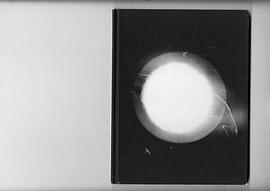
After & Before [Book] Douban
author:
Harold Edgerton
/
James Elkins
…
publishing house:
Distributed Art Pub Inc
2003
- 6
Andrew Roth announces the opening of “After and Before: Documenting the A-Bomb.” On view will be two distinct archives: The first consists of black-and-white vintage photographs by Dr. Harold Edgerton taken at nuclear test sites in the U.S. in the 1950s; the second is a collection of over 700 black-and-white vintage photographs shot in Hiroshima by a U.S. Navy officer during the first few months after the dropping of the atomic bomb on August 6, 1945.
Harold Edgerton was recruited by the U.S. Government to photographically document nuclear bomb tests, starting with the atomic explosions at Eniwetok Atoll in 1951. Toward this aim, he invented the Rapatronic camera which enabled him to make images with an exposure time as brief as one-millionth of a second. The lens, which was mounted to a telescope, enabled exposures at very close range. Thus the images display a molecular mass perched on the horizon; a gelatinous growth spitting flames with no resemblance to the iconic “mushroom.” In his essay printed in the accompanying exhibition catalogue, James Elkins writes: “ The few surviving Rapatronic images … are the most astonishing photographs I know. They are exactly as only images can be: nearly unbearable, insistently present, perfectly resistant to the pressure of meaning.”
The photographs documenting Hiroshima shortly after the bomb dropped in August of 1945 were made by an anonymous photographer, believed to be an officer in the U.S. Navy. The 700 images were found in a suitcase several years ago outside an abandoned building in Massachusetts. They document the surviving architectural structures, detailing specific forensic evidence of the blasts’ destruction. They chronicle, as well, the circumference of the blasts’ damage through text labels affixed to the verso: “Looking South, 5700 feet from Ground Zero,” or “ Looking North East, showing cedar bark shingles on dwelling ignited by Bomb Flash.” One of the more haunting images presents a single wall from a building standing in a field of rubble. The label reads: “ Building, School: Shows 12 inch concrete fire wall with non-automatic steel roll shutters … fire destroyed two story school building.”
This comparative study evinces the physical scarring of the urban landscape with the physical characteristics of the fire ball itself. The demolished buildings are presented as victims, bearing witness to the annihilation of life.
PPP Editions, in association with Andrew Roth, published the accompanying exhibition catalogue, reproducing ten duotone images with original essays by James Elkins (”Rapatronic Photographs of Atomic Tests”) and Hilton Als (”Hiroshima, a life”).
Exhibition catalogue for the 2002 exhibition, reproducing ten duotone images with original essays by James Elkins (”Rapatronic Photographs of Atomic Tests”) and Hilton Als (”Hiroshima, a life”).
The images presented here are from two distinct archives: the first, black-and-white vintage photographs by Dr. Harold Edgerton taken at nuclear test sites in the U.S. in the 1950s; the second, a collection of over 700 black-and-white vintage photographs shot in Hiroshima by a U.S. Navy officer during the first few months after the dropping of the atomic bomb on August 6, 1945.
Harold Edgerton was recruited by the U.S. Government to photographically document nuclear bomb tests, starting with the atomic explosions at Eniwetok Atoll in 1951. Toward this aim, he invented the Rapatronic camera which enabled him to make images with an exposure time as brief as one-millionth of a second. The lens, which was mounted to a telescope, enabled exposures at very close range. Thus the images display a molecular mass perched on the horizon; a gelatinous growth spitting flames with no resemblance to the iconic “mushroom.” In his essay printed in the accompanying exhibition catalogue, James Elkins writes: “ The few surviving Rapatronic images … are the most astonishing photographs I know. They are exactly as only images can be: nearly unbearable, insistently present, perfectly resistant to the pressure of meaning.”
The photographs documenting Hiroshima shortly after the bomb dropped in August of 1945 were made by an anonymous photographer, believed to be an officer in the U.S. Navy. The 700 images were found in a suitcase several years ago outside an abandoned building in Massachusetts. They document the surviving architectural structures, detailing specific forensic evidence of the blasts’ destruction. They chronicle, as well, the circumference of the blasts’ damage through text labels affixed to the verso: “Looking South, 5700 feet from Ground Zero,” or “ Looking North East, showing cedar bark shingles on dwelling ignited by Bomb Flash.” One of the more haunting images presents a single wall from a building standing in a field of rubble. The label reads: “ Building, School: Shows 12 inch concrete fire wall with non-automatic steel roll shutters … fire destroyed two story school building.”
This comparative study evinces the physical scarring of the urban landscape with the physical characteristics of the fire ball itself. The demolished buildings are presented as victims, bearing witness to the annihilation of life.
PPP Editions, in association with Andrew Roth, published the accompanying exhibition catalogue, reproducing ten duotone images with original essays by James Elkins (”Rapatronic Photographs of Atomic Tests”) and Hilton Als (”Hiroshima, a life”).
Exhibition catalogue for the 2002 exhibition, reproducing ten duotone images with original essays by James Elkins (”Rapatronic Photographs of Atomic Tests”) and Hilton Als (”Hiroshima, a life”).
The images presented here are from two distinct archives: the first, black-and-white vintage photographs by Dr. Harold Edgerton taken at nuclear test sites in the U.S. in the 1950s; the second, a collection of over 700 black-and-white vintage photographs shot in Hiroshima by a U.S. Navy officer during the first few months after the dropping of the atomic bomb on August 6, 1945.