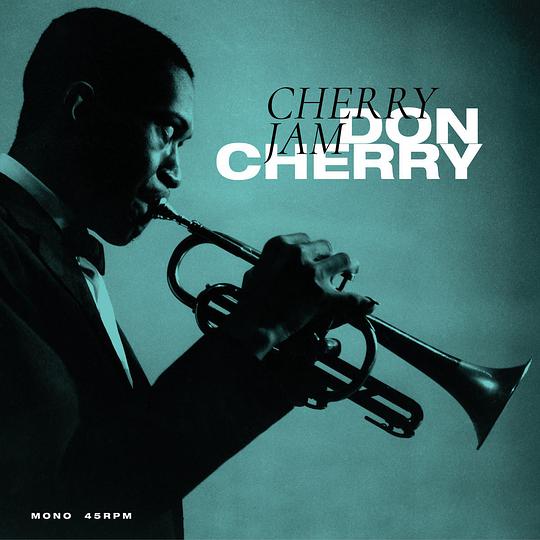
Don Cherry — 艺术家 (49)
Eternal Now [音乐] 豆瓣
Don Cherry 类型: 爵士
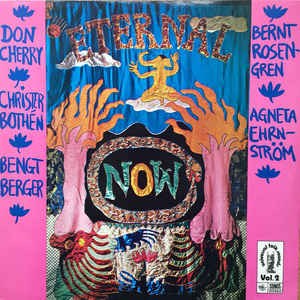
发布日期 1973年4月30日 出版发行: Sonet
Donald Eugene Cherry (November 18, 1936 – October 19, 1995) was an American jazz trumpeter. Cherry had a long association with free jazz saxophonist Ornette Coleman, which began in the late 1950s. Cherry was also a pioneer in world fusion music in the 1960s and 1970s
Köln – February 23, 1975 [音乐] 豆瓣
Terry Riley / Don Cherry 类型: 爵士
发布日期 2016年1月1日 出版发行: modern silence
Keyboards – Terry Riley
Trumpet – Don Cherry
Vibraphone – Karl Berger
Limited numbered edition of 500 on 180 gram vinyl. Made in Germany.
"A legendary recording that pairs Don Cherry's heavenly trumpet stylings, Terry Riley's psychedelic/minimalist organ work and the vibes of Karl Berger in a great live concert recorded in Köln in 1975. A great document of a key moment in the history of minimalism music." -- hype sticker copy
The Avant-Garde [音乐] 豆瓣
John Coltrane / Don Cherry 类型: 爵士
发布日期 2000年6月26日 出版发行: Rhino / Wea
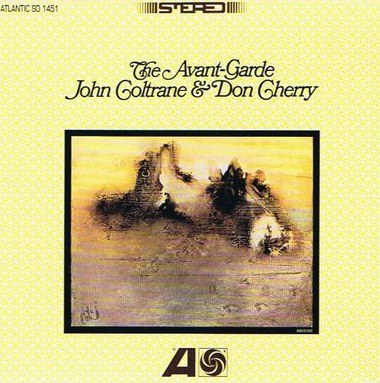
Recorded in 1960, but released in 1966, this CD features tenor saxophonist John Coltrane performing with trumpeter Don Cherry, bassist Charlie Haden, and drummer Ed Blackwell--three-fourths of Ornette Coleman's trailblazing quartet. It's a historic musical fork in the road where Trane's "sheets of sound" improvisational style meets Coleman's angular, blues-based conception that he later called harmolodics. The band members perform like blood brothers on Cherry's frenetic "Cherryco." And on Coleman's snaky midtempo number, "The Blessing," Coltrane unveiled his distinct soprano sax for the first time on wax. On "Focus on Sanity," "The Invisible," and Thelonius Monk's witty blues "Bemsha Swing," Coltrane and Cherry are joined by Percy Heath of the Modern Jazz Quartet, who replaces Haden. The importance of this recording cannot be overstated, as it illuminates that the seemingly parallel tracks on which Coltrane and Coleman created music actually crossed paths fruitfully. --Eugene Holley Jr.
Music / Sangam [音乐] 豆瓣
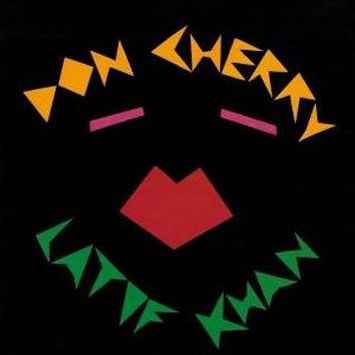
Don Cherry / Latif Khan
出版发行: Europa Records
"T'ain't what you do, it's the way that you do it" is a famous song by the trombonist Trummy Young that has since become a saying that sums up beautifully the whole philosophy of jazz. Nothing could be truer of "Music/Sangam". This recording made in June 1978 had (almost) never been released, but it has now finally been revived by Martin Messonnier, the inspired producer who had the original idea.
Few American Indians have gone down in the history of jazz: the bass player Oscar Pettiford, a Cherokee Choctaw African American; the Choctaw African American Don Cherry, who hails from Oklahoma like Pettiford; and the pro-Indian rights tenor saxophonist Jim Pepper, a Kaw-Creek from Oregon, who has made three recordings with Don Cherry since 1983.
Equipped with a solid musical appetite and a flawless imagination, the public first got to know Don - although they did not always understand him - when he played the trumpet and cornet alongside Ornette Coleman. First in Los Angeles, then in New York, he was at the heart of the revolution in improvisation based on melody rather than harmony called "free jazz", the last structural development in American jazz. Although he turned his back on this adventure that he undertook with Albert Ayler and a few other iconoclasts, he gradually became the chief initiator of unlikely musical combinations, slowly but surely working a string of "exotic" instruments and their cultures - India, Brazil, Africa, Indonesia and even China to name but a few - into his style.
The time was ripe for the emergence of world music, which was, with hindsight, a highly imaginative and attractive patchwork that often turned out to have little to it when all the folklore rubbed off. Don Cherry, on the other hand, has always showed total personal commitment to a worldwide vision of art and of the human condition. There's nothing frivolous about his work and, although one could trace his extraordinary open-mindedness back to his family origins, his talent is all his own.
He quickly displayed a keen interest in the music of north India, experimenting with it on some of his recordings from 1971 onwards. He wasn't the first though, as Joe Harriot (alto) and John Meyer (vina) had made the first attempts at an "Indo-jazz fusion" in 1965 in London. However, being an interesting pioneer isn't enough: "T'Ain't What You Do", etc.
Ustad Ahmed Latif Khan, a member of the Delhi garana (dynasty of musicians), was one of a new generation of accompanists (percussionists, sarangi players, flautists, etc.) who had built on the technical and conceptual skills of their predecessors to make their names as soloists and, soon thereafter, to take to the international stage.
Latif stood out among these musicians because of his pronounced taste for irregular, extremely syncopated rhythmic cells of great variety and originality. If I dared, I'd make the comparison with Elvin Jones. Oh go on, I'll dare!
Martin organised a European tour for Don and Latif, although they had never played together before. When he invited me to co-produce a recording of their encounter, I was worried by the possibility that what we were doing would come across as artificial, but I was just as excited about working with such exceptional musicians. However, the two musicians almost immediately treated each other as equals, displaying the same calmness, the same concentration… and a similar sense of humour.
"Sangam" means "meeting place" in Sanskrit. Don obviously knew exactly what he wanted to do, and nothing seemed to cause any problems for Latif, who immediately understood the American's intentions, his fingers fizzing across the tablas at frightening speed, his perfect pitch making him the obvious person to tune the disparate instruments in Don's armoury to those in the studio, which included a grand piano, a B3 Hammond organ and chromatic timpani.
It was Don who suggested that Latif overdub new tabla parts to enrich and add complexity to the first takes. We could reasonably have expected to spend the night doing this because this was the first time the percussionist had done this. It took him all of five minutes to get used to listening to the first tracks over the headphones before playing them without the slightest mistake.
When we got to the timpani, which he was playing for the first time ever, his keen sense of pitch and tone once again did miracles. During one take, just for the fun of it Latif started to play a fairly slow, disconnected duple time, moving on to three and then four… all the way up to 19 by which time his fingers were whizzing invisibly across the skins, leaving us in awe and him looking as if he didn't know what the fuss was all about.
All this just made Don even keener to impress his musical companion for a day… and so he did, with great ease and a complicity created by their shared love of music.
Of course, the subtleties of this album call for greater analysis, for example the meeting between the Malian doussou n'gouni and Indian tablas, the Hammond organ taking over from the tampura, 5 ¼ time as if it were the easiest thing in the world, the reinvented Indonesian gamelan… and the lyricism of the (pocket!) cornet. Just let yourself float away on the music and you'll find out it is well worth the ride. T‘ain't what you do…
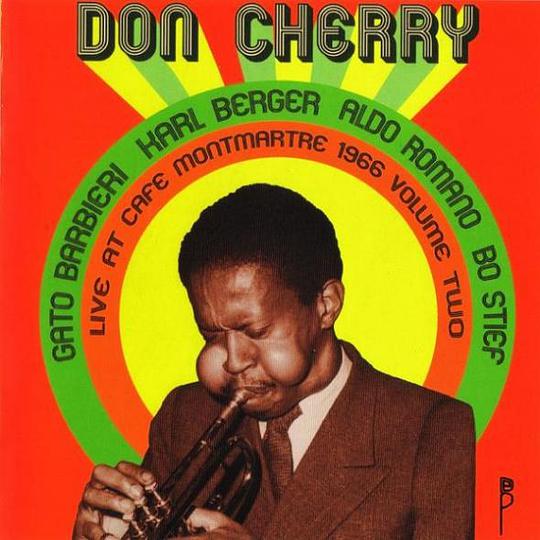
Live at Cafe Montmartre 1966 2 (Dig) [音乐] 豆瓣
发布日期 2008年4月8日 出版发行: Esp Disk Ltd.
Volume two of the Don Cherry at Montmartre collection continues with more superb music, this time from March 1966. This unique performance actually represents the third Cherry appearance at Copenhagen's Café Montmartre. He had just recorded his first album for Blue Note Records, Complete Communion, in December 1965. Another added attraction is the mini-suite in tribute to Albert Ayler, the medley of Ghosts and Holy Spirit. Gato Barbieri is on fire throughout all three performances, Karl Berger constantly has a fast-paced conversation going on his vibes, and Bo Steif keeps a pulsating rhythm on bass upon which Berger and drummer Aldo Romano float.
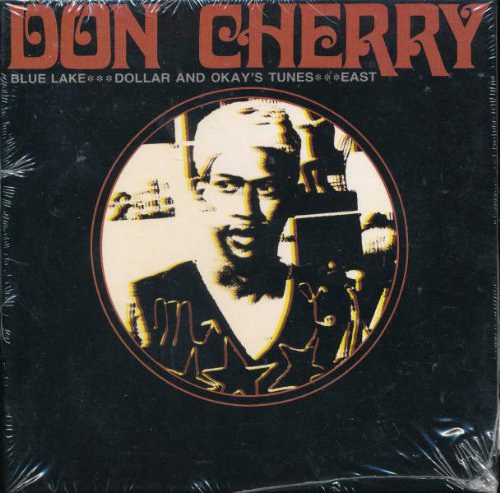
Blue Lake [音乐] 豆瓣
Don Cherry 类型: 爵士
发布日期 2002年11月26日 出版发行: Fruit Tree Italy
Donald Eugene Cherry (November 18, 1936 – October 19, 1995) was an American jazz trumpeter. Cherry had a long association with free jazz saxophonist Ornette Coleman, which began in the late 1950s. Cherry was also a pioneer in world fusion music in the 1960s and 1970s
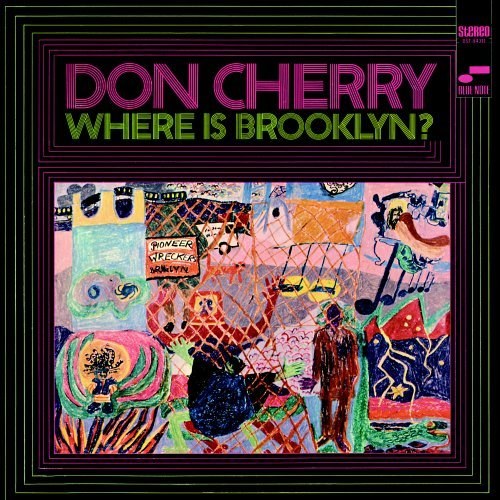
Where Is Brooklyn? [音乐] 豆瓣
Don Cherry 类型: 爵士
发布日期 2005年10月4日 出版发行: Blue Note Records
Don Cherry cor
Pharoah Sanders ts, picc
Henry Grimes b
Ed Blackwell dr
Live In Ankara [音乐] 豆瓣
Don Cherry 类型: 爵士
发布日期 1978年1月1日 出版发行: Sonet
Recorded at the US Embassy in Ankara, Turkey on November 23, 1969.
Trumpet, Zurna [Trumpet-zürna], Piano, Vocals, Flute, Engineer – Don Cherry
Arranged By, Collected By – Maffy Falay (tracks: A5, A6, B2 to B5)
Artwork [Front Cover Tapestry, Liner Poster], Liner Notes – Moki Cherry
Bass – Selçuk Sun
Drums, Percussion – Okay Temiz
Lacquer Cut By – T
Percussion, Tenor Saxophone – Irfan Sümer
Photography By – Rita Knox
Producer – Keith Knox
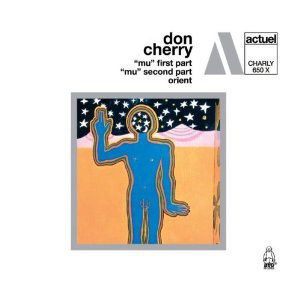
Orient/Blue Lake [音乐] 豆瓣
Don Cherry 类型: 流行
发布日期 2003年9月22日 出版发行: Charly Records
Donald Eugene Cherry (November 18, 1936 – October 19, 1995) was an American jazz trumpeter. Cherry had a long association with free jazz saxophonist Ornette Coleman, which began in the late 1950s. Cherry was also a pioneer in world fusion music in the 1960s and 1970s
Complete Communion [音乐] 豆瓣
Don Cherry 类型: 爵士
发布日期 2000年2月15日 出版发行: Blue Note Records
Recorded at the Van Gelder Studio, Englewood Cliffs, New Jersey on December 24, 1965
Cornet, Composed By – Don Cherry
Bass – Henry Grimes
Drums – Edward Blackwell*
Engineer [Recording] – Rudy Van Gelder
Liner Notes [Original] – Nat Hentoff
Mastered By [Transferred Using 24-bit Resolution] – Ron McMaster
Photography By [Cover And Liner Photographs] – Francis Wolff
Producer [Original Session Produced By] – Alfred Lion
Reissue Producer [Reissue Produced By] – Michael Cuscuna
Tenor Saxophone – Leandro "Gato" Barbieri*
Multikulti [音乐] 豆瓣
Don Cherry 类型: 爵士
发布日期 1988年1月1日 出版发行: A&M
It's obvious right from the title that Multikulti is another of Don Cherry's trademark fusions of jazz and world music, this time around with a heavy African influence. Cherry is joined on several tracks by members of multi-instrumentalist Peter Apfelbaum's Hieroglyphics Ensemble (plus the full band on "Until the Rain Comes" and "Divinity-Tree"), and their shared affinity for African music is what produces most of the album's best moments. (Listeners who prefer Cherry in a stricter jazz context are hereby warned.) The percolating, polyrhythmic grooves of "Dedication to Thomas Mapfumo," "Until the Rain Comes" (parts of it, anyway), "Divinity-Tree," and "Rhumba Multikulti" make for an infectious celebration of pan-cultural awareness that fully lives up to the promise of the album's title. Other highlights include the spare bounce of "Birdboy" and the more traditional free bop of "Pettiford Bridge." There are a few unfortunate indulgences, however. The brief instrumental sketches that punctuate the album actually detract from the flow and consistency, and if you've never been a fan of poetry recitations over jazz backing, the ones here won't change your mind. A few cuts just don't quite go anywhere, and at 12 minutes, "Until the Rain Comes" -- despite some undeniably great sections -- just starts to meander after a while. There's definitely enough good music here to make Multikulti worthwhile for fans of Cherry's world fusion explorations, but it isn't quite consistent enough to become essential. ~ Steve Huey, All Music Guide
Don Cherry Live in Stockholm [音乐] 豆瓣
Tommy Koverhult / Bernt Rosengren 类型: 爵士
发布日期 2013年10月29日 出版发行: Caprice Records
Bass – Rolf Olsson (tracks: 3), Torbjörn Hultcrantz (tracks: 1, 2)
Drums – Leif Wennerström (tracks: 1, 2), Okay Temiz (tracks: 3)
Tenor Saxophone, Flute, Percussion – Bernt Rosengren (tracks: 1, 2), Tommy Koverhult
Trumpet [Pocket], Flute, Piano, Percussion, Vocals – Don Cherry
Trumpet, Flute, Percussion – Maffy Falay
Old And New Dreams [音乐] 豆瓣
Don Cherry / Dewey Redman 类型: 爵士
发布日期 2009年12月3日 出版发行: BLACK SAINT
Donald Eugene Cherry (November 18, 1936 – October 19, 1995) was an American jazz trumpeter. Cherry had a long association with free jazz saxophonist Ornette Coleman, which began in the late 1950s. Cherry was also a pioneer in world fusion music in the 1960s and 1970s
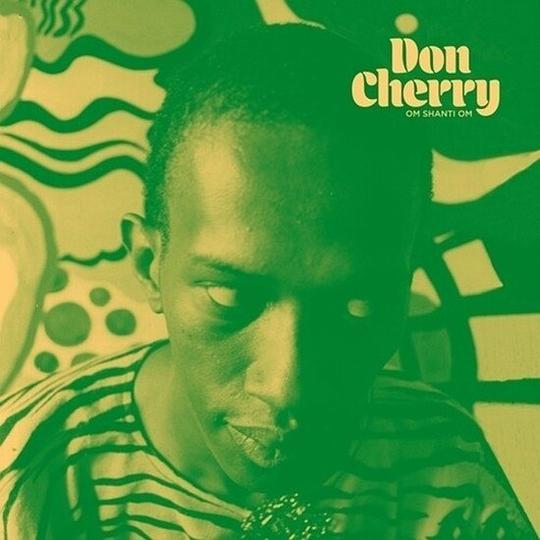
Om Shanti Om [音乐] 豆瓣
Don Cherry 类型: 爵士
发布日期 2020年1月1日 出版发行: Black Sweat Records
Guitar, Flute – Gian Piero Pramaggiore
Mastered By – Arne Ziemann
Percussion, Berimbau – Nana Vasconcelos
Photography By – Peder Björkegren
Tambura [Tanpura] – Moki Cherry
Trumpet [Pocket Trumpet], Flute, Kora – Don Cherry
Recorded at RAI studios [Rome, Italy] in 1976 for the television broadcast “Incontro con Don Cherry” presented by Franco Fayenz.
Previously unreleased. Includes a digital download code and a postcard reproduction of Moki Cherry's «Organic Music Tapestry», 1975. Photo: Prallan Allsten. © Moki Cherry
Licensed by MOKI / the Estate of Moki Cherry
Master tape licensed by RAI [Radiotelevisione Italiana]
Mastering work by Arne Ziemann at Oakfield Studio
Photos by Peder Björkegren
Thanks to Umberto Marongiu, Fabio Carboni, Naima Karlsson
Black Sweat Records
Tambourinen Session, Copenhagen, 1970 [音乐] 豆瓣
Don Cherry / Terry Riley
发布日期 2014年1月1日 出版发行: Anökumena
Bass, Cello – Poul Ehlers
Flute, Drum – Knud Bjørnø
Soprano Saxophone, Organ – Terry Riley
Soprano Saxophone, Tenor Saxophone, Tambourine, Flute – Jesper Zeuthen
Trumpet, Drum [Wood Drum] – Don Cherry
Cherry and Riley had met in Sweden and Riley invited Cherry along for this session. Apart from a short rehearsal the night before it was the first time they played together. The session took place in complete darkness, the musicians seated in a circle on the studio floor.
Bura-Bura [音乐] 豆瓣
Masahiko Togashi / Sreve Lacy 类型: 爵士
发布日期 1986年1月1日 出版发行: ALFA
Masahiko Togashi(d)
Sreve Lacy(sax)
Don Cherry(p-tp,p,vo)
Dave Holland(b)
May 14, 1986 : Live at Yubin Chokin Kaikan Hall, Tokyo
The Summer House Sessions [音乐] 豆瓣
Don Cherry 类型: 爵士
发布日期 2021年6月18日 出版发行: Blank Forms Editions
In 1968, Don Cherry had already established himself as one of the leading voices of the avant-garde. Having pioneered free jazz as a member of Ornette Coleman’s classic quartet, and with a high profile collaboration with John Coltrane under his belt, the globetrotting jazz trumpeter settled in Sweden with his partner Moki and her daughter Neneh. There, he assembled a group of Swedish musicians and led a series of weekly workshops at the ABF, or Workers’ Educational Association, from February to April of 1968, with lessons on extended forms of improvisation including breathing, drones, Turkish rhythms, overtones, silence, natural voices, and Indian scales. That summer, saxophonist and recording engineer Göran Freese—who later recorded Don’s classic Organic Music Society and Eternal Now LPs—invited Don, members of his two working bands, and a Turkish drummer to his summer house in Kummelnäs, just outside of Stockholm, for a series of rehearsals and jam sessions that put the prior months’ workshops into practice. Long relegated to the status of a mysterious footnote in Don’s sessionography, tapes from this session, as well as one professionally mixed tape intended for release, were recently found in the vaults of the Swedish Jazz Archive, and the lost Summer House Sessions are finally available over fifty years after they were recorded.
On July 20, the musicians gathered at Freese’s summer house included Bernt Rosengren (tenor saxophone, flutes, clarinet), Tommy Koverhult (tenor saxophone, flutes), Leif Wennerström (drums), and Torbjörn Hultcrantz (bass) from Don’s Swedish group; Jacques Thollot (drums) and Kent Carter (bass) from his newly formed international band New York Total Music Company; Bülent Ateş (hand drum, drums), who was visiting from Turkey; and Don (pocket trumpet, flutes, percussion) himself. Lacking a common language, the players used music as their common means of communication. In this way, these frenetic and freewheeling sessions anticipate Don’s turn to more explicitly panethnic expression, preceding his epochal Eternal Rhythm dates by four months. The octet, comprising musicians from America, France, Sweden, and Turkey, was a perfect vehicle for Don’s budding pursuit of “collage music,” a concept inspired by the shortwave radio on which Don listened to sounds from around the world. Using the collage metaphor, Don eliminated solos and the introduction of tunes, transforming a wealth of melodies, sounds, and rhythms into poetic suites of different moods and changing forms. The Summer House Sessions ensemble joyously layers manifold cultural idioms, traversing the airy peaks and serene valleys of Cherry’s earthly vision.
In the Swedish Jazz Archive quite a few other recordings from the same day were to be found. Some of the highlights are heard as bonus material on the CD edition of this album. The octet is augmented by producer and saxophone player Gunnar Lindqvist, who led the Swedish free jazz orchestra G.L. Unit on the album Orangutang, and drummer Sune Spångberg, who recorded with Albert Ayler in 1962. The bonus CD also includes a track without Cherry featuring Jacques Thollot joined by five Swedes including Lindqvist, Tommy Koverhult, Sune Spångberg, and others.
With liner notes by Magnus Nygren and album art featuring a cover painting by Moki Cherry: Untitled, ca. 1967–68.
releases June 18, 2021
Recorded July 20, 1968 at Kummelnäs, Sweden by Göran Freese
Audio restoration by Robbie Lee
Mastering for vinyl by Kassian Troyer at Dubplates & Mastering, Berlin
Cover painting by Moki Cherry: Untitled, ca. 1967-68
Design by Alec Mapes-Frances
Thanks to: Magnus Nygren, Naima Karlsson, Roger Bergner and the Centre for Swedish Folk Music and Jazz Research in Stockholm, Anna Freese & Lisa Freese, David Grubbs, Caroline de Bendern, Åsa Engel, and Bengt Rosengren