埃里克·尼尔森 — 作者 (6)
王权派的革命 [图书] 豆瓣
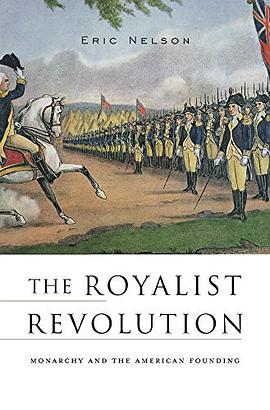
The Royalist Revolution: Monarchy and the American Founding
8.4 (5 个评分) 作者: [美] 埃里克·纳尔逊 / Eric Nelson 译者: 吴景键 publishing house: 中国政法大学出版社 2019 - 4
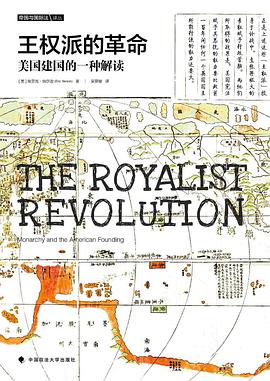
长期以来我们都认为,美国革命是对英王暴政的反抗。而在这部发覆之作中,埃里克·纳尔逊却指出,“美国国父”中的相当一部分人事实上将自己视为英国议会而非王权的反叛者,驱动他们的是这样一种观念——英国议会僭用了国王独有的专权。在1787年制定美国宪法时,正是上述这些“王权派”投身于论战中,主张将极大的专权赋予行政首脑。而他们所取得的战果是,美国宪法赋予其总统的权力要比此前一百年间任何一个英国国王所能行使的权力还要大。
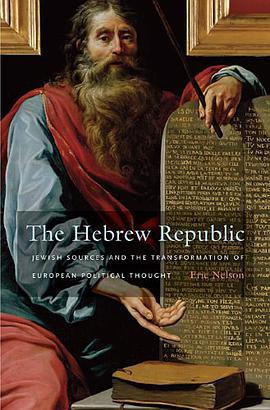
The Hebrew Republic [图书] 豆瓣
作者: Eric Nelson publishing house: Harvard University Press 2011 - 10
According to a commonplace narrative, the rise of modern political thought in the West resulted from secularization - the exclusion of religious arguments from political discourse. But in this pathbreaking work, Eric Nelson argues that this familiar story is wrong. Instead, he contends, political thought in early-modern Europe became less, not more, secular with time, and it was the Christian encounter with Hebrew sources that provoked this radical transformation. During the sixteenth and seventeenth centuries, Christian scholars began to regard the Hebrew Bible as a political constitution designed by God for the children of Israel. Newly available rabbinic materials became authoritative guides to the institutions and practices of the perfect republic. This thinking resulted in a sweeping reorientation of political commitments. In the book's central chapters, Nelson identifies three transformative claims introduced into European political theory by the Hebrew revival: the argument that republics are the only legitimate regimes; the idea that the state should coercively maintain an egalitarian distribution of property; and the belief that a godly republic would tolerate religious diversity. One major consequence of Nelson's work is that the revolutionary politics of John Milton, James Harrington, and Thomas Hobbes appear in a brand-new light. Nelson demonstrates that central features of modern political thought emerged from an attempt to emulate a constitution designed by God. This paradox, a reminder that while we may live in a secular age, we owe our politics to an age of religious fervor, in turn illuminates fault lines in contemporary political discourse.
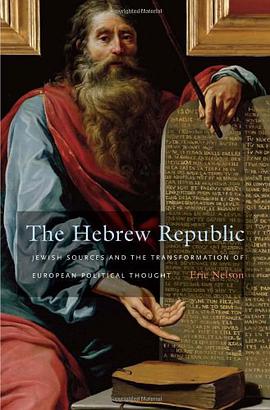
The Hebrew Republic [图书] 豆瓣
作者: Eric Nelson publishing house: Harvard University Press 2010 - 3
According to a commonplace narrative, the rise of modern political thought in the West resulted from secularization—the exclusion of religious arguments from political discourse. But in this pathbreaking work, Eric Nelson argues that this familiar story is wrong. Instead, he contends, political thought in early-modern Europe became less, not more, secular with time, and it was the Christian encounter with Hebrew sources that provoked this radical transformation.
During the sixteenth and seventeenth centuries, Christian scholars began to regard the Hebrew Bible as a political constitution designed by God for the children of Israel. Newly available rabbinic materials became authoritative guides to the institutions and practices of the perfect republic. This thinking resulted in a sweeping reorientation of political commitments. In the book’s central chapters, Nelson identifies three transformative claims introduced into European political theory by the Hebrew revival: the argument that republics are the only legitimate regimes; the idea that the state should coercively maintain an egalitarian distribution of property; and the belief that a godly republic would tolerate religious diversity. One major consequence of Nelson’s work is that the revolutionary politics of John Milton, James Harrington, and Thomas Hobbes appear in a brand-new light.
Nelson demonstrates that central features of modern political thought emerged from an attempt to emulate a constitution designed by God. This paradox, a reminder that while we may live in a secular age, we owe our politics to an age of religious fervor, in turn illuminates fault lines in contemporary political discourse.
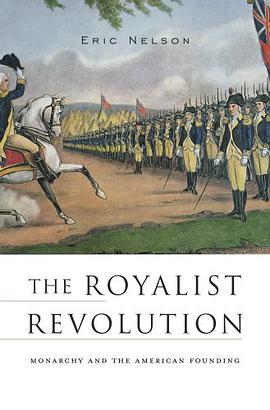
The Royalist Revolution [图书] 豆瓣
作者: Eric Nelson publishing house: Belknap Press 2014 - 10
Generations of students have been taught that the American Revolution was a revolt against royal tyranny. In this revisionist account, Eric Nelson argues that a great many of our "founding fathers" saw themselves as rebels against the British Parliament, not the Crown. The Royalist Revolution interprets the patriot campaign of the 1770s as an insurrection in favor of royal power--driven by the conviction that the Lords and Commons had usurped the just prerogatives of the monarch.
Leading patriots believed that the colonies were the king's own to govern, and they urged George III to defy Parliament and rule directly. These theorists were proposing to turn back the clock on the English constitution, rejecting the Whig settlement that had secured the supremacy of Parliament after the Glorious Revolution. Instead, they embraced the political theory of those who had waged the last great campaign against Parliament's "usurpations" the reviled Stuart monarchs of the seventeenth century.
When it came time to design the state and federal constitutions, the very same figures who had defended this expansive conception of royal authority--John Adams, Alexander Hamilton, James Wilson, and their allies--returned to the fray as champions of a single executive vested with sweeping prerogatives. As a result of their labors, the Constitution of 1787 would assign its new president far more power than any British monarch had wielded for almost a hundred years. On one side of the Atlantic, Nelson concludes, there would be kings without monarchy; on the other, monarchy without kings.
The Theology of Liberalism [图书] 豆瓣
作者: Eric Nelson publishing house: Belknap Press 2019 - 10
We think of modern liberalism as the novel product of a world reinvented on a secular basis after 1945. In The Theology of Liberalism, one of the country's most important political theorists argues that we could hardly be more wrong. Eric Nelson contends that the tradition of liberal political philosophy founded by John Rawls is, however unwittingly, the product of ancient theological debates about justice and evil. Once we understand this, he suggests, we can recognize the deep incoherence of various forms of liberal political philosophy that have emerged in Rawls's wake.
Nelson starts by noting that today's liberal political philosophers treat the unequal distribution of social and natural advantages as morally arbitrary. This arbitrariness, they claim, diminishes our moral responsibility for our actions. Some even argue that we are not morally responsible when our own choices and efforts produce inequalities. In defending such views, Nelson writes, modern liberals have implicitly taken up positions in an age-old debate about whether the nature of the created world is consistent with the justice of God. Strikingly, their commitments diverge sharply from those of their proto-liberal predecessors, who rejected the notion of moral arbitrariness in favor of what was called Pelagianism--the view that beings created and judged by a just God must be capable of freedom and merit. Nelson reconstructs this earlier "liberal" position and shows that Rawls's philosophy derived from his self-conscious repudiation of Pelagianism. In closing, Nelson sketches a way out of the argumentative maze for liberals who wish to emerge with commitments to freedom and equality intact.