Stan Brakhage — Director (148)
Prelude 5 (1995) [Movie] IMDb TMDB
Prelude 5
director: Stan Brakhage
This section is very similar to Prelude 4 except that it is composed of extremely thin-lined colors and sharply delineated shapes which are constantly interrupted by "cloud"-like forms.
Sexual Meditation: Office Suite (1972) [Movie] IMDb TMDB
Sexual Meditation: Office Suite
director: Stan Brakhage
This film evolves from several years’ observation of the sexual energy which charges the world of business and the qualities of palatial environ which this energy often creates. It is one of the most perfect films it has been given to me to make. – S.B.
Prelude 1 (1995) [Movie] IMDb TMDB
Prelude 1
director: Stan Brakhage
Turquoise and maroon-toned thin lines of paint are interspersed with variously toned circular "watermarks" of blotched paint giving-way to multi-colored brush strokes and finally fulsomely darkened and thickened brush-strokes which then thin to something akin to the beginning.
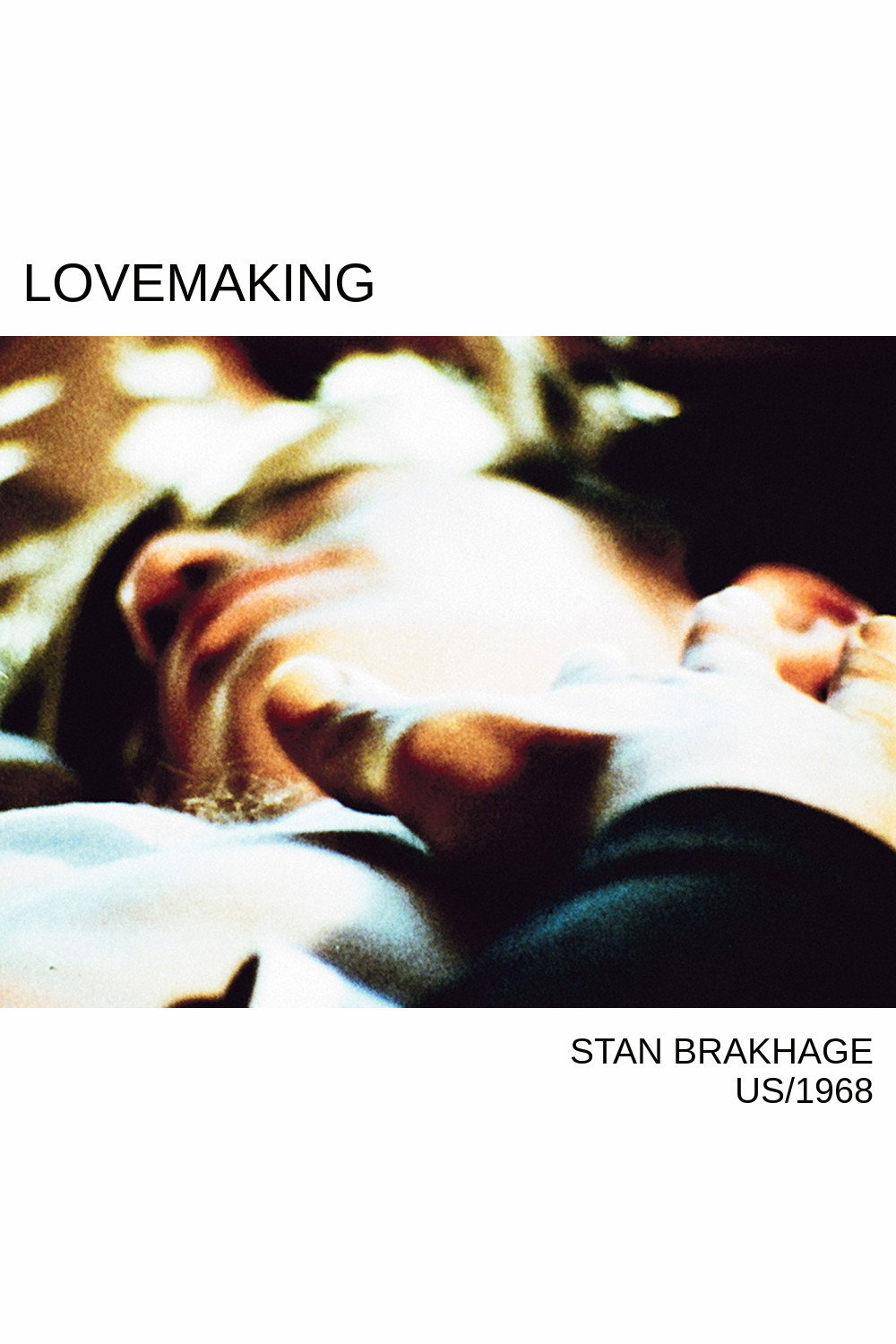
Lovemaking (1968) [Movie] WikiData IMDb TMDB
Lovemaking
director: Stan Brakhage
A film about the naturalness of sexuality. Its four sequences feature heterosexual and homosexual lovemaking, dogs copulating, and naked childen at play.
23rd Psalm Branch: Part I (1967) [Movie] IMDb TMDB
23rd Psalm Branch: Part I
director: Stan Brakhage
In this haunting but lyrical meditation on war, Brakhage intercuts 8-mm footage of Colorado with imagery from WWII newsreels. He responds to the violence and nightmare of war by painting directly on the filmstrip.
Prelude 2 (1996) [Movie] IMDb Douban
Prelude 2
Interplay of toned rectangular shapes, vertical and horizontal and diagonal lines in juxtaposition with hardened darker shapes which gradually shift tone and lighten until ending on thin blues.
Interim (1952) [Movie] IMDb Douban
Interim
director: 斯坦·布拉哈格 actor: Walter Newcomb / Janice Hubka
other title: 间歇期
A young man meets a young woman under a bridge by a railroad. They shelter from the rain and exchange a kiss. The man grows sullen and leaves. The film starts with him and ends with her. It’s a straightforward anecdote told in traditional ways, the likes of which he’d forsake forever; that is, it uses actors, a soundtrack with music and post-dubbed sound effects, a photographer who frames everything professionally and a coherent edited narrative.
The Extraordinary Child (1954) [Movie] IMDb
The Extraordinary Child
director: 斯坦·布拉哈格 actor: Robert Benson / 斯坦·布拉哈格
The Extraordinary Child applies his developing style to broad slapstick. His friends from the previous films and the director himself play out a riotous farce about an overgrown baby who steals his father’s cigars. Everyone mugs hilariously. The movie could be taken as another example of the Romantic notion of the artist as a monstrous child or misfit, or a parody of the same rather than the personal confessional statement seen so often in these film movements.
Persian Series #9 (2000) [Movie] IMDb Douban
Persian Series #9
Sharp edged "chunks" of color set in black, straight, often multicolored, lines piercing shapes, imprisoning them, until they are fragmented bits of color in black: repeat of this theme again and again until darkness prevails, but is then broken open by pure white shards and "spears" restoring the original "dance" of hard-edge shapes and lines, which then begin to whirl clockwise, interspersed with fade-outs, and then shatter into "confetti" texture, in black, burnt "sugar-shapes" and the overwhelming flare of yellow.
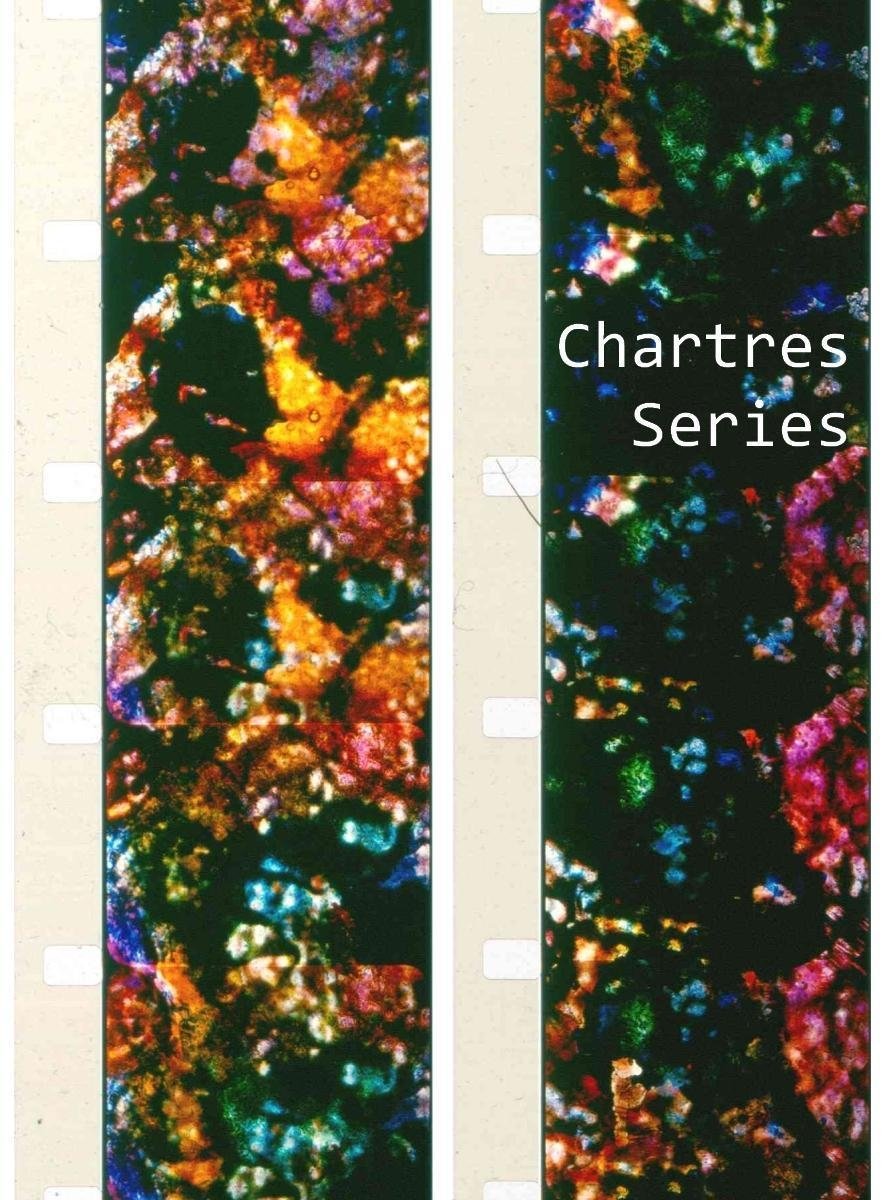
Chartres Series (1994) [Movie] WikiData IMDb TMDB
Chartres Series
director: Stan Brakhage
other title: The Chartres Series
A year and a half ago the filmmaker Nick Dorsky, hearing I was going to France, insisted I must see the Chartres Cathedral. I, who had studied picture books of its great stained-glass windows, sculpture and architecture for years, having also read Henry Adams' great book three times, willingly complied and had an experience of several hours (in the discreet company of French filmmaker Jean-Michele Bouhours) which surely transformed my aesthetics more than any other single experience. Then Marilyn's sister died; and I, who could not attend the funeral, sat down alone and began painting on film one day, this death in mind ... Chartres in mind. Eight months later the painting was completed on four little films which comprise a suite in homage to Chartres and dedicated to Wendy Jull.
Scenes from Under Childhood, Section Four (1970) [Movie] IMDb TMDB
Scenes from Under Childhood, Section Four
director: Stan Brakhage
Section IV is the longest of the four parts and the one in which the photographic material from the past plays the most prominent role. We see more of Brakhage and his wife than in previous sections, both in everyday activities and in the grip of intense emotion; a long sequence shows Jane weeping intercut with stills from her past; another shows Brakhage in anger. The children are seen in varying moods: fighting, crying, delighting in water, absorbed by the grass or their own bodies. The most banal surroundings, such as the bathroom, are totally transformed before our eyes into nearly abstract compositions of form and color, and a mundane activity like dishwashing becomes the occasion for an exploration of pure color. (Artforum)
Scenes from Under Childhood, Section Three (1969) [Movie] IMDb TMDB
Scenes from Under Childhood, Section Three
director: Stan Brakhage
Section Ill is the most abstract section of the four, and the only one which does not contain old photographic material. The means used in previous sections to achieve abstraction and transformation of the realistic image are here employed in the extreme so that texture, color, and shape predominate. We can recognize some realistic images, such as shots of the family walking in the woods, or the children reading comics and riding in a car, but the overall impression given by this section is one of abstraction. (Artforum)
Scenes from Under Childhood, Section Two (1969) [Movie] IMDb TMDB
Scenes from Under Childhood, Section Two
director: Stan Brakhage
In Section II we see a series of discrete sequences showing the children, now somewhat older, in different types of play. They manipulate tiny objects, doll furniture and miniature figures, dress up in costume, play outdoors, watch TV. We see them eating, sleeping, crying . . . A repeated image in this section, used both alone and in superimposition, is a moving, glittery golden dazzle which resembles tinselly pinpoints of light. There are golden dazzle images that look more like small bubbles than pinpoints. These glitter images, along with the occasional solid color frames, are recurrent threads connecting the separate sequences of this section. (Artforum)
23rd Psalm Branch (1967) [Movie] IMDb TMDB
23rd Psalm Branch
director: Stan Brakhage
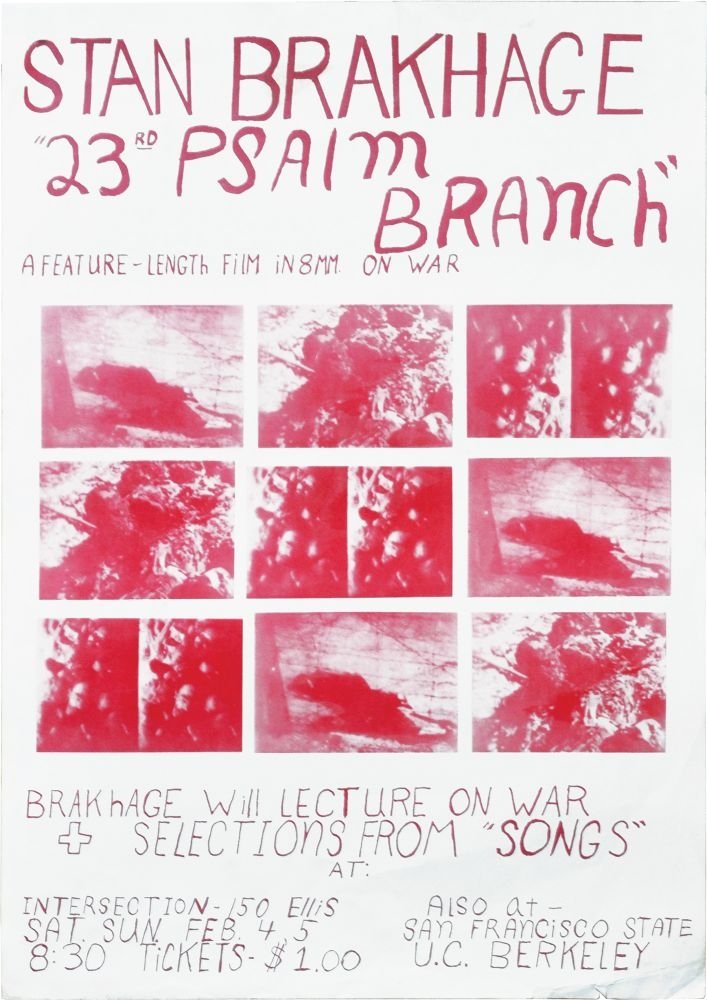
Made during the height of the Vietnam War, Stan Brakhage has said of this film that he was hoping to bring some clarity to the subject of war. Characteristically for Brakhage there is no direct reference to Vietnam.
The Machine of Eden (1970) [Movie] IMDb TMDB
The Machine of Eden
director: Stan Brakhage
"'Mis-takes' give birth to 'shape' (which, in this work, is 'matter,' subject and otherwise) amidst a weave of thought: ... the 'dream' of Eden will speak for itself." The second part of the of The Weir-Falcon Saga trilogy.
Desert (1976) [Movie] IMDb TMDB
Desert
director: Stan Brakhage
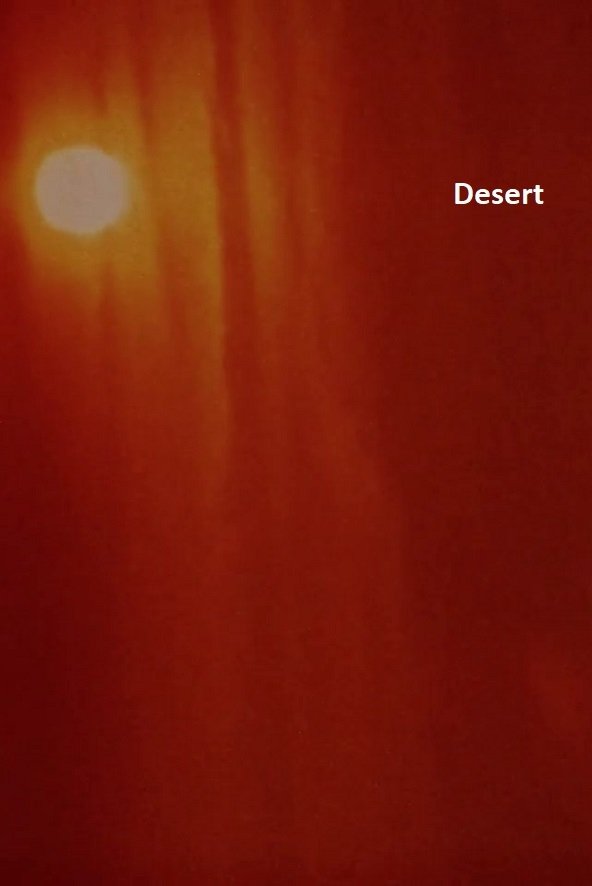
Says Fred Camper of the film: "Invited to Riverside, California, Brakhage, under the mistaken impression that it was a desert, was planning a desert movie when he arrived to discover an unattractive suburban landscape. So he decided to make, and shoot, a desert on his motel room table".
Arabic Numeral Series 12 (1981) [Movie] IMDb TMDB
Arabic Numeral Series 12
director: Stan Brakhage
This is the twelfth film in the twenty-part Arabics series. Brakhage creates blurry visual fields that are profoundly without ground, worlds of unidentifiable, ever-shifting shapes, and oceans of light and darkness.