Stan Brakhage — Director (148)
The Mammals of Victoria (1994) [Movie] IMDb TMDB
The Mammals of Victoria
director: Stan Brakhage
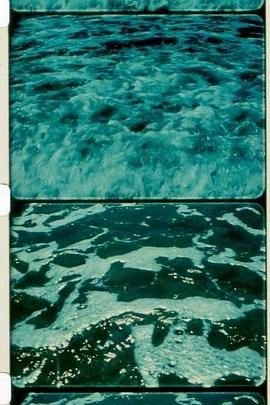
The film begins with a series of horizontally running ocean tide waves, sometimes with mountains in the background, hand-painted patterns, sometimes step-printed hand-painting, abstractions composed of distorted (jammed) TV shapes in shades of blue with occasional red, refractions of light within the camera lens, sometimes mixed with reflections of water. Increasingly closer images of water, and of light reflected off water, as well as of bursts of fire, intersperse the long shots, the seascapes and all the other interwoven imagery. Eventually a distant volleyball arcs across the sky: this is closely followed by, and interspersed with, silhouettes of a young man and woman in the sea, which leads to some extremely out-of-focus images from a front car window, an opening between soft-focus trees, a clearing. Carved wooden teeth suddenly sweep across the frame. Then the film ends on some soft-focus horizon lines, foregrounded by ocean.
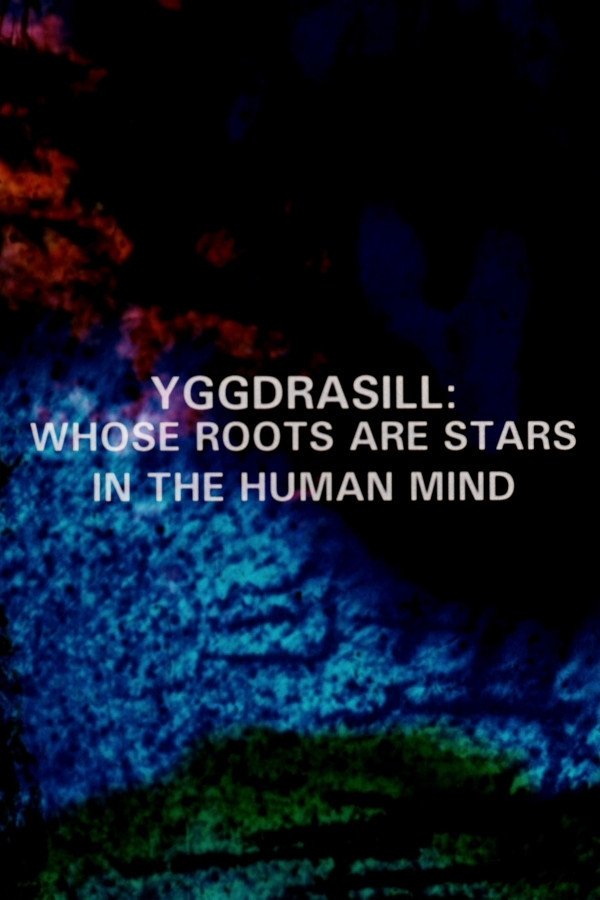
Yggdrasill: Whose Roots Are Stars in the Human Mind (1997) [Movie] IMDb TMDB
Yggdrasill: Whose Roots Are Stars in the Human Mind
director: Stan Brakhage
This film, a combination of hand-painting and photography, is a fulsome exposition of the themes of DOG STAR MAN. In that early epic I had envisioned The World Tree as dead, fit only for firewood; and at end of DOG STAR MAN I had chopped it up amidst a flurry of stars (finally Cassiopia's Chair): now, these many years later, I am compelled to comprehend YGGDRASILL as rooted in the complex electrical synapses of thought process, to sense it being alive today as when nordic legendry hatched it. I share this compulsion with Andrei Tarkovsky, whose last film The Sacrifice struggles to revive The World Tree narratively, whereas I simply present (one might almost say "document") a moving graph approximate to my thought process, whereby The Tree roots itself as the stars we, reflectively, are.
"..." Reel 5 (1998) [Movie] IMDb TMDB
"..." Reel 5
director: Stan Brakhage
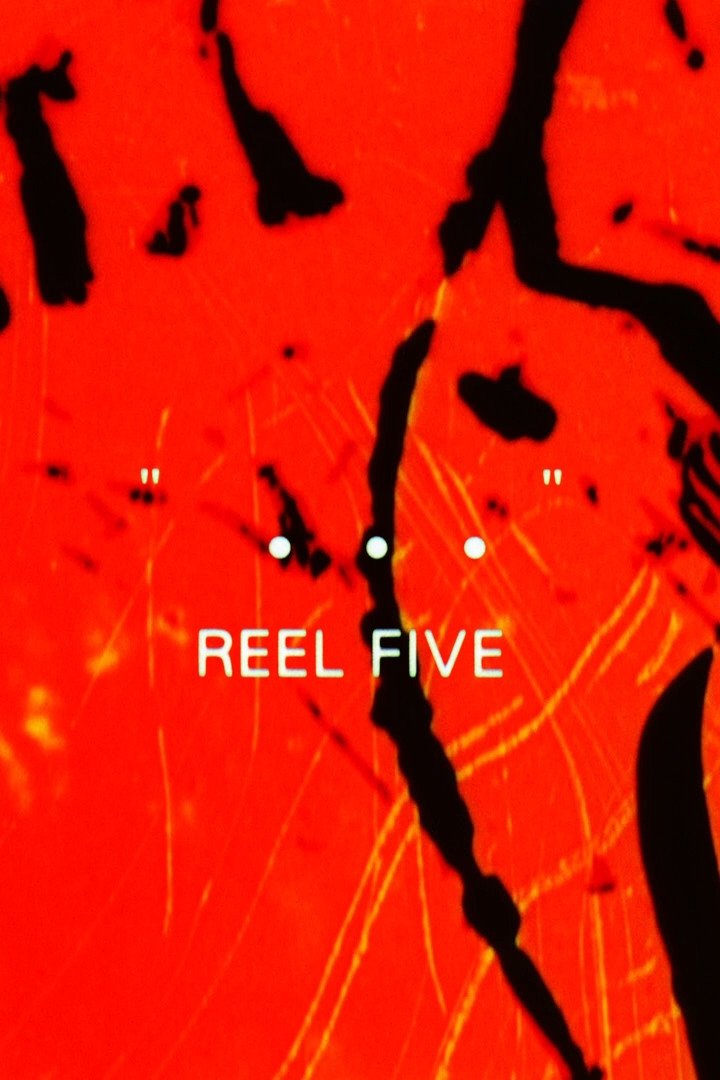
Reel #5 of (...) is composed of scratch-imagery edited to music by James Tenney. The music starts accompanied only by black leader: then there is a sudden flare of pure white which begins to flicker with negative-colored ephemeral shapes, until finally the music and a fulsome mass of scratched images are accompanying each other. At times a distinctly different quality of colored image appears and continues for awhile (non-orange negative photography of painted film as well as picture images).
Reflections on Black (1955) [Movie] Douban
Reflections on Black
director: Stan Brakhage
other title: 黑色的省思
史坦•布莱凯吉的《黑色的省思》(Reflections on Black,1995)透过一名神秘盲人探访一间公寓,呈现出对于男性-女性关系一系列不同的变化。
The Process (1972) [Movie] IMDb TMDB Douban
The Process
This film by Stan Brakhage investigates the process of memory and thought by melting a series of images and a field of color. The positive-negative flickering graphs a sort of shutter-window all over the matter of the vision. Jittery flocks of space are interweaving as pieces of language in a scant illumination, whereas the process of thought is sheared in fuzzy transience.
First Hymn to the Night - Novalis (1994) [Movie] IMDb TMDB Douban
From: First Hymn to the Night – Novalis
other title: From: First Hymn to the Night – Novalis
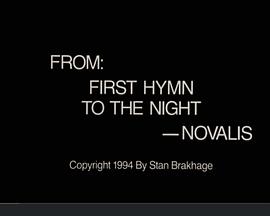
“This is a hand-painted film whose emotionally referential shapes and colors are interwoven with words (in English) from the first Hymn to the Night by the late 18th century mystic poet Friedrich Philipp von Hardenberg, whose pen name was Novalis. The pieces of text which I've used are as follows: ‘the universally gladdening light … As inmost soul … it is breathed by stars … by stone … by suckling plant … multiform beast … and by (you). I turn aside to Holy Night … I seek to blend with ashes. Night opens in us … infinite eyes … blessed love.’” -SB
Visions in Meditation #3: Plato's Cave (1990) [Movie] IMDb TMDB Douban
Visions in Meditation #3: Plato's Cave
other title: 冥想中的幻象 #3:柏拉图的洞穴
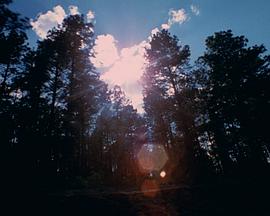
Brakhage begins here with Carlsbad Caverns as a stand-in for Plato's Cave and then responds to the philosopher's notion of inaccessible ideal forms by seeking out imagery that evokes worlds we cannot see.
Visions in Meditation #4: D.H. Lawrence (1990) [Movie] IMDb TMDB Douban
Visions in Meditation #4: D.H. Lawrence
other title: 冥想中的幻象 #4:D·H·劳伦斯
Photographing near Taos, New Mexico, where D.H. Lawrence lived, and in the room in which his ashes may be entombed, Brakhage also cites a statement of the writer's in connection with the film: "There must be mutation swifter than iridescence, haste, not rest, come-and-go, not fixity, inconclusiveness, immediacy, the quality of life itself, without denouement or close."
A Child's Garden and the Serious Sea (1991) [Movie] TMDB Douban
A Child’s Garden and the Serious Sea
director: Stan Brakhage
other title: 어린이의 정원과 위험한 바다 / A Child’s Garden and the Serious Sea
"In his description for A CHILD'S GARDEN, Brakhage quotes from poets Ronald Johnson and Charles Olson (and cites Johnson's poem "Beam 29" as inspiration). But the film also vaguely calls to mind William Blake—more perhaps for his art than his poetry: there is both a sense of darkness and of mystical transport in Brakhage's images. The first film in the loose "Vancouver Island" quartet, Brakhage films locations around the British Columbia locale where his second wife, Marilyn, grew up. He films land, sea, and sky and intercuts frequently between them. Shots are often out-of-focus, to accentuate color and light; they are hand-held, upside down, and fleeting. All of this is no surprise for those who know Brakhage's work: anything and everything is valid, as long as it works." - Cine-File.info
Burial Path (1978) [Movie] IMDb TMDB Douban
Burial Path
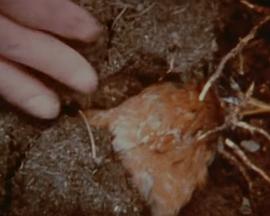
The film begins with the image of a dead bird. The mind moves to forget, as well as to remember: this film graphs the process of forgetfulness against all oddities of remembered bird-shape.