Kant [Book] Douban
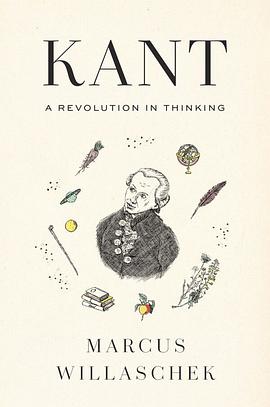
A foremost Kant expert takes us on a lively tour through the revolutionary ideas of the founder of modern philosophy.
Immanuel Kant is undoubtedly the most important philosopher of the modern era. His Critique of Pure Reason, “categorical imperative,” and conception of perpetual peace in the global order decisively influenced both intellectual history and twentieth-century politics, shaping everything from the German constitution to the United Nations charter.
Renowned philosopher Marcus Willaschek explains why, three centuries after Kant’s birth, his reflections on democracy, beauty, nature, morality, and the limits of human knowledge remain so profoundly relevant. Weaving biographical and historical context together with exposition of key ideas, Willaschek emphasizes three central features of Kant’s theory and method. First, Kant combines seemingly incompatible positions to show how their insights can be reconciled. Second, he demonstrates that it is not only human thinking that must adjust to the realities of the world; the world must also be fitted to the structures of our thinking. Finally, he overcomes the traditional opposition between thought and action by putting theory at the service of practice.
In Kant: A Revolution in Thinking, even readers having no prior acquaintance with Kant’s ideas or with philosophy generally will find an adroit introduction to the Prussian polymath’s oeuvre, beginning with his political arguments, expanding to his moral theory, and finally moving to his more abstract considerations of natural science, epistemology, and metaphysics. Along the way, Kant himself emerges from beneath his famed works, revealing a magnetic personality, a clever ironist, and a man deeply engaged with his contemporary world.
Immanuel Kant is undoubtedly the most important philosopher of the modern era. His Critique of Pure Reason, “categorical imperative,” and conception of perpetual peace in the global order decisively influenced both intellectual history and twentieth-century politics, shaping everything from the German constitution to the United Nations charter.
Renowned philosopher Marcus Willaschek explains why, three centuries after Kant’s birth, his reflections on democracy, beauty, nature, morality, and the limits of human knowledge remain so profoundly relevant. Weaving biographical and historical context together with exposition of key ideas, Willaschek emphasizes three central features of Kant’s theory and method. First, Kant combines seemingly incompatible positions to show how their insights can be reconciled. Second, he demonstrates that it is not only human thinking that must adjust to the realities of the world; the world must also be fitted to the structures of our thinking. Finally, he overcomes the traditional opposition between thought and action by putting theory at the service of practice.
In Kant: A Revolution in Thinking, even readers having no prior acquaintance with Kant’s ideas or with philosophy generally will find an adroit introduction to the Prussian polymath’s oeuvre, beginning with his political arguments, expanding to his moral theory, and finally moving to his more abstract considerations of natural science, epistemology, and metaphysics. Along the way, Kant himself emerges from beneath his famed works, revealing a magnetic personality, a clever ironist, and a man deeply engaged with his contemporary world.