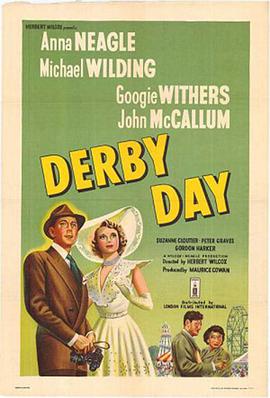
Herbert Wilcox — Director (13)
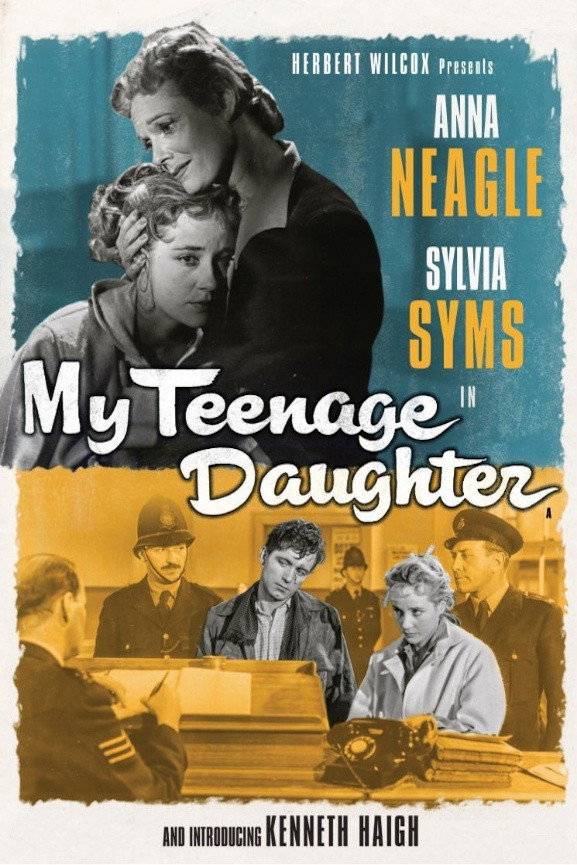
My Teenage Daughter (1956) [Movie] WikiData IMDb TMDB
My Teenage Daughter
director: Herbert Wilcox actor: Anna Neagle / Sylvia Syms
other title: 飛女正傳 / Nuestras hijas...
Magazine editor Valerie Carr lives in London with her two daughters Jan, aged seventeen, and Poppet, thirteen. When Jan is invited to a party at the Savoy, she meets dashing young Tony Ward Black mad about jive, owner of a Bentley, and supposedly running through a legacy. Attracted to the daring young man, she rejects Mark, a young farmer who is in love with her. But it soon becomes apparent to everyone but Jan that neither Tony's fortune nor even his name may be his own, and her association with him will lead her into delinquency and danger.
Irene (1940) [Movie] WikiData IMDb TMDB
Irene
director: Herbert Wilcox actor: Anna Neagle / Ray Milland
other title: 艾琳 / Irène
Upholsterer's assistant Irene O'Dare meets wealthy Don Marshall while she is measuring chairs for Mrs. Herman Vincent at her Long Island estate. Charmed by her, Don anonymously purchases Madame Lucy's, an exclusive Manhattan boutique, and instructs newly hired manager Mr. Smith to offer Irene a job as a model. She soon catches the eye of socialite Bob Vincent, whose mother is hosting a ball at the family mansion. To promote Madame Lucy's dress line, Mr. Smith arranges for his models to be invited to the ball.
Yellow Canary (1943) [Movie] WikiData IMDb TMDB
Yellow Canary
director: Herbert Wilcox actor: Anna Neagle / Richard Greene
other title: El canario amarillo
In 1940 Sally Maitland is forced to leave England, ostracised as a Nazi sympathiser by everyone including her well-to-do family. On the ship to Halifax, Canada, she is courted by Polish aristocrat Jan Orloch and by awkward British navel intelligence officer Jimmy Garrick. She shows herself somewhat more amenable to Orloch's advances, and agrees to meet his mother in Halifax. Once there however, it becomes clear no-one is really who they say they are.
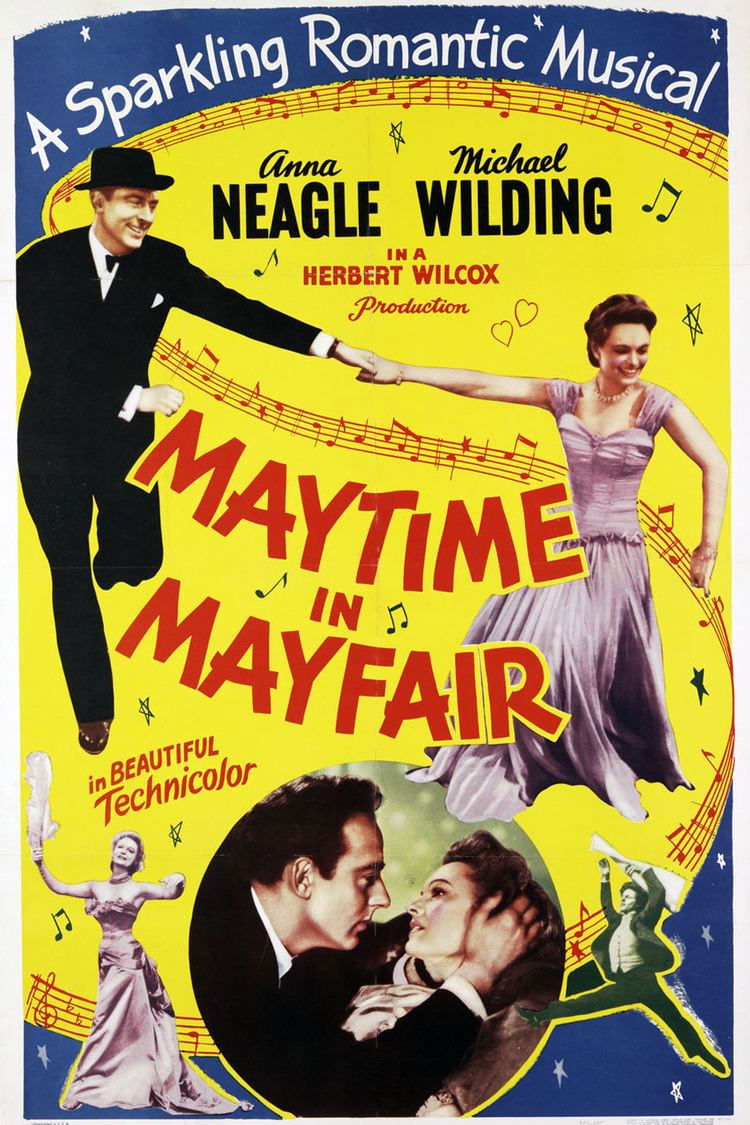
Maytime in Mayfair (1949) [Movie] WikiData IMDb TMDB Douban
Maytime in Mayfair
director: Herbert Wilcox actor: Anna Neagle / Michael Wilding
other title: 五月情歌 / 五月千金
Penniless man-about-town Michael Gore-Brown is delighted to hear he has been left a high-class Mayfair fashion salon. His intention is to sell it as quickly as possible, but on meeting Ellen, chief designer and manager, he quickly changes his mind and turns his attention to courting her.
The Lady Is a Square (1959) [Movie] WikiData IMDb TMDB Douban
The Lady Is a Square
director: Herbert Wilcox actor: Anna Neagle / Frankie Vaughan
other title: 古板女士 / The Lady is a Square
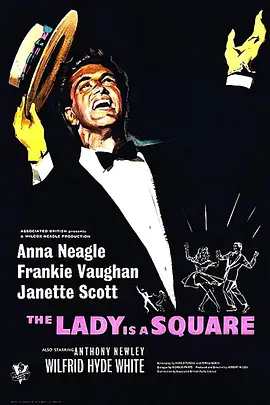
Neagle stars as Frances Baring, a socialite widow attempting to keep her late husband's symphony orchestra going. Reluctantly she enlists the help of a young pop singer (Frankie Vaughan) who has fallen for Baring's daughter Joanna, played by a young Janette Scott.
Sixty Glorious Years (1938) [Movie] IMDb Douban
Sixty Glorious Years
director: Herbert Wilcox actor: Anna Neagle / Anton Walbrook
other title: 荣耀六十年
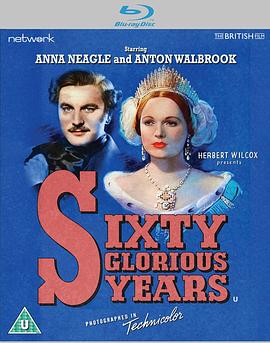
Sixty Glorious Years is an exercise in the creation of iconography, both for Victoria and its star, Anna Neagle (who subsequently became known as 'Regal Neagle'). Just as Elizabeth I commissioned artists to create flattering iconic images for public consumption, so this film performs a similar function, for Neagle is more beautiful than the real life Victoria. Controversial events (such as the 'Irish problem') are omitted and unpleasant aspects of Victoria's character (her petulance, arrogance, favouritism and 'right to privilege') are glossed over as endearing little 'whims'. Albert acts as a moderating influence when she goes too far.
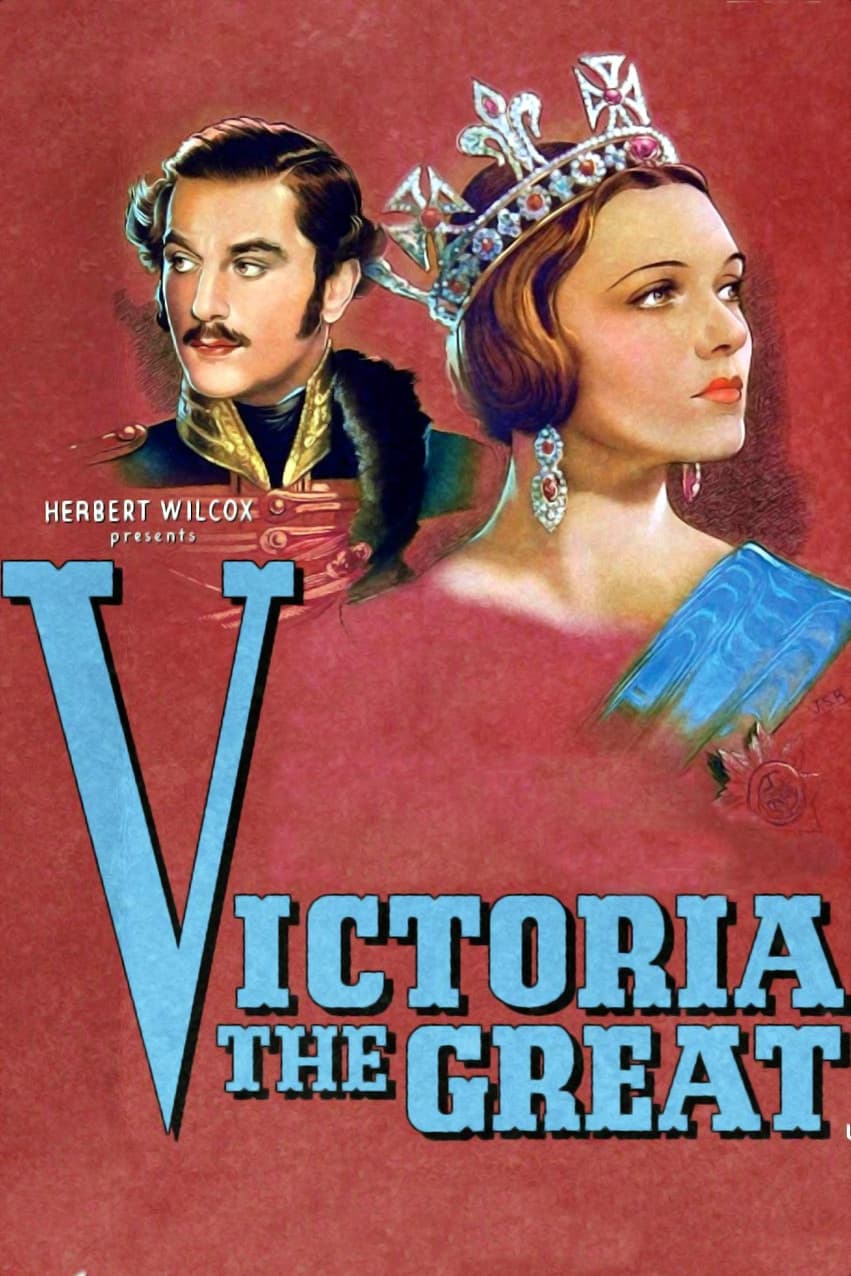
The film followed a year after the highly successful Victoria the Great (d. Herbert Wilcox, 1937). Again the screenplay is by Miles Malleson and Robert Vansittart, and many of the supporting cast (the cream of acting talent of period) repeat their roles, this time for the colour cameras. This was the first full length Technicolor film of cinematographer Freddie Young, who captures the spectacle of royal weddings, grand balls and opulent interiors, with scenes actually filmed at royal palaces. Vivid battle scenes, set in Alexander Korda's empire territory (Sevastopol and the Sudan), rival those in The Four Feathers (d. Zoltan Korda 1939).
The title music sets the tone: a regal choir sings over a shot of the crown. Elgar's 1901 'Pomp and Circumstance' march is heard during the diamond jubilee celebrations and, as Victoria's coffin lies in state, the film concludes with Anthony Collins' stately music accompanied by the text of Rudyard Kipling's 'Lest we forget'. Combined with the emotional appeal of scenes of Victoria connecting with her 'ordinary folk', this is stirring stuff.
The film connects with contemporary events of 1938. The release of two celebratory royal films was intended to boost public affection for the monarchy in the wake of Edward VIII's abdication. Anglo-German relations were another touchy subject. With another war on the horizon, influential voices wanted appeasement, and the film could be seen to fit that agenda. Victoria herself was of mainly German descent, nicknamed 'the grandmother of Europe', while Albert is a 'good German', charmingly played by Anton Walbrook as a cultured, decent man.
Sixty Glorious Years now seems unduly formal and reverential. Had movies existed during Victoria's reign (they only emerged at the end) this might have been the kind of film produced. Unlike Mrs Brown (d. John Madden, 1997), it is all so very 'Victorian'.
Roger Philip Mellor
春日紫丁香 (1954) [Movie] Douban
Let's Make Up
director: Herbert Wilcox actor: Errol Flynn / Anna Neagle
other title: Let's Make Up
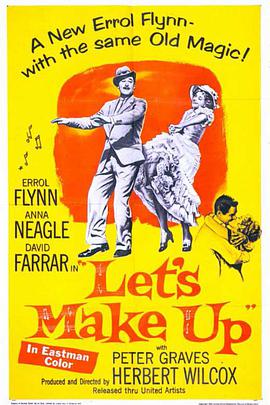
A young entertainer, Carole Beaumont, is wooed by actor-producer Charles King but, uncertain of her feelings, she resists his attentions. During an air raid, a bomb explosion rocks the café and Carole is knocked unconscious. In her confused state, fantasies flash through her mind, and she seems to become Nell Gwyn of Old Drury, with Charles King looking very much like King Charles. Recovering, she is advised by her doctor to take a rest in the country and, there,another beau, Albert Gutman, prompts his grandmother, Lady Drayton, to invite Carole to their family home at Windsor. She accepts and telephones Charles but hangs up when his phone is answered by a female voice. Looking out on Windsor Castle, she sees herself as the young Queen Victoria and Albert as Prince Albert. Influenced by her day-dream, she accepts Albert's proposal. Charles arrives to tell her that all arrangements are made for her to leave with him and the company for Burma, but she refuses saying she will never marry an actor. Barmaid Kate tells Charles why Carole feels the way she does about actors: Carole's mother, Lillian Grey, was with a touring show in 1913 when the handsome star, John Beaumont raised her from the chorus to be his partner in his first West End show. They were a success, fell in love and were married. But the war soon took Beau off to Flanders and Lillian was left to become a great star on her own. Carole was born in wartime, but saw little of her busy mother.