Harun Farocki — Director (46)

Movie

Serious Games 3: Immersion (2009)
Ernste Spiele III: Immersion Douban
other title: 严肃游戏3:沉浸 / Ernste Spiele III: Immersion …
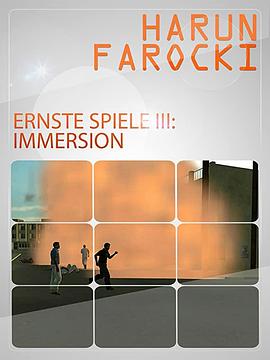
“Immersion” shows a variation of the same training program. In this case it is recreating the traumatic experiences of soldiers during the war for therapeutic purposes. The soldiers are being trained and rehabilitated through virtual reality recalling their memories. Immersion was flmed in Fort Louis, near Seattle, during a treatment of PTSD.

Movie

Serious Games 4: A Sun with No Shadow (2010)
Ernste Spiele IV: Eine Sonne ohne Schatten Douban
other title: 严肃游戏4:无影日光 / Ernste Spiele IV: Eine Sonne ohne Schatten
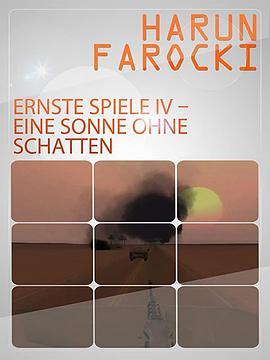
In this fourth of a four part series, media artist Harun Farocki explores the interplay between modern warfare and electronic media using computer simulation and documentary footage. Originally presented as a simultaneous four-screen gallery video installation, the separate films are available exclusively on realeyz.tv. Director's Notes to part IV: “This chapter considers the high degree of similarity between the images used in briefing for war and those used in debriefing once it’s over. There is one difference, however: the program for recalling traumatic experiences is slightly cheaper. Here, nothing and nobody casts a shadow.” (Harun Farocki)

Movie

Two Paths (1966)
Zwei Wege Douban
other title: 两条道路 / Zwei Wege
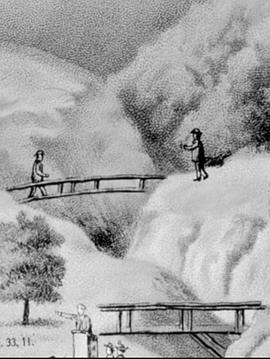
Farocki shows us an image of an oil painting, a religious allegory showing the 'right' and the 'wrong' path for a Christian. The one path leads to heaven, the other to hell. This short piece for the television station Sender Freies Berlin (SFB) is highly relevant to Farocki's later work.

Movie

Serious Games 1: Watson Is Down (2010)
Serious Games 1: Watson Is Down Douban
other title: 严肃游戏1:沃森倒下了
In the autumn of 2009 we filmed a drill at the Marine Corps Base 29 Palms in California. Four Marines sitting in a class represented the crew of a tank. They had laptops in front of them on which they steered their own vehicle and watched others in the unit being driven through a Computer-AnimationLandscape. The simulated Afghan is based on geographical data out of Afghanistan. A street in the computer landscape runs exactly as it would in the real Afghanistan; the same holds for every tree, the vegetation on the ground or the mountain ranges. The instructor places explosive devices and sets insurgents out in the area. A sniper shot the tank gunner, which we documented with the camera. When the tank drives over the fallow it kicks up a dust tail. The more vegetation there is, the less dust. On the asphalt street, no dust. Even with all this attention to detail, death in the computer game is still something different than the real one.

Movie

The Image (1983)
Ein Bild Douban
other title: 一张照片 / Ein Bild …
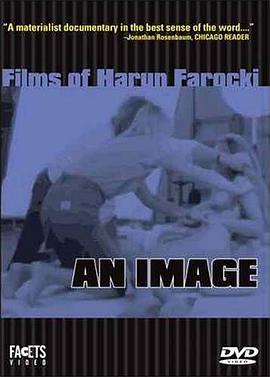
"Four days spent in a studio working on a centerfold photo for Playboy magazine provided the subject matter for my film. The magazine itself deals with culture, cars, a certain lifestyle. Maybe all those trappings are only there to cover up the naked woman. Maybe it's like with a paper-doll. The naked woman in the middle is a sun around which a system revolves: of culture, of business, of living! (It's impossible to either look or film into the sun.) One can well imagine that the people creating such a picture, the gravity of which is supposed to hold all that, perform their task with as much care, seriousness, and responsibility as if they were splitting uranium. This film, An Image, is part of a series I've been working on since 1979. The television station that commissioned it assumes in these cases that I'm making a film that is critical of its subject matter, and the owner or manager of the thing that's being filmed assumes that my film is an advertisement for them. I try to do neither. Nor do I want to do something in between, but beyond both." --Harun Farocki, Zelluloid, no. 27, Fall 1988

Movie

Film-Tip: Le thé au harem d'Archimède (1985)
Film-Tip: Le thé au harem d’Archimède IMDb TMDB Douban
other title: Filmtip: Tee im Harem des Archimedes von Harun Farocki / Film-Tip: Le thé au harem d’Archimède
This is a short 7-minute movie review by Harun Farocki made in 1985 for the German TV-series »Filmtip«. Over 300 short movie reviews have been produced for the series since 1978. You'll find more about »Filmtip«, the series history and methods here. Farocki's short review is about Mehdi Charef's »Le thé au harem d'Archimède«. The movie was shown in German cinemas in 1985/86. The images of Farocki's »Filmtip« are from a German-dubbed version of Charef's movie; no additional material has been produced or used. The only addition is the voice-over text, written by Farocki. The text (which is spoken by a professional voice-over-guy) is very simple and concise. It focusses on two longer descriptive/realistic sequences from Charef's movie and their impact on its narration and form. The text emphasizes the way characters are introduced and shown by quasi-documentary means describing their suroundings and according actions.

Movie

Indoctrination (1987)
Die Schulung Douban
other title: 教学 / Die Schulung
在這部特殊的紀錄片中,導演紀錄下了一場為期五天、目的旨在教導管理階層行政人員如何運用基本的辯證法和花言巧語來更好展現自我的研討會。整場研討會上,一群年輕的從業人士在學習語言技巧,以便於更好的推銷自己;之後他們接受身體語言、手勢和面部表情的培訓。在這部沒有任何標題、麥克風或其它紀錄片慣例的影片中,導演成功地揭露出大企業利用心理學花言巧語來推銷觀念和產品。其結果是透過此窗口讓觀眾窺見企業行為、市場操作以及現代資本主義這個秘密世界。

Movie

Nothing Ventured (2004)
Nicht ohne Risiko Douban
other title: 并非没有风险 / Nicht ohne Risiko
The film follows the negotiations between a mid-sized company and a venture capital firm. The company is looking for capital to start production on its invention. Farocki limits himself to observing events without comment. He has edited together documentary footage of the two meetings that resulted in a contract. It's a microscopic look at one cell of today's economy; an ethnographic portrait of a commonplace business dealing.

Movie

手的表达 (1997)
Der Ausdruck der Hände Douban
other title: Der Ausdruck der Hände
Historically, the cinema close-up was initially employed to convey emotions through facial expressions. But soon filmmakers also began focusing their attention on hands. Using film extracts, Farocki explores this visual language, it's symbolism, Freudian slips, automatisms and its music. Often, hands betray an emotion which the face tries to dissimulate. They can also function as a conduit (exchanging money) or witness to a form of competence (work).

Movie

War at a Distance (2003)
Erkennen und Verfolgen Douban
other title: 识别和追踪 / Erkennen und Verfolgen
In 1991, when images of the Gulf War flooded the international media, it was virtually impossible to distinguish between real pictures and those generated on computer. This loss of bearings was to change forever our way of deciphering what we see. The image is no longer used only as testimony, but also as an indispensable link in a process of production and destruction. This is the central premise of Erkennen und Verfolgen, which continues the deconstruction of claims to visual objectivity In War at a Distance, Farocki returns to themes explored in works such as Images of the World and the Inscription of War, bringing them technologically up to date. The automation of factory production is paralleled with the automation of destruction in warfare, and a new world of machine images is revealed – images not intended for human eyes, but for the visual tracking systems of the digital age. The video traces the history of missile guidance systems from WWII through the present day using visual artifacts of machine guidance systems, as well as training films, missile footage from the Gulf War, and flight and battle simulations. A coolly terrifying glimpse of the future.

Movie

两次战争之间 (1978)
Zwischen zwei Kriegen Douban
other title: Zwischen zwei Kriegen / Between Two Wars
In Between two wars, Harun Farocki attempts to interlock the logic of war with the logic of production as determining dynamics of the years 1918-1933, the period between the two "world wars". By way of didactical acting, voice-over reflections and by applying a associating and analytical montage the film develops its thesis, that in the early 1920's the "necessities" of capitalistic production have become more and more ignorant of the actual needs of the people. Rationalization and the forming of trusts finally lead to a point where the capitalist production machine directly transformed into a warfare and destruction machine. Farocki's film is relevant for the discussion of "The Lost Moment", both in terms of its narrative and in formal and aesthetic terms. Farocki tries to reconstruct the enabling conditions of a historical period, which was to manifest itself as an ultimate catastrophe and which was often not understood or straightforwardly mystified. While the political and economical decision makers are trying to perfect their use of the capitalist machinery, the workers are confronted with the question how come they always and at any rate serve this machine as canon fodder. The narrator Farocki explains in the film that he had intended to tell the story at the original historic sites, but that these were mostly destroyed and had vanished. The war, which was produced there, had swept them away. Instead the artist Farocki, who in one scene we see at his money job as a picture editor for a print publication, abstracts from the call for "authenticity" and thus clears the table for an argumentative editing of the images. One could say that the film re-interprets the distance to the lost historical moment and turns it into a freedom of thought. Instead of searching the archives, Farocki searches the historical consciousness. This way, the film – even in its primness - also bears testimony of its time and the way in which certain films were made in Germany then. In Between two wars, Harun Farocki attempts to interlock the logic of war with the logic of production as determining dynamics of the years 1918-1933, the period between the two "world wars". By way of didactical acting, voice-over reflections and by applying a associating and analytical montage the film develops its thesis, that in the early 1920's the "necessities" of capitalistic production have become more and more ignorant of the actual needs of the people. Rationalization and the forming of trusts finally lead to a point where the capitalist production machine directly transformed into a warfare and destruction machine. Farocki's film is relevant for the discussion of "The Lost Moment", both in terms of its narrative and in formal and aesthetic terms. Farocki tries to reconstruct the enabling conditions of a historical period, which was to manifest itself as an ultimate catastrophe and which was often not understood or straightforwardly mystified. While the political and economical decision makers are trying to perfect their use of the capitalist machinery, the workers are confronted with the question how come they always and at any rate serve this machine as canon fodder. The narrator Farocki explains in the film that he had intended to tell the story at the original historic sites, but that these were mostly destroyed and had vanished. The war, which was produced there, had swept them away. Instead the artist Farocki, who in one scene we see at his money job as a picture editor for a print publication, abstracts from the call for "authenticity" and thus clears the table for an argumentative editing of the images. One could say that the film re-interprets the distance to the lost historical moment and turns it into a freedom of thought. Instead of searching the archives, Farocki searches the historical consciousness. This way, the film – even in its primness - also bears testimony of its time and the way in which certain films were made in Germany then. The meeting point for the film screenings is always at 9 pm in the exhibition space on the 2nd floor of GfKFB, Kunstfabrik, Am Flutgraben 3. The film screening will then probably take place in a former sales and presentation building in the immediate vicinity. The incomplete emptiness of this room conveys an impression of the parasite use which a globalized economy makes of space and how the appearance of urban space becomes subject to the strategic decisions of a company. Florian Wüst, as a film curator, is interested in political filmmaking in Germany and specifically in the ways in which films deal with the peculiar identity of a "Post-War" society. I see interesting parallels to Farocki's work in the 70's (of which Between two wars is a good example) in Florian Wüst's own artistic production – also in "Belated Advocacy", which deals with the ideology of production in post-war "Wirtschaftswunder" Germany. Especially the use of historical documents, the interest for the linguistic forms of quotation and statement, the use of abstraction and re-enactment and also the self-confident positioning in the distance to the historic moment suggest interesting connections between both oeuvres. Florian Wüst, as a film curator, is interested in political filmmaking in Germany and specifically in the ways in which films deal with the peculiar identity of a "Post-War" society. I see interesting parallels to Farocki's work in the 70's (of which Between two wars is a good example) in Florian Wüst's own artistic production – also in "Belated Advocacy", which deals with the ideology of production in post-war "Wirtschaftswunder" Germany. Especially the use of historical documents, the interest for the linguistic forms of quotation and statement, the use of abstraction and re-enactment and also the self-confident positioning in the distance to the historic moment suggest interesting connections between both oeuvres.
Movie

Aufschub (2007)
Aufschub Douban
other title: 暂留 / Resipite
Respite consists of silent black-and-white film shot at Westerbork, a Dutch refugee camp established in 1939 for Jews fleeing Germany. In 1942, after the occupation of Holland, its function was reversed by the Nazis and it became a 'transit camp.' In 1944, the camp commander commissioned a film, shot by a photographer, Rudolph Breslauer. By exhuming the scattered fragments and traces of the phantom film (intertitle cards, ideas for the scenario, graphic elements), Harun Farocki inscribes the Dutch footage within the genre of the corporate film.

Movie

As You See (1986)
Wie man sieht IMDb TMDB Douban
other title: 如你所见 / Wie man sieht …
In As You See, Farocki searches for those instances and facts in the history of technology that have been overlooked or ignored, also exploring the ambivalent relationship between technologies developed for civil use and those designed for military purposes. Thus the film for instance describes how in the 1970's workers at the British arms factory Lucas Aerospace attempted to develop socially useful products to replace the company's military output. Rather than following a linear argument, this essay-film juxtaposes disparate images and weaves them into a mosaic-like structure which makes it possible for the viewers to make their own connections between the different images as well as between the images and the commentary.

Movie

Working on "Class Relations" (1983)
Jean-Marie Straub und Danièle Huillet bei der Arbeit an einem Film IMDb TMDB Douban
other title: 制造《阶级关系》 / Jean-Marie Straub und Danièle Huillet bei der Arbeit an einem Film …
This is a fascinating documentary on the making of Klassenverhältnisse (Class Relations). Farocki is both an actor and a director of this documentary. The film focuses on the rehearsal of two scenes (the "missing photo in the bag" scene and the "I'm completely drunk and I'm going to ruin your life" scene) and the shooting of the first rehearsed scene. Like Pedro Costa's beautiful film on Straub & Huillet, Farocki's take focuses on the meticulous, obsessive work of the authors while at the same time incorporating a cinematic pace akin to their films'. Here we see not the final step (editing) but the very early phases of the construction of the film. While working with the actors, while making them repeat the same scene over and over, Straub & Huillet are actually beginning to envision the mise-en-scène. We thus have the rare opportunity to see two master film-makers as they start to make actual progress in the artistic concretization of the work. It may help if you have seen Klassenverhältnisse before, but it's really not necessary in order to follow this fascinating film.

Movie

Eye / Machine I (2001)
Auge/Maschine IMDb TMDB Douban
other title: 眼睛/机器:第一部分 / Auge/Maschine …
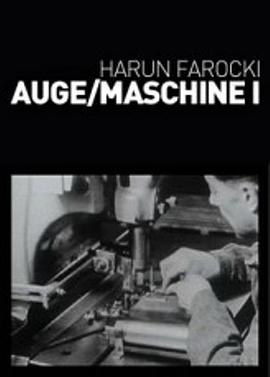
Harun Farocki utilizes a vast collection of image sequences from laboratories, archives and production facilities to explore modern weapons technology. This trilogy examines "intelligent" image processing techniques such as electronic surveillance, mapping and object recognition, in order to take a closer look at the relationship between man, machine, and modern warfare.

Movie

Stilleben (1997)
Stilleben IMDb TMDB Douban
other title: 静物写生 / Still Life …
According to Harun Farocki, today's photographers working in advertising are, in a way, continuing the tradition of 17th century Flemish painters in that they depict objects from everyday life - the "still life". The filmmaker illustrates this intriguing hypothesis with three documentary sequences which show the photographers at work creating a contemporary "still life": a cheese-board, beer glasses and an expensive watch. This remarkable film by Harun Farocki is a powerful essay and commentary on contemporary life. It compares the still-lifes of the Dutch painters with the still-lifes of today: Photographs for advertisements for cheese, beer and watches. Farocki's film is about objects because, according to the director, "Gods and heroes are no longer imaginable." Using behind-the-scenes glimpses of modern advertising offices, where employees toil at the proper placement of objects for maximum sales effect, Farocki presents a vision of our reality in which objects bear witness to their producers. In these objects is a new image of man.

Movie

The Words of the Chairman (1969)
Die Worte des Vorsitzenden WikiData IMDb Douban
哈伦·法罗基 actor: Ursula Lefkes / Otto Schily
other title: 主席的话 / Die Worte des Vorsitzenden
I was on a ship – this sounds like a novel: I had just embarked for Venezuela on June 2, 1967 as the Shah of Iran was arriving in West Berlin. There were protests, a student was shot, and a new form of opposition movement came into existence. The idea for this film came to me while I was still aboard the ship. The film is structured like a commercial. The film takes a metaphor literally: words can become weapons. However, it also shows that these weapons are made of paper. The weapon spoiled everything for the Shah and his wife, they are wearing paper bags on their heads with faces drawn on them – the kind of bags worn by Iranian students during demonstrations to hide their identity from the Savak, the Iranian Secret Service. When I showed this film to the audiences in the late 60s, it was highly praised. I think people understood then that over obviousness is also a form of irony. This capacity was lost a few years later. I think it's coming back today. –HF

Movie

Prison Images (2000)
Gefängnisbilder WikiData IMDb TMDB Douban
other title: 监狱影像 / Gefängnisbilder …
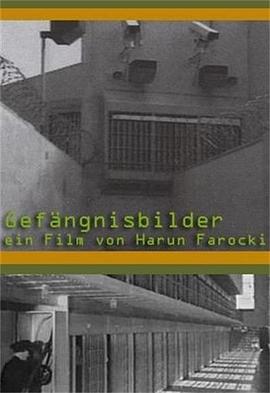
A film composed of images from prisons. Quotes from fiction films and documentaries as well as footage from surveillance cameras. A look at the new control technologies, at personal identification devices, electronic ankle bracelets, electronic tracking devices. The cinema has always been attracted to prisons. Today's prisons are full of video surveillance cameras. These images are unedited and monotonous; as neither time nor space is compressed, they are particularly well-suited to conveying the state of inactivity into which prisoners are placed as a punitive measure. The surveillance cameras show the norm and reckon with deviations from it. Clips from films by Genet and Bresson. Here the prison appears as a site of sexual infraction, a site where human beings must create themselves as people and as a workers. In Un Chant d'amour by Jean Genet, the guard looks in on inmates in their cells and sees them masturbating. The inmates are aware that they are being watched and thus become performers in a peep show. The protagonist in Bresson's Un Condamné à mort s'est échappé turns the objects of imprisonment into the tools of his escape. These topoi appear in many prison films. In newer prisons, in contrast, contemporary video surveillance technology aims at demystification.