Nicholas Elliott — 译者 (5)
The Future of Architecture Since 1889 [图书] 豆瓣
作者: Jean-Louis Cohen 译者: Nicholas Elliott 出版社: Phaidon 2012 - 1
Truly far-ranging - both conceptually and geographically - The Future of Architecture Since 1889 is a rich, compelling history that will shape future thinking about this period for years to come. Jean-Louis Cohen, one of today's most distinguished architectural historians and critics, gives an authoritative and compelling account of the twentieth century, tracing an arc from industrialization through computerization, and linking architecture to developments in art, technology, urbanism and critical theory. Encompassing both well-known masters and previously neglected but significant architects, this book also reflects Cohen's deep knowledge architecture across the globe, and in places such Eastern Europe and colonial Africa and South America that have rarely been included in histories of this period. This comprehensive history is richly illustrated not only with buildings, projects and plans, but also with publications, portraits, paintings, diagrams, film stills, and exhibitions, showing the immense diversity of architectural thought and production throughout the twentieth century.
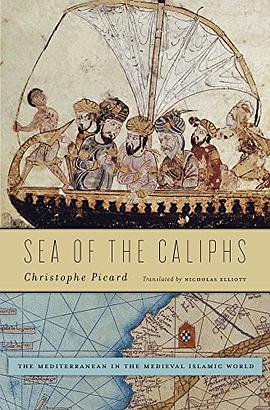
Sea of the Caliphs [图书] 豆瓣
作者: Christophe Picard 译者: Nicholas Elliott 出版社: Harvard University Press 2018 - 1
“How could I allow my soldiers to sail on this disloyal and cruel sea?” These words, attributed to the most powerful caliph of medieval Islam, Umar Ibn al-Khattab (634–644), have led to a misunderstanding in the West about the importance of the Mediterranean to early Islam. This body of water, known in Late Antiquity as the Sea of the Romans, was critical to establishing the kingdom of the caliphs and for introducing the new religion to Europe and Africa. Over time, it also became a pathway to commercial and political dominion, indispensable to the prosperity and influence of the Islamic world. Sea of the Caliphs returns Muslim sailors to their place of prominence in the history of the Islamic caliphate.
As early as the seventh century, Muslim sailors competed with Greek and Latin seamen for control of this far-flung route of passage. Christophe Picard recreates these adventures as they were communicated to admiring Muslims by their rulers. After the Arab conquest of southern Europe and North Africa, Muslims began to speak of the Mediterranean in their strategic visions, business practices, and notions of nature and the state. Jurists and ideologues conceived of the sea as a conduit for jihad, even as Muslims’ maritime trade with Latin, Byzantine, and Berber societies increased.
In the thirteenth century, Christian powers took over Mediterranean trade routes, but by that time a Muslim identity that operated both within and in opposition to Europe had been shaped by encounters across the sea of the caliphs.
The Hatred of Literature [图书] 豆瓣
作者: William Marx 译者: Nicholas Elliott 出版社: Belknap Press 2018 - 1
For the last 2,500 years literature has been attacked, booed, and condemned, often for the wrong reasons and occasionally for very good ones. The Hatred of Literature examines the evolving idea of literature as seen through the eyes of its adversaries: philosophers, theologians, scientists, pedagogues, and even leaders of modern liberal democracies. From Plato to C. P. Snow to Nicolas Sarkozy, literature’s haters have questioned the value of literature—its truthfulness, virtue, and usefulness—and have attempted to demonstrate its harmfulness.
Literature does not start with Homer or Gilgamesh, William Marx says, but with Plato driving the poets out of the city, like God casting Adam and Eve out of Paradise. That is its genesis. From Plato the poets learned for the first time that they served not truth but merely the Muses. It is no mere coincidence that the love of wisdom (philosophia) coincided with the hatred of poetry. Literature was born of scandal, and scandal has defined it ever since.
In the long rhetorical war against literature, Marx identifies four indictments—in the name of authority, truth, morality, and society. This typology allows him to move in an associative way through the centuries. In describing the misplaced ambitions, corruptible powers, and abysmal failures of literature, anti-literary discourses make explicit what a given society came to expect from literature. In this way, anti-literature paradoxically asserts the validity of what it wishes to deny. The only threat to literature’s continued existence, Marx writes, is not hatred but indifference.
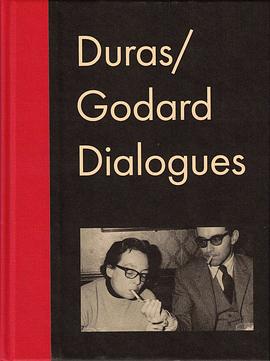
Duras / Godard Dialogues [图书] 豆瓣
作者: Marguerite Duras / Jean-Luc Godard 译者: Nicholas Elliott 出版社: The Film Desk 2020
Introduction, afterword and footnotes by Cyril Béghin. Translation by Nicholas Elliott.
Three dialogues between Marguerite Duras and Jean-Luc Godard from 1979, 1980 and 1987.
“The two demonstrate a profound shared passion, a way of literally being one with a medium and speaking about it with a dazzling lyricism interspersed with dryly ironic remarks, fueled by a conviction that inspires them to traverse history. Their point of intersection is obvious. Duras, a writer, is also a filmmaker, and Godard, a filmmaker, has maintained a distinctive relationship with literature, writing and speech.”—Cyril Béghin
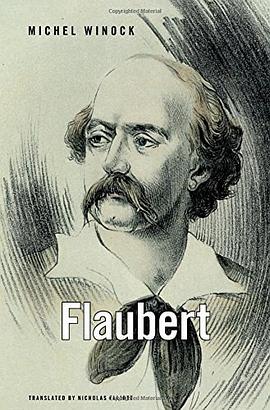
Flaubert [图书] 豆瓣
作者: Michel Winock 译者: Nicholas Elliott 出版社: Belknap Press 2016 - 10
Michel Winock’s biography situates Gustave Flaubert’s life and work in France’s century of great democratic transition. Flaubert did not welcome the egalitarian society predicted by Tocqueville. Wary of the masses, he rejected the universal male suffrage hard won by the Revolution of 1848, and he was exasperated by the nascent socialism that promoted the collective to the detriment of the individual. But above all, he hated the bourgeoisie. Vulgar, ignorant, obsessed with material comforts, impervious to beauty, the French middle class embodied for Flaubert every vice of the democratic age. His loathing became a fixation―and a source of literary inspiration.
Flaubert depicts a man whose personality, habits, and thought are a stew of paradoxes. The author of Madame Bovary and Sentimental Education spent his life inseparably bound to solitude and melancholy, yet he enjoyed periodic escapes from his “hole” in Croisset to pursue a variety of pleasures: fervent friendships, society soirées, and a whirlwind of literary and romantic encounters. He prided himself on the impersonality of his writing, but he did not hesitate to use material from his own life in his fiction. Nowhere are Flaubert’s contradictions more evident than in his politics. An enemy of power who held no nostalgia for the monarchy or the church, he was nonetheless hostile to collectivist utopias.
Despite declarations of the timelessness and sacredness of Art, Flaubert could not transcend the era he abominated. Rejecting the modern world, he paradoxically became its celebrated chronicler and the most modern writer of his time.