Ritchie Robertson — 作者 (6)
Kafka [图书] 豆瓣 豆瓣
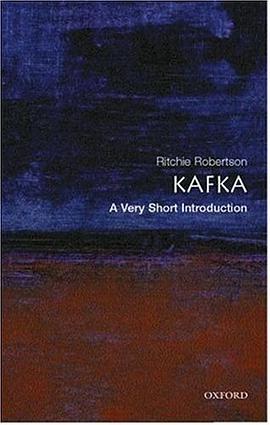
作者: Ritchie Robertson publishing house: Oxford University Press, USA 2005 - 9
'When Gregor Samsa awoke one morning from troubled dreams he found himself transformed in his bed into a monstrous insect ...' So begins Franz Kafka's most famous story Die Verwandlung or Metamorphosis. Franz Kafka is one of the most intriguing writers of the twentieth century; adjective 'kafkaesque' evokes his bizarre world in which characters grapple with faceless bureaucracy, find themselves turned into insects, or starve themselves to death in the name of art. This Very Short Introduction Ritchie Robertson provides the newcomer with an up-to-date and accessible examination of this fascinating author: beginning with an examination of Kafka's life, he then goes on to discuss some of the major themes that emerge in Kafka's work, using his short story Metamorphosis as a recurring example.
卡夫卡 [图书] 豆瓣
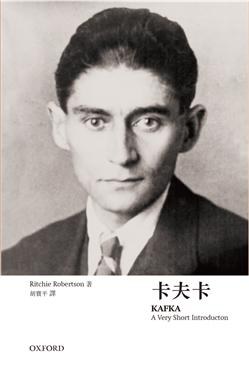
Kafka A Very Short Introduction
作者: Ritchie Robertson 译者: 罗宝平 publishing house: 牛津大学出版社 2016
本书概述了卡夫卡波折四起的生活,细致分析了他写作的技巧,以及他是如何反映现代主题的,比如文化中身份的地位,机构对人的压迫,尼采宣告了“上帝死了”之后宗教的前景等等。作者以现代视角和浅白易于理解的方式,刻画出这位独具魅力的作家,向读者展示了如何阅读和理解卡夫卡那些令人迷惑而又引人入胜的作品。
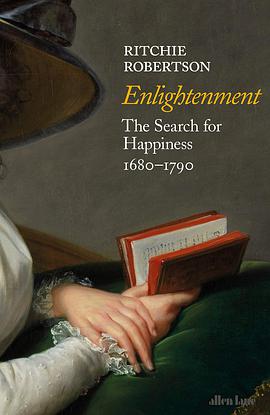
The Enlightenment [图书] 豆瓣
作者: Ritchie Robertson publishing house: Allen Lane 2020 - 11
This magisterial history--sure to become the definitive work on the subject--recasts the Enlightenment as a period not solely consumed with rationale and reason, but rather as a pursuit of practical means to achieve greater human happiness. One of the formative periods of European and world history, the Enlightenment is the fountainhead of modern secular Western values: religious tolerance, freedom of thought, speech and the press, of rationality and evidence-based argument. Yet why, over three hundred years after it began, is the Enlightenment so profoundly misunderstood as controversial, the expression of soulless calculation? The answer may be that, to an extraordinary extent, we have accepted the account of the Enlightenment given by its conservative enemies. Ritchie Robertson goes back into the "long eighteenth century," from approximately 1680 to 1790, to reveal what this much-debated period was really about. Any account of the Enlightenment must be in large part a history of ideas. But Robertson argues that it is not solely a philosophical movement; the Enlightenment saw the publication of the Encyclopedie, which is not only a historical and philosophical compendium, but also an illustrated guide to all sorts of contemporary machinery, handicrafts, and trades aimed to improve people's lives in immediate and practical ways. Robertson chronicles the campaigns mounted by some Enlightened figures against specific evils such as capital punishment, judicial torture, serfdom and witchcraft trials, featuring the experiences of major figures like Voltaire and Diderot with ordinary people who lived through this extraordinary moment. Robertson gives due attention to philosophical and theological debates, but also looks to literature, music, and the visual arts as prominent means of conveying enlightenment ideas. In seeking to correct one-sided views of the Enlightenment, Robertson ultimately puts forward his own. He does not reduce this transformative period to a formula, but instead makes the claim that indeed the Enlightenment was an attempt to increase human happiness, and to claim that happiness was possible in this world, without needing any compensatory belief in a better one beyond the grave.
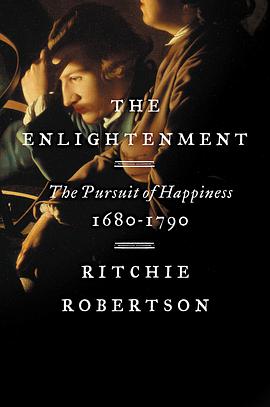
The Enlightenment [图书] 豆瓣
作者: Ritchie Robertson publishing house: Harper 2021 - 2
This magisterial history—sure to become the definitive work on the subject—recasts the Enlightenment as a period not solely consumed with rationale and reason, but rather as a pursuit of practical means to achieve greater human happiness.
One of the formative periods of European and world history, the Enlightenment is the fountainhead of modern secular Western values: religious tolerance, freedom of thought, speech and the press, of rationality and evidence-based argument. Yet why, over three hundred years after it began, is the Enlightenment so profoundly misunderstood as controversial, the expression of soulless calculation? The answer may be that, to an extraordinary extent, we have accepted the account of the Enlightenment given by its conservative enemies. Ritchie Robertson goes back into the “long eighteenth century,” from approximately 1680 to 1790, to reveal what this much-debated period was really about.
Any account of the Enlightenment must be in large part a history of ideas. But Robertson argues that it is not solely a philosophical movement; the Enlightenment saw the publication of the Encyclopédie, which is not only a historical and philosophical compendium, but also an illustrated guide to all sorts of contemporary machinery, handicrafts, and trades aimed to improve people’s lives in immediate and practical ways. Robertson chronicles the campaigns mounted by some Enlightened figures against specific evils such as capital punishment, judicial torture, serfdom and witchcraft trials, featuring the experiences of major figures like Voltaire and Diderot with ordinary people who lived through this extraordinary moment. Robertson gives due attention to philosophical and theological debates, but also looks to literature, music, and the visual arts as prominent means of conveying enlightenment ideas.
In seeking to correct one-sided views of the Enlightenment, Robertson ultimately puts forward his own. He does not reduce this transformative period to a formula, but instead makes the claim that indeed the Enlightenment was an attempt to increase human happiness, and to claim that happiness was possible in this world, without needing any compensatory belief in a better one beyond the grave.
Goethe: A Very Short Introduction [图书] 谷歌图书
作者: Ritchie Robertson publishing house: Oxford University Press 2016 - 01
In 1878 the Victorian critic Matthew Arnold wrote: 'Goethe is the greatest poet of modern times... because having a very considerable gift for poetry, he was at the same time, in the width, depth, and richness of his criticism of life, by far our greatest modern man.' In this Very Short Introduction Ritchie Robertson covers the life and work of Johann Wolfgang von Goethe (1749-1832): scientist, administrator, artist, art critic and supreme literary writer in a vast variety of genres. Looking at Goethe's poetry, novels and drama pieces, as well as his travel writing, autobiography, and essays on art and aesthetics, Robertson analyses some of the key themes in his works: love, nature, religion and tragedy. Dispelling the misconception of Goethe as a sedate Victorian sage, Robertson shows how much of his art was rooted in turbulent personal conflicts, and draws on recent research to present a complete portrait of the scientific work and political activity which accompanied Goethe's writings. ABOUT THE SERIES: The Very Short Introductions series from Oxford University Press contains hundreds of titles in almost every subject area. These pocket-sized books are the perfect way to get ahead in a new subject quickly. Our expert authors combine facts, analysis, perspective, new ideas, and enthusiasm to make interesting and challenging topics highly readable.
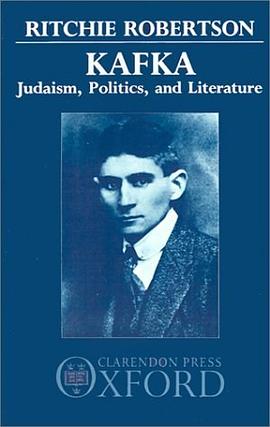
Kafka [图书] 豆瓣 Goodreads
作者: Ritchie Robertson / 里奇·罗伯逊 publishing house: Oxford University Press, USA 1987 - 6 其它标题: Kafka: Judaism, Politics, and Literature
Kafka wrote Das Urteil, his first major work of literature, in a single night in the autumn of 1912. It was for him a breakthrough, and closely connected with it was the awakening of his interest in Jewish culture. This is a general study of Kafka, which explores the literary and historical context of his writings, and links them with his emergent sense of Jewish identity. What is emphasized throughout is Kafka's concern with contemporary society - his distrust of its secular, humanitarian ideals - and his desire for a new kind of community, based on religion.